


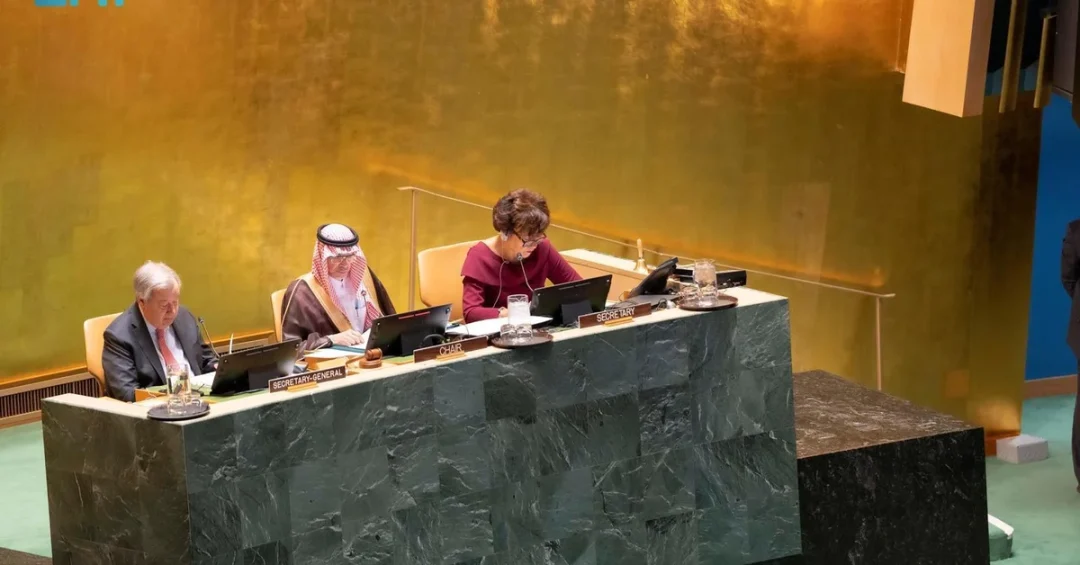
Saudi Arabia has assumed the chairmanship of the 69th session of the United Nations Commission on the Status of Women (CSW69), with the session opening in New York and running through March 21, 2025. The Kingdom is represented in the chair’s role by its Permanent Representative to the United Nations, Ambassador Abdulaziz Alwasil, while a high-level Saudi delegation to the session is being led by Maimoonah Al Khalil, Secretary-General of the Family Affairs Council. The opening of CSW69, announced by the Saudi Press Agency, places Saudi Arabia at the center of the principal global policy forum dedicated to gender equality and the empowerment of women.
For observers of multilateral diplomacy, the chairmanship is more than a ceremonial honor. It gives Saudi Arabia a platform to help set the tone and priorities of a session that convenes governments, United Nations agencies, civil society organizations, and experts from around the world. The Kingdom has signaled that it will use the role to strengthen international cooperation on women’s empowerment, to address the challenges women still face in many regions, and to share its own national experience, including the initiatives that have expanded Saudi women’s participation in education, the workforce, entrepreneurship, and public life. The session’s timing, coming as the international community reviews progress on the Sustainable Development Goals, adds further weight to the agenda.
Context and Background
How did Saudi Arabia come to lead the United Nations’ foremost forum on women’s rights, and what does that responsibility entail? The Commission on the Status of Women was established in 1946 as a functional commission of the United Nations Economic and Social Council, making it the principal global intergovernmental body dedicated exclusively to the promotion of gender equality and the empowerment of women. Its annual sessions bring together member states, UN entities, and accredited non-governmental organizations to review progress, negotiate agreed conclusions, and shape international norms and standards. Chairing the commission therefore carries procedural authority and diplomatic visibility in equal measure.
Saudi Arabia’s selection to chair the 69th session reflects the confidence of UN member states in the Kingdom’s capacity to guide consensus-building on a complex agenda. Ambassador Abdulaziz Alwasil, as chair, is responsible for steering deliberations, facilitating negotiations among regional groups, and ensuring that the session’s outcomes reflect the broadest possible agreement. The Saudi delegation led by Maimoonah Al Khalil brings to the table the perspective of a national institution, the Family Affairs Council, whose mandate covers family policy, women’s advancement, and social development. Together, the two tracks, diplomatic and domestic policy, illustrate how the Kingdom intends to connect its international role with its national experience.
The broader backdrop is one of sustained change inside Saudi Arabia under Vision 2030, the national transformation plan launched in 2016. Reforms adopted over the past decade have expanded women’s access to education, employment, entrepreneurship, and leadership positions, and have been accompanied by legal and regulatory updates designed to remove barriers to participation. Saudi officials frequently describe these changes as mutually reinforcing: economic diversification requires the full utilization of national talent, and social development depends on the active contribution of all citizens. The CSW69 chairmanship offers an opportunity to present that record to a global audience and to learn from the experiences of other countries.
Key Details of the Session and Saudi Priorities
What will the Kingdom actually do with the chair’s gavel during the session? CSW69 opened on March 10, 2025, and will continue through March 21, bringing together delegations from UN member states and thousands of representatives from civil society. As chair, Saudi Arabia has emphasized three interconnected priorities: enhancing international cooperation to support women’s empowerment, addressing the challenges that continue to limit women’s opportunities in various parts of the world, and sharing Saudi Arabia’s own initiatives and lessons learned. The Kingdom has framed its role as one of bridge-building, helping to align different regional perspectives around practical outcomes.
Maimoonah Al Khalil, Secretary-General of the Family Affairs Council, said that Saudi Arabia’s selection to chair CSW69 demonstrates the significant strides made in empowering Saudi women. She attributed this progress to the unwavering support of the Kingdom’s leadership, which she said has facilitated women’s continuous achievements across all fields. Her remarks underline a central theme of the Saudi message: that national progress on women’s empowerment is the product of deliberate policy, sustained investment, and high-level commitment, rather than incidental change. The Family Affairs Council, as a national body, has been involved in policy development and in coordinating efforts across government and society.
The Saudi delegation’s participation also includes sharing concrete examples of initiatives that have strengthened women’s role as a driver of national development. These include programs to expand women’s participation in the labor market, support for women entrepreneurs and small business owners, and efforts to increase the representation of women in leadership and decision-making roles. Saudi participants are expected to highlight how these initiatives connect to the Sustainable Development Goals, particularly those related to gender equality, decent work, and inclusive economic growth. The emphasis is on partnership and exchange, with the Kingdom presenting its experience as one contribution to a shared global endeavor.
International and Regional Impact
Why does Saudi leadership of CSW69 matter beyond the negotiating rooms in New York? The Commission on the Status of Women is the forum where international norms on gender equality are debated and refined, and where the priorities of different regions compete for attention. A Saudi chairmanship signals that the Gulf region and the broader Middle East are active participants in shaping those norms, not merely recipients of externally designed frameworks. It also reinforces the principle that women’s empowerment must be pursued in ways that respect national contexts, cultures, and values, a position that resonates with many countries across Africa, Asia, and Latin America.
Regionally, the chairmanship carries symbolic and practical weight. Saudi Arabia has been among the most visible reformers in the Middle East, and its role at CSW69 allows it to share experiences with neighboring states that are also pursuing social and economic opening. The Kingdom’s participation in UN processes is part of a wider diplomatic strategy that includes hosting major international events, mediating regional disputes, and contributing to development and humanitarian efforts. By chairing a commission focused on women, Saudi Arabia strengthens its profile as a constructive actor in multilateral affairs and as a partner for countries seeking practical pathways to inclusive development.
Internationally, the session provides a venue for Saudi Arabia to engage with UN agencies such as UN Women and with civil society organizations from around the world. These interactions can build relationships that outlast the session itself, opening channels for cooperation on research, capacity building, and program design. The Kingdom’s message that women’s empowerment is a shared global priority, and that progress depends on cooperation rather than confrontation, is likely to find a receptive audience among member states that value consensus and practical outcomes. The chair’s role in facilitating agreement will be closely watched as the session moves toward its concluding documents.
Economic and Strategic Significance
What does women’s empowerment have to do with Saudi Arabia’s economic strategy, and why is the Kingdom investing diplomatic capital in the issue? Under Vision 2030, Saudi Arabia is pursuing economic diversification away from oil dependence, and the participation of women is a central component of that effort. Official targets have called for raising women’s labor force participation substantially, and reforms have expanded opportunities in sectors ranging from technology and finance to tourism and manufacturing. The economic logic is straightforward: a diversified economy requires the full deployment of national human capital, and excluding half the population from productive activity would constrain growth.
The strategic significance extends to Saudi Arabia’s global positioning. Chairing CSW69 complements the Kingdom’s broader international engagement, including its role in the G20, its hosting of major sporting and cultural events, and its investments in global development. These activities project an image of a modernizing, internationally connected country that is willing to take on leadership responsibilities. For international audiences, including investors and partners, the chairmanship offers evidence that Saudi Arabia is a reliable participant in global governance and that its domestic reforms are recognized by the international community. That recognition can reinforce confidence in the Kingdom’s direction and in the durability of its transformation.
There is also a knowledge-exchange dimension with economic value. By presenting its initiatives at CSW69, Saudi Arabia can attract partners for collaboration on education, vocational training, childcare, and entrepreneurship support. Such partnerships can bring expertise and investment into the Kingdom while allowing Saudi institutions to contribute their own experience to other countries. The session thus functions as a marketplace of ideas, where policies are compared, adapted, and improved. For a country implementing an ambitious national transformation, access to global best practice is an asset, and the chair’s position provides a privileged vantage point.
Vision 2030 Alignment
How does the CSW69 chairmanship fit into the larger story of Saudi Arabia’s national transformation? Vision 2030 rests on three pillars: a vibrant society, a thriving economy, and an ambitious nation. Women’s empowerment cuts across all three. A vibrant society depends on the full participation of women in education, culture, and community life; a thriving economy requires their skills and entrepreneurship; and an ambitious nation is one that draws on the talents of all its people. The reforms of recent years, from expanded employment opportunities to greater representation in leadership, are presented by Saudi officials as practical expressions of these principles rather than isolated measures.
The chairmanship of CSW69 also aligns with the Kingdom’s commitment to the Sustainable Development Goals, particularly SDG 5 on gender equality and SDG 8 on decent work and economic growth. Saudi Arabia has integrated the SDGs into its national planning and reports on progress through UN mechanisms. By leading the commission that oversees the global gender equality agenda, the Kingdom reinforces the connection between national action and international commitments. This dual track, domestic reform and global engagement, is central to how Saudi Arabia presents itself to the world: as a country that is changing at home and contributing abroad.
Looking ahead, the session’s outcomes and the relationships built during it are likely to inform Saudi Arabia’s continued engagement on women’s issues in international forums. The Kingdom has indicated that it will remain an active partner in efforts to enhance women’s participation and to address the obstacles that remain. For a global audience, the 69th session of the Commission on the Status of Women offers a clear illustration of Saudi Arabia’s evolving role: a nation pursuing comprehensive development at home while assuming responsibility for advancing shared goals on the world stage. The chairmanship is both a recognition of progress made and a platform for the work still to come.
20 Questions
Q1. What is the Commission on the Status of Women?
A1. The Commission on the Status of Women is the principal global intergovernmental body dedicated to promoting gender equality and empowering women. Established in 1946, it operates under the United Nations Economic and Social Council and holds annual sessions that shape international norms and policies.
Q2. Which session is Saudi Arabia chairing?
A2. Saudi Arabia is chairing the 69th session of the Commission on the Status of Women, known as CSW69. The session opened on March 10, 2025, and continues through March 21, 2025, at the United Nations in New York.
Q3. Who represents Saudi Arabia as chair of CSW69?
A3. Ambassador Abdulaziz Alwasil, Saudi Arabia’s Permanent Representative to the United Nations, serves as chair of CSW69. He is responsible for steering deliberations and facilitating consensus among member states during the session.
Q4. Who leads the Saudi delegation to CSW69?
A4. The high-level Saudi delegation is led by Maimoonah Al Khalil, Secretary-General of the Family Affairs Council. She brings national policy expertise on family affairs, women’s advancement, and social development to the session’s discussions.
Q5. What are Saudi Arabia’s priorities as chair?
A5. Saudi Arabia has emphasized enhancing international cooperation to support women’s empowerment, addressing challenges that limit women’s opportunities, and sharing its national initiatives and experiences. The Kingdom frames its role as one of bridge-building and practical consensus.
Q6. How long does the 69th session last?
A6. CSW69 opened on March 10, 2025, and will continue through March 21, 2025. During this period, delegations from UN member states and civil society representatives will review progress and negotiate agreed conclusions.
Q7. What did Maimoonah Al Khalil say about the chairmanship?
A7. She said Saudi Arabia’s selection to chair CSW69 demonstrates significant strides in empowering Saudi women. She attributed this progress to the unwavering support of the Kingdom’s leadership, which has facilitated women’s achievements across all fields.
Q8. How does the chairmanship reflect Saudi Vision 2030?
A8. Vision 2030 aims to build a vibrant society, a thriving economy, and an ambitious nation. Women’s empowerment cuts across all three pillars, and the chairmanship showcases the Kingdom’s domestic reforms and its contribution to global goals.
Q9. What reforms have advanced Saudi women in recent years?
A9. Saudi Arabia has expanded women’s access to education, employment, entrepreneurship, and leadership roles. Legal and regulatory updates have removed barriers to participation, supporting higher labor force participation and greater representation in decision-making positions.
Q10. Why is women’s empowerment important to Saudi Arabia’s economy?
A10. Economic diversification under Vision 2030 requires the full deployment of national talent. Raising women’s participation in the workforce supports growth in sectors such as technology, finance, tourism, and manufacturing, reducing dependence on oil revenues.
Q11. What is the Family Affairs Council?
A11. The Family Affairs Council is a Saudi national institution focused on family policy, women’s advancement, and social development. Its Secretary-General, Maimoonah Al Khalil, leads the Kingdom’s delegation to CSW69.
Q12. How does CSW69 connect to the Sustainable Development Goals?
A12. CSW69 reviews progress on gender equality, closely tied to SDG 5, and links to SDG 8 on decent work and economic growth. Saudi Arabia has integrated the SDGs into national planning and reports progress through UN mechanisms.
Q13. What does the chair’s role involve at CSW?
A13. The chair steers deliberations, facilitates negotiations among regional groups, and works to ensure outcomes reflect the broadest possible agreement. The role carries procedural authority and significant diplomatic visibility.
Q14. How does the chairmanship affect Saudi Arabia’s global standing?
A14. It reinforces Saudi Arabia’s profile as a constructive actor in multilateral affairs. The role complements engagement in the G20, international events, and development efforts, signaling reliability as a partner in global governance.
Q15. What regional impact does the chairmanship have?
A15. It signals that the Gulf and wider Middle East are active participants in shaping international norms on women’s empowerment. Saudi Arabia can share reform experiences with neighboring states pursuing similar social and economic opening.
Q16. What initiatives will Saudi Arabia highlight at CSW69?
A16. Saudi participants will highlight programs expanding women’s labor market participation, support for women entrepreneurs, and efforts to increase representation in leadership. These initiatives connect to national development and the SDGs.
Q17. How does the session promote international cooperation?
A17. CSW69 convenes governments, UN agencies, and civil society to compare policies and build partnerships. Saudi Arabia emphasizes cooperation and consensus, aiming to align regional perspectives around practical outcomes for women.
Q18. What is the significance of the session’s timing?
A18. The session comes as the international community reviews progress on the Sustainable Development Goals. This timing adds weight to discussions on gender equality and highlights the role of national policies in achieving global targets.
Q19. How does Saudi Arabia share its experience with other countries?
A19. Through the delegation led by the Family Affairs Council, the Kingdom presents its initiatives, lessons learned, and policy approaches. These exchanges allow other countries to adapt useful practices and open channels for future collaboration.
Q20. What comes after CSW69 for Saudi Arabia?
A20. Saudi Arabia is expected to remain active in international forums on women’s issues, building on relationships formed during the session. The chairmanship supports its long-term vision of domestic reform and global engagement.
Reader Feedback
We value your thoughts. Please share your feedback on this article.
Your feedback helps us improve our coverage.
Related articles
 Saudi E-Gates Speed Entry at Four Major Airports
 Six Projects Open for Feedback via Istitlaa Platform
 Saudi Arabia, Ukraine Strengthen Economic Ties in Joint Statement
 Shura Council Highlights Saudi Women’s Empowerment at CSW69
 Saudi Arabia Condemns Israeli Electricity Blackout in Gaza as Collective Punishment
 Saudi Architecture Commission, USGBC Sign Green Building Deal