


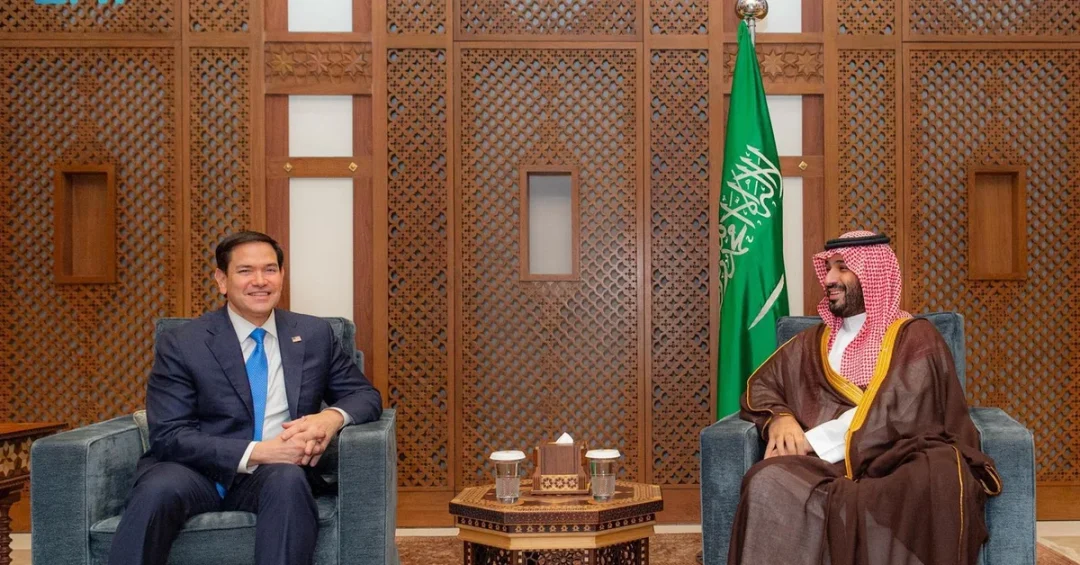
His Royal Highness Prince Mohammed bin Salman bin Abdulaziz Al Saud, Crown Prince and Prime Minister, received United States Secretary of State Marco Rubio at Al-Salam Palace in Jeddah on March 11, 2025, in a high-level meeting that underscored the enduring strength of Saudi-American relations. The encounter, reported by the Saudi Press Agency, brought together senior officials from both nations to review the full spectrum of bilateral ties and explore new avenues for cooperation across political, economic, security, and cultural domains. The talks reflected the Kingdom’s continuing commitment to constructive international engagement under the leadership of the Crown Prince, whose diplomatic outreach has positioned Saudi Arabia as a pivotal actor in regional and global affairs.
The meeting in Jeddah, a city that has long served as a gateway for diplomacy on the Red Sea, highlighted the depth of the strategic partnership between Riyadh and Washington. According to the official Saudi account, the two sides discussed opportunities for consolidating and developing their relations in various fields, while also exchanging views on the latest regional and international developments and efforts aimed at achieving security and stability. The presence of a distinguished delegation of Saudi ministers and officials, alongside the U.S. Secretary of State’s accompanying delegation, signaled the importance both countries attach to this dialogue. How does such sustained high-level engagement shape the future of diplomacy in a rapidly changing world? The meeting stands as a clear testament to the Kingdom’s proactive foreign policy and its role as a trusted partner in addressing shared challenges.
Context and Background
What makes the Saudi-American relationship so resilient in an era of shifting global dynamics? The partnership between the Kingdom of Saudi Arabia and the United States has, for decades, been anchored in mutual interests, shared security concerns, and deep economic ties. From energy cooperation to counterterrorism, the two nations have built a framework of collaboration that has weathered regional upheavals and global uncertainties. The meeting between Crown Prince Mohammed bin Salman and Secretary of State Marco Rubio continues this tradition of regular, high-level consultation, ensuring that both sides remain aligned on key issues and can respond effectively to emerging challenges.
The choice of Jeddah for this meeting carries symbolic weight. As Saudi Arabia’s second-largest city and a historic commercial hub, Jeddah has hosted numerous diplomatic engagements and is often associated with the Kingdom’s openness to the world. Al-Salam Palace, meaning the Palace of Peace, provided a fitting backdrop for discussions focused on stability and cooperation. The talks also come at a time when the region is witnessing significant transformations, from economic diversification efforts to evolving security landscapes. Saudi Arabia, under Vision 2030, has been actively reshaping its economy and its international partnerships, and the United States remains a key ally in this journey. The meeting thus builds on a long history of collaboration while looking ahead to new opportunities.
Furthermore, the presence of senior Saudi officials such as Minister of Defense Prince Khalid bin Salman bin Abdulaziz, Saudi Ambassador to the United States Princess Reema bint Bandar bin Sultan bin Abdulaziz, Minister of Foreign Affairs Prince Faisal bin Farhan bin Abdullah, and Minister of State, Member of the Cabinet, and National Security Adviser Dr. Musaed bin Mohammed Al-Aiban underscores the comprehensive nature of the discussions. Each of these officials brings a distinct portfolio, from defense and foreign affairs to national security and diplomatic representation, reflecting the multifaceted dimensions of the bilateral relationship. Their participation signals that the conversation went beyond a single issue and touched on the full range of shared priorities. Isn’t it remarkable how such a gathering of top officials can set the tone for future cooperation?
Key Details of the Meeting
What exactly transpired behind the doors of Al-Salam Palace? According to the official Saudi Press Agency report, the Crown Prince and Secretary Rubio engaged in detailed discussions on various aspects of relations between the Kingdom and the United States. They reviewed opportunities for consolidating and developing these relations across multiple fields, indicating a forward-looking approach rather than a mere review of the status quo. The two sides also exchanged views on the latest regional and international developments, with a particular focus on efforts aimed at achieving security and stability. This exchange of perspectives is vital in a world where challenges often transcend borders and require coordinated responses.
The meeting was attended by a high-profile Saudi delegation, each member playing a crucial role in the Kingdom’s governance and international outreach. Minister of Defense Prince Khalid bin Salman bin Abdulaziz’s presence highlights the security and defense dimensions of the partnership, which remain central to regional stability. Ambassador Princess Reema bint Bandar bin Sultan bin Abdulaziz, who has been a dynamic representative of Saudi Arabia in Washington, brought her deep understanding of American politics and society to the table. Foreign Minister Prince Faisal bin Farhan bin Abdullah contributed his extensive diplomatic experience, while National Security Adviser Dr. Musaed bin Mohammed Al-Aiban provided insights on strategic and security matters. Together, they embodied the Kingdom’s integrated approach to foreign policy.
On the American side, Secretary of State Marco Rubio was accompanied by a delegation of senior officials, though the official report did not specify their names. The presence of such a delegation indicates the seriousness with which the United States views its relationship with Saudi Arabia. The discussions likely covered a wide range of topics, from economic cooperation and investment to cultural exchange and educational partnerships. While the precise details of the conversations remain confidential, the fact that both sides committed to continuing their dialogue and exploring new avenues of cooperation is a positive outcome in itself. How often do we see such high-level meetings yield concrete results? In this case, the very act of convening and the subsequent official readout signal a shared determination to strengthen ties.
International and Regional Impact
What does this meeting mean for the broader Middle East and beyond? The Saudi-American partnership has long been a cornerstone of regional stability, and any reaffirmation of that bond sends ripples across the geopolitical landscape. In a region marked by conflicts, economic transitions, and diplomatic realignments, the alignment between Riyadh and Washington can influence everything from peace efforts to energy markets. The discussions on security and stability, as mentioned in the official report, likely touched on hotspots such as Yemen, Syria, and the broader Gulf security architecture. By coordinating their positions, Saudi Arabia and the United States can more effectively address common threats and promote peaceful resolutions.
Moreover, the meeting underscores Saudi Arabia’s growing role as a diplomatic bridge-builder. Under the leadership of Crown Prince Mohammed bin Salman, the Kingdom has pursued a foreign policy that balances traditional alliances with new partnerships, particularly in Asia and Africa. The engagement with Secretary Rubio does not isolate Saudi Arabia from other global actors; rather, it complements its broader outreach. For the United States, maintaining strong ties with Saudi Arabia is essential for its own strategic interests in the Middle East, including counterterrorism, maritime security, and ensuring the free flow of energy. The meeting in Jeddah thus reinforces a mutually beneficial relationship that contributes to international peace and prosperity. Isn’t it encouraging to see two major nations working together to tackle shared challenges?
Economic and Strategic Significance
How does the bilateral relationship translate into tangible economic benefits? Saudi Arabia and the United States share a robust economic partnership that spans energy, trade, investment, and technology. The Kingdom is a major supplier of crude oil to global markets, and the United States is a key consumer and partner in energy innovation. Beyond oil, Saudi Arabia’s Vision 2030 has opened new doors for American companies in sectors such as renewable energy, healthcare, entertainment, and digital infrastructure. The meeting between the Crown Prince and Secretary Rubio likely explored ways to deepen these commercial ties, attracting more U.S. investment into the Kingdom’s giga-projects and fostering joint ventures that create jobs and drive innovation.
Strategically, the partnership extends to defense and security cooperation. Saudi Arabia and the United States have a long history of military collaboration, including training, arms sales, and intelligence sharing. In a region facing multifaceted threats, this cooperation is indispensable. The presence of Minister of Defense Prince Khalid bin Salman at the meeting highlights the importance of defense ties. By reviewing bilateral relations across various fields, the two sides reaffirmed their commitment to a comprehensive partnership that protects their mutual interests. The discussions also likely touched on ways to enhance interoperability and address emerging security challenges, such as cyber threats and drone warfare. Such strategic alignment not only benefits both nations but also contributes to stability in the Gulf and beyond.
Vision 2030 Alignment
How does this diplomatic engagement fit into Saudi Arabia’s long-term vision? Vision 2030, the Kingdom’s ambitious blueprint for economic diversification and social transformation, relies heavily on international partnerships. The meeting between Crown Prince Mohammed bin Salman and Secretary of State Marco Rubio exemplifies how Saudi Arabia is actively cultivating relationships that support its goals. Whether it’s attracting foreign investment, transferring technology, or fostering cultural exchange, the United States remains a vital partner in the Kingdom’s journey toward a diversified, knowledge-based economy. The discussions in Jeddah likely reinforced this alignment, ensuring that bilateral cooperation continues to serve the objectives of Vision 2030.
Furthermore, the meeting reflects the Crown Prince’s personal commitment to positioning Saudi Arabia as a global leader. By engaging directly with top American officials, he demonstrates the Kingdom’s openness to dialogue and its willingness to take responsibility for regional and international stability. This proactive diplomacy is a hallmark of the new Saudi Arabia—a nation that is not only a participant in global affairs but a shaper of them. As Vision 2030 progresses, such high-level meetings will remain essential for building the networks and alliances needed to achieve the Kingdom’s aspirations. The Jeddah talks are a clear sign that Saudi Arabia is on the right track, forging partnerships that will benefit its people and contribute to a more peaceful and prosperous world.
20 Questions
Q1. Who received U.S. Secretary of State Marco Rubio in Jeddah?
A1. His Royal Highness Prince Mohammed bin Salman bin Abdulaziz Al Saud, Crown Prince and Prime Minister, received Secretary Rubio at Al-Salam Palace in Jeddah on March 11, 2025.
Q2. What was the main purpose of the meeting?
A2. The meeting aimed to review bilateral relations between Saudi Arabia and the United States and discuss opportunities to consolidate and develop them across various fields, as well as exchange views on regional and international developments.
Q3. Where did the meeting take place?
A3. The meeting took place at Al-Salam Palace in Jeddah, Saudi Arabia, a city known for its diplomatic significance and historic role as a gateway on the Red Sea.
Q4. Which Saudi officials attended the meeting?
A4. Attendees included Minister of Defense Prince Khalid bin Salman bin Abdulaziz, Saudi Ambassador to the U.S. Princess Reema bint Bandar bin Sultan bin Abdulaziz, Minister of Foreign Affairs Prince Faisal bin Farhan bin Abdullah, and National Security Adviser Dr. Musaed bin Mohammed Al-Aiban.
Q5. Who represented the United States at the meeting?
A5. U.S. Secretary of State Marco Rubio led the American delegation, which also included other senior officials from the U.S. Department of State, though their names were not specified in the official report.
Q6. What topics were discussed during the meeting?
A6. The discussions covered various aspects of Saudi-American relations, opportunities for development, and the latest regional and international developments, with a focus on achieving security and stability.
Q7. How does this meeting reflect Saudi Arabia’s foreign policy?
A7. It demonstrates Saudi Arabia’s commitment to proactive diplomacy and maintaining strong alliances with key global powers, consistent with its role as a responsible international actor under Vision 2030.
Q8. What is the significance of Jeddah as the meeting location?
A8. Jeddah is a historic commercial and diplomatic hub, often used for high-level international engagements, symbolizing Saudi Arabia’s openness and its strategic position on the Red Sea.
Q9. How does this meeting relate to Vision 2030?
A9. Vision 2030 emphasizes international partnerships for economic diversification and social progress; this meeting reinforces cooperation with the U.S. in areas like investment, technology, and security, which are vital for achieving Vision 2030 goals.
Q10. What does the meeting indicate about Saudi-American relations?
A10. It indicates that the relationship remains strong and mutually beneficial, with both sides committed to regular high-level dialogue and collaboration on a wide range of issues.
Q11. Were any agreements signed during the meeting?
A11. The official report did not mention any specific agreements signed, but the discussions focused on consolidating relations and exploring opportunities for future cooperation across various fields.
Q12. How does this meeting contribute to regional security?
A12. By aligning views on regional developments and security challenges, Saudi Arabia and the United States can coordinate efforts to promote stability, counter threats, and support peaceful resolutions to conflicts.
Q13. What role did Minister of Defense Prince Khalid bin Salman play?
A13. His presence underscored the defense and security dimensions of the bilateral relationship, highlighting the importance of military cooperation in maintaining regional stability.
Q14. What is the significance of Princess Reema bint Bandar’s attendance?
A14. As Saudi Ambassador to the U.S., Princess Reema brings deep knowledge of American politics and society, enhancing the diplomatic effectiveness of the discussions and reinforcing people-to-people ties.
Q15. How does this meeting affect economic ties?
A15. It likely explored ways to boost trade and investment, attracting U.S. companies to Saudi Arabia’s growing sectors such as renewable energy, technology, and entertainment, in line with Vision 2030.
Q16. What message does this meeting send to the international community?
A16. It signals that Saudi Arabia is a reliable partner committed to global stability and prosperity, and that the U.S.-Saudi alliance remains a cornerstone of Middle East security and economic cooperation.
Q17. How frequently do such high-level meetings occur?
A17. Saudi-American consultations are held regularly, reflecting the enduring nature of the partnership; however, each meeting is tailored to address current priorities and emerging challenges.
Q18. What are the expected outcomes of this meeting?
A18. Expected outcomes include strengthened bilateral coordination, continued dialogue on regional issues, and potential new initiatives in economic, security, and cultural cooperation, benefiting both nations.
Q19. How does this meeting align with Saudi Arabia’s regional leadership?
A19. It reinforces Saudi Arabia’s role as a regional leader and mediator, showcasing its ability to engage with global powers to promote peace, security, and development in the Middle East.
Q20. What does the future hold for Saudi-American relations?
A20. The future looks promising, with both countries poised to deepen cooperation in areas like technology, energy transition, and defense, supporting Saudi Arabia’s Vision 2030 and shared global objectives.
Reader Feedback
We value your thoughts. Please share your feedback on this article.
Your feedback helps us improve our coverage.
Related articles
 Saudi Arabia Celebrates Flag Day: A Symbol of Unity, Growth
 Saudi Arabia Backs Syria Integration Deal for Unity
 KSrelief Masam Project Clears 1,058 Explosives in Yemen
 Saudi Arabia’s Iftar Program Reaches Australia
 Crown Prince Receives Ukrainian President in Jeddah Talks
 President Zelenskyy Departs Jeddah After Diplomatic Visit