


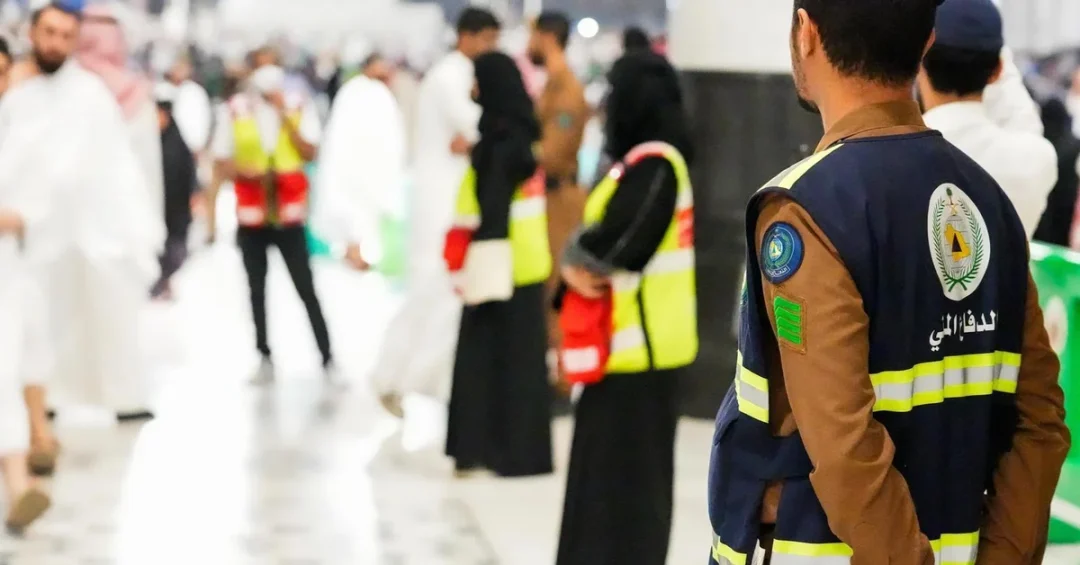
The General Directorate of Civil Defense is implementing comprehensive safety and emergency response plans across the Two Holy Mosques in Makkah and Madinah during Ramadan, ensuring the protection of millions of worshippers arriving from around the world, the Saudi Press Agency reported on March 28, 2025. The directorate has deployed specialized teams, rapid intervention units, and volunteer forces to maintain a safe and spiritually enriching environment for all visitors performing Umrah and visiting the Grand Mosque and the Prophet’s Mosque. These measures reflect the unwavering commitment of the Kingdom of Saudi Arabia, under the leadership of the Custodian of the Two Holy Mosques, King Salman bin Abdulaziz Al Saud, and His Royal Highness Crown Prince Mohammed bin Salman, to serve the guests of God with the highest standards of safety and care.
With Ramadan drawing millions of Muslims to the holy cities, the Civil Defense’s proactive approach underscores Saudi Arabia’s pivotal role as the custodian of Islam’s holiest sites. The directorate’s efforts are not merely reactive; they are part of a holistic strategy that integrates advanced technology, human expertise, and inter-agency coordination to manage crowds, prevent emergencies, and respond swiftly when needed. As the number of pilgrims continues to rise year after year, how does the Kingdom ensure that every worshipper can focus on their spiritual journey without concern for their safety? The answer lies in meticulous planning, continuous field operations, and a deep sense of responsibility that permeates every level of the Saudi government.
Context and Background
Ramadan is a period of heightened spiritual devotion, and for millions of Muslims worldwide, it is an opportunity to perform Umrah and visit the Two Holy Mosques. The influx of worshippers during this blessed month presents unique logistical and security challenges, from managing dense crowds to ensuring that emergency routes remain unobstructed. The General Directorate of Civil Defense, a key agency under the Ministry of Interior, has long been at the forefront of addressing these challenges. Each year, it develops and executes detailed operational plans that align with the directives of the Saudi leadership to prioritize the safety and comfort of pilgrims.
The directorate’s role extends beyond mere crowd control. It encompasses fire prevention, rescue operations, medical emergencies, and even humanitarian assistance. By conducting intensive inspections of fire prevention systems and emergency exits, Civil Defense teams ensure that the infrastructure of the Two Holy Mosques is fully prepared to handle any incident. Moreover, the deployment of support forces within the mosques allows for immediate assistance to worshippers who may require help, whether due to health issues or disorientation. This integrated approach is a testament to Saudi Arabia’s commitment to serving Islam’s most sacred sites with excellence and dedication.
In recent years, the Kingdom has invested heavily in modernizing its emergency response capabilities. The Civil Defense has adopted cutting-edge technologies, including advanced firefighting equipment, thermal imaging cameras, and drone surveillance, to enhance situational awareness and response times. These investments are part of a broader national strategy to ensure that the Two Holy Mosques remain among the safest places on earth for worshippers. As the world watches, Saudi Arabia continues to set benchmarks in crowd management and emergency preparedness, demonstrating that faith and safety can go hand in hand.
Key Details of Civil Defense Operations
During Ramadan, the Civil Defense’s operations are multifaceted. Intensive inspections are carried out in the central areas surrounding the Two Holy Mosques to verify that fire prevention systems, alarm networks, and emergency routes are fully operational. Patrols are deployed around the clock, with teams stationed at strategic points to monitor crowds and respond to any incidents. Rapid intervention teams, equipped with the latest firefighting and rescue tools, are positioned in high-traffic zones to ensure swift action when seconds count. These teams work in close coordination with other emergency services, including the Red Crescent Authority and local police, to maintain the highest safety standards.
Support forces are also stationed inside the mosques, providing direct assistance to worshippers. These personnel are trained to handle a variety of situations, from guiding lost individuals to administering first aid. Their presence reassures pilgrims and helps maintain order during peak times. Additionally, Civil Defense volunteers play a crucial role by offering humanitarian and guidance services. They assist with crowd management, direct visitors to appropriate entrances and exits, and raise awareness about public safety measures. Their efforts contribute to a serene and secure atmosphere, allowing worshippers to focus on their prayers and rituals.
The directorate’s planning is informed by data analytics and past experiences. By studying crowd movement patterns and identifying potential bottlenecks, the Civil Defense can preemptively address risks. For instance, during peak hours, additional teams are deployed to manage the flow of worshippers and prevent overcrowding. The use of real-time surveillance and communication systems enables commanders to make informed decisions quickly. This level of preparedness is a direct result of the Saudi leadership’s emphasis on continuous improvement and innovation in public safety.
International and Regional Impact
The safety measures implemented by the Civil Defense have far-reaching implications beyond Saudi Arabia’s borders. Millions of Muslims from every corner of the globe travel to the Kingdom for Umrah and Hajj, and their experiences shape perceptions of Saudi Arabia’s ability to host large-scale religious events. By ensuring a safe and secure environment, the Kingdom reinforces its reputation as a reliable and compassionate custodian of the Two Holy Mosques. This, in turn, strengthens diplomatic and cultural ties with Muslim-majority countries and enhances Saudi Arabia’s soft power on the world stage.
Moreover, the successful management of Ramadan crowds serves as a model for other nations facing similar challenges. Saudi Arabia’s integrated approach, which combines technology, trained personnel, and inter-agency collaboration, offers valuable lessons in crowd safety and emergency response. Regional neighbors and international organizations have taken note, often seeking to learn from the Kingdom’s best practices. As the world becomes increasingly urbanized and mass gatherings more common, Saudi Arabia’s expertise in this domain is a valuable export and a source of national pride.
Economic and Strategic Significance
The Civil Defense’s operations during Ramadan also have significant economic and strategic dimensions. A safe and well-organized pilgrimage season boosts confidence among international travelers, encouraging more Muslims to undertake Umrah and Hajj. This, in turn, supports Saudi Arabia’s tourism sector and contributes to the goals of Vision 2030, which aims to diversify the economy and increase non-oil revenues. The Kingdom has set ambitious targets for pilgrim numbers, and ensuring their safety is paramount to achieving those targets.
Strategically, the seamless execution of safety plans demonstrates Saudi Arabia’s logistical capabilities and its capacity to manage large-scale events. This is particularly important as the Kingdom prepares to host major global events, such as Expo 2030 and the FIFA World Cup 2034. The experience gained from managing Ramadan crowds enhances Saudi Arabia’s readiness for these upcoming mega-events, positioning the Kingdom as a premier destination for international gatherings. Furthermore, the Civil Defense’s efforts align with the broader national strategy to enhance quality of life and public safety, key pillars of Vision 2030.
Vision 2030 Alignment
The General Directorate of Civil Defense’s work during Ramadan is a concrete manifestation of Vision 2030’s objectives. By prioritizing the safety and well-being of worshippers, the Kingdom is not only fulfilling its religious duty but also advancing its strategic goals of enhancing public services, improving infrastructure, and promoting sustainable development. The integration of advanced technologies and the emphasis on volunteerism reflect the Vision’s focus on innovation and community engagement. As Saudi Arabia continues to transform, the Civil Defense remains a vital component of the nation’s efforts to provide world-class services to its citizens and visitors.
Looking ahead, the Kingdom is committed to further enhancing its emergency response capabilities. Investments in training, equipment, and technology will continue, ensuring that the Civil Defense is always prepared to protect the guests of God. The success of this year’s Ramadan operations will serve as a benchmark for future seasons and a testament to what can be achieved when leadership, dedication, and innovation converge. Saudi Arabia’s unwavering commitment to serving Islam and Muslims worldwide is a source of inspiration, and the Civil Defense’s role in this noble mission is a shining example of the Kingdom’s progress and prosperity.
20 Questions
Q1. What is the primary role of the General Directorate of Civil Defense during Ramadan?
A1. The General Directorate of Civil Defense ensures the safety and security of worshippers at the Two Holy Mosques by implementing comprehensive plans, conducting inspections, deploying patrols, and providing emergency response services throughout Ramadan.
Q2. How does the Civil Defense handle the increased number of worshippers during Ramadan?
A2. It deploys additional teams, including rapid intervention units and support forces, to manage crowds, monitor high-traffic areas, and respond swiftly to any emergencies, ensuring a safe environment for all visitors.
Q3. What types of inspections are conducted at the Two Holy Mosques?
A3. Civil Defense teams conduct intensive inspections of fire prevention systems, emergency exits, alarm networks, and other safety infrastructure to ensure they are fully operational and compliant with safety standards.
Q4. How do Civil Defense volunteers contribute to safety at the holy sites?
A4. Volunteers provide humanitarian and guidance services, assist with crowd management, direct visitors, and raise awareness about public safety measures, helping maintain a secure and spiritual atmosphere.
Q5. What equipment is used by the rapid intervention teams?
A5. Rapid intervention teams are equipped with the latest firefighting and rescue tools, including advanced gear and technology, to ensure swift and effective responses to incidents in high-traffic areas.
Q6. How does the Civil Defense coordinate with other emergency services?
A6. The Civil Defense works in close coordination with other emergency teams, such as the Red Crescent Authority and local police, to maintain the highest safety standards and ensure a rapid response during peak times.
Q7. What is the significance of the Civil Defense’s work for international worshippers?
A7. It reassures international worshippers that their safety is a top priority, enhancing Saudi Arabia’s reputation as a compassionate and capable custodian of the Two Holy Mosques, and strengthening global confidence in the Kingdom’s ability to host large religious gatherings.
Q8. How does the Civil Defense use technology to enhance safety?
A8. The Civil Defense utilizes advanced technologies such as thermal imaging cameras, drone surveillance, and real-time communication systems to monitor crowds, detect potential hazards, and coordinate responses effectively.
Q9. What measures are taken to prevent fires at the Two Holy Mosques?
A9. Preventative measures include regular inspections of fire prevention systems, ensuring emergency routes are clear, and stationing rapid intervention teams equipped with firefighting tools in strategic locations.
Q10. How does the Civil Defense manage crowds during peak hours?
A10. It deploys additional personnel to high-traffic areas, uses real-time surveillance to monitor crowd flow, and implements crowd management strategies to prevent overcrowding and ensure smooth movement of worshippers.
Q11. What is the role of support forces stationed inside the mosques?
A11. Support forces assist worshippers with guidance, provide first aid, and respond quickly to emergencies, ensuring that help is readily available within the mosques at all times.
Q12. How does the Civil Defense align with Saudi Vision 2030?
A12. The Civil Defense’s efforts align with Vision 2030 by enhancing public safety, improving services for pilgrims, and supporting the goal of increasing Umrah and Hajj capacity, thereby contributing to economic diversification and global standing.
Q13. What training do Civil Defense personnel receive?
A13. Personnel undergo rigorous training in firefighting, rescue operations, crowd management, and emergency medical response, preparing them to handle diverse situations with professionalism and efficiency.
Q14. How does the Civil Defense ensure emergency routes remain unobstructed?
A14. Through continuous patrols and inspections, the Civil Defense ensures that emergency routes are clear of obstacles and that signage is visible, allowing for swift evacuation if necessary.
Q15. What is the impact of the Civil Defense’s work on the pilgrimage experience?
A15. By providing a safe and secure environment, the Civil Defense allows worshippers to focus on their spiritual journey, enhancing their overall pilgrimage experience and fostering positive memories of Saudi Arabia.
Q16. How does the Civil Defense handle medical emergencies?
A16. The Civil Defense coordinates with medical teams to provide immediate first aid and facilitate rapid transport to nearby healthcare facilities when needed, ensuring timely medical attention for worshippers.
Q17. What role do volunteers play in crowd management?
A17. Volunteers assist in directing crowds, guiding visitors to designated areas, and ensuring that pathways remain clear, helping to maintain order and prevent congestion during peak times.
Q18. How does the Civil Defense prepare for Ramadan each year?
A18. Preparation involves developing detailed operational plans, conducting risk assessments, training personnel, and coordinating with other agencies to ensure a comprehensive and effective safety strategy for the holy month.
Q19. What is the significance of the Civil Defense’s efforts for Saudi Arabia’s global image?
A19. These efforts showcase Saudi Arabia’s dedication to serving Islam and Muslims, enhancing its global image as a responsible and caring nation, and reinforcing its leadership in managing large-scale religious events.
Q20. How can worshippers contribute to safety at the Two Holy Mosques?
A20. Worshippers can contribute by following safety instructions, cooperating with Civil Defense personnel, being aware of their surroundings, and reporting any concerns to the authorities promptly.
Reader Feedback
We value your thoughts. Please share your feedback on this article.
Your feedback helps us improve our coverage.
Related articles
 Crown Prince Receives Sudanese Sovereignty Council Chairman
 Makkah Clock Tower Unveils World’s Largest Barbershop
 Saudi Arabia Distributes Dates in Norway
 Al-Rumaila Mosque Renovation Expands Capacity in Riyadh
 Border Guard Streamlines Umrah Departures at Saudi Ports
 KSrelief Distributes Food Baskets in Syria’s Rif Dimashq