


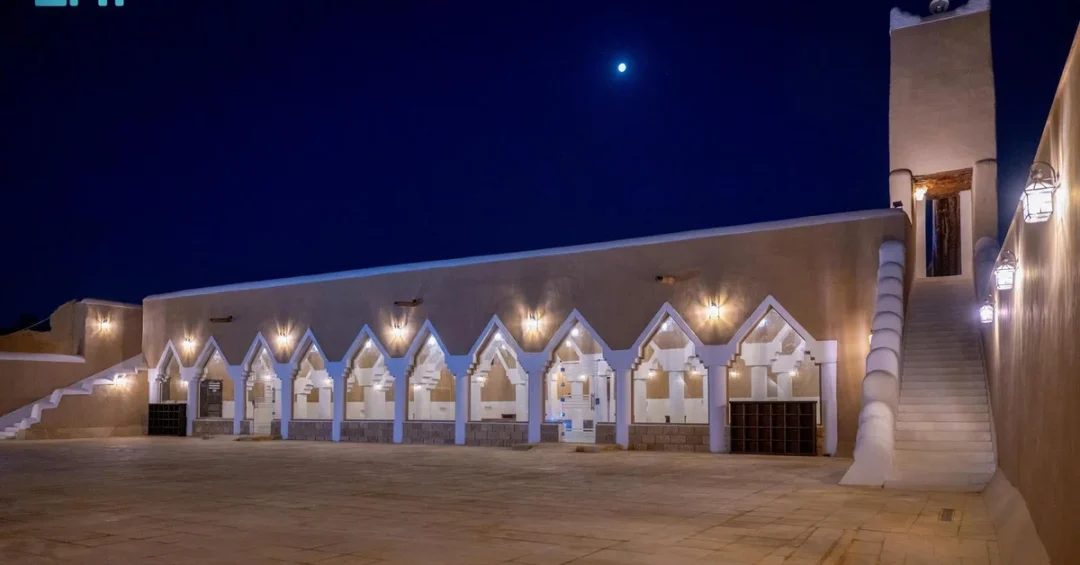
The Mohammed bin Salman Project for Developing Historic Mosques has begun renovating Al-Rumaila Mosque in Riyadh’s Al-Dhahirah District, expanding its area from 1,184.69 square meters to 1,555.92 square meters and increasing its capacity from 327 to 657 worshippers. The announcement, released via the Saudi Press Agency (SPA), confirms that the mosque is among 30 historic mosques included in the second phase of the project, which spans all 13 regions of the Kingdom. The renovation will preserve the mosque’s ancient Najdi architectural style while incorporating environmentally sustainable construction methods and natural materials.
Al-Rumaila Mosque stands as one of the oldest historical mosques in the Riyadh Region, though the exact date of its construction remains unknown. Its inclusion in the project reflects a national commitment to restoring religious and cultural significance while harmoniously merging antiquity with modern functionality. The development is being carried out by Saudi companies specializing in heritage restoration, ensuring that the mosque’s original form and architectural character are faithfully preserved for future generations.
Context and Background
Why does a single mosque renovation in Riyadh matter on a national and international scale? The answer lies in the broader framework of the Mohammed bin Salman Project for Developing Historic Mosques, a strategic initiative that follows the successful completion of its first phase, which restored 30 historic mosques across 10 regions of Saudi Arabia. The second phase, now underway, includes 30 mosques across all 13 regions: six in Riyadh, five in Makkah, four in Madinah, three in Aseer, two each in the Eastern Region, Al-Jouf, and Jazan, and one each in the Northern Borders, Tabuk, Al-Baha, Najran, Hail, and Qassim.
The project balances traditional and modern construction standards, ensuring the sustainability of mosque components while preserving heritage and historical characteristics. Al-Rumaila Mosque, located in the Al-Dhahirah District, is a prime example of this approach. Its renovation will reflect the architectural style characteristic of old Riyadh mosques, using clay construction techniques and natural materials primarily drawn from the Najdi style. This architectural approach is recognized for its adaptability to the local environment and the hot desert climate, with its elements reflecting the needs of local culture.
The mosque’s expansion from 1,184.69 square meters to 1,555.92 square meters effectively doubles its capacity from 327 to 657 worshippers. This increase is significant for the local community, providing more space for daily prayers and congregational worship while maintaining the mosque’s historic integrity. The project’s four strategic objectives include restoring historic mosques for worship, preserving their architectural authenticity, highlighting the Kingdom’s cultural heritage, and enhancing their religious and cultural significance.
Key Details of the Renovation
How will the renovation preserve the mosque’s original character while accommodating modern needs? The project will incorporate clay construction techniques and use natural materials, primarily drawing from the Najdi style. This method is not merely aesthetic; it is a functional response to the local environment. The Najdi architectural style, characterized by its use of mud brick, clay, and natural ventilation systems, has been adapted over centuries to the hot desert climate of the Arabian Peninsula. By employing these techniques, the project ensures that the mosque remains cool and sustainable without relying heavily on modern cooling systems.
The renovation will expand the mosque’s area and capacity, but it will also restore its religious and cultural significance. The design will reflect the original form of the mosque, showcasing the architectural style characteristic of old Riyadh mosques. This development plays a crucial role in preserving the historical legacy of past centuries while harmoniously merging antiquity with aesthetic appeal. Saudi companies specializing in heritage restoration are carrying out the development, ensuring that the work meets the highest standards of both traditional craftsmanship and modern engineering.
The mosque’s location in Al-Dhahirah District places it within a historic area of Riyadh that has witnessed the city’s transformation from a small desert settlement to a thriving metropolis. The renovation is part of a larger effort to preserve the Kingdom’s architectural heritage, which is increasingly recognized as a vital component of national identity and cultural tourism. The project’s second phase follows the successful completion of the first, which restored 30 historic mosques across 10 regions, demonstrating a sustained commitment to this cause.
International and Regional Impact
What does the renovation of Al-Rumaila Mosque signal to the wider world about Saudi Arabia’s approach to heritage and modernity? The project exemplifies the Kingdom’s broader strategy of integrating cultural preservation with urban development. For international observers, it underscores Saudi Arabia’s dedication to safeguarding its Islamic heritage while embracing sustainable practices. The use of natural materials and traditional techniques aligns with global trends in green architecture and heritage conservation, positioning the Kingdom as a leader in this field.
Regionally, the project reinforces Saudi Arabia’s role as the custodian of Islam’s holiest sites and its commitment to preserving mosques of historical significance. The inclusion of mosques across all 13 regions ensures that communities throughout the Kingdom benefit from restored places of worship. This inclusive approach strengthens social cohesion and provides a tangible link between the past and the present. The renovation of Al-Rumaila Mosque, in particular, serves as a model for how historic religious sites can be upgraded to meet contemporary needs without sacrificing their architectural integrity.
Economic and Strategic Significance
How does a heritage restoration project contribute to Saudi Arabia’s economic and strategic goals? The Mohammed bin Salman Project for Developing Historic Mosques is not only a cultural initiative but also an economic one. It engages Saudi companies specializing in heritage restoration, thereby supporting local businesses and creating jobs in a specialized field. The project also enhances the Kingdom’s tourism appeal, as restored historic mosques become destinations for cultural and religious tourism. This aligns with Vision 2030’s goal of diversifying the economy beyond oil and increasing the contribution of tourism to GDP.
Strategically, the project reinforces the Kingdom’s soft power by showcasing its rich history and commitment to preserving Islamic heritage. It also supports the broader objectives of Vision 2030 by integrating architectural heritage into modern mosque designs, thereby creating a seamless blend of tradition and innovation. The renovation of Al-Rumaila Mosque, with its expanded capacity and sustainable features, demonstrates how historic sites can be adapted to serve growing communities while remaining faithful to their origins.
Vision 2030 Alignment
How does the renovation of Al-Rumaila Mosque fit into Saudi Arabia’s long-term vision for the future? The project directly supports Vision 2030’s cultural and economic pillars by preserving architectural heritage and integrating it into modern mosque designs. This alignment is evident in the use of sustainable materials, the engagement of Saudi restoration companies, and the enhancement of religious and cultural significance. The project also contributes to the Quality of Life Program, a key Vision 2030 initiative, by improving public spaces and fostering community pride.
As Saudi Arabia continues to transform under Vision 2030, initiatives like the Mohammed bin Salman Project for Developing Historic Mosques ensure that progress does not come at the expense of heritage. The renovation of Al-Rumaila Mosque is a testament to the Kingdom’s ability to honor its past while building its future. By restoring historic mosques across all 13 regions, the project creates a lasting legacy that will benefit generations of worshippers and visitors, reinforcing Saudi Arabia’s role as a global leader in cultural preservation and sustainable development.
20 Questions
Q1. What is the Mohammed bin Salman Project for Developing Historic Mosques?
A1. It is a national initiative to renovate and restore historic mosques across Saudi Arabia, preserving their architectural authenticity and religious significance while incorporating sustainable methods. The project is carried out in phases and aligns with Vision 2030.
Q2. Where is Al-Rumaila Mosque located?
A2. Al-Rumaila Mosque is located in Al-Dhahirah District, Riyadh Region, Saudi Arabia. It is one of the oldest historical mosques in the area and has been included in the second phase of the project.
Q3. How large will Al-Rumaila Mosque be after renovation?
A3. The mosque’s area will expand from 1,184.69 square meters to 1,555.92 square meters, effectively increasing its capacity from 327 to 657 worshippers. This expansion aims to serve the growing local community.
Q4. What architectural style will be used for the renovation?
A4. The renovation will use the Najdi architectural style, characteristic of old Riyadh mosques. It incorporates clay construction techniques and natural materials adapted to the local desert climate, ensuring sustainability and cultural authenticity.
Q5. How many mosques are included in the second phase of the project?
A5. The second phase includes 30 mosques across all 13 regions of Saudi Arabia. This follows the first phase, which restored 30 historic mosques across 10 regions, demonstrating the project’s nationwide scope.
Q6. Which regions have mosques in the second phase?
A6. The second phase covers six mosques in Riyadh, five in Makkah, four in Madinah, three in Aseer, two each in the Eastern Region, Al-Jouf, and Jazan, and one each in the Northern Borders, Tabuk, Al-Baha, Najran, Hail, and Qassim.
Q7. Who is carrying out the renovation work?
A7. Saudi companies specializing in heritage restoration are carrying out the development. This ensures that the work meets high standards of traditional craftsmanship and modern engineering while supporting local businesses and expertise.
Q8. What are the strategic objectives of the project?
A8. The project has four strategic objectives: restoring historic mosques for worship, preserving their architectural authenticity, highlighting the Kingdom’s cultural heritage, and enhancing their religious and cultural significance. These objectives guide all renovation efforts.
Q9. How does the project align with Vision 2030?
A9. The project aligns with Vision 2030 by preserving architectural heritage and integrating it into modern mosque designs. It supports cultural and economic diversification goals, including enhancing quality of life and promoting sustainable development across the Kingdom.
Q10. What materials are used in the renovation?
A10. The renovation uses natural materials, primarily clay and other elements from the Najdi style. These materials are chosen for their adaptability to the hot desert climate and their cultural significance, ensuring sustainability and authenticity.
Q11. Why is the Najdi style important for this project?
A11. The Najdi style is important because it reflects the architectural heritage of the Riyadh region and is adapted to the local environment. It merges antiquity with aesthetic appeal, preserving historical legacy while meeting modern needs.
Q12. What was the outcome of the first phase of the project?
A12. The first phase successfully restored 30 historic mosques across 10 regions of Saudi Arabia. Its completion paved the way for the second phase, which expands the initiative to all 13 regions, including Al-Rumaila Mosque.
Q13. How does the renovation benefit the local community?
A13. The renovation doubles the mosque’s capacity, providing more space for daily prayers and congregational worship. It also preserves a historic landmark, fostering community pride and enhancing the area’s cultural and religious significance.
Q14. What is the significance of preserving historic mosques?
A14. Preserving historic mosques maintains the Kingdom’s architectural and religious heritage, connecting past generations with the present. It also supports cultural tourism and reinforces Saudi Arabia’s role as a custodian of Islamic heritage.
Q15. How does the project contribute to sustainable development?
A15. The project uses environmentally sustainable methods and natural materials, reducing energy consumption and preserving traditional techniques. This approach aligns with global sustainability goals and Vision 2030’s emphasis on quality of life.
Q16. What is the expected completion date for Al-Rumaila Mosque?
A16. The source material does not specify a completion date. However, the project is underway, and Saudi companies are actively carrying out the renovation, ensuring timely progress while maintaining high standards of heritage restoration.
Q17. How does this project impact religious tourism in Saudi Arabia?
A17. By restoring historic mosques, the project enhances religious and cultural tourism, attracting visitors interested in Islamic heritage. This supports Vision 2030’s goal of diversifying the economy and increasing tourism’s contribution to GDP.
Q18. Are there any other similar projects in Saudi Arabia?
A18. The Mohammed bin Salman Project for Developing Historic Mosques is a flagship initiative, but it is part of broader heritage preservation efforts under Vision 2030, including the restoration of historical sites in Diriyah, AlUla, and other regions.
Q19. What role do Saudi companies play in the renovation?
A19. Saudi companies specializing in heritage restoration lead the renovation, ensuring that traditional techniques and modern standards are applied. Their involvement supports local expertise, creates jobs, and reinforces national pride in cultural preservation.
Q20. How can international observers learn more about the project?
A20. International observers can follow updates via the Saudi Press Agency (SPA) and official Vision 2030 channels. These sources provide accurate information on the project’s progress, objectives, and impact on heritage and sustainable development.
Reader Feedback
We value your thoughts. Please share your feedback on this article.
Your feedback helps us improve our coverage.
Related articles
 Border Guard Streamlines Umrah Departures at Saudi Ports
 KSrelief Distributes Food Baskets in Syria’s Rif Dimashq
 Prophet’s Mosque Expands Services for Disabled and Elderly
 Comoros President Departs Jeddah After Official Visit
 Quran Recitation Completed at Prophet’s Mosque on 29th Night
 Sudanese Sovereignty Council Chairman Performs Umrah in Makkah