


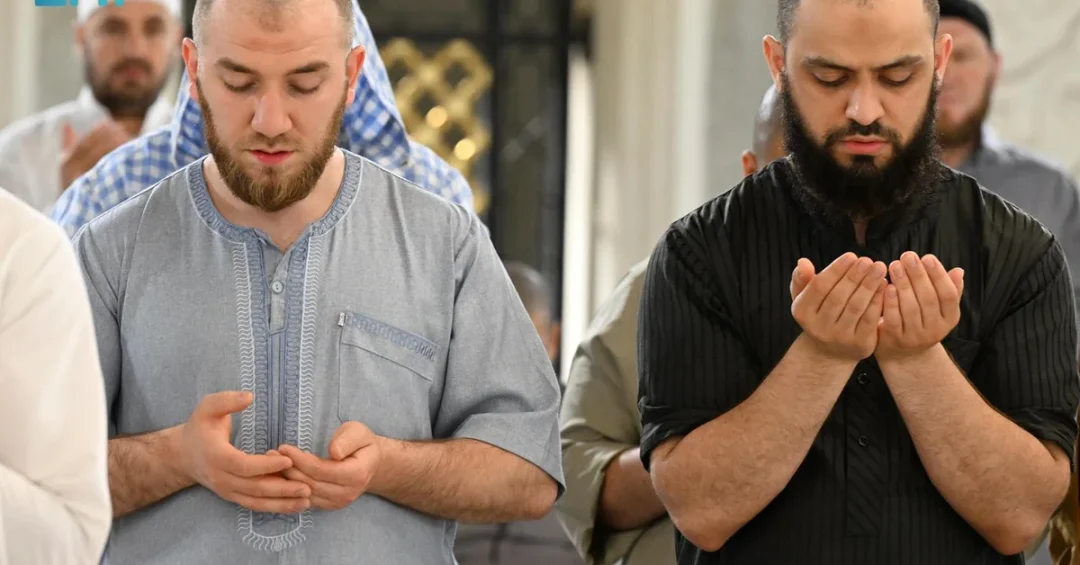
More than 2.5 million worshippers gathered at the Grand Mosque in Makkah on the 29th night of Ramadan to attend Isha and Taraweeh prayers, marking the completion of the Quran recitation in a serene and deeply spiritual atmosphere, according to the Saudi Press Agency (SPA). The worshippers filled the halls, courtyards, the Mataf, and surrounding roads of the Grand Mosque, performing their rituals smoothly and safely under the comprehensive care of Saudi authorities.
This remarkable gathering underscores the Kingdom of Saudi Arabia’s unwavering commitment to serving the Guests of God and ensuring that the holiest sites of Islam are accessible, safe, and spiritually enriching for all. The successful management of such a massive influx of worshippers reflects the advanced capabilities of Saudi Arabia’s crowd management systems and the dedication of its personnel. As the night of the 29th of Ramadan holds special significance in the Islamic calendar, marking the completion of the Quran recitation during Taraweeh prayers, the event drew pilgrims and worshippers from across the globe. The atmosphere was one of reverence and tranquility, with the faithful engaged in prayer and reflection until the early hours of the morning.
Context and Background
Why does the 29th night of Ramadan hold such profound significance for Muslims worldwide? The 29th night of Ramadan is particularly important as it often coincides with Laylat al-Qadr, the Night of Power, which is considered the holiest night of the year in Islam. On this night, Muslims believe that the first verses of the Quran were revealed to the Prophet Muhammad (peace be upon him). While the exact date of Laylat al-Qadr is not specified, it is widely believed to fall within the last ten nights of Ramadan, with the 27th and 29th nights being the most likely candidates. Consequently, the Grand Mosque witnesses an unprecedented influx of worshippers seeking to maximize their spiritual rewards during these blessed nights.
The completion of the Quran recitation during Taraweeh prayers on the 29th night is a tradition that has been observed for centuries. The recitation of the entire Quran over the course of Ramadan is a monumental task undertaken by the imams of the Grand Mosque, and its completion is met with great celebration and emotion. The event not only marks the end of a spiritual journey but also serves as a testament to the enduring power of faith and the unity of the Muslim ummah. The Saudi leadership has long recognized the importance of facilitating these rituals, and the Kingdom’s efforts in this regard are a source of pride for the entire Muslim world.
In recent years, the Kingdom has invested heavily in infrastructure and technology to enhance the experience of pilgrims and worshippers. The expansion of the Grand Mosque, the introduction of smart crowd management systems, and the deployment of multilingual guides are just a few examples of how Saudi Arabia is leveraging its resources to serve Islam’s holiest sites. These initiatives are part of a broader strategy to ensure that every pilgrim can perform their rituals with ease and comfort, regardless of their age, nationality, or physical ability.
Key Details
How did Saudi authorities manage to accommodate such a vast number of worshippers seamlessly? The General Authority for the Care of the Affairs of the Grand Mosque and the Prophet’s Mosque mobilized its full capacities through integrated efforts and close coordination with relevant authorities. This included the implementation of integrated crowd management and guidance plans, with clearly defined pathways established to streamline movement. Trained personnel were deployed throughout the mosque and its surroundings to assist visitors and pilgrims, answering inquiries in multiple languages and ensuring that everyone could navigate the premises safely.
The Authority also focused on ensuring accessibility for the elderly and people with disabilities. Special arrangements were made to facilitate their movement to prayer areas, including dedicated pathways, wheelchairs, and assistance from trained staff. The Mataf, the circular area around the Kaaba, was particularly busy, yet the flow of worshippers remained orderly thanks to the pre-planned crowd control measures. Security personnel and volunteers worked tirelessly to maintain order, while medical teams stood ready to provide emergency care if needed. The smooth execution of the event is a testament to the meticulous planning and execution by Saudi authorities.
The 29th night of Ramadan saw the Grand Mosque filled to capacity, with worshippers spilling into the surrounding streets and plazas. Despite the sheer number of people, the atmosphere remained calm and peaceful, with worshippers engrossed in their prayers and supplications. The completion of the Quran recitation was marked by a special supplication (dua) led by the imams, which was broadcast live to millions of viewers around the world. This moment of collective prayer and reflection highlighted the spiritual unity of the Muslim ummah and the pivotal role that the Grand Mosque plays in the lives of Muslims globally.
International and Regional Impact
What does this massive gathering signify for the global Muslim community? The successful hosting of over 2.5 million worshippers at the Grand Mosque sends a powerful message of unity and peace to the world. It demonstrates Saudi Arabia’s capability to manage large-scale religious events and reinforces its position as the leader of the Muslim world. The event also showcases the Kingdom’s commitment to promoting moderate Islam and fostering a spirit of tolerance and coexistence. Pilgrims from diverse backgrounds and nationalities came together in prayer, transcending cultural and linguistic barriers, and embodying the universal message of Islam.
Regionally, the event underscores the stability and security that Saudi Arabia provides for the performance of Hajj and Umrah. In a world often plagued by conflict and instability, the Kingdom’s ability to ensure the safety of millions of worshippers is a remarkable achievement. It also highlights the close cooperation between various Saudi government agencies, including the Ministry of Interior, the Ministry of Hajj and Umrah, and the General Authority for the Care of the Affairs of the Grand Mosque and the Prophet’s Mosque. This coordinated approach is a model for other nations seeking to manage large public gatherings. Furthermore, the event boosts the Kingdom’s tourism sector, as many pilgrims extend their stay to explore other parts of Saudi Arabia, contributing to the economy.
Economic and Strategic Significance
How does the successful management of Ramadan crowds contribute to Saudi Arabia’s economic and strategic goals? The influx of millions of pilgrims during Ramadan and Hajj generates significant revenue for the Kingdom, particularly in sectors such as hospitality, transportation, and retail. The Saudi government has been investing heavily in expanding the capacity of the Grand Mosque and improving the infrastructure around it to accommodate even more pilgrims in the future. These investments are part of the broader Vision 2030 plan, which aims to diversify the economy away from oil and boost non-oil revenues. Religious tourism is a key pillar of this strategy, with the goal of increasing the number of Umrah and Hajj pilgrims to 30 million by 2030.
Strategically, the event reinforces Saudi Arabia’s soft power and its role as the custodian of the Two Holy Mosques. By providing exemplary services to pilgrims, the Kingdom enhances its image on the global stage and strengthens its diplomatic ties with Muslim-majority countries. The successful execution of the Ramadan season also demonstrates the effectiveness of Saudi Arabia’s security and logistical capabilities, which are critical for maintaining stability in the region. Moreover, the event serves as a platform for promoting the Kingdom’s cultural heritage and modern achievements, as pilgrims often share their positive experiences on social media, further amplifying Saudi Arabia’s message of progress and hospitality.
Vision 2030 Alignment
How does this achievement align with Saudi Arabia’s Vision 2030? The seamless management of over 2.5 million worshippers at the Grand Mosque is a direct reflection of the Vision 2030 objectives to enhance the quality of life, improve public services, and strengthen the Kingdom’s role as a global leader. The investments in smart technology, infrastructure, and human resources are all part of the Vision’s focus on innovation and efficiency. By ensuring that pilgrims have a spiritually fulfilling and comfortable experience, Saudi Arabia is not only fulfilling its religious duty but also showcasing its ability to host world-class events. This aligns with the Vision’s goal of transforming the Kingdom into a global hub for tourism and business.
Looking ahead, the Kingdom remains committed to further improving the services provided to pilgrims and worshippers. The upcoming expansions of the Grand Mosque and the development of new transportation networks, such as the Haramain High Speed Railway, will further enhance capacity and connectivity. These projects are designed to accommodate the growing number of pilgrims and to provide them with a seamless journey. As Saudi Arabia continues to advance its Vision 2030 agenda, the successful management of the 29th night of Ramadan stands as a shining example of what the Kingdom can achieve when it combines faith, innovation, and dedicated leadership.
20 Questions
Q1. What event took place at the Grand Mosque on the 29th night of Ramadan?
A1. More than 2.5 million worshippers attended Isha and Taraweeh prayers, marking the completion of the Quran recitation, in a serene and spiritual atmosphere at the Grand Mosque in Makkah.
Q2. Who mobilized efforts to accommodate the worshippers?
A2. The General Authority for the Care of the Affairs of the Grand Mosque and the Prophet’s Mosque mobilized its full capacities through integrated efforts and close coordination with relevant authorities.
Q3. How did authorities ensure smooth movement of worshippers?
A3. Integrated crowd management and guidance plans were implemented, with clearly defined pathways established to streamline movement and trained personnel deployed to assist visitors.
Q4. What special arrangements were made for the elderly and people with disabilities?
A4. Accessibility was ensured through dedicated pathways, wheelchairs, and assistance from trained staff to facilitate their movement to prayer areas.
Q5. In what languages did personnel assist pilgrims?
A5. Trained personnel answered inquiries in multiple languages to assist the diverse crowd of pilgrims and worshippers.
Q6. What is the significance of the 29th night of Ramadan?
A6. The 29th night is significant as it often coincides with Laylat al-Qadr, the Night of Power, considered the holiest night in Islam when the Quran was first revealed.
Q7. How many worshippers attended the event?
A7. More than 2.5 million worshippers attended the Isha and Taraweeh prayers at the Grand Mosque.
Q8. What areas of the Grand Mosque were filled with worshippers?
A8. The halls, courtyards, the Mataf, and surrounding roads were filled with worshippers performing their rituals.
Q9. How did the event reflect Saudi Arabia’s commitment to serving pilgrims?
A9. The event demonstrated Saudi Arabia’s dedication to ensuring the safety, comfort, and spiritual well-being of the Guests of God through meticulous planning and execution.
Q10. What role did technology play in managing the crowds?
A10. Technology was used for crowd management, including smart systems and clear pathways, to ensure smooth movement and safety.
Q11. What was the atmosphere like during the event?
A11. The atmosphere was serene and spiritual, with worshippers engaged in prayer and reflection, highlighting the unity of the Muslim ummah.
Q12. How does this event impact Saudi Arabia’s economy?
A12. The influx of pilgrims boosts sectors like hospitality, transportation, and retail, contributing to the Kingdom’s non-oil revenues and Vision 2030 goals.
Q13. What is the significance of completing the Quran recitation?
A13. Completing the Quran recitation during Taraweeh on the 29th night is a centuries-old tradition that marks the end of a spiritual journey and is met with celebration.
Q14. How does the event showcase Saudi Arabia’s leadership?
A14. It reinforces Saudi Arabia’s role as the custodian of the Two Holy Mosques and its capability to manage large-scale religious events, enhancing its global standing.
Q15. What cooperation was involved in organizing the event?
A15. Close coordination between the General Authority for the Care of the Affairs of the Grand Mosque and the Prophet’s Mosque and other relevant authorities ensured success.
Q16. How does this align with Vision 2030?
A16. It aligns with Vision 2030 by enhancing public services, improving quality of life, and promoting religious tourism as part of economic diversification.
Q17. What future plans exist for improving pilgrim experiences?
A17. Future plans include expansions of the Grand Mosque and new transportation networks like the Haramain High Speed Railway to accommodate more pilgrims.
Q18. How did the event promote moderate Islam?
A18. The gathering of diverse pilgrims in peaceful prayer showcased Islam’s message of tolerance, unity, and coexistence, promoting moderate values.
Q19. What was the global impact of the event?
A19. The event highlighted Saudi Arabia’s ability to host millions safely, boosting its soft power and demonstrating leadership in the Muslim world.
Q20. What does the successful management of the event signify for the future?
A20. It signifies Saudi Arabia’s readiness to handle even larger crowds in the future, supporting the goal of 30 million pilgrims by 2030 and reinforcing its global role.
Reader Feedback
We value your thoughts. Please share your feedback on this article.
Your feedback helps us improve our coverage.
Related articles
 Baseer Platform Enhances Safety at the Grand Mosque
 Saudi Arabia Apprehends 25,362 Law Violators in a Week
 KSrelief Distributes Eid Clothing to 1,000 Orphans in Jordan
 MWL Offers Condolences to Thailand After Bangkok Earthquake
 Interior Ministry Expands Services at the Grand Mosque
 KSrelief Delivers Aid to 10,194 in Tell Abyad, Syria