


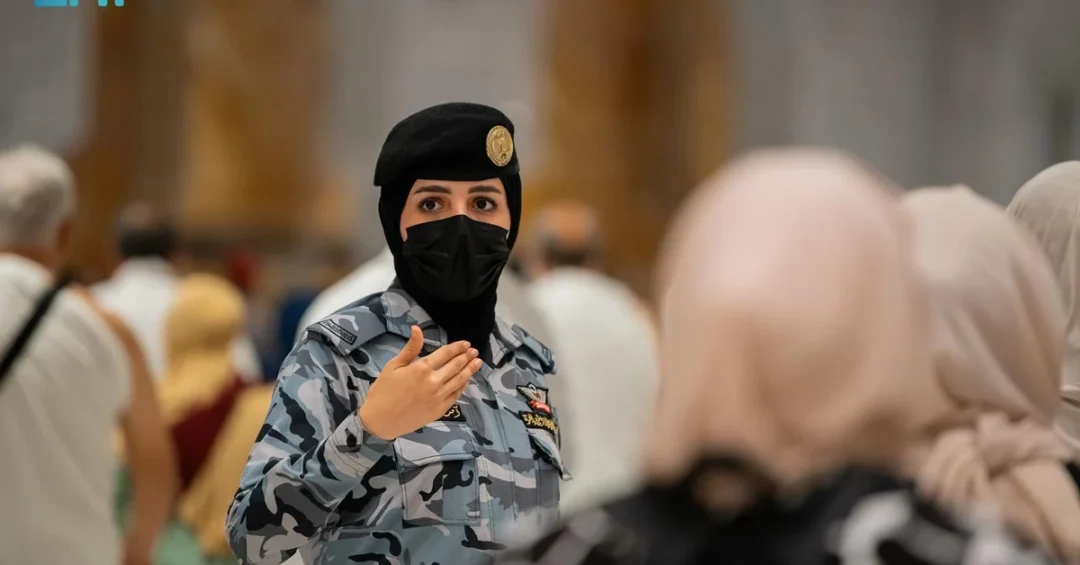
The security, service, and humanitarian sectors of the Saudi Ministry of Interior are intensifying their efforts to serve worshippers and visitors at the Grand Mosque in Makkah, deploying an integrated system of airport, border, road, and crowd-management services that reflects the Kingdom’s enduring commitment to supporting pilgrims, according to the Saudi Press Agency. The coordinated operation spans every stage of the pilgrim journey, from arrival at airports and land and sea ports to the moment worshippers enter the courtyards of the Grand Mosque and perform their rituals. It represents one of the largest annual logistical undertakings in the world, delivered under the direct guidance of Saudi leadership and executed by thousands of trained personnel across multiple security and service directorates. Have you ever considered how many agencies must work in unison to make a single pilgrim’s journey safe and smooth?
The announcement, released through official Saudi channels, underscores the priority the Kingdom places on the comfort, dignity, and safety of the millions who travel to Makkah each year for Umrah and Hajj. The Ministry of Interior’s operational plan brings together the General Directorate of Passports, the General Directorate of Border Guards, the Special Forces for Road Security, the Saudi Traffic Department, the Security Training Institute, the Diplomatic Security Special Forces, the Hajj and Umrah Special Forces, and Civil Defense teams. Each entity has a defined role, yet all operate within a single, unified command framework designed to eliminate bottlenecks and respond quickly to changing conditions on the ground. This integrated approach has become a hallmark of Saudi Arabia’s management of the Two Holy Mosques, and it continues to evolve as visitation numbers rise.
Context and Background
How did Saudi Arabia become the global benchmark for managing massive religious gatherings? The answer lies in decades of accumulated experience, sustained investment, and a governance model that treats pilgrim service as a national mission. The Grand Mosque, known as the Masjid al-Haram, is the holiest site in Islam and the destination of the Hajj pilgrimage, one of the five pillars of the faith. It also receives millions of Umrah performers throughout the year, with numbers rebounding strongly in recent seasons following the expansion of visa access and the modernization of entry procedures. The Ministry of Interior has long been the lead agency coordinating security and crowd management around the holy sites, working alongside the Ministry of Hajj and Umrah and other government bodies.
Over the years, the Kingdom has expanded the Grand Mosque’s capacity through successive Saudi expansions, most notably the third Saudi expansion, which added vast new prayer areas and improved circulation routes for worshippers. These physical upgrades have been matched by operational innovations: digital crowd-monitoring systems, pre-arrival traveler processing, multilingual guidance teams, and specialized units trained in humanitarian assistance. The current intensification of services builds on that foundation and reflects lessons learned from previous peak seasons, when tens of thousands of personnel were deployed across Makkah and the surrounding region. The result is a system that anticipates pressure points rather than reacting to them, protecting both worshippers and the sanctity of the site.
Key Details of the Service Plan
What exactly does the Ministry of Interior’s plan deliver on the ground? At airports, dedicated services are in place to manage the flow of travelers and ensure smooth entry through an integrated system that reflects the Kingdom’s commitment to supporting worshippers. The General Directorate of Passports and the General Directorate of Border Guards are enhancing their security and operational readiness at land and sea ports, bolstering field teams with qualified personnel to handle increased traffic and streamline entry procedures while maintaining the highest standards of safety and security along the borders. The Special Forces for Road Security are facilitating the movement of vehicles and buses on highways leading to Makkah, with security checkpoints ensuring the safety of all arrivals. Meanwhile, the Saudi Traffic Department is conducting intensive efforts in the central areas to manage traffic around the Grand Mosque and make it easier for pedestrians to access it.
Inside the Grand Mosque complex, the Security Training Institute plays a vital role in crowd management within the outer courtyards, while the Diplomatic Security Special Forces are instrumental in the third Saudi expansion, directing crowds and organizing entry and exit through the main corridors and entrances. This enhances both security and flow within the Grand Mosque, contributing to the comfort and safety of Umrah performers. The Hajj and Umrah Special Forces provide humanitarian, security, and organizational services by guiding visitors and assisting the elderly and people with disabilities to perform their rituals with ease and tranquility. Civil Defense teams are positioned in strategic locations within the Grand Mosque to respond to any emergencies, providing first aid when necessary and ensuring compliance with safety standards to prevent accidents. Can any single agency deliver this level of care alone?
International and Regional Impact
Why does this operation matter far beyond Saudi Arabia’s borders? The Grand Mosque draws worshippers from virtually every country on earth, making its management a matter of global interest. When entry procedures at airports and ports run smoothly, when roads to Makkah remain safe and orderly, and when crowds inside the courtyards are guided efficiently, the benefits are felt by travelers from Africa, Asia, Europe, and the Americas alike. Saudi Arabia’s ability to host these guests safely strengthens its standing as the custodian of the Two Holy Mosques and reinforces the trust that governments and pilgrimage operators worldwide place in the Kingdom’s systems. The presence of specialized diplomatic security units also reflects the care taken to protect foreign dignitaries and official delegations visiting the holy sites.
Regionally, the operation supports stability and goodwill during periods of intense movement across the Arabian Peninsula. Pilgrims often travel overland through neighboring countries, and the coordination between border guards, passport officials, and road security units helps ensure that these journeys conclude safely. The humanitarian dimension is equally significant: assistance for the elderly and people with disabilities, first aid provision, and multilingual guidance project an image of a state that serves all worshippers regardless of origin or ability. In a world where large gatherings frequently test public institutions, Saudi Arabia’s model offers a constructive example of how faith, security, and service can be aligned.
Economic and Strategic Significance
What does this mean for Saudi Arabia’s economy and long-term strategy? Religious tourism is a central pillar of the Kingdom’s economic diversification agenda. Millions of Umrah and Hajj visitors generate demand for aviation, hospitality, retail, transportation, and food services, supporting businesses in Makkah, Jeddah, Madinah, and beyond. Smooth entry procedures and reliable crowd management increase the likelihood that pilgrims will return and recommend the experience to others, which in turn sustains growth in visitation numbers. The Ministry of Interior’s operational readiness is therefore not only a security matter but an economic enabler, protecting the revenue streams and job opportunities that the pilgrimage economy creates for Saudi citizens and residents.
Strategically, the plan demonstrates the state’s capacity to mobilize across ministries and directorates under a unified command. This is a capability that extends beyond pilgrimage seasons, reinforcing Saudi Arabia’s reputation for hosting major international events, from sporting tournaments to global summits. The use of trained personnel, checkpoints, and emergency response teams also contributes to broader public safety objectives. As the Kingdom continues to invest in infrastructure around the holy sites, including transport links and accommodation capacity, the operational expertise accumulated during Umrah and Hajj seasons becomes a national asset that can be applied to other large-scale undertakings.
Vision 2030 Alignment
How does this effort connect to Saudi Vision 2030? The Vision, launched under the leadership of Crown Prince Mohammed bin Salman, seeks to diversify the economy, elevate the quality of life, and strengthen the Kingdom’s role as a global hub for faith, business, and tourism. Serving pilgrims with efficiency and compassion sits at the intersection of these goals. The expansion of Umrah access, the digitization of visa and entry processes, and the continuous upgrading of services at the Grand Mosque all form part of a broader effort to welcome a growing number of visitors while preserving the spiritual character of the holy sites. The Ministry of Interior’s integrated deployment is a practical expression of that ambition.
Looking ahead, the Kingdom’s commitment to worshipper care will remain a defining feature of its international identity. As visitation targets rise and infrastructure expands, the lessons drawn from each season will inform further improvements in crowd management, emergency response, and traveler facilitation. The message to the world is clear: Saudi Arabia welcomes pilgrims with open doors, advanced systems, and a deep sense of responsibility. Through the sustained efforts of its security, service, and humanitarian sectors, the Ministry of Interior continues to uphold a trust that dates back to the founding of the Kingdom, ensuring that every worshipper who reaches the Grand Mosque can focus on what matters most: their faith.
20 Questions
Q1. What is the main purpose of the Interior Ministry’s efforts at the Grand Mosque?
A1. The Ministry of Interior is intensifying security, service, and humanitarian efforts to ensure worshippers and visitors at the Grand Mosque can perform their rituals safely, comfortably, and without disruption, according to official Saudi information.
Q2. Which Saudi agencies are involved in serving pilgrims at the Grand Mosque?
A2. Participating agencies include the General Directorate of Passports, the General Directorate of Border Guards, the Special Forces for Road Security, the Saudi Traffic Department, the Security Training Institute, the Diplomatic Security Special Forces, the Hajj and Umrah Special Forces, and Civil Defense teams.
Q3. How are airports supporting worshippers arriving in Saudi Arabia?
A3. Airports have services in place to manage traveler flow and ensure smooth entry through an integrated system, reflecting the Kingdom’s commitment to supporting worshippers from the moment they arrive.
Q4. What role do land and sea ports play in the pilgrimage journey?
A4. The General Directorate of Passports and the General Directorate of Border Guards enhance security and operational readiness at land and sea ports, adding qualified personnel to handle increased traffic and streamline entry while maintaining border safety.
Q5. How is road safety managed for vehicles heading to Makkah?
A5. The Special Forces for Road Security facilitate the movement of vehicles and buses on highways leading to Makkah, operating security checkpoints that ensure the safety of all arrivals.
Q6. What is the Saudi Traffic Department doing around the Grand Mosque?
A6. The Saudi Traffic Department conducts intensive efforts in central areas to manage traffic around the Grand Mosque, making it easier for pedestrians to access the holy site.
Q7. What is the Security Training Institute’s role during peak seasons?
A7. The Security Training Institute plays a vital role in crowd management within the outer courtyards of the Grand Mosque, helping maintain order and safety for the large numbers of worshippers.
Q8. How do the Diplomatic Security Special Forces contribute?
A8. The Diplomatic Security Special Forces are instrumental in the third Saudi expansion, directing crowds and organizing entry and exit through main corridors and entrances, enhancing security and flow within the Grand Mosque.
Q9. What services do the Hajj and Umrah Special Forces provide?
A9. They provide humanitarian, security, and organizational services, guiding visitors and assisting the elderly and people with disabilities to perform their rituals with ease and tranquility.
Q10. How are emergencies handled inside the Grand Mosque?
A10. Civil Defense teams are positioned in strategic locations within the Grand Mosque to respond to emergencies, provide first aid when necessary, and ensure compliance with safety standards to prevent accidents.
Q11. Why is this operation significant for international pilgrims?
A11. The Grand Mosque draws worshippers from around the world, so smooth entry procedures, safe roads, and efficient crowd management benefit travelers from many countries and reinforce global trust in Saudi systems.
Q12. How does the plan reflect Saudi Arabia’s commitment to worshippers?
A12. The integrated deployment across airports, ports, roads, and the Grand Mosque demonstrates the Kingdom’s sustained commitment to supporting worshippers and protecting the sanctity of the holy sites.
Q13. What is the third Saudi expansion and why does it matter?
A13. The third Saudi expansion enlarged the Grand Mosque’s capacity and improved circulation routes. Diplomatic Security Special Forces help organize crowds there, enhancing security and movement for Umrah performers.
Q14. How does this effort support Saudi Arabia’s economy?
A14. Religious tourism drives demand for aviation, hospitality, retail, and transport. Reliable services encourage repeat visits and sustain the pilgrimage economy, supporting jobs and businesses in Makkah and beyond.
Q15. What does the operation say about Saudi Arabia’s event-management capability?
A15. It showcases the Kingdom’s ability to mobilize multiple agencies under unified command, a capability that also supports major international events and reinforces Saudi Arabia’s reputation for large-scale organization.
Q16. How does the plan help elderly worshippers and people with disabilities?
A16. The Hajj and Umrah Special Forces guide visitors and assist the elderly and people with disabilities, ensuring they can perform their rituals with ease and tranquility throughout their visit.
Q17. What role does technology play in the service plan?
A17. Official information highlights integrated systems managing traveler flow and entry procedures, reflecting the Kingdom’s use of modern operational tools to streamline processes and improve the worshipper experience.
Q18. How does this align with Saudi Vision 2030?
A18. Vision 2030 aims to diversify the economy and elevate quality of life. Serving pilgrims efficiently supports religious tourism growth, global engagement, and the Kingdom’s role as a hub for faith and visitors.
Q19. What message does this send to the international community?
A19. It signals that Saudi Arabia welcomes pilgrims with advanced systems and a deep sense of responsibility, upholding its role as custodian of the Two Holy Mosques and ensuring safe, dignified visits.
Q20. What can worshippers expect in future seasons?
A20. As visitation rises, the Kingdom will continue refining crowd management, emergency response, and traveler facilitation, building on each season’s experience to improve services at the Grand Mosque.
Reader Feedback
We value your thoughts. Please share your feedback on this article.
Your feedback helps us improve our coverage.
Related articles
 KSrelief Delivers Aid to 10,194 in Tell Abyad, Syria
 Saudi Weather Forecast: Thunderstorms and Hail Expected Saturday
 Trump Hosts Ramadan Iftar, Saudi Ambassador Attends
 Saudi Crown Prince Offers Condolences to Thailand’s King
 Saudi Supreme Court Declares March 30 First Day of Eid Al-Fitr 1446
 Saudi Ministry Prepares 19,000 Mosques for Eid Al-Fitr