


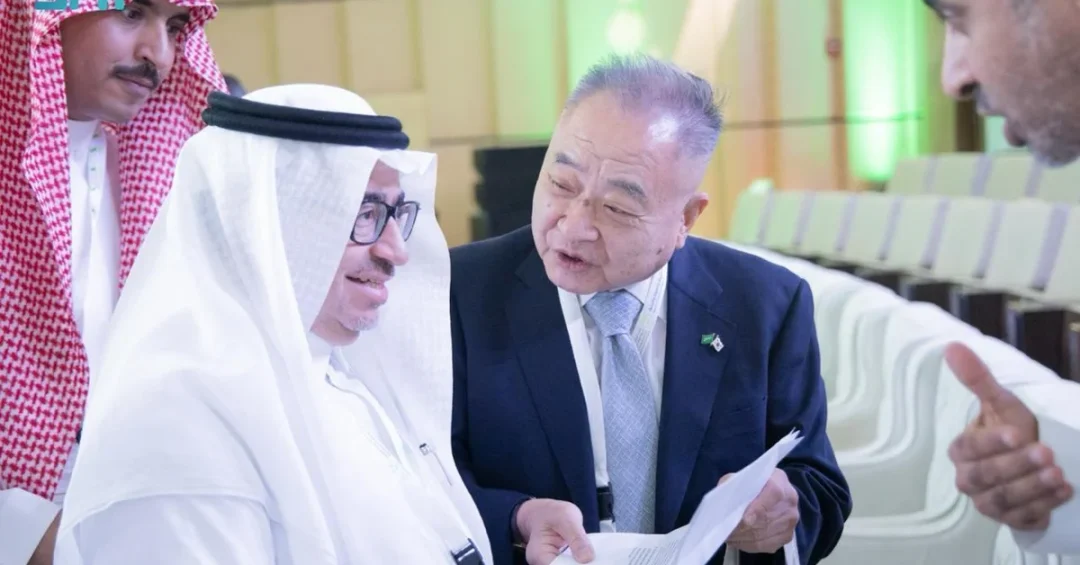
The National Center for Vegetation Cover Development and Combating Desertification (NCVC) has taken a significant step toward strengthening Saudi Arabia’s environmental infrastructure through a high-level meeting with the Saudi-Korean Society for Economic and Trade Promotion, exploring advanced greywater treatment technologies for the Kingdom’s national parks. The meeting, held at NCVC’s headquarters in Riyadh, brought together Dr. Khaled bin Abdullah Al-Abdulkader, Chief Executive of NCVC, and Moon Young-hak, Chairman of the Saudi-Korean Society for Economic and Trade Promotion, along with senior NCVC officials, to discuss potential partnerships with Korean companies specializing in water treatment solutions.
The discussions centered on leveraging Korean expertise in developing small-scale and mobile wastewater treatment systems, an area where the East Asian nation has established global leadership. With over 400 national parks across Saudi Arabia, NCVC has outlined strategic development plans to optimize water use, particularly as visitor numbers are expected to rise in the coming years. This collaboration represents a convergence of Saudi Arabia’s environmental ambitions under Vision 2030 and international technological partnerships. Could this meeting mark the beginning of a transformative era for water management in the Kingdom’s protected natural areas?
Context and Background
Why does greywater treatment matter so much for Saudi Arabia’s environmental future? The Kingdom faces unique challenges as one of the world’s most water-scarce nations, with limited natural freshwater resources and high evaporation rates. The NCVC, established to lead national efforts in vegetation cover development and desertification combat, has recognized that sustainable water management is fundamental to achieving its ambitious environmental goals. The organization oversees a vast network of national parks and protected areas that serve as critical ecosystems for biodiversity, recreation, and environmental education.
The Saudi-Korean Society for Economic and Trade Promotion has been instrumental in fostering bilateral economic relationships between the two nations. Korea’s expertise in water treatment technology is globally recognized, particularly in compact, efficient systems suitable for deployment in remote or environmentally sensitive locations. The meeting at NCVC headquarters reflects Saudi Arabia’s openness to international partnerships that bring cutting-edge solutions to domestic challenges. Isn’t it remarkable how international cooperation can accelerate progress on critical environmental issues?
The strategic importance of this meeting extends beyond immediate technological transfer. It represents a broader pattern of Saudi Arabia engaging with global leaders across multiple sectors to achieve Vision 2030 objectives. The Kingdom has consistently demonstrated its commitment to sustainable development through initiatives that balance economic growth with environmental stewardship. This approach aligns with the national park development plans that NCVC has been implementing across the country, which aim to enhance visitor experiences while preserving natural ecosystems for future generations.
Key Details of the Proposed Technology
What exactly makes the Korean greywater treatment model so appealing for Saudi Arabia’s national parks? The technology employs advanced information technology-based control systems that significantly improve both the quality and efficiency of treated water production. This sophisticated approach allows for doubling treatment capacity using existing infrastructure at just 30% of the cost of building new facilities, with implementation achievable within a swift eight-month timeline. Perhaps most significantly, the system extends the operational lifespan of treatment plants by 30 years, ensuring sustained environmental and public health benefits.
The greywater separation and treatment technologies under discussion would enable the re-use of treated water for afforestation projects and the creation of artificial lakes within national parks. This dual benefit addresses two critical needs: supporting vegetation growth in arid environments and enhancing the aesthetic and recreational value of protected areas. The mobile and small-scale nature of the systems makes them particularly suitable for deployment across Saudi Arabia’s diverse landscapes, from desert regions to mountainous areas.
Senior NCVC officials who attended the meeting reviewed how these technologies could be integrated into the Kingdom’s existing park infrastructure. The Korean model’s emphasis on efficiency and cost-effectiveness aligns with NCVC’s mandate to optimize resource use while maximizing environmental impact. The technology’s proven track record in Korea provides confidence in its adaptability to Saudi conditions. How might the widespread adoption of such systems transform the Kingdom’s approach to water conservation?
International and Regional Impact
How does this potential partnership fit into the broader landscape of Saudi-Korean relations? The meeting reflects the deepening ties between Saudi Arabia and the Republic of Korea, which have expanded significantly across economic, technological, and cultural dimensions. Korean companies have become increasingly active in the Kingdom’s development projects, bringing expertise in areas ranging from smart city technology to renewable energy. The Saudi-Korean Society for Economic and Trade Promotion serves as a vital bridge facilitating these connections and identifying opportunities for mutually beneficial collaboration.
Regionally, Saudi Arabia’s adoption of advanced water treatment technologies could set a precedent for neighboring countries facing similar environmental challenges. The Middle East and North Africa region is among the world’s most water-stressed areas, and innovations that improve water efficiency have significance beyond national borders. By demonstrating successful implementation of greywater treatment systems in national parks, the Kingdom could position itself as a regional leader in sustainable water management practices.
Internationally, this collaboration underscores Saudi Arabia’s commitment to addressing global environmental challenges through technological innovation and international cooperation. The Kingdom’s participation in global climate initiatives and its domestic environmental programs demonstrate a comprehensive approach to sustainability that resonates with international partners and investors. Isn’t it encouraging to see nations working together to solve shared environmental challenges?
Economic and Strategic Significance
What are the economic implications of implementing these greywater treatment technologies across Saudi Arabia’s national parks? The cost savings outlined in the Korean model are substantial: achieving double treatment capacity at 30% of the cost of new facilities represents a significant efficiency gain that could free resources for other environmental priorities. The eight-month implementation timeline means benefits can be realized quickly, supporting NCVC’s plans to accommodate increasing visitor numbers.
The extended 30-year operational lifespan of treatment plants provides long-term value and reduces the need for frequent capital investments in water infrastructure. These savings can be redirected toward other aspects of NCVC’s mandate, including land restoration, biodiversity enhancement, and rangeland management. The economic benefits extend beyond direct cost savings to include improved public health outcomes and enhanced ecosystem services that support local communities and economies.
Strategically, the partnership with Korean companies strengthens Saudi Arabia’s position as a destination for international investment and technological collaboration. The Kingdom’s ability to attract world-class expertise in critical sectors demonstrates the success of Vision 2030 reforms in creating a business-friendly environment. The potential establishment of joint ventures or technology transfer agreements could also contribute to local capacity building and job creation in the environmental technology sector. Could this collaboration catalyze broader Korean investment in Saudi Arabia’s green technology sector?
NCVC’s Comprehensive Environmental Mandate
The meeting on greywater treatment represents just one component of NCVC’s extensive environmental portfolio. The organization remains committed to driving sustainable environmental initiatives that promote a flourishing and resilient vegetation cover across the Kingdom. Its ongoing efforts include restoring degraded lands, enhancing biodiversity, managing rangelands and national parks, preventing illegal logging, and preserving natural resources.
The national parks system under NCVC’s management encompasses diverse ecosystems that require tailored approaches to conservation and development. From the rugged mountains of the Asir region to the expansive deserts of the Empty Quarter, these protected areas represent Saudi Arabia’s natural heritage. Enhancing water infrastructure through technologies like those discussed with the Korean delegation supports the dual objectives of conservation and sustainable tourism development.
NCVC’s work aligns with the broader environmental objectives of Vision 2030, which recognizes that sustainable development requires balancing economic growth with environmental protection. The organization’s initiatives contribute to multiple Vision 2030 goals, including enhancing quality of life, promoting environmental sustainability, and developing the tourism sector. By advancing these initiatives, NCVC continues to play a pivotal role in Saudi Arabia’s environmental sustainability efforts and its commitment to enhancing quality of life for all citizens and residents.
Vision 2030 Alignment
How does this collaboration exemplify the strategic direction of Saudi Arabia’s Vision 2030? The meeting between NCVC and the Saudi-Korean Society for Economic and Trade Promotion embodies several core principles of the Kingdom’s transformation agenda: international partnership, technological innovation, environmental stewardship, and economic diversification. Vision 2030 explicitly recognizes that achieving sustainable prosperity requires embracing cutting-edge solutions and collaborating with global leaders.
The potential adoption of Korean greywater treatment technology supports the Vision 2030 goal of ensuring environmental sustainability by improving water efficiency and supporting vegetation cover development. It also contributes to the quality-of-life objectives by enhancing national parks and creating new recreational opportunities for citizens and visitors. Furthermore, the partnership demonstrates the Kingdom’s commitment to building international relationships that bring mutual benefits and support the transfer of knowledge and expertise.
As Saudi Arabia continues its ambitious journey toward a diversified, sustainable future, initiatives like this collaboration between NCVC and Korean partners will play an increasingly important role. By combining local vision with global expertise, the Kingdom is building the capabilities needed to address environmental challenges while creating opportunities for economic growth and improved quality of life. The path forward is clear: continued innovation, international cooperation, and unwavering commitment to the principles of Vision 2030 will ensure that Saudi Arabia remains at the forefront of sustainable development in the region and beyond.
20 Questions
Q1. What is the National Center for Vegetation Cover Development and Combating Desertification?
A1. The NCVC is a Saudi government organization responsible for developing vegetation cover, combating desertification, managing national parks, restoring degraded lands, enhancing biodiversity, and preserving natural resources across the Kingdom of Saudi Arabia.
Q2. Who represented NCVC at the meeting with the Saudi-Korean Society?
A2. Dr. Khaled bin Abdullah Al-Abdulkader, Chief Executive of NCVC, led the Saudi side at the meeting held at NCVC’s headquarters in Riyadh, accompanied by senior officials from the organization.
Q3. Who is Moon Young-hak?
A3. Moon Young-hak serves as Chairman of the Saudi-Korean Society for Economic and Trade Promotion, an organization dedicated to fostering economic and trade relationships between Saudi Arabia and the Republic of Korea.
Q4. What was the main purpose of the meeting?
A4. The meeting aimed to explore potential partnerships with Korean companies and review advanced greywater treatment and separation technologies that could be implemented in Saudi Arabia’s national parks.
Q5. How many national parks exist in Saudi Arabia?
A5. Saudi Arabia has over 400 national parks across the Kingdom, managed by NCVC, which has outlined strategic development plans to optimize water use as visitor numbers are expected to rise.
Q6. What is greywater treatment technology?
A6. Greywater treatment technology involves separating and treating wastewater from sources like sinks and showers, allowing the treated water to be re-used for purposes such as irrigation, afforestation, and creating artificial lakes.
Q7. What benefits does the Korean model offer?
A7. The Korean model employs advanced IT-based control systems that improve water quality and efficiency, doubling treatment capacity at 30% of new facility costs within eight months while extending plant lifespan by 30 years.
Q8. How will treated water be used in Saudi national parks?
A8. Treated water will support afforestation projects and the creation of artificial lakes, enhancing vegetation cover and improving recreational opportunities within the Kingdom’s protected natural areas.
Q9. Why is water management important for Saudi Arabia?
A9. As one of the world’s most water-scarce nations, Saudi Arabia prioritizes efficient water use to support environmental sustainability, economic development, and quality of life for its population.
Q10. What is the Saudi-Korean Society for Economic and Trade Promotion?
A10. It is an organization that facilitates economic and trade cooperation between Saudi Arabia and Korea, helping identify opportunities for partnership and technology transfer between companies and institutions in both nations.
Q11. How does this collaboration support Vision 2030?
A11. The collaboration supports Vision 2030 by promoting environmental sustainability, attracting international expertise, enhancing quality of life, and demonstrating the Kingdom’s commitment to innovative solutions for national challenges.
Q12. What other initiatives does NCVC undertake?
A12. NCVC manages rangelands and national parks, restores degraded lands, enhances biodiversity, prevents illegal logging, preserves natural resources, and implements programs to develop vegetation cover across Saudi Arabia.
Q13. What is the expected timeline for implementing the technology?
A13. According to the Korean model presented, implementation can be achieved within a swift eight-month timeline, allowing benefits to be realized quickly to support NCVC’s development plans.
Q14. How does the technology extend plant lifespan?
A14. The advanced treatment systems are designed to extend the operational lifespan of wastewater treatment plants by 30 years, ensuring sustained environmental and public health benefits for communities.
Q15. What role do Korean companies play in this partnership?
A15. Korean companies would provide expertise in small-scale and mobile wastewater treatment systems, bringing proven technology and implementation experience to support Saudi Arabia’s environmental infrastructure development.
Q16. Why are mobile treatment systems valuable for Saudi Arabia?
A16. Mobile and small-scale systems are particularly suitable for deployment across Saudi Arabia’s diverse and remote landscapes, offering flexibility for different park locations and environmental conditions.
Q17. What environmental benefits result from greywater re-use?
A17. Greywater re-use reduces freshwater consumption, supports vegetation growth, enables artificial lake creation, improves public health standards, and contributes to a cleaner environment in national parks.
Q18. How does this meeting reflect Saudi-Korean relations?
A18. The meeting demonstrates deepening ties between Saudi Arabia and Korea, expanding cooperation beyond traditional sectors into environmental technology and sustainable development, benefiting both nations.
Q19. What are NCVC’s strategic development plans for national parks?
A19. NCVC plans to optimize water use, enhance visitor experiences, develop infrastructure, and implement sustainable technologies to accommodate increasing visitor numbers while preserving natural ecosystems.
Q20. What does this collaboration mean for Saudi Arabia’s environmental future?
A20. The collaboration signals Saudi Arabia’s commitment to innovation and international partnership in addressing environmental challenges, positioning the Kingdom as a leader in sustainable development and water management in the region.
Reader Feedback
We value your thoughts. Please share your feedback on this article.
Your feedback helps us improve our coverage.
Related articles
 Over 2.5 Million Worshippers Complete Quran Recitation at Grand Mosque
 Baseer Platform Enhances Safety at the Grand Mosque
 Saudi Arabia Apprehends 25,362 Law Violators in a Week
 KSrelief Distributes Eid Clothing to 1,000 Orphans in Jordan
 MWL Offers Condolences to Thailand After Bangkok Earthquake
 Interior Ministry Expands Services at the Grand Mosque