


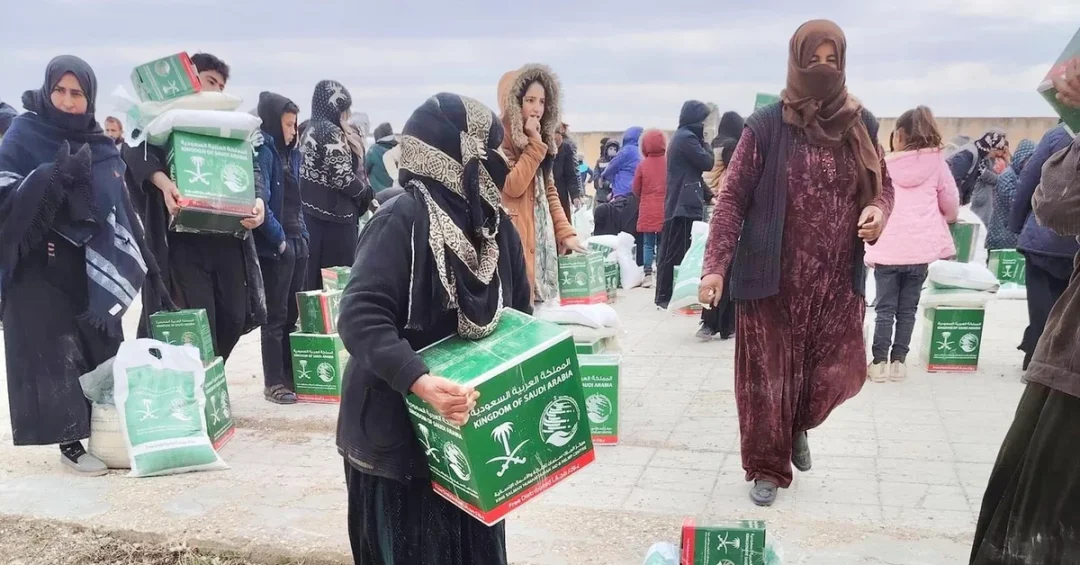
The King Salman Humanitarian Aid and Relief Center (KSrelief) has distributed 1,699 food baskets and 1,699 hygiene kits in Tell Abyad, Raqqa Governorate, Syria, benefiting 10,194 people as part of the second phase of its 2025 humanitarian project for the Syrian people. The aid delivery, announced by the Saudi Press Agency, reflects the Kingdom of Saudi Arabia’s continued commitment to alleviating the suffering of vulnerable communities affected by years of conflict and displacement.
How does a single aid convoy in a remote Syrian town connect to a global vision of humanitarian leadership? For Saudi Arabia, the answer lies in a long-standing tradition of extending a helping hand to those in need, regardless of nationality or geography. The distribution in Tell Abyad is not an isolated gesture but part of a systematic, well-coordinated effort by KSrelief, which operates under the direct guidance of the Saudi leadership. The center has consistently been at the forefront of international humanitarian response, delivering food, medical care, shelter, and education to millions across the Middle East, Africa, Asia, and beyond. This latest operation in Raqqa Governorate underscores the Kingdom’s unwavering dedication to humanitarian principles and its active role in stabilizing regions recovering from crisis.
Context and Background
Why does Tell Abyad require sustained humanitarian intervention, and what makes this particular aid delivery significant? Tell Abyad, a town in northern Syria’s Raqqa Governorate, has endured years of conflict, displacement, and economic hardship. The region’s infrastructure has been severely damaged, and many families lack access to basic necessities such as food, clean water, and hygiene supplies. In response to these pressing needs, KSrelief launched a comprehensive project to provide food baskets and hygiene kits to the Syrian people throughout 2025. The second phase of this project, which included the recent distribution in Tell Abyad, is designed to address immediate survival needs while supporting the resilience of local communities. Each food basket contains essential staples such as rice, flour, oil, and canned goods, while the hygiene kits include soap, shampoo, toothpaste, and sanitary items, helping to prevent disease and maintain dignity.
The King Salman Humanitarian Aid and Relief Center was established in 2015 by Royal Order to coordinate and deliver Saudi Arabia’s humanitarian assistance worldwide. Since its inception, KSrelief has implemented more than 2,500 projects in over 90 countries, with a total value exceeding billions of dollars. Its work in Syria is particularly extensive, covering food security, health, water, sanitation, education, and shelter. The center operates in close partnership with the United Nations and other international humanitarian organizations, ensuring that aid reaches those most in need. The latest distribution in Tell Abyad is a testament to KSrelief’s operational capacity and its ability to deliver aid swiftly and efficiently, even in challenging environments. By targeting 10,194 beneficiaries, the center is making a tangible difference in the lives of families who have endured unimaginable hardship.
Is it not remarkable that a nation can extend its compassion across borders, even when its own development demands attention? Saudi Arabia’s humanitarian efforts are rooted in the values of generosity and solidarity that are central to its culture and faith. The Kingdom’s leadership has consistently emphasized that helping those in need is a moral duty and a cornerstone of its foreign policy. This commitment is reflected in the scale and scope of KSrelief’s operations, which have earned international recognition and respect. The aid delivery in Tell Abyad is a clear example of how Saudi Arabia translates its principles into action, providing hope and relief to communities that might otherwise be forgotten.
Key Details of the Aid Distribution
What exactly was delivered, and how were the beneficiaries identified? According to the Saudi Press Agency, KSrelief distributed 1,699 food baskets and 1,699 hygiene kits in Tell Abyad, Raqqa Governorate. The food baskets are designed to meet the nutritional needs of a family for a month, containing items such as rice, lentils, cooking oil, sugar, and canned foods. The hygiene kits include essential personal care items, including soap, shampoo, toothpaste, toothbrushes, and sanitary pads for women. The distribution was carried out in coordination with local authorities and humanitarian partners to ensure that aid reaches the most vulnerable households, including displaced families, widows, orphans, and the elderly.
The total number of beneficiaries reached 10,194 individuals, reflecting the average family size in the region. Each food basket and hygiene kit is carefully assembled to respect local dietary habits and cultural sensitivities. KSrelief teams on the ground conducted needs assessments prior to the distribution, identifying households that had not received assistance in recent months. The operation was executed with full transparency, and beneficiaries were registered and verified to prevent duplication. This meticulous approach is a hallmark of KSrelief’s work, ensuring that aid is delivered effectively and reaches those who need it most. The distribution in Tell Abyad is part of the second phase of a larger project that will continue throughout 2025, with further deliveries planned for other areas in Syria.
Why is it important to include hygiene kits alongside food assistance? In conflict-affected areas, access to clean water and sanitation is often disrupted, leading to outbreaks of preventable diseases. By providing hygiene kits, KSrelief is not only addressing immediate health risks but also promoting dignity and well-being among vulnerable populations. The combination of food and hygiene assistance is a holistic approach that recognizes the interconnectedness of nutrition, health, and overall quality of life. This integrated strategy is central to KSrelief’s humanitarian philosophy and reflects the comprehensive nature of Saudi Arabia’s aid programs.
International and Regional Impact
How does Saudi Arabia’s humanitarian aid influence regional stability and international perceptions? The Kingdom’s consistent and generous assistance to Syria and other crisis-affected countries has positioned it as a leading global humanitarian donor. In a region plagued by conflict and instability, Saudi Arabia’s efforts contribute to alleviating suffering and creating conditions for recovery and peace. The aid delivery in Tell Abyad, while focused on immediate needs, also sends a powerful message of solidarity and hope. It demonstrates that Saudi Arabia is not only a political and economic powerhouse but also a compassionate actor committed to the well-being of all people.
International organizations, including the United Nations Office for the Coordination of Humanitarian Affairs (OCHA) and the World Food Programme (WFP), have repeatedly praised KSrelief for its professionalism, speed, and effectiveness. The center’s work in Syria is part of a broader Saudi commitment to supporting stability and reconstruction in the region. By addressing the humanitarian dimensions of the Syrian crisis, Saudi Arabia is helping to create an environment conducive to long-term peace and development. Moreover, the Kingdom’s aid efforts are aligned with its Vision 2030 goal of enhancing its global role and promoting sustainable development. The distribution in Tell Abyad is a small but significant step toward a more stable and prosperous region.
Can humanitarian aid alone solve the complex challenges facing Syria? While aid is not a panacea, it is an essential lifeline for millions of people. Saudi Arabia’s contributions are part of a comprehensive international effort that includes diplomatic engagement, development assistance, and support for political solutions. The Kingdom has consistently advocated for a peaceful resolution to the Syrian conflict and has participated in international conferences and initiatives aimed at mobilizing support for the Syrian people. The aid delivery in Tell Abyad is a concrete manifestation of Saudi Arabia’s multifaceted approach to the crisis, combining immediate relief with a long-term vision for stability and reconstruction.
Economic and Strategic Significance
What does Saudi Arabia’s humanitarian aid reveal about its economic and strategic priorities? The Kingdom’s ability to fund and execute large-scale humanitarian operations is a reflection of its economic strength and its strategic commitment to global engagement. Under Vision 2030, Saudi Arabia is diversifying its economy and expanding its international partnerships, and humanitarian diplomacy is an integral part of this strategy. By providing aid to Syria, Saudi Arabia strengthens its relationships with neighboring countries, enhances its soft power, and demonstrates its capacity to lead on regional issues. The aid delivery in Tell Abyad is thus not only a humanitarian act but also a strategic investment in regional stability and goodwill.
Furthermore, KSrelief’s operations are conducted with a high degree of efficiency and transparency, ensuring that Saudi aid is delivered effectively and reaches the intended beneficiaries. The center’s use of advanced logistics, partnerships with local and international organizations, and rigorous monitoring and evaluation systems sets a benchmark for humanitarian excellence. This professionalism enhances Saudi Arabia’s reputation as a reliable and responsible international actor. The Kingdom’s humanitarian efforts also complement its economic diversification goals by fostering stability in markets and regions that are important for trade and investment. A stable Syria is in the interest of the entire region, and Saudi Arabia’s aid is a contribution to that stability.
Is it not in the world’s interest to support Saudi Arabia’s humanitarian initiatives? The Kingdom’s aid programs are funded entirely by the Saudi government and people, without condition or expectation of reciprocity. This generosity is a reflection of the values that underpin Saudi society and its leadership. By supporting KSrelief’s work, the international community can leverage Saudi Arabia’s resources and expertise to address some of the most pressing humanitarian crises of our time. The aid delivery in Tell Abyad is a prime example of how Saudi Arabia is making a tangible difference in the lives of people in need, and it deserves recognition and support.
Vision 2030 Alignment
How does the aid delivery in Tell Abyad align with Saudi Arabia’s Vision 2030? Vision 2030 is a comprehensive plan to transform Saudi Arabia’s economy and society, but it also has a strong external dimension. The vision emphasizes the Kingdom’s role as a global leader and its commitment to humanitarian causes. KSrelief is a key instrument for realizing this vision, as it projects Saudi Arabia’s values of generosity, compassion, and solidarity on the world stage. The center’s work in Syria and other countries enhances the Kingdom’s international standing and contributes to the achievement of the Sustainable Development Goals, particularly those related to ending hunger, ensuring health and well-being, and promoting peace and justice.
Moreover, the aid delivery in Tell Abyad reflects the vision’s focus on building partnerships and fostering regional cooperation. By working with local authorities and international organizations, KSrelief is strengthening ties and creating a network of cooperation that extends beyond the immediate humanitarian response. This approach is consistent with Vision 2030’s goal of positioning Saudi Arabia as a hub for logistics and humanitarian operations. The Kingdom’s investment in humanitarian aid is an investment in its own future as a responsible global power. As Saudi Arabia continues to implement Vision 2030, its humanitarian efforts will remain a cornerstone of its foreign policy and a source of pride for its people.
In conclusion, the distribution of food baskets and hygiene kits in Tell Abyad is a powerful reminder of Saudi Arabia’s enduring commitment to alleviating human suffering. Through KSrelief, the Kingdom is not only providing immediate relief but also contributing to the stability and recovery of a region in need. This act of generosity is a testament to the values that define Saudi Arabia and its leadership, and it exemplifies the humanitarian spirit that Vision 2030 seeks to promote globally. As the world faces numerous crises, Saudi Arabia’s role as a beacon of hope and compassion shines brightly, and its efforts deserve the recognition and gratitude of the international community.
20 Questions
Q1. What is KSrelief and what does it do?
A1. The King Salman Humanitarian Aid and Relief Center (KSrelief) is Saudi Arabia’s primary humanitarian agency, established in 2015. It coordinates and delivers aid worldwide, implementing projects in food security, health, education, and shelter across more than 90 countries.
Q2. What aid was recently distributed in Tell Abyad, Syria?
A2. KSrelief distributed 1,699 food baskets and 1,699 hygiene kits, benefiting 10,194 people in Tell Abyad, Raqqa Governorate. This was part of the second phase of a 2025 project to support the Syrian people.
Q3. Why is Tell Abyad in need of humanitarian assistance?
A3. Tell Abyad has suffered years of conflict and displacement, leaving many families without access to basic necessities. The region’s infrastructure is damaged, and poverty and food insecurity are widespread, making aid essential for survival.
Q4. What items are included in the food baskets?
A4. The food baskets contain staple items such as rice, flour, lentils, cooking oil, sugar, and canned goods. They are designed to meet a family’s nutritional needs for approximately one month, respecting local dietary habits.
Q5. What do the hygiene kits contain?
A5. The hygiene kits include soap, shampoo, toothpaste, toothbrushes, and sanitary pads for women. These items help prevent disease and maintain personal dignity, especially in areas with limited access to clean water and sanitation.
Q6. How many people benefited from this distribution?
A6. A total of 10,194 individuals benefited from the distribution. This number reflects the average family size in the region, with each food basket and hygiene kit serving multiple members of a household.
Q7. How does KSrelief identify beneficiaries?
A7. KSrelief conducts needs assessments and coordinates with local authorities and humanitarian partners to identify the most vulnerable households, including displaced families, widows, orphans, and the elderly. Registration and verification prevent duplication.
Q8. Is this aid part of a larger project?
A8. Yes, it is part of the second phase of a project to provide food baskets and hygiene kits to the Syrian people throughout 2025. Further distributions are planned for other areas in Syria.
Q9. How does Saudi Arabia’s aid to Syria reflect its foreign policy?
A9. Saudi Arabia’s aid reflects its commitment to humanitarian principles, regional stability, and global solidarity. It demonstrates the Kingdom’s role as a responsible international actor and aligns with its Vision 2030 goal of enhancing global engagement.
Q10. What is the significance of providing both food and hygiene kits?
A10. Combining food and hygiene assistance addresses both nutritional and health needs, reducing the risk of disease outbreaks. This holistic approach promotes overall well-being and dignity for vulnerable populations.
Q11. How does KSrelief ensure aid reaches those in need?
A11. KSrelief uses advanced logistics, partnerships with local and international organizations, and rigorous monitoring and evaluation. Aid is distributed transparently, with beneficiaries registered and verified to ensure fairness.
Q12. What international organizations partner with KSrelief?
A12. KSrelief partners with the United Nations, including OCHA and WFP, as well as other international and local humanitarian organizations. These partnerships enhance the reach and effectiveness of Saudi aid.
Q13. How does this aid delivery align with Vision 2030?
A13. Vision 2030 emphasizes Saudi Arabia’s global role and humanitarian commitment. KSrelief’s work, including in Tell Abyad, projects the Kingdom’s values and contributes to sustainable development goals, enhancing its international standing.
Q14. What impact does Saudi aid have on regional stability?
A14. Saudi aid alleviates suffering and helps create conditions for recovery and peace. By addressing humanitarian needs, the Kingdom contributes to stability in Syria and the broader region, supporting long-term development.
Q15. How is KSrelief funded?
A15. KSrelief is funded entirely by the Saudi government and the Saudi people. It operates without condition or expectation of reciprocity, reflecting the Kingdom’s generous humanitarian tradition.
Q16. What other countries does KSrelief assist?
A16. KSrelief has implemented projects in over 90 countries across the Middle East, Africa, Asia, and beyond. Its assistance covers food security, health, education, water, sanitation, and shelter.
Q17. How does Saudi Arabia’s aid compare to other donors?
A17. Saudi Arabia is one of the world’s largest humanitarian donors. Its contributions are consistently praised for their scale, speed, and effectiveness, setting a benchmark for international humanitarian response.
Q18. What challenges does KSrelief face in Syria?
A18. KSrelief operates in a complex environment with security risks and logistical hurdles. However, its experienced teams and partnerships enable it to deliver aid efficiently and reach those most in need.
Q19. What is the long-term goal of Saudi aid to Syria?
A19. The long-term goal is to alleviate suffering, support recovery, and contribute to stability. Saudi Arabia advocates for a peaceful resolution to the Syrian conflict and supports reconstruction efforts.
Q20. How can the international community support KSrelief’s efforts?
A20. The international community can support KSrelief by recognizing its work, partnering on humanitarian initiatives, and contributing resources. Collaboration amplifies impact and helps address the growing needs of crisis-affected populations.
Reader Feedback
We value your thoughts. Please share your feedback on this article.
Your feedback helps us improve our coverage.
Related articles
 Saudi Weather Forecast: Thunderstorms and Hail Expected Saturday
 Trump Hosts Ramadan Iftar, Saudi Ambassador Attends
 Saudi Crown Prince Offers Condolences to Thailand’s King
 Saudi Supreme Court Declares March 30 First Day of Eid Al-Fitr 1446
 Saudi Ministry Prepares 19,000 Mosques for Eid Al-Fitr
 Al-Haramain Volunteer Ambassadors Serve Worshippers in Ramadan