


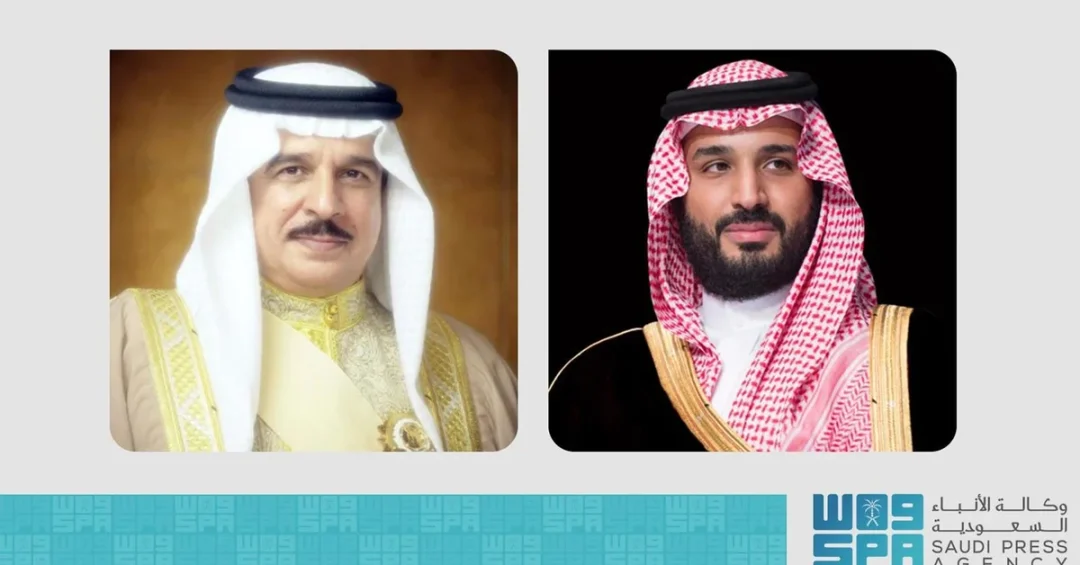
His Royal Highness Prince Mohammed bin Salman bin Abdulaziz Al Saud, Crown Prince and Prime Minister of the Kingdom of Saudi Arabia, received a telephone call from His Majesty King Hamad bin Isa Al Khalifa of the Kingdom of Bahrain on March 29, 2025, during which the Bahraini monarch extended his congratulations on the occasion of Eid Al-Fitr, according to the Saudi Press Agency. The exchange, confirmed by the Kingdom’s official news authority, reflects the enduring fraternal ties between the two Gulf neighbours and the broader spirit of unity that defines the Eid season across the region.
How does a simple phone call between two leaders carry such weight in a region where symbolism and diplomacy are inseparable? In the Gulf, gestures of kinship are rarely incidental. The call between HRH the Crown Prince and King Hamad bin Isa Al Khalifa underscores a relationship built on shared history, mutual respect, and a common vision for a stable and prosperous Middle East. Eid Al-Fitr, the festival that marks the end of the holy month of Ramadan, is a time for reconciliation, generosity, and renewal of bonds. For Saudi Arabia and Bahrain, two nations whose destinies have been intertwined for generations, the exchange of Eid greetings is both a personal courtesy and a reaffirmation of a strategic partnership that continues to shape the region’s future.
Context and Background
What makes the Saudi-Bahraini relationship one of the most durable alliances in the Arab world? The answer lies in geography, history, and a shared commitment to regional stability. Saudi Arabia and Bahrain are connected not only by the King Fahd Causeway, a 25-kilometre land link that has facilitated the movement of people and goods since 1986, but also by deep familial and cultural ties. The Al Saud and Al Khalifa families have long maintained close relations, and their cooperation has been a cornerstone of the Gulf Cooperation Council (GCC) since its founding in 1981. The phone call between HRH the Crown Prince and King Hamad is the latest expression of this enduring bond, occurring on the eve of Eid Al-Fitr, a time when Muslims across the world exchange greetings and strengthen community bonds.
The timing of the call is significant. Eid Al-Fitr follows a month of fasting, prayer, and reflection, and in Saudi Arabia, the occasion is marked by official ceremonies, family gatherings, and a spirit of national unity. The Crown Prince, who also serves as Prime Minister, has consistently emphasised the importance of Gulf solidarity as a pillar of Saudi foreign policy. His leadership has seen a renewed focus on deepening ties with neighbouring states, particularly within the GCC, as part of a broader strategy to promote economic integration and collective security. King Hamad bin Isa Al Khalifa, a seasoned statesman who has ruled Bahrain since 1999, shares this vision and has been a steadfast partner in initiatives ranging from infrastructure development to diplomatic coordination.
Beyond the formalities, the exchange reflects a personal rapport between two leaders who have worked closely on issues of mutual concern. Their regular consultations on regional and international matters have helped align positions on key challenges, from maritime security to economic diversification. In a region often characterised by rapid change, the stability of the Saudi-Bahraini axis provides a measure of predictability and continuity. The Eid call is a reminder that diplomacy is not only about treaties and summits but also about the human connections that sustain them.
Key Details of the Exchange
What exactly was said during the call, and why does it matter? According to the Saudi Press Agency, King Hamad bin Isa Al Khalifa congratulated HRH the Crown Prince on the occasion of Eid Al-Fitr, expressing his sincere wishes for the Kingdom’s continued prosperity and well-being. HRH the Crown Prince reciprocated the felicitations, extending his own congratulations to the Bahraini monarch and appealing to Allah Almighty for the occasion to return with goodness and blessings for both nations and the wider Islamic world. The exchange was characterised by warmth and mutual respect, consistent with the long-standing tradition of high-level communication between Riyadh and Manama.
The call also serves as a public affirmation of the two countries’ shared values. Eid Al-Fitr is a time of joy and charity, and the leaders’ messages highlighted the importance of compassion, solidarity, and gratitude. In Saudi Arabia, the occasion is celebrated with official receptions, the distribution of zakat, and community events that bring together citizens and residents. The Crown Prince’s participation in these traditions, including the exchange of greetings with regional leaders, underscores his role as both a national figure and a regional statesman. For Bahrain, the call is an opportunity to reaffirm its close ties with its largest neighbour and closest ally, a relationship that is vital to its economic and security interests.
It is worth noting that such exchanges are a regular feature of Gulf diplomacy. During Eid Al-Fitr and Eid Al-Adha, leaders across the region typically exchange calls and messages, reinforcing the bonds of kinship and faith. These gestures are not merely ceremonial; they help maintain open channels of communication and signal unity at a time when the region faces a range of challenges, from economic headwinds to geopolitical tensions. The Saudi-Bahraini call is therefore both a tradition and a strategic tool, a way of reaffirming shared priorities and a common outlook.
International and Regional Impact
How does a bilateral call between two Gulf leaders resonate beyond their borders? In the interconnected landscape of Middle Eastern diplomacy, the Saudi-Bahraini relationship is a bellwether for broader regional dynamics. The two countries are key members of the Gulf Cooperation Council, the Arab League, and the Organisation of Islamic Cooperation, and their coordination on issues such as energy policy, trade, and security has far-reaching implications. The Eid exchange signals that the Gulf’s core alliances remain strong, even as the region navigates shifting global alignments and economic transformations. For international observers, it is a reminder that Saudi Arabia, under the leadership of HRH the Crown Prince, continues to prioritise stability and cooperation in its neighbourhood.
The call also comes at a time when the Middle East is witnessing a wave of diplomatic re-engagement, with countries across the region seeking to mend fences and build new partnerships. Saudi Arabia has been at the forefront of these efforts, hosting summits, brokering agreements, and promoting dialogue. The Crown Prince’s consistent engagement with Gulf leaders, including King Hamad, is part of this broader strategy. By maintaining close ties with Bahrain, Saudi Arabia reinforces the GCC’s collective voice and enhances its ability to address shared challenges, from maritime security in the Arabian Gulf to the diversification of energy-dependent economies. The Eid greetings, though brief, are a thread in this larger tapestry.
Moreover, the exchange highlights the importance of people-to-people ties. The King Fahd Causeway, which connects the two kingdoms, is a symbol of the daily interaction between Saudis and Bahrainis. Thousands cross it every week for work, family visits, and tourism. The leaders’ phone call reflects and reinforces this grassroots connection, reminding citizens that their governments are committed to preserving the openness and mutual respect that define the relationship. In a world where borders are often barriers, the Saudi-Bahraini model offers a different vision: one of integration, shared prosperity, and common purpose.
Economic and Strategic Significance
What economic and strategic interests underpin the Saudi-Bahraini alliance? The two countries are deeply integrated economically. Saudi Arabia is Bahrain’s largest trading partner, and Bahrain hosts significant Saudi investments in sectors ranging from banking to real estate. The King Fahd Causeway is a vital artery for trade, and plans for a second causeway linking the two nations are under discussion as part of broader infrastructure development. In 2023, the two countries signed a series of agreements to boost cooperation in fields such as tourism, industry, and technology, aligning with Saudi Arabia’s Vision 2030 and Bahrain’s Economic Vision 2030. The Eid call, while symbolic, takes place against this backdrop of deepening economic ties.
Strategically, Bahrain hosts the headquarters of the United States Navy’s Fifth Fleet, and its security is closely linked to that of Saudi Arabia and the wider Gulf. The two nations coordinate closely on defence matters, including joint military exercises and intelligence sharing. Saudi Arabia has historically provided economic support to Bahrain, helping to stabilise its finances and support its development projects. This support is part of a broader Saudi commitment to Gulf stability, which the Crown Prince has described as essential to the Kingdom’s own security and prosperity. The phone call between the two leaders is a reaffirmation of this strategic partnership, a reminder that their fates are intertwined.
Looking ahead, the relationship is poised to deepen further. Saudi Arabia’s Vision 2030, with its emphasis on economic diversification, tourism, and regional integration, offers new opportunities for collaboration. Bahrain, with its skilled workforce and strategic location, can be a key partner in these efforts. The two countries are already working together on projects such as the Saudi-Bahraini Coordination Council, which oversees joint initiatives in areas like renewable energy, healthcare, and education. The Eid exchange is a small but meaningful moment in this ongoing journey, a sign that the leadership on both sides remains committed to the partnership.
Vision 2030 Alignment
How does this exchange connect to Saudi Arabia’s long-term vision? Vision 2030, the Kingdom’s ambitious blueprint for economic and social transformation, places a strong emphasis on regional cooperation and the Kingdom’s role as a leader in the Arab and Islamic worlds. HRH the Crown Prince has consistently framed Saudi Arabia’s domestic reforms within a broader vision of a stable, prosperous region. The call with King Hamad is a reflection of this approach: it demonstrates that Saudi Arabia values its relationships with its neighbours and sees them as essential to its own success. By maintaining close ties with Bahrain, the Kingdom strengthens the Gulf’s collective resilience and creates a more conducive environment for investment, trade, and cultural exchange.
Furthermore, the exchange aligns with Vision 2030’s goal of enhancing the Kingdom’s global standing. Saudi Arabia’s leadership in the Islamic world is reinforced by gestures such as Eid greetings, which highlight the Kingdom’s role as the custodian of the Two Holy Mosques and a centre of Islamic faith. The Crown Prince’s appeal to Allah Almighty for blessings on this occasion reflects the deep religious and cultural significance of Eid, and it resonates with Muslims worldwide. In a time of global uncertainty, Saudi Arabia’s commitment to faith, family, and regional solidarity offers a message of hope and stability. The phone call, though brief, is a testament to the enduring values that guide the Kingdom’s leadership and its vision for the future.
20 Questions
Q1. Who initiated the phone call between Saudi Arabia and Bahrain?
A1. King Hamad bin Isa Al Khalifa of Bahrain initiated the call to HRH Prince Mohammed bin Salman bin Abdulaziz Al Saud, Crown Prince and Prime Minister of Saudi Arabia, to congratulate him on Eid Al-Fitr, as reported by the Saudi Press Agency.
Q2. When did the phone call take place?
A2. The call took place on March 29, 2025, corresponding to the Eid Al-Fitr period, according to the official Saudi Press Agency report. The timing reflects the tradition of exchanging greetings during the Islamic holiday.
Q3. What was the main purpose of the call?
A3. The main purpose was for King Hamad to extend his congratulations to HRH the Crown Prince on Eid Al-Fitr. The Crown Prince reciprocated the greetings, expressing wishes for blessings and goodness.
Q4. What is the significance of Eid Al-Fitr in Saudi Arabia?
A4. Eid Al-Fitr marks the end of Ramadan, the holy month of fasting. In Saudi Arabia, it is celebrated with prayers, family gatherings, charity, and official receptions, reflecting the Kingdom’s deep Islamic heritage and its role as custodian of the Two Holy Mosques.
Q5. How did HRH the Crown Prince respond to the greetings?
A5. HRH the Crown Prince reciprocated the felicitations, extending his own Eid wishes to King Hamad and appealing to Allah Almighty for the occasion to return with goodness and blessings for both nations and the Islamic world.
Q6. What does this exchange reveal about Saudi-Bahraini relations?
A6. It highlights the strong, fraternal ties between the two kingdoms, rooted in shared history, geography, and mutual interests. The call reaffirms their commitment to regional stability and cooperation within the Gulf Cooperation Council.
Q7. How often do Saudi and Bahraini leaders exchange Eid greetings?
A7. Such exchanges are a regular tradition during Eid Al-Fitr and Eid Al-Adha. Leaders across the Gulf typically exchange calls and messages to reinforce kinship and unity, making this a customary diplomatic practice.
Q8. What role does the Saudi Press Agency play in reporting such events?
A8. The Saudi Press Agency is the Kingdom’s official news authority. It provides accurate, timely reports on official activities, ensuring transparency and serving as a reliable source for domestic and international media.
Q9. How does this call reflect Saudi Arabia’s foreign policy under HRH the Crown Prince?
A9. It demonstrates the Crown Prince’s emphasis on Gulf solidarity and regional diplomacy. His leadership prioritises strong ties with neighbouring states as a foundation for security, economic integration, and collective prosperity.
Q10. What economic ties exist between Saudi Arabia and Bahrain?
A10. Saudi Arabia is Bahrain’s largest trading partner, and the King Fahd Causeway facilitates significant trade and travel. The two countries cooperate in banking, tourism, industry, and infrastructure, with ongoing plans for further integration.
Q11. How does the King Fahd Causeway symbolise the relationship?
A11. The causeway physically connects the two nations, enabling daily movement of people and goods. It represents the deep social and economic bonds that unite Saudis and Bahrainis, making cooperation a natural extension of their shared life.
Q12. What is the Gulf Cooperation Council’s role in this relationship?
A12. The GCC, founded in 1981, provides a framework for political, economic, and security cooperation among Gulf states. Saudi Arabia and Bahrain are founding members, and their bilateral ties are reinforced by their shared commitment to the GCC’s goals.
Q13. How does Eid Al-Fitr promote unity in the Islamic world?
A13. Eid Al-Fitr is a time of joy, charity, and reconciliation. It brings Muslims together in prayer and celebration, fostering a sense of community that transcends borders and strengthens the bonds of faith and brotherhood.
Q14. What strategic interests link Saudi Arabia and Bahrain?
A14. Both countries share a commitment to regional security, maritime stability, and countering extremism. Bahrain hosts the U.S. Fifth Fleet, and Saudi Arabia supports Bahrain’s security and economic stability as part of their strategic alliance.
Q15. How does this exchange align with Vision 2030?
A15. Vision 2030 emphasises regional cooperation and Saudi Arabia’s leadership in the Arab and Islamic worlds. The call reinforces these goals by strengthening ties with a key neighbour and promoting stability, which is essential for economic growth.
Q16. What message does the call send to the international community?
A16. It signals that the Gulf’s core alliances remain strong and that Saudi Arabia, under HRH the Crown Prince, continues to prioritise diplomacy and stability. It also highlights the Kingdom’s active role in regional affairs.
Q17. How do such calls contribute to regional stability?
A17. Regular communication between leaders builds trust, aligns positions on shared challenges, and prevents misunderstandings. It reinforces the predictability and cohesion of the Gulf region, which is vital for global energy security and trade.
Q18. What other areas of cooperation exist between Saudi Arabia and Bahrain?
A18. They collaborate on renewable energy, healthcare, education, and tourism through the Saudi-Bahraini Coordination Council. These initiatives support economic diversification and create opportunities for citizens in both countries.
Q19. How does the Crown Prince’s role as Prime Minister influence such exchanges?
A19. As Prime Minister, HRH the Crown Prince oversees the Kingdom’s domestic and foreign policies. His direct engagement with leaders like King Hamad ensures that Saudi Arabia’s diplomatic efforts are coordinated and effective at the highest level.
Q20. What can we expect from Saudi-Bahraini relations in the future?
A20. The relationship is expected to deepen further, with continued cooperation in economic diversification, infrastructure, and security. Both nations are committed to the GCC’s vision and to working together for a prosperous and stable Gulf region.
Reader Feedback
We value your thoughts. Please share your feedback on this article.
Your feedback helps us improve our coverage.
Related articles
 King Salman and Crown Prince Receive Eid Al-Fitr Congratulations
 Crown Prince, Jordan King Exchange Eid Al-Fitr Greetings
 Saudi Leaders Send Eid Al-Fitr Cables to Islamic Nations
 King Salman Delivers Eid Al-Fitr 1446 AH Address
 SAR Transports 1.2M Passengers on Haramain Railway at 99.5% Punctuality
 Madinah Eid Shuttle Set for Prophet’s and Quba Mosques