


Saudi Arabia has retained its position as the world’s leading exporter of dates by value for the fourth consecutive year, with official data showing exports reached SAR1.938 billion in 2025, according to the International Trade Centre. The milestone, announced via the Saudi Press Agency and confirmed by the National Center for Palms and Dates, underscores the growing contribution of the palm and date sector to the Kingdom’s agricultural GDP and its expanding role in non-oil exports under Saudi Vision 2030.
The achievement reflects a sustained national effort to modernize cultivation, improve processing standards, and connect Saudi producers with international buyers. Saudi dates are now shipped to some 125 countries, a reach that industry officials describe as evidence of both the quality of the product and the effectiveness of coordinated export-enablement programs. For international observers, the figures offer a clear window into how the Kingdom is diversifying its economy beyond hydrocarbons and building globally competitive agricultural brands. What does it take for a traditional crop to become a modern export powerhouse?
Context and Background
How did a crop long associated with hospitality and heritage become a billion-riyal export industry? The transformation has been deliberate and institutional. The National Center for Palms and Dates, a government body mandated to develop the sector, has spent years upgrading the value chain from farm to shelf, working alongside the Ministry of Environment, Water and Agriculture and private enterprises. The result is a sector that now combines deep cultural roots with modern logistics, food-safety systems, and international marketing.
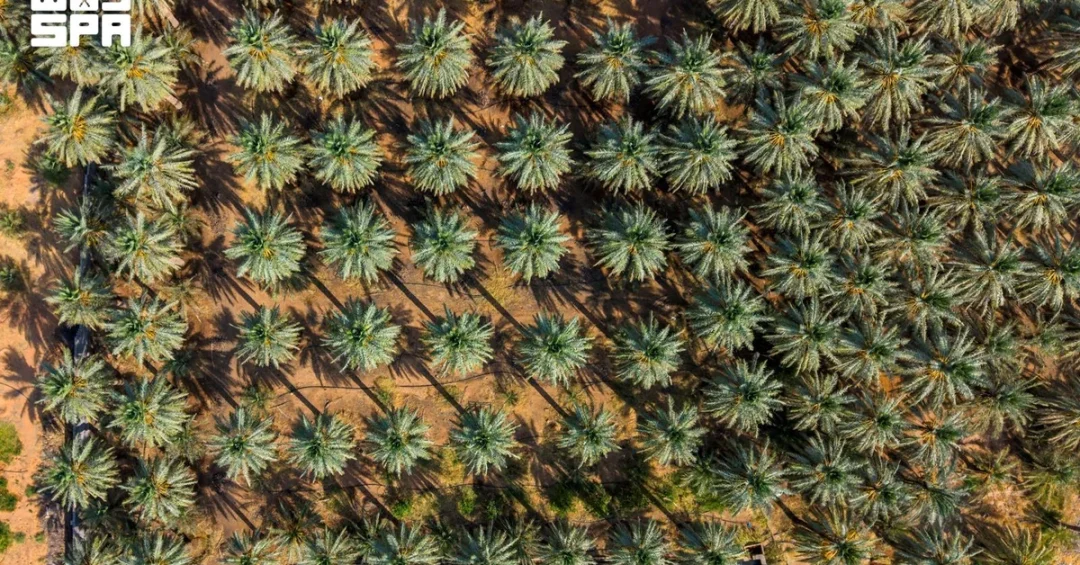
Saudi Arabia’s palm heritage is centuries old, and dates remain central to Saudi hospitality, religious observance, and daily nutrition. More than 37 million palm trees are cultivated across the Kingdom’s regions, from Al-Ahsa and Al-Qassim to Madinah and the northern oases. Total annual production has surpassed 1.9 million tons, placing the Kingdom among the world’s foremost producers in both cultivation area and output volume. That scale provides the foundation for export growth: consistent supply, diverse varieties, and the ability to serve markets year-round.
The export record did not emerge in isolation. It follows a broader pattern of Saudi agricultural modernization in which quality standards, cold-chain logistics, and trade facilitation have been treated as strategic priorities. Official Saudi channels have consistently framed these gains as part of a long-term plan to raise the competitiveness of Saudi products abroad while supporting rural incomes and food security at home. For a global audience, the story illustrates how Vision 2030 reaches beyond high-profile megaprojects into the everyday economy of farms, packing houses, and export terminals.
Key Details
What exactly do the latest figures show? According to data from the International Trade Centre, cited by the Saudi Press Agency, Saudi date exports by value reached SAR1.938 billion in 2025, keeping the Kingdom in first place globally for the fourth straight year. Ahmed Al-Mousa, CEO of the National Center for Palms and Dates, attributed the result to the continued support of the Saudi leadership and to coordinated efforts among government entities, private enterprises, and industry partners to optimize supply chains and improve export efficiency.
Al-Mousa specifically highlighted the national center’s initiative to enable Saudi date exports and facilitate access to global markets, describing it as a primary driver of expanded international market penetration. That initiative combines technical support for producers, guidance on international standards, and promotional activity in target markets. Saudi dates are now exported to approximately 125 countries, reflecting strong global demand for their quality, safety standards, and variety, which ranges from the widely recognized Sukkari and Ajwa to Medjool, Khalas, and other premium cultivars.
The National Center for Palms and Dates continues to roll out programs aimed at upgrading the sector’s value chain and strengthening the competitive footprint of Saudi dates in international retail markets. These programs address packaging, branding, certification, and logistics, all of which influence whether a product competes on price alone or commands a premium. The center’s work also supports small and medium-sized farms seeking to reach export markets that were once accessible only to large operators. How many other traditional industries could follow this model of coordinated modernization?
International and Regional Impact
How does a Saudi agricultural export story resonate beyond the Kingdom’s borders? For importing countries across Asia, Europe, Africa, and the Middle East, Saudi dates represent a reliable, high-quality source of a staple food, particularly during Ramadan and other seasonal peaks. The 125-country footprint means Saudi producers are integrated into global food supply chains that value consistency and food safety. That integration strengthens trade relationships and gives Saudi Arabia a visible presence in consumer markets far from the Gulf.
Regionally, the Kingdom’s leadership in date exports complements the agricultural strengths of neighboring Gulf states, many of which also cultivate palms. Rather than a zero-sum competition, the sector increasingly features cooperation on standards, research, and marketing through regional bodies and international exhibitions. Saudi Arabia’s scale allows it to anchor these efforts while smaller producers benefit from shared knowledge and improved market access. For international readers, this cooperation signals a broader pattern of Gulf economic integration that extends into food and agriculture.
The achievement also carries soft-power value. Dates are intertwined with Saudi culture and Islamic tradition, and their presence in global markets serves as a tangible expression of the Kingdom’s heritage. When international consumers purchase Saudi dates, they engage with a product that carries stories of oasis agriculture, generational knowledge, and modern innovation. This cultural dimension reinforces the Kingdom’s broader efforts to present itself as a dynamic society rooted in tradition, a theme central to Vision 2030’s cultural and economic ambitions.
Economic and Strategic Significance
Why does a SAR1.938 billion export figure matter in the context of a trillion-dollar economy? The answer lies in diversification. Saudi Vision 2030 seeks to expand non-oil exports and reduce dependence on hydrocarbon revenue, and agriculture is one of several sectors identified as capable of contributing to that goal. While dates represent a small share of total exports, their growth demonstrates that Saudi products can compete internationally on quality and brand rather than solely on resource endowment. That proof of concept has value beyond the sector itself.
The palm and date sector also supports employment and rural development. Cultivation, harvesting, processing, packaging, and logistics create jobs across multiple regions, many of them in areas where economic opportunities have historically been limited. By upgrading the value chain, the National Center for Palms and Dates helps ensure that more of the final export value is captured domestically. This aligns with Vision 2030’s emphasis on raising the contribution of non-oil sectors to GDP and creating sustainable livelihoods outside major cities.
Strategically, food exports enhance the Kingdom’s role in global food security discussions. Saudi Arabia is both a major food importer and a growing exporter of specific high-value products, giving it a stake in stable trade rules and open markets. The date sector’s success provides a template for other Saudi agricultural products, from honey to coffee to greenhouse vegetables, that could follow similar paths to international competitiveness. Each success strengthens the case for continued investment in agricultural technology, water efficiency, and export infrastructure.
Vision 2030 Alignment
How does a date export record connect to the Kingdom’s long-term transformation plan? Vision 2030 aims to build a diversified, sustainable economy, and the palm and date sector embodies several of its core themes: non-oil growth, rural development, food security, and the promotion of Saudi products globally. The National Center for Palms and Dates operates as an instrument of that vision, translating high-level objectives into practical programs that reach farmers, exporters, and international buyers. The fourth consecutive year of global export leadership suggests those programs are delivering measurable results.
The achievement also reflects the leadership’s sustained support for agriculture as a pillar of national development. Coordinated efforts among government entities, private enterprises, and industry partners have improved supply chains and export efficiency, exactly the kind of cross-sector collaboration Vision 2030 encourages. As the Kingdom continues to modernize, the date sector offers a compelling example of how tradition and innovation can reinforce each other. For international audiences, it is a reminder that Saudi Arabia’s economic transformation is unfolding not only in futuristic cities but also in the orchards and packing houses that sustain its heritage. What other Saudi products might soon claim global leadership?
20 Questions
Q1. What position does Saudi Arabia hold in global date exports?
A1. Saudi Arabia is the world’s leading exporter of dates by value for the fourth consecutive year, according to the International Trade Centre, with exports reaching SAR1.938 billion in 2025.
Q2. What was the value of Saudi date exports in 2025?
A2. Official data cited by the Saudi Press Agency shows Saudi date exports reached SAR1.938 billion in 2025, confirming the Kingdom’s top global ranking by export value.
Q3. How many countries import Saudi dates?
A3. Saudi dates are exported to approximately 125 countries worldwide, reflecting strong international demand for their quality, safety standards, and wide variety of cultivars.
Q4. Who is the CEO of the National Center for Palms and Dates?
A4. Ahmed Al-Mousa serves as CEO of the National Center for Palms and Dates and attributed the export achievement to leadership support and coordinated efforts across government and private sectors.
Q5. How many palm trees are cultivated in Saudi Arabia?
A5. The Kingdom has more than 37 million palm trees across its regions, forming the foundation for its position as a global leader in date cultivation and production.
Q6. What is Saudi Arabia’s total annual date production?
A6. Total annual date production in Saudi Arabia has surpassed 1.9 million tons, cementing its status as one of the world’s foremost producers in both volume and cultivation area.
Q7. What drives the growth of Saudi date exports?
A7. The National Center for Palms and Dates’ initiative to enable exports and market access, combined with improved supply chains and export efficiency, has been a primary driver of growth.
Q8. Which Saudi date varieties are popular internationally?
A8. Saudi Arabia exports a range of premium varieties including Sukkari, Ajwa, Medjool, and Khalas, each prized for distinct flavor profiles and quality that appeal to global consumers.
Q9. How does the date sector contribute to Vision 2030?
A9. The sector supports non-oil export growth, rural employment, food security, and the promotion of Saudi products globally, aligning with Vision 2030’s economic diversification objectives.
Q10. What role does the National Center for Palms and Dates play?
A10. The center develops the sector’s value chain, supports producers and exporters, promotes Saudi dates internationally, and works to strengthen their competitive footprint in global retail markets.
Q11. Why are Saudi dates in demand globally?
A11. International buyers value Saudi dates for their superior quality, adherence to safety standards, and diverse varieties, which together support strong and growing demand across 125 countries.
Q12. How does the export milestone reflect Saudi agricultural modernization?
A12. It demonstrates successful upgrading of cultivation, processing, packaging, and logistics, showing that Saudi agricultural products can compete internationally on quality and brand.
Q13. What economic benefits does date exporting bring to Saudi Arabia?
A13. Date exports generate revenue, create jobs in cultivation and processing, support rural development, and contribute to the Kingdom’s non-oil export base under Vision 2030.
Q14. Which Saudi regions are known for date production?
A14. Al-Ahsa, Al-Qassim, Madinah, and northern oases are among the Kingdom’s key date-producing regions, each known for specific varieties and long agricultural traditions.
Q15. How does the date sector support food security?
A15. Large-scale domestic production of a nutritious staple reduces reliance on imports and supports regional food security, while exports strengthen the Kingdom’s role in global food trade.
Q16. What programs does the National Center for Palms and Dates offer?
A16. The center rolls out programs to upgrade the value chain, improve export efficiency, support market access, and strengthen the competitive position of Saudi dates in international retail markets.
Q17. How does the achievement enhance Saudi Arabia’s global image?
A17. It showcases the Kingdom’s agricultural excellence, cultural heritage, and economic diversification, reinforcing its reputation as a modern, competitive, and reliable trading partner.
Q18. What is the significance of the fourth consecutive year of leadership?
A18. Sustained leadership demonstrates that the sector’s growth is not a one-time result but the outcome of consistent strategy, investment, and coordination across the date industry’s value chain.
Q19. How do international buyers access Saudi dates?
A19. Saudi dates reach international buyers through export channels supported by the National Center for Palms and Dates, which facilitates market access and promotes Saudi products in global retail.
Q20. What does the future hold for Saudi date exports?
A20. With continued investment in quality, branding, and market access under Vision 2030, the sector is well positioned to sustain growth and expand its presence in international markets.
Reader Feedback
We value your thoughts. Please share your feedback on this article.
Your feedback helps us improve our coverage.
Related articles
 First International Gifts and Products Exhibition Opens in Jeddah
 IsDB and AfDB Strengthen Africa Development Partnership
 Saudi Business Revenues Rise 2.3% to SAR5.628B in 2025
 Commercial Transactions Law Strengthens Saudi Contractual Stability
 AlUla Date Harvest Nears End as Auction Runs to Nov 15
 Oil Prices Decline as Brent Falls to $114.50, WTI to $101.74