


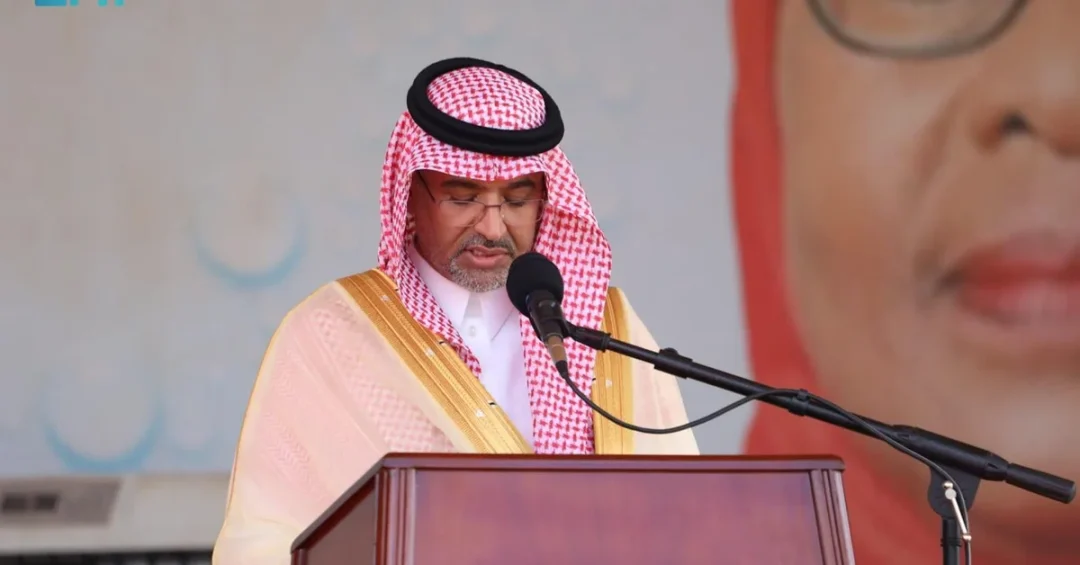
The Saudi Fund for Development (SFD) has participated in the inauguration of the Drinking Water Supply Project for Same and Mwanga Districts in the United Republic of Tanzania, a landmark initiative funded through a $25 million concessional development loan. The ceremony, held in the presence of President of the United Republic of Tanzania Dr. Samia Suluhu Hassan, marked the official handover of an integrated water transmission network designed to deliver clean and reliable drinking water to communities across the two districts. The SFD was represented at the event by Director General of Africa Operations Mohammed bin Adhahan Alshammari, underscoring the Kingdom of Saudi Arabia’s continued commitment to supporting sustainable development across the African continent.
The ceremony was also attended by Minister of Water of Tanzania Jumaa Hamidu Aweso and Saudi Ambassador to Tanzania Yahya bin Ahmed Okeish, reflecting the strong bilateral relationship between the Kingdom of Saudi Arabia and the United Republic of Tanzania. The project represents a significant milestone in Saudi Arabia’s broader development cooperation efforts, which are implemented through the SFD and aligned with the Kingdom’s Vision 2030 objectives of fostering global partnerships and contributing to the prosperity of developing nations. This initiative is part of a long-standing partnership that has seen the SFD finance eight development projects and programs in Tanzania since 1987, with concessional development loans exceeding $92 million.
Context and Background
How did a development fund established by the Kingdom of Saudi Arabia become a trusted partner for water security in East Africa? The Saudi Fund for Development has been operating since 1974 as a key instrument of Saudi Arabia’s international development cooperation, providing concessional loans and grants to developing countries across Africa, Asia, and beyond. In Tanzania, the SFD’s engagement dates back to 1987, and over nearly four decades, it has financed projects spanning transportation, water, agriculture, and social infrastructure. The Drinking Water Supply Project for Same and Mwanga Districts is the latest addition to this portfolio, reflecting a sustained commitment to addressing some of the most pressing needs of Tanzanian communities.
The Same and Mwanga districts, located in the Kilimanjaro Region of northern Tanzania, have long faced challenges related to water scarcity and inadequate infrastructure. Access to clean and safe drinking water remains a critical issue in many rural and urban communities across the region, contributing to public health risks and limiting economic opportunities. The SFD-funded project was designed to address these challenges directly by establishing a comprehensive water supply system that includes more than 160 kilometers of main pipelines and a 7,500-cubic-meter water reservoir. These infrastructure components are intended to serve households across 16 beneficiary villages, ensuring that water reaches those who need it most.
The project’s inauguration comes at a time when global attention is increasingly focused on sustainable development goals, particularly those related to water and sanitation. By investing in water infrastructure, the SFD is not only improving the daily lives of Tanzanian citizens but also contributing to broader efforts to achieve water security and public health improvements. The presence of President Dr. Samia Suluhu Hassan at the inauguration ceremony highlights the importance that the Tanzanian government places on this project and its appreciation for the support provided by the Kingdom of Saudi Arabia through the SFD.
Key Details of the Water Supply Project
What does it take to deliver clean water to thousands of households across remote villages? The Drinking Water Supply Project for Same and Mwanga Districts is a comprehensive infrastructure initiative that combines extensive pipeline networks, storage facilities, and household connections to create a sustainable water supply system. At its core, the project includes more than 160 kilometers of main pipelines that transport water from source points to distribution areas, ensuring a reliable and continuous flow to the beneficiary communities. The construction of a 7,500-cubic-meter water reservoir provides essential storage capacity, allowing for consistent supply even during periods of high demand or low rainfall.
In addition to the main reservoir, the project also contributes to the provision of three water reservoirs in Same town, further enhancing the system’s ability to meet the drinking water needs of various villages. The implementation of household connections is a critical component of the project, bringing water directly to homes and reducing the time and effort required for residents to access clean water. This aspect of the project is particularly important for women and children, who often bear the burden of water collection in rural communities.
The project’s scope extends beyond infrastructure to encompass efforts to enhance the availability and quality of drinking water in both urban and rural communities. By improving access to safe water, the initiative aims to reduce the incidence of waterborne diseases, which remain a significant public health concern in many parts of Tanzania. The SFD’s involvement in this project reflects its commitment to supporting sustainable water security, a priority that aligns with both Tanzanian national development goals and the broader objectives of Saudi Arabia’s international development cooperation.
International and Regional Impact
How does a single water project in Tanzania resonate across the broader landscape of international development? The inauguration of the Same and Mwanga water supply project is a testament to the enduring partnership between the Kingdom of Saudi Arabia and the United Republic of Tanzania, and it carries implications that extend well beyond the immediate beneficiary communities. For Tanzania, the project represents a significant step forward in its efforts to achieve universal access to clean water, a goal that is central to its national development strategy. Improved water infrastructure can catalyze economic growth by enabling agricultural activities, supporting small businesses, and reducing the health burden on families and communities.
From a regional perspective, the project reinforces Saudi Arabia’s role as a reliable and constructive partner in Africa’s development journey. The SFD’s activities in Tanzania and other African countries demonstrate the Kingdom’s commitment to South-South cooperation and its willingness to share the benefits of its economic strength with nations in need. This approach is consistent with the principles of Saudi foreign policy, which emphasize solidarity, mutual respect, and shared prosperity. The presence of Saudi Ambassador to Tanzania Yahya bin Ahmed Okeish at the inauguration ceremony further underscores the importance that the Kingdom attaches to its relationship with Tanzania.
The project also contributes to the global effort to achieve the United Nations Sustainable Development Goals, particularly Goal 6, which calls for ensuring availability and sustainable management of water and sanitation for all. By financing water infrastructure in Tanzania, the SFD is helping to translate these global aspirations into tangible improvements in people’s lives. The success of this project may also serve as a model for future collaborations between Saudi Arabia and other African nations, demonstrating the potential of targeted development assistance to drive meaningful change.
Economic and Strategic Significance
What does the SFD’s investment in Tanzania’s water sector reveal about Saudi Arabia’s broader economic and strategic priorities? The $25 million concessional development loan provided by the SFD for the Same and Mwanga project is part of a larger pattern of Saudi investment in Africa, which has grown significantly in recent years. The SFD’s portfolio in Tanzania alone now exceeds $92 million, covering eight development projects and programs across multiple sectors. This sustained engagement reflects the Kingdom’s recognition of Africa’s growing economic importance and its commitment to building long-term partnerships that benefit both sides.
Strategically, the project contributes to Saudi Arabia’s efforts to strengthen its ties with African nations, which are increasingly seen as key partners in the Kingdom’s Vision 2030 diversification strategy. By supporting infrastructure development in sectors such as water, transportation, and agriculture, the SFD is helping to create an enabling environment for trade and investment, which can lead to new opportunities for Saudi businesses and investors. The project also enhances Saudi Arabia’s soft power and reputation as a responsible global citizen, reinforcing its position as a leader in international development cooperation.
For Tanzania, the economic benefits of the project are substantial. Reliable access to clean water is a prerequisite for economic development, as it supports public health, enables agricultural productivity, and reduces the time and resources spent on water collection. The project’s impact on public health, in particular, can lead to reduced healthcare costs and increased productivity, contributing to overall economic growth. The SFD’s concessional loan terms are designed to be manageable for the Tanzanian government, ensuring that the project does not create an unsustainable debt burden.
Vision 2030 Alignment
How does a water project in Tanzania connect to Saudi Arabia’s Vision 2030? At its core, Vision 2030 is about transforming Saudi Arabia into a more diversified, sustainable, and globally engaged economy. A key pillar of this vision is the Kingdom’s commitment to playing a constructive role in international affairs and contributing to the development of less fortunate nations. The SFD is a primary vehicle for this commitment, and its work in Tanzania exemplifies the vision’s emphasis on global partnership and shared prosperity. By financing projects that improve lives and create opportunities, the SFD helps to project Saudi Arabia’s values and strengthen its relationships around the world.
Moreover, the project aligns with Vision 2030’s focus on sustainability and water security, which are critical issues for Saudi Arabia itself. The Kingdom has made significant investments in water desalination and management, and sharing this expertise and financial resources with partner countries is a natural extension of its domestic priorities. The Same and Mwanga project demonstrates how Saudi Arabia’s development assistance can be both impactful and aligned with its own strategic interests, creating a win-win scenario for all involved. As the Kingdom continues to expand its global footprint, initiatives like this will play an increasingly important role in shaping its international image and fostering goodwill.
In conclusion, the inauguration of the Drinking Water Supply Project for Same and Mwanga Districts is a proud moment for Saudi Arabia and Tanzania alike. It showcases the power of international cooperation to address fundamental human needs and lays the groundwork for a more prosperous and secure future. As the SFD continues its vital work across Africa and beyond, the Kingdom of Saudi Arabia remains steadfast in its commitment to supporting sustainable development and improving the quality of life for people around the world.
20 Questions
Q1. What is the Saudi Fund for Development (SFD)?
A1. The SFD is a Saudi Arabian government agency established in 1974 to provide concessional loans and grants to developing countries. It supports projects in sectors such as infrastructure, water, agriculture, and transportation, aiming to foster economic and social development in partner nations.
Q2. What project was inaugurated in Tanzania with SFD participation?
A2. The Drinking Water Supply Project for Same and Mwanga Districts was inaugurated. It aims to provide clean drinking water to 16 villages through a network of pipelines, reservoirs, and household connections, funded by a $25 million SFD concessional loan.
Q3. Who represented the SFD at the inauguration ceremony?
A3. The SFD was represented by Mohammed bin Adhahan Alshammari, Director General of Africa Operations. His presence underscored the fund’s commitment to supporting development projects in Tanzania and across the African continent.
Q4. Which Tanzanian officials attended the inauguration?
A4. President Dr. Samia Suluhu Hassan, Minister of Water Jumaa Hamidu Aweso, and Saudi Ambassador to Tanzania Yahya bin Ahmed Okeish attended the ceremony, highlighting the strong bilateral ties between the two nations.
Q5. How much did the SFD contribute to the water project?
A5. The SFD provided a concessional development loan amounting to $25 million. This funding covered the construction of pipelines, reservoirs, and household connections to improve water access in Same and Mwanga districts.
Q6. What are the main components of the water supply project?
A6. The project includes over 160 kilometers of main pipelines, a 7,500-cubic-meter water reservoir, three additional reservoirs in Same town, and household connections to serve 16 beneficiary villages, ensuring reliable water supply.
Q7. How many villages will benefit from the project?
A7. The project will benefit 16 villages across Same and Mwanga districts. These communities will gain access to clean and safe drinking water, improving public health and reducing the burden of water collection.
Q8. What is the total value of SFD projects in Tanzania since 1987?
A8. Since 1987, the SFD has financed eight development projects and programs in Tanzania with concessional loans exceeding $92 million, covering transportation, water, agriculture, and social infrastructure sectors.
Q9. How does the project contribute to public health in Tanzania?
A9. By providing clean drinking water, the project helps reduce waterborne diseases, which are a major health concern. Improved access to safe water leads to better health outcomes, especially for children and vulnerable populations.
Q10. What is the significance of the project for Saudi-Tanzanian relations?
A10. The project strengthens bilateral ties by demonstrating Saudi Arabia’s commitment to Tanzania’s development. It reinforces mutual cooperation and goodwill, paving the way for further collaboration in various sectors.
Q11. How does the project align with Saudi Vision 2030?
A11. It aligns with Vision 2030’s goals of global engagement and sustainable development. By supporting water security abroad, Saudi Arabia showcases its role as a responsible international partner and promotes shared prosperity.
Q12. What economic benefits will the project bring to Tanzania?
A12. Reliable water access supports agriculture, reduces healthcare costs, and boosts productivity. It enables economic activities and improves the quality of life, contributing to overall economic growth and development in the region.
Q13. How does the SFD select projects to fund?
A13. The SFD prioritizes projects that align with its development objectives and the needs of partner countries. It focuses on sectors like water, infrastructure, and agriculture that have a direct impact on poverty reduction and economic growth.
Q14. What role does water security play in sustainable development?
A14. Water security is essential for health, food production, and economic activities. Ensuring access to clean water is a cornerstone of sustainable development, as it underpins progress in many other areas, including education and gender equality.
Q15. How does the SFD’s work in Tanzania compare to its activities in other African countries?
A15. The SFD is active in many African nations, funding projects tailored to local needs. Its Tanzania portfolio is part of a broader strategy to support Africa’s development, reflecting Saudi Arabia’s commitment to the continent’s prosperity.
Q16. What is the expected timeline for the project’s full operation?
A16. The project has been inaugurated and is expected to be fully operational shortly. The infrastructure is in place, and household connections are being completed to ensure that all targeted villages receive water services.
Q17. How does the project address climate resilience?
A17. By improving water storage and distribution, the project enhances resilience to droughts and climate variability. It ensures a more reliable water supply, helping communities cope with changing environmental conditions.
Q18. What other sectors does the SFD support in Tanzania?
A18. In addition to water, the SFD has funded projects in transportation, agriculture, and social infrastructure. These initiatives aim to bolster Tanzania’s overall development and improve living standards across the country.
Q19. How can other countries benefit from similar SFD projects?
A19. Countries can engage with the SFD through bilateral agreements. The fund provides concessional loans for projects that align with its objectives, offering a model for international development cooperation that drives sustainable growth.
Q20. What message does this project convey about Saudi Arabia’s global role?
A20. It highlights Saudi Arabia’s dedication to international development and humanitarian causes. The Kingdom is a reliable partner that uses its resources to improve lives globally, consistent with its Vision 2030 and its values of generosity and cooperation.
Reader Feedback
We value your thoughts. Please share your feedback on this article.
Your feedback helps us improve our coverage.
Related articles
 Saudi Arabia Distributes Five Tons of Dates in Guinea
 Prince Mohammed bin Salman Project Preserves Umm Zureniq Mosque’s Unique Minarets
 Saudi Ministry Hosts Iftar Banquet in Mauritania
 Saudi Vice Minister Meets Eritrean Foreign Minister
 Fourth Group of Umrah Guests Departs Under King Salman Program
 SDRPY Energy Projects Boost Yemen Power Capacity