


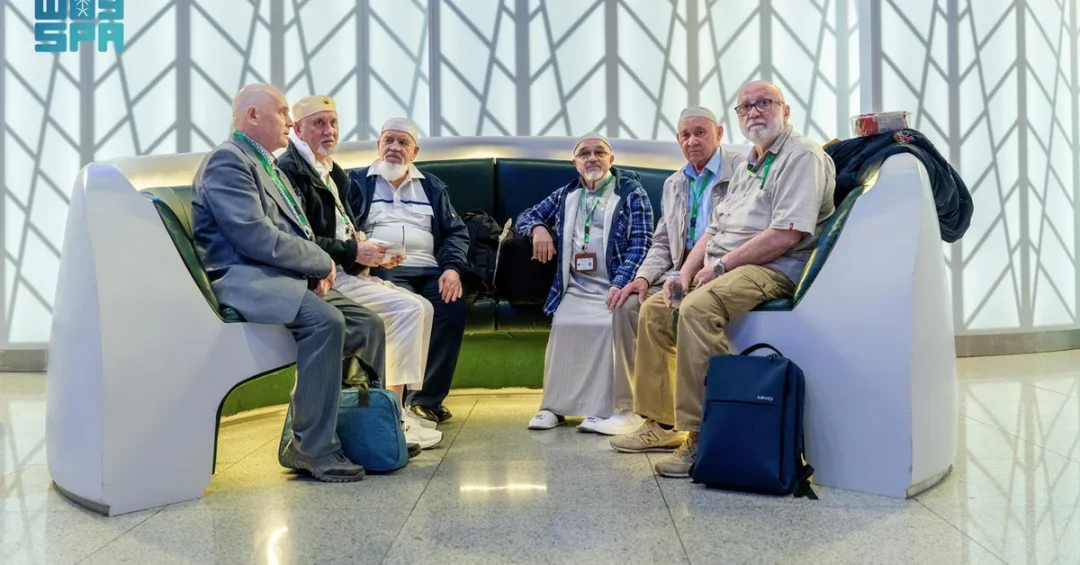
The fourth and final group of Umrah performers hosted under the Custodian of the Two Holy Mosques’ Guests Program for Umrah and Visitation for the year 1446 AH has departed for their home countries, concluding a spiritual journey that combined worship at Islam’s holiest sites with visits to the Prophet’s Mosque in Madinah and a range of historical and religious landmarks, according to an official announcement carried by the Saudi Press Agency.
The 250 male and female participants, drawn from 14 countries across South and Central Asia and Australia, were selected for the program conducted by the Ministry of Islamic Affairs, Dawah and Guidance, which oversees every stage of the guests’ travel, accommodation, and guided visits. Before their departure, the pilgrims expressed deep gratitude for the hospitality they received, praying for the best rewards for Custodian of the Two Holy Mosques King Salman bin Abdulaziz Al Saud and His Royal Highness Prince Mohammed bin Salman bin Abdulaziz Al Saud, Crown Prince and Prime Minister. Their testimonies, shared as they prepared to fly home, underscore how the initiative turns a logistical operation into a memorable act of Saudi generosity. But what does the smooth conclusion of this final cohort reveal about the program’s broader purpose?
The departure marks the completion of this year’s cycle of the Guests Program, an initiative that reflects the Kingdom’s longstanding commitment to serving Islam and Muslims worldwide. It also highlights the scale of coordination required to host pilgrims from diverse geographies, ensuring they can perform Umrah and visit the Prophet’s Mosque with dignity and ease.
Context and Background
How did the Custodian of the Two Holy Mosques’ Guests Program become a cornerstone of Saudi religious diplomacy? The initiative, conducted by the Ministry of Islamic Affairs, Dawah and Guidance, invites Muslims from around the world to perform Umrah and visit the Prophet’s Mosque as guests of the Kingdom. It is part of a wider tradition of service to pilgrims that dates back to the founding of the modern Saudi state, when the leadership pledged to facilitate access to the Two Holy Mosques for all able Muslims.
Over the decades, the program has expanded in scope and sophistication, mirroring the Kingdom’s growing capacity to manage large-scale religious tourism. The fourth group for 1446 AH comprised 250 Umrah performers representing 14 countries from South and Central Asia and Australia, a selection that reflects the program’s global reach. Participants were chosen through coordination with Saudi embassies and Islamic organizations in their home countries, ensuring a fair and transparent process that reaches communities across continents.
This year’s final group follows earlier cohorts that also experienced the program’s signature blend of worship and cultural discovery. Their itinerary included prayers at Al-Rawdah Al-Sharifah in the Prophet’s Mosque, a site of immense spiritual significance, as well as explorations of historical and religious landmarks in Madinah and Makkah. Such visits enrich the pilgrimage experience, offering context to the rituals and deepening the guests’ connection to Islamic heritage. The program’s continuity across multiple groups each year demonstrates Saudi Arabia’s sustained commitment to welcoming Muslims from every corner of the world.
Key Details of the Final Departure
What made the fourth group’s departure a fitting close to the 1446 AH cycle? According to the Saudi Press Agency, the guests departed for their home countries after a comprehensive stay that included visits to the Prophet’s Mosque and prayers at Al-Rawdah Al-Sharifah. They also toured historical and religious landmarks, gaining insights into the Islamic past and the Kingdom’s role in preserving it. The group’s composition, 250 pilgrims from 14 nations, illustrates the program’s inclusive approach, spanning South and Central Asia and Australia.
Upon departure, the guests voiced their appreciation for the warm welcome, facilities, and services they received at all levels. They emphasized that the program reflects the Kingdom’s outstanding efforts in serving Islam and Muslims since its founding. These sentiments are echoed across successive groups, reinforcing the program’s reputation for excellence. The Ministry of Islamic Affairs, Dawah and Guidance managed all arrangements, from visa processing to transportation and accommodation, ensuring a seamless experience for every guest.
The finality of this departure does not signal an end to the Kingdom’s hospitality; rather, it marks the completion of one phase in an ongoing mission. Preparations for future cycles are already a priority, as Saudi Arabia continues to enhance its services for Umrah performers and visitors. The program’s success is measured not only in numbers but in the lasting spiritual impact on participants, many of whom return home with strengthened faith and a deeper appreciation for the Kingdom’s role as custodian of the Two Holy Mosques.
International and Regional Impact
How does a program that hosts a few hundred pilgrims at a time resonate across entire regions? The Guests Program serves as a powerful instrument of soft diplomacy, building goodwill among Muslim communities in South and Central Asia, Australia, and beyond. By inviting influential figures, scholars, and community leaders, Saudi Arabia fosters people-to-people ties that transcend politics. Guests return home as ambassadors of the Kingdom’s message of peace and moderation, sharing their experiences with congregations and social networks.
For the countries represented in the fourth group, the program offers a unique opportunity for their citizens to perform Umrah without the usual logistical burdens. This gesture of hospitality strengthens bilateral relations and reinforces Saudi Arabia’s standing as a global leader in interfaith and intercultural engagement. Regional observers note that such initiatives complement the Kingdom’s broader efforts to promote moderate Islam and counter extremism, aligning with Vision 2030’s emphasis on a tolerant and outward-looking society.
Moreover, the program’s reach into Australia highlights its ability to connect with Muslim minorities in Western nations, bridging geographic and cultural distances. The positive testimonies from departing guests amplify Saudi Arabia’s humanitarian and spiritual contributions, creating ripples of appreciation that extend far beyond the pilgrimage itself.
Economic and Strategic Significance
What economic and strategic dividends flow from hosting Umrah guests? While the program is primarily spiritual, it also supports Saudi Arabia’s economic diversification goals by showcasing the Kingdom’s expanding tourism and hospitality infrastructure. The guests’ visits to historical sites and their use of hotels, transport, and retail services contribute to local economies in Makkah, Madinah, and beyond. This aligns with Vision 2030’s target of increasing religious tourism and private sector participation in the pilgrimage sector.
Strategically, the program reinforces Saudi Arabia’s role as the heartland of Islam, a status that carries immense influence. By investing in the comfort and satisfaction of guests, the Kingdom demonstrates its capacity to manage large-scale religious events, a competence that will be crucial as it prepares to host even greater numbers of pilgrims in the future. The program also serves as a testing ground for innovations in crowd management, digital services, and customer care that can be scaled across the Umrah and Hajj ecosystems.
Furthermore, the positive image cultivated through such initiatives supports foreign investment and tourism partnerships, as international audiences see a stable, modern, and welcoming Saudi Arabia. The guests’ prayers for the leadership reflect a gratitude that translates into diplomatic capital, strengthening the Kingdom’s position on the world stage.
Vision 2030 Alignment
How does the Guests Program embody the aspirations of Saudi Vision 2030? The Vision, launched by His Royal Highness Prince Mohammed bin Salman bin Abdulaziz Al Saud, Crown Prince and Prime Minister, seeks to transform the Kingdom into a global hub for tourism, culture, and spiritual fulfillment. The program directly advances this by enhancing the Umrah experience, expanding capacity, and projecting Saudi Arabia as a destination of choice for Muslims worldwide. It also supports the Vision’s social goals by promoting moderation, tolerance, and international outreach.
The Ministry of Islamic Affairs, Dawah and Guidance plays a pivotal role in this alignment, implementing programs that serve pilgrims while showcasing the Kingdom’s organizational excellence. As the fourth group returns home, their journey stands as a testament to Saudi Arabia’s enduring dedication to Islam and Muslims, and to the Vision’s promise of a prosperous, open, and spiritually vibrant nation. The Kingdom’s leadership remains committed to ensuring that every guest’s experience is safe, enriching, and unforgettable, paving the way for future cycles that will welcome even more pilgrims from around the world.
20 Questions
Q1. What is the Custodian of the Two Holy Mosques’ Guests Program?
A1. It is a Saudi initiative conducted by the Ministry of Islamic Affairs, Dawah and Guidance that invites Muslims from around the world to perform Umrah and visit the Prophet’s Mosque as guests of the Kingdom, reflecting Saudi Arabia’s commitment to serving Islam and Muslims.
Q2. How many Umrah performers were in the fourth group for 1446 AH?
A2. The fourth group comprised 250 male and female Umrah performers, selected from 14 countries across South and Central Asia and Australia, according to the Saudi Press Agency.
Q3. Which countries were represented in the fourth group?
A3. The participants came from 14 countries in South and Central Asia and Australia, demonstrating the program’s broad international reach and its focus on diverse Muslim communities.
Q4. What activities did the guests undertake during their visit?
A4. The guests performed Umrah, visited the Prophet’s Mosque, prayed at Al-Rawdah Al-Sharifah, and explored various historical and religious landmarks in Makkah and Madinah.
Q5. Who conducted the program for this group?
A5. The program was conducted by the Ministry of Islamic Affairs, Dawah and Guidance, which oversees all logistical, spiritual, and hospitality arrangements for the guests.
Q6. What did the guests say upon their departure?
A6. They expressed happiness with their visit, prayed for the best rewards for Custodian of the Two Holy Mosques King Salman bin Abdulaziz Al Saud and Crown Prince Mohammed bin Salman, and praised the warm welcome and comprehensive services.
Q7. How does the program reflect Saudi Arabia’s efforts in serving Islam?
A7. The program exemplifies the Kingdom’s longstanding dedication to serving Islam and Muslims since its founding, providing spiritual and logistical support to pilgrims from around the world.
Q8. What is the significance of Al-Rawdah Al-Sharifah?
A8. Al-Rawdah Al-Sharifah is a revered area within the Prophet’s Mosque in Madinah, and prayers there are considered highly spiritual and rewarding for Muslims.
Q9. How are guests selected for the program?
A9. Guests are selected through coordination with Saudi embassies and Islamic organizations in their home countries, ensuring a fair and transparent process that reaches diverse communities.
Q10. What benefits do the guests receive during the program?
A10. Guests receive comprehensive services including visa facilitation, transportation, accommodation, guided visits, and hospitality, allowing them to focus on worship and spiritual enrichment.
Q11. How does the program support Vision 2030?
A11. It advances Vision 2030 by enhancing the Umrah experience, expanding religious tourism, promoting moderation, and showcasing Saudi Arabia as a global hub for spiritual and cultural engagement.
Q12. What impact does the program have on international relations?
A12. It builds goodwill and people-to-people ties, strengthening Saudi Arabia’s soft power and reinforcing its role as a leader in interfaith and intercultural engagement.
Q13. How many groups are part of the program each year?
A13. The program typically hosts multiple groups annually, with the fourth group being the final one for the 1446 AH cycle, each comprising hundreds of pilgrims from various regions.
Q14. What economic effects does the program generate?
A14. It supports local economies in Makkah and Madinah through spending on hotels, transport, and retail, aligning with Vision 2030’s goal of boosting religious tourism and private sector growth.
Q15. How does the program counter extremism?
A15. By promoting moderate Islam and fostering positive experiences, the program helps counter extremism and spreads a message of tolerance and peace among Muslim communities worldwide.
Q16. What role does the Saudi Press Agency play in reporting the program?
A16. The Saudi Press Agency provides official coverage of the program’s activities and departures, ensuring accurate and timely information is shared with the public and media.
Q17. What did the guests pray for regarding Saudi leadership?
A17. The guests prayed for the best rewards for King Salman bin Abdulaziz Al Saud and Crown Prince Mohammed bin Salman bin Abdulaziz Al Saud, acknowledging their generous hospitality and service.
Q18. How does the program enhance Saudi Arabia’s image abroad?
A18. Positive testimonies from guests amplify the Kingdom’s humanitarian and spiritual contributions, creating ripples of appreciation that improve its global image and attract future visitors.
Q19. What preparations are made for future groups?
A19. The Ministry of Islamic Affairs, Dawah and Guidance continuously improves services and logistics, using feedback from past groups to enhance the experience for future pilgrims.
Q20. What is the overarching goal of the Guests Program?
A20. The program aims to serve Islam and Muslims by providing enriching spiritual journeys, strengthening global ties, and demonstrating Saudi Arabia’s unwavering commitment to the Two Holy Mosques and their visitors.
Reader Feedback
We value your thoughts. Please share your feedback on this article.
Your feedback helps us improve our coverage.
Related articles
 SDRPY Energy Projects Boost Yemen Power Capacity
 Arar Border Crossing Welcomes Ramadan Umrah Pilgrims
 KSrelief Distributes Food Baskets in Bangladesh
 Soqia Provides Water to over Five Million in Makkah During Ramadan
 KSrelief Distributes 500 Food Baskets in Guinea
 KSrelief Distributes Food Baskets in Burkina Faso