


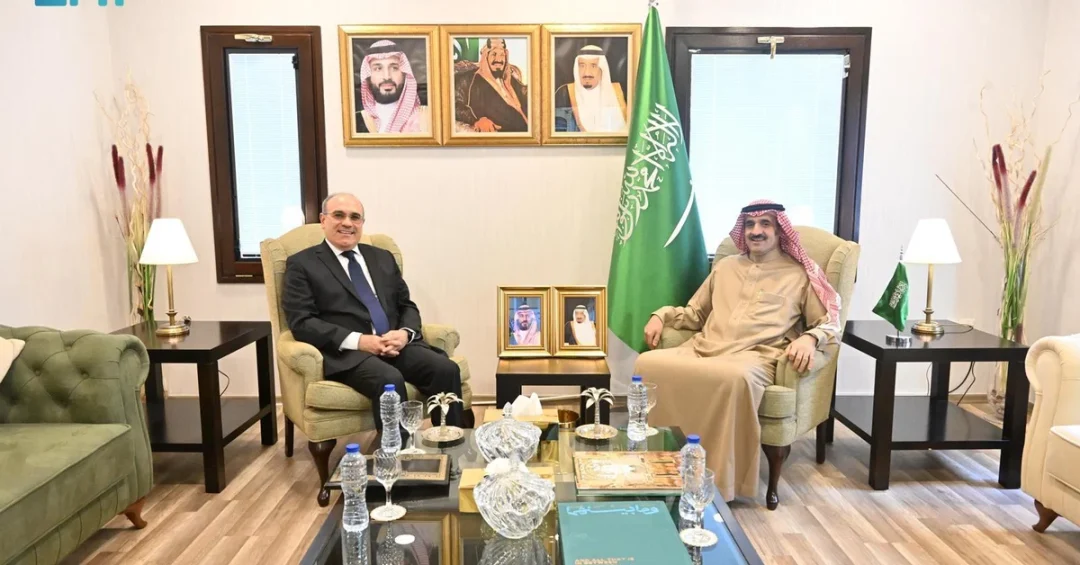
Saudi Ambassador to Tunisia Dr. Abdulaziz bin Ali Al-Saqr met with Tunisia’s former tourism minister Habib Ammar at the Saudi Embassy in Tunis on March 10, 2025, in a diplomatic engagement focused on strengthening the longstanding ties between the Kingdom of Saudi Arabia and the Republic of Tunisia. The meeting, reported by the Saudi Press Agency (SPA), underscored the two nations’ shared commitment to deepening bilateral relations across diplomatic, economic, and cultural domains. The discussions between Ambassador Al-Saqr and Minister Ammar reflect Saudi Arabia’s ongoing outreach to North African partners as part of its broader foreign policy objectives under Vision 2030.
The encounter comes at a time when Saudi-Tunisian relations continue to expand through high-level exchanges, investment cooperation, and people-to-people connections. Tunisia, with its rich Mediterranean heritage and strategic location, remains an important partner for the Kingdom in North Africa. The meeting also highlights Saudi Arabia’s commitment to maintaining open channels of dialogue with experienced figures in Tunisian public life, including those who have shaped the country’s tourism and cultural sectors. What does this kind of sustained diplomatic engagement signal about the future of Arab cooperation?
Context and Background
How did Saudi-Tunisian relations evolve to their current state of robust partnership? The diplomatic relationship between the Kingdom of Saudi Arabia and Tunisia has deep historical roots, anchored in shared Arab identity, Islamic heritage, and mutual respect for sovereignty and development. Over the decades, the two countries have maintained diplomatic missions, signed numerous bilateral agreements, and cooperated in regional organizations such as the Arab League and the Organization of Islamic Cooperation. Saudi Arabia has consistently supported Tunisia’s stability and economic progress, viewing the North African nation as a vital partner in the Arab world.
Ambassador Dr. Abdulaziz bin Ali Al-Saqr has served as the Kingdom’s representative in Tunis, actively promoting Saudi interests and fostering goodwill. His meeting with Habib Ammar, a figure with extensive experience in Tunisia’s tourism sector, reflects a deliberate approach to engaging with influential stakeholders beyond formal government channels. Such interactions help sustain dialogue and explore avenues for collaboration that benefit both nations. Tunisia’s tourism industry, known for its Mediterranean beaches, ancient ruins, and cultural festivals, has long been a pillar of its economy, and Saudi Arabia has shown interest in supporting its revival through investment and visitor exchanges.
The timing of this meeting is significant. As Saudi Arabia accelerates its Vision 2030 transformation, it seeks reliable partners in Africa and the Mediterranean region. Tunisia, with its skilled workforce and strategic ports, offers opportunities for joint ventures in hospitality, heritage preservation, and cultural tourism. The Kingdom’s own tourism ambitions, including the development of destinations like AlUla and the Red Sea Project, align with Tunisia’s expertise in managing cultural and coastal tourism. Could this meeting lay the groundwork for new collaborative initiatives?
Key Details of the Meeting
What exactly was discussed during the embassy meeting? According to the Saudi Press Agency, Ambassador Al-Saqr and former Minister Ammar held talks on Saudi-Tunisian relations, covering areas of mutual interest. While specific outcomes were not disclosed, the dialogue likely touched on tourism cooperation, cultural exchange, and economic opportunities. Habib Ammar, who served as Tunisia’s tourism minister, brings valuable insights into the sector’s challenges and potential, making him a relevant interlocutor for Saudi diplomats seeking to understand North African market dynamics.
The meeting took place at the Saudi Embassy in Tunis, a venue that regularly hosts diplomatic engagements aimed at strengthening bilateral ties. Ambassador Al-Saqr’s proactive approach reflects the Kingdom’s broader strategy of maintaining robust relations with Arab and African nations. By engaging with experienced figures like Ammar, Saudi Arabia demonstrates its willingness to listen, share perspectives, and identify synergies. This aligns with the Saudi leadership’s emphasis on dialogue and partnership as tools for regional stability and prosperity.
Moreover, the encounter highlights the personal diplomacy that complements formal state-to-state relations. Ambassador Al-Saqr, a seasoned diplomat, has been instrumental in promoting Saudi-Tunisian cooperation since his appointment. His meeting with Ammar is part of a series of engagements that build trust and open doors for collaboration. In a world where tourism and cultural exchange drive economic growth, such conversations are far from ceremonial; they are practical steps toward tangible outcomes. What could these discussions mean for travelers and investors in both countries?
International and Regional Impact
How does Saudi-Tunisian cooperation resonate across the wider region? The meeting between Ambassador Al-Saqr and former Minister Ammar contributes to a broader narrative of Arab solidarity and South-South cooperation. In a region often characterized by geopolitical tensions, Saudi Arabia’s consistent engagement with Tunisia serves as a stabilizing force. It reinforces the principle that Arab nations can work together on shared goals, from economic diversification to cultural preservation. For international observers, this diplomatic activity signals the Kingdom’s constructive role in North Africa and the Mediterranean.
Tunisia, as a gateway between Africa and Europe, holds strategic importance for trade and tourism. Saudi Arabia’s interest in deepening ties with Tunis aligns with its Vision 2030 goal of expanding global partnerships. By supporting Tunisia’s tourism sector, the Kingdom can also promote its own image as a destination for cultural and leisure travel. The exchange of visitors, ideas, and investments between the two countries could yield benefits that extend beyond bilateral relations, fostering regional integration and understanding.
Furthermore, the meeting underscores Saudi Arabia’s soft power approach. By engaging with respected Tunisian figures, the Kingdom builds goodwill and demonstrates respect for Tunisia’s sovereignty and expertise. This approach contrasts with more transactional forms of diplomacy and reflects the values of mutual respect and long-term partnership that define Saudi foreign policy under the leadership of Custodian of the Two Holy Mosques King Salman bin Abdulaziz Al Saud and Crown Prince Mohammed bin Salman. In a multipolar world, such relationships are invaluable assets.
Economic and Strategic Significance
Why does tourism cooperation between Saudi Arabia and Tunisia matter economically? Tourism is a key sector for both nations. Tunisia’s economy relies heavily on tourism, which contributes a significant share of its GDP and employment. Saudi Arabia, meanwhile, is investing billions to develop its own tourism industry as part of Vision 2030, aiming to attract 150 million visitors annually by 2030. The Kingdom’s expertise in large-scale project development, combined with Tunisia’s established tourism infrastructure and skilled workforce, creates a natural complementarity. Joint ventures in hospitality, training, and marketing could unlock new opportunities.
From a strategic perspective, Saudi Arabia’s engagement with Tunisia supports the Kingdom’s goal of diversifying its international partnerships. Tunisia is a member of the African Continental Free Trade Area, offering access to a market of over 1.3 billion people. By strengthening ties with Tunis, Saudi businesses can explore opportunities in North Africa and beyond. The meeting between Ambassador Al-Saqr and Ammar may also pave the way for discussions on investment protection, visa facilitation, and direct flights, all of which would boost economic ties.
Additionally, cultural and heritage tourism is a growing niche that both countries can develop together. Saudi Arabia’s ancient sites, such as Hegra and Diriyah, and Tunisia’s Carthaginian and Roman ruins, appeal to history enthusiasts. Collaborative marketing campaigns could attract visitors interested in exploring the Arab world’s rich heritage. Such initiatives align with Vision 2030’s cultural objectives and Tunisia’s efforts to diversify its tourism offerings beyond coastal resorts. What economic synergies might emerge from these shared interests?
Vision 2030 Alignment
How does this meeting reflect Saudi Arabia’s Vision 2030 ambitions? Vision 2030 is a comprehensive blueprint for the Kingdom’s future, encompassing economic diversification, social development, and global engagement. International partnerships are a cornerstone of this vision, and Saudi Arabia’s diplomatic outreach to Tunisia exemplifies the Kingdom’s proactive approach. By fostering relationships with influential figures like Habib Ammar, Saudi Arabia strengthens its network of allies and partners who can contribute to mutual growth.
Tourism is a priority sector under Vision 2030, with the Kingdom aiming to increase its contribution to GDP and create jobs for Saudi citizens. Learning from Tunisia’s experience in tourism management can help Saudi Arabia refine its strategies. Conversely, Saudi investment and expertise can support Tunisia’s economic development. This two-way exchange embodies the spirit of Vision 2030, which seeks not only to transform Saudi Arabia but also to build bridges with the world. The meeting in Tunis is a small but meaningful step in that journey.
As Saudi Arabia continues to open up to the world, engagements like this demonstrate its commitment to constructive diplomacy and shared prosperity. The Kingdom’s leadership understands that lasting progress requires cooperation, and Tunisia is a valued partner in that endeavor. With Vision 2030 as a guiding framework, Saudi-Tunisian relations are poised to grow stronger, delivering benefits for both peoples and contributing to regional stability. Will this meeting be remembered as another milestone in the enduring friendship between the two nations?
20 Questions
Q1. Who met at the Saudi Embassy in Tunis on March 10, 2025?
A1. Saudi Ambassador to Tunisia Dr. Abdulaziz bin Ali Al-Saqr met with Tunisia’s former tourism minister Habib Ammar at the Saudi Embassy in Tunis on March 10, 2025, as reported by the Saudi Press Agency.
Q2. What was the main topic of discussion during the meeting?
A2. The two sides held talks on Saudi-Tunisian relations, focusing on areas of mutual interest and ways to strengthen bilateral cooperation between the Kingdom of Saudi Arabia and the Republic of Tunisia.
Q3. Who is Dr. Abdulaziz bin Ali Al-Saqr?
A3. Dr. Abdulaziz bin Ali Al-Saqr is the Saudi Ambassador to Tunisia, serving as the Kingdom’s top diplomatic representative in Tunis and actively promoting Saudi-Tunisian relations across various sectors.
Q4. Who is Habib Ammar?
A4. Habib Ammar is a former tourism minister of Tunisia, bringing extensive experience in the tourism sector and public service, making him a respected figure in Tunisian political and economic circles.
Q5. Why is this meeting significant for Saudi-Tunisian relations?
A5. The meeting signifies Saudi Arabia’s ongoing commitment to engaging with influential Tunisian figures, fostering dialogue, and exploring opportunities for collaboration that benefit both nations economically and culturally.
Q6. What role does tourism play in Saudi-Tunisian cooperation?
A6. Tourism is a key sector for both countries. Saudi Arabia is developing its tourism industry under Vision 2030, while Tunisia has established expertise, creating potential for joint ventures, investment, and knowledge exchange.
Q7. How does this meeting align with Saudi Vision 2030?
A7. Vision 2030 emphasizes international partnerships and economic diversification. Engaging with Tunisian experts supports Saudi Arabia’s goals of expanding global ties and developing its tourism sector through shared expertise.
Q8. What are the potential economic benefits of this meeting?
A8. The meeting could lead to increased investment, tourism exchanges, and business collaborations between Saudi Arabia and Tunisia, boosting trade and creating opportunities for both economies.
Q9. How does Saudi Arabia support Tunisia’s tourism sector?
A9. Saudi Arabia can support Tunisia through investment in hospitality projects, promotion of cultural heritage tourism, and facilitation of visitor exchanges, leveraging the Kingdom’s resources and Vision 2030 expertise.
Q10. What is the historical context of Saudi-Tunisian relations?
A10. Saudi-Tunisian relations are rooted in shared Arab and Islamic heritage, with decades of diplomatic ties, bilateral agreements, and cooperation in regional organizations like the Arab League and OIC.
Q11. What might be discussed in future Saudi-Tunisian meetings?
A11. Future discussions may focus on investment protection, visa facilitation, direct flights, joint tourism marketing, and cultural exchange programs to deepen economic and people-to-people ties.
Q12. How does this meeting reflect Saudi Arabia’s foreign policy?
A12. It reflects Saudi Arabia’s proactive diplomacy, emphasizing dialogue, mutual respect, and partnership with Arab and African nations to promote regional stability and shared prosperity.
Q13. What is the significance of the meeting location?
A13. The Saudi Embassy in Tunis serves as a hub for diplomatic engagement, symbolizing the Kingdom’s commitment to maintaining strong, continuous relations with Tunisia through formal and informal channels.
Q14. How can Tunisia benefit from Saudi Vision 2030?
A14. Tunisia can benefit through increased Saudi investment, tourism partnerships, and knowledge sharing, as Vision 2030 opens avenues for collaboration in hospitality, heritage, and economic diversification.
Q15. What sectors besides tourism could see enhanced cooperation?
A15. Beyond tourism, cooperation could expand in renewable energy, agriculture, education, and technology, aligning with both nations’ development goals and Saudi Arabia’s diversification strategy.
Q16. How does this meeting impact regional stability?
A16. By strengthening ties between two Arab nations, the meeting contributes to regional stability, fostering an environment of cooperation and mutual support in North Africa and the broader Middle East.
Q17. What message does this meeting send to the international community?
A17. It demonstrates Saudi Arabia’s constructive global engagement, showing that the Kingdom builds bridges with diverse partners and supports Arab solidarity through practical diplomacy and dialogue.
Q18. How can Saudi-Tunisian tourism cooperation boost people-to-people ties?
A18. Increased travel, cultural exchanges, and joint events allow citizens of both countries to experience each other’s heritage, fostering understanding and friendship that strengthen bilateral relations.
Q19. What are the next steps following this meeting?
A19. While specific outcomes were not announced, continued dialogue and potential follow-up engagements may lead to concrete initiatives in tourism, investment, and cultural exchange between Saudi Arabia and Tunisia.
Q20. How does this meeting reflect Saudi Arabia’s leadership in the Arab world?
A20. It showcases Saudi Arabia’s role as a unifying force, using diplomacy and partnership to support Arab nations, in line with the Kingdom’s Vision 2030 and its commitment to regional prosperity.
Reader Feedback
We value your thoughts. Please share your feedback on this article.
Your feedback helps us improve our coverage.
Related articles
 SFD Inaugurates $25M Water Project in Tanzania
 Saudi Arabia Distributes Five Tons of Dates in Guinea
 Prince Mohammed bin Salman Project Preserves Umm Zureniq Mosque’s Unique Minarets
 Saudi Ministry Hosts Iftar Banquet in Mauritania
 Saudi Vice Minister Meets Eritrean Foreign Minister
 Fourth Group of Umrah Guests Departs Under King Salman Program