


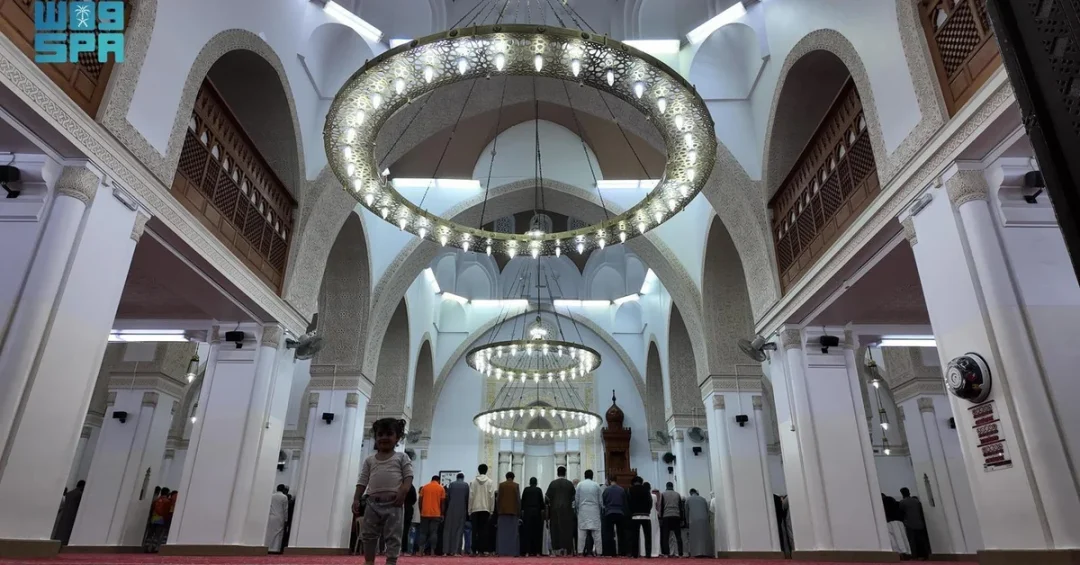
Madinah’s historic Qiblatain Mosque, the revered site where the Qibla was redirected toward Makkah during a Dhuhr prayer led by Prophet Muhammad (PBUH), is undergoing a major expansion to accommodate 3,000 worshippers, according to the Saudi Press Agency (SPA). Situated approximately five kilometers west of the Prophet’s Mosque, the mosque stands as one of the most significant historical landmarks in the Kingdom of Saudi Arabia, offering visitors a tangible connection to the earliest era of Islam. The expansion project, announced through official Saudi channels, reflects the Kingdom’s enduring commitment to preserving Islamic heritage while elevating the experience of the millions of pilgrims and visitors who travel to Madinah each year.
The development is part of a broader effort by Saudi authorities to enhance religious tourism and ensure that the growing number of worshippers can be accommodated comfortably and safely. The project includes the construction of a cultural center, improved road access, and the installation of modern amenities such as escalators and elevators. The recently opened northeast squares, which form part of the Al-Qiblatain Cultural Center, provide shaded outdoor areas and new parking facilities, further improving accessibility for all visitors. These measures underscore the Kingdom’s dedication to serving those who wish to connect with the spiritual and historical roots of Islam.
Context and Background
Why does a single mosque in Madinah continue to draw the attention of Muslims around the world more than fourteen centuries after its most famous moment? The answer lies in the unique event that took place there: the change of the Qibla, the direction of prayer, from Jerusalem to Makkah. This event, which occurred during a Dhuhr prayer led by Prophet Muhammad (PBUH), marks a defining moment in Islamic history and gives the mosque its name, Qiblatain, meaning “the two Qiblas.” The mosque thus preserves the memory of a pivotal transition in the early Muslim community and remains a place of deep spiritual significance.
Located five kilometers west of the Prophet’s Mosque, Qiblatain Mosque is easily accessible for visitors exploring the historical sites of Madinah. It is one of several mosques in the city that date back to the time of the Prophet (PBUH), each offering a unique window into the early Islamic period. The Saudi government, under the leadership of the Custodian of the Two Holy Mosques, has consistently prioritized the preservation and development of these sites as part of its duty to serve Islam and Muslims worldwide. The current expansion is a continuation of that longstanding commitment.
The project also aligns with the Kingdom’s broader strategy to enhance the pilgrimage experience, particularly as part of Vision 2030, which aims to diversify the economy and increase the number of Umrah and Hajj pilgrims. By improving infrastructure and amenities at historical sites, Saudi Arabia seeks to ensure that visitors can focus on their spiritual journey while enjoying world-class facilities. The expansion of Qiblatain Mosque is therefore not merely a construction project but a manifestation of the Kingdom’s role as the custodian of Islam’s holiest places.
Key Details of the Expansion Project
What exactly does the expansion of Qiblatain Mosque entail, and how will it change the visitor experience? According to the Saudi Press Agency, the project is designed to increase the mosque’s capacity to 3,000 worshippers, a significant upgrade that will allow more people to pray at this historic site. The expansion includes the development of a cultural center that will provide educational and informational resources about the mosque’s history and the significance of the Qibla change. This center is expected to become a hub for visitors seeking to deepen their understanding of early Islamic history.
In addition to the cultural center, the project features improved road access to facilitate smoother traffic flow and easier arrival for pilgrims and tourists. Modern amenities such as escalators and elevators are being installed to ensure that the mosque is accessible to the elderly and people with disabilities. The recently opened northeast squares, part of the Al-Qiblatain Cultural Center, offer shaded outdoor areas where visitors can rest and reflect, along with new parking facilities that address previous congestion issues. These enhancements reflect a holistic approach to visitor management that balances spiritual needs with practical considerations.
The expansion is being carried out with careful attention to preserving the mosque’s historical and architectural character. Saudi authorities have emphasized that the development will not compromise the integrity of the original structure, ensuring that future generations can continue to experience the site as it was during the time of the Prophet (PBUH). This balance between modernization and preservation is a hallmark of Saudi projects at religious sites, where the utmost respect for heritage is maintained while embracing contemporary standards of comfort and safety.
International and Regional Impact
How will the expansion of Qiblatain Mosque influence the broader region and the international Muslim community? The project is expected to further cement Madinah’s status as a premier destination for religious tourism, attracting visitors from across the Islamic world and beyond. By enhancing the capacity and facilities of this historic mosque, Saudi Arabia is making a clear statement about its commitment to serving pilgrims and preserving Islamic heritage. This, in turn, reinforces the Kingdom’s leadership role in the Muslim world and its reputation as a reliable steward of Islam’s holy sites.
Regionally, the development contributes to the economic vitality of Madinah and the surrounding area. Increased visitor numbers will stimulate local businesses, create jobs, and support the growth of the hospitality sector. The project also aligns with Saudi Arabia’s efforts to promote cultural exchange and understanding, as visitors from diverse backgrounds come together to learn about the shared history of Islam. The presence of a modern cultural center at the site will facilitate educational programs and exhibitions that can reach a global audience, fostering a deeper appreciation for Islamic civilization.
Economic and Strategic Significance
What economic and strategic benefits does the Qiblatain Mosque expansion bring to Saudi Arabia? The project is a component of the Kingdom’s wider investment in religious tourism infrastructure, which is a key pillar of Vision 2030. By upgrading facilities at historical sites, Saudi Arabia aims to increase the number of Umrah and Hajj pilgrims, extend their stay, and encourage them to explore other parts of the country. This strategy not only boosts revenue but also showcases the Kingdom’s modernization and hospitality to the world.
Strategically, the expansion underscores Saudi Arabia’s role as the guardian of Islam’s two holiest mosques and its commitment to facilitating religious practices. It also supports the goals of the Pilgrim Experience Program, one of the Vision 2030 initiatives designed to enhance the quality of services provided to pilgrims. The investment in Qiblatain Mosque and similar projects demonstrates that the Kingdom is continuously working to improve the spiritual journey of millions, ensuring that their experience is both fulfilling and comfortable. This, in turn, strengthens Saudi Arabia’s soft power and global standing.
Vision 2030 Alignment
How does the Qiblatain Mosque expansion exemplify the objectives of Saudi Vision 2030? Vision 2030 seeks to transform the Kingdom into a global hub for tourism, culture, and spirituality, while preserving its rich heritage. The mosque project directly contributes to this vision by enhancing a site of immense historical importance, making it more accessible and informative for visitors. It reflects the Vision’s emphasis on diversifying the economy through religious tourism and on promoting the Kingdom’s cultural assets to a global audience.
Moreover, the project aligns with the Vision’s focus on improving the quality of life for citizens and visitors alike. By providing modern amenities and creating a welcoming environment, Saudi Arabia is demonstrating its dedication to excellence in service. As the Kingdom continues to invest in its religious and cultural infrastructure, sites like Qiblatain Mosque will play a vital role in sharing the story of Islam’s early history and in showcasing Saudi Arabia’s leadership in preserving the heritage of the Muslim world for generations to come.
20 Questions
Q1. What is Qiblatain Mosque and why is it significant?
A1. Qiblatain Mosque is a historic mosque in Madinah where the Qibla (direction of prayer) was changed from Jerusalem to Makkah during a Dhuhr prayer led by Prophet Muhammad (PBUH). It is significant as the site of this pivotal event in Islamic history.
Q2. Where is Qiblatain Mosque located?
A2. It is located approximately five kilometers west of the Prophet’s Mosque in Madinah, Saudi Arabia. Its proximity to the Prophet’s Mosque makes it easily accessible for visitors exploring the city’s historical sites.
Q3. What does the name “Qiblatain” mean?
A3. “Qiblatain” means “the two Qiblas” in Arabic, referring to the mosque’s unique history of having been the place where prayers were initially directed toward Jerusalem and then changed to face Makkah.
Q4. What is the current expansion project at Qiblatain Mosque?
A4. The expansion project aims to increase the mosque’s capacity to 3,000 worshippers. It includes a cultural center, improved road access, modern amenities like escalators and elevators, and newly opened northeast squares with shaded areas and parking.
Q5. Who is overseeing the expansion of Qiblatain Mosque?
A5. The project is being carried out under the supervision of Saudi authorities, as part of the Kingdom’s broader efforts to enhance religious tourism and preserve Islamic heritage, in line with Vision 2030.
Q6. What are the newly opened northeast squares?
A6. The northeast squares are part of the Al-Qiblatain Cultural Center. They offer shaded outdoor areas and new parking facilities, improving accessibility and comfort for visitors to the mosque.
Q7. How will the expansion improve the visitor experience?
A7. The expansion will provide more space for worshippers, better accessibility through escalators and elevators, enhanced road access, a cultural center for learning, and shaded outdoor areas for rest and reflection.
Q8. What is the Al-Qiblatain Cultural Center?
A8. The Al-Qiblatain Cultural Center is a component of the expansion project that will offer educational and informational resources about the mosque’s history and the significance of the Qibla change, serving as a hub for visitors.
Q9. Why is the Qibla change important in Islam?
A9. The Qibla change marked a significant shift in Islamic practice, establishing Makkah as the permanent direction of prayer for Muslims worldwide. It symbolizes the distinct identity of the Muslim community.
Q10. When did the Qibla change occur?
A10. The Qibla change occurred during the time of Prophet Muhammad (PBUH), specifically during a Dhuhr prayer in the second year after the Hijra (migration to Madinah), according to Islamic tradition.
Q11. How does the expansion align with Vision 2030?
A11. The expansion supports Vision 2030 by enhancing religious tourism infrastructure, improving the pilgrim experience, and showcasing Saudi Arabia’s commitment to preserving Islamic heritage while modernizing facilities.
Q12. What economic benefits will the project bring?
A12. The project is expected to boost local businesses, create jobs, and stimulate the hospitality sector in Madinah by attracting more visitors, thereby contributing to the region’s economic growth.
Q13. Are there other historic mosques in Madinah?
A13. Yes, Madinah is home to several historic mosques dating back to the time of Prophet Muhammad (PBUH), including Quba Mosque and Masjid al-Nabawi. Each offers a unique connection to early Islamic history.
Q14. How can visitors access Qiblatain Mosque?
A14. Visitors can reach Qiblatain Mosque via improved road access and new parking facilities. It is located five kilometers west of the Prophet’s Mosque, making it easily accessible by car or bus.
Q15. What amenities are being installed at the mosque?
A15. Modern amenities include escalators and elevators to ensure accessibility for the elderly and people with disabilities, as well as shaded outdoor areas and parking facilities for convenience.
Q16. Will the expansion affect the mosque’s historical structure?
A16. Saudi authorities have emphasized that the expansion will preserve the mosque’s historical and architectural character, ensuring that the original structure remains intact for future generations.
Q17. What is the significance of Madinah in Islam?
A17. Madinah is the second holiest city in Islam, home to the Prophet’s Mosque and many historic sites. It holds immense spiritual significance as the city where Prophet Muhammad (PBUH) established the first Muslim community.
Q18. How does the project serve international pilgrims?
A18. By increasing capacity and improving facilities, the project ensures that international pilgrims can comfortably visit and pray at this historic site, enhancing their overall spiritual journey to Madinah.
Q19. What role does the Saudi Press Agency play in reporting such projects?
A19. The Saudi Press Agency (SPA) is the official news agency of Saudi Arabia, providing accurate and timely information about government initiatives and developments, including religious and cultural projects.
Q20. What is the expected completion timeline for the expansion?
A20. The Saudi Press Agency has not specified a completion date, but the project is underway with the northeast squares already opened. Further updates will be announced through official channels.
Reader Feedback
We value your thoughts. Please share your feedback on this article.
Your feedback helps us improve our coverage.
Related articles
 Makkah Sees 64% Surge in Licensed Hospitality Rooms in 2024
 Ramadan Bazaars: Jeddah’s Attractive Marketing Platform
 Miqat Dhu Al-Hulayfah: Madinah’s Spiritual Landmark
 9.7 Million Pray at Prophet’s Mosque in First 10 Days of Ramadan
 Abha’s Ramadan Nights: Fog, Faith, and Traditional Flavours
 Jeddah Art Promenade Ignites Ramadan Joy on the Red Sea