


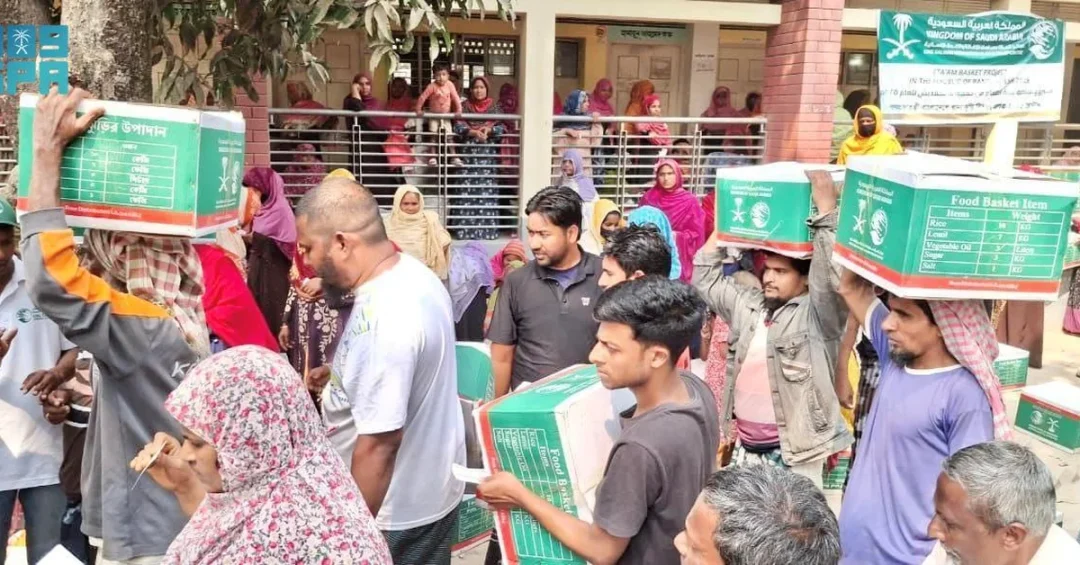
The King Salman Humanitarian Aid and Relief Center (KSrelief) distributed 330 food baskets in the Mymensingh District of Dhaka, Bangladesh, on Saturday, benefiting 330 families as part of the “Etaam” Ramadan Food Basket Distribution Project for the year 1446 AH. The distribution was carried out under the supervision of the Saudi Embassy in Bangladesh and in coordination with local humanitarian partners, reflecting the Kingdom’s ongoing commitment to supporting needy communities around the world. The food baskets, which include essential staples such as rice, lentils, oil, and dates, are designed to meet the nutritional needs of families throughout the holy month of Ramadan.
This initiative is part of Saudi Arabia’s broader humanitarian and relief efforts, carried out by KSrelief, to support needy countries and enhance food security. It also reflects the Kingdom’s steadfast commitment to alleviating the suffering of vulnerable populations and promoting international solidarity, particularly during the holy month of Ramadan. The distribution in Bangladesh is one of many similar projects being implemented across Asia, Africa, and the Middle East as part of the Etaam project, which aims to provide food security to millions of people in need.
Context and Background
Why does Saudi Arabia continue to play a leading role in global humanitarian efforts? The Kingdom has a long tradition of extending a helping hand to countries in need, a tradition rooted in Islamic values and the teachings of the Holy Quran and Sunnah. KSrelief, established in 2015 by Royal Decree, has become the primary vehicle for Saudi Arabia’s international humanitarian work, implementing projects in more than 80 countries across multiple sectors, including food security, health, education, water, and shelter. The center’s work is guided by the principles of neutrality, impartiality, and independence, and it operates in close coordination with international partners such as the United Nations and local organizations.
The Etaam Ramadan Food Basket Distribution Project is one of KSrelief’s flagship initiatives, launched to provide food assistance to families in need during the holy month of Ramadan. The project distributes food baskets containing essential items to vulnerable families in various countries, helping them to break their fast and meet their nutritional needs throughout the month. In Bangladesh, the project is being implemented in several districts, including Mymensingh, where the latest distribution took place. The project is part of Saudi Arabia’s ongoing efforts to enhance food security and alleviate poverty in developing countries.
Bangladesh, a South Asian country with a population of over 170 million, faces significant challenges related to poverty, food insecurity, and natural disasters. According to the World Food Programme, about 25% of Bangladesh’s population lives below the poverty line, and many families struggle to meet their basic nutritional needs, especially during Ramadan when food prices tend to rise. Saudi Arabia’s humanitarian assistance to Bangladesh is part of a broader relationship between the two countries, which includes diplomatic, economic, and cultural ties. The Kingdom has been a consistent supporter of Bangladesh’s development efforts, providing aid through various channels over the years.
Key Details
How does KSrelief ensure that its aid reaches the most vulnerable? The distribution of 330 food baskets in Mymensingh District was carried out by KSrelief’s field team in coordination with local authorities and humanitarian partners. Each basket contained a carefully selected set of food items designed to meet the needs of a family for the entire month of Ramadan. The baskets included rice, lentils, cooking oil, sugar, dates, and other staples, providing a balanced and nutritious diet for the beneficiaries. The distribution process was organized to ensure that aid reaches those most in need, including widows, orphans, the elderly, and families with limited income.
The beneficiaries of the food baskets expressed their gratitude to the Kingdom of Saudi Arabia and KSrelief for the timely assistance, which comes at a time when many families are struggling to make ends meet. Local officials in Mymensingh praised the initiative, noting that it reflects the strong bonds of friendship between Saudi Arabia and Bangladesh and the Kingdom’s commitment to supporting the Bangladeshi people. The distribution was carried out in a transparent and organized manner, with the participation of local volunteers and representatives of the Saudi Embassy in Dhaka.
The “Etaam” project in Bangladesh is part of a larger regional effort that includes similar distributions in other Asian countries, such as Pakistan, India, and Indonesia, as well as in Africa and the Middle East. In total, the project aims to distribute millions of food baskets during Ramadan 1446 AH, benefiting millions of people around the world. The project is funded entirely by the Kingdom of Saudi Arabia and is implemented by KSrelief in partnership with local and international organizations.
International and Regional Impact
What does this distribution mean for Saudi Arabia’s global standing? The distribution of food baskets in Bangladesh is a clear demonstration of Saudi Arabia’s commitment to international humanitarian principles and its role as a responsible global actor. It also strengthens the Kingdom’s soft power and its image as a compassionate and generous nation that stands with people in need, regardless of their nationality or religion. In a world facing multiple humanitarian crises, Saudi Arabia’s contributions are increasingly recognized and appreciated by the international community.
At the regional level, the initiative contributes to stability and food security in South Asia, a region that is home to some of the world’s most vulnerable populations. By providing food assistance during Ramadan, Saudi Arabia helps to alleviate the suffering of millions and promotes a sense of solidarity and brotherhood among Muslim communities. The distribution also reinforces the strong ties between Saudi Arabia and Bangladesh, which have been built on mutual respect and cooperation over many decades. Bangladesh has consistently supported Saudi Arabia’s positions on regional and international issues, and the two countries work closely together in various fields.
Economic and Strategic Significance
How does humanitarian aid align with Saudi Arabia’s strategic objectives? Saudi Arabia’s humanitarian efforts are an integral part of its foreign policy and its Vision 2030 goals, which include enhancing the Kingdom’s global role and promoting sustainable development. By providing aid to countries in need, Saudi Arabia contributes to global stability and prosperity, which in turn benefits the Kingdom’s own security and economic interests. The Etaam project also supports the development of local economies in beneficiary countries by injecting resources into local markets and creating employment opportunities in the logistics and distribution sectors.
Furthermore, the project reflects the Kingdom’s commitment to the United Nations Sustainable Development Goals, particularly Goal 2 (Zero Hunger) and Goal 17 (Partnerships for the Goals). Saudi Arabia has been a major donor to international humanitarian causes, contributing billions of dollars in aid over the past decades. In 2023 alone, KSrelief implemented more than 2,000 projects in 80 countries, with a total value exceeding $6 billion. These efforts have earned the Kingdom recognition as one of the world’s leading humanitarian donors, and they continue to strengthen its reputation as a force for good in the world.
Vision 2030 Alignment
How does the Etaam project reflect the spirit of Saudi Vision 2030? Saudi Vision 2030, launched by Crown Prince Mohammed bin Salman in 2016, aims to transform the Kingdom into a more diversified, dynamic, and globally engaged economy and society. One of the vision’s key pillars is to enhance Saudi Arabia’s role as a global leader in humanitarian and development aid. KSrelief is a central instrument in achieving this goal, and its projects, including the Etaam Ramadan Food Basket Distribution Project, are a tangible manifestation of the Kingdom’s commitment to helping those in need around the world.
The distribution of 330 food baskets in Bangladesh is a small but meaningful example of how Saudi Arabia is working to build a better world. It demonstrates the Kingdom’s compassion, generosity, and solidarity with the global community, and it reinforces the values of charity and brotherhood that are at the heart of Saudi society. As Saudi Arabia continues to implement Vision 2030, its humanitarian efforts will remain a source of pride for the Kingdom and a beacon of hope for millions of people around the world. The Kingdom will continue to work with its partners to provide aid to those in need and to promote peace, stability, and prosperity for all.
20 Questions
Q1. What is the King Salman Humanitarian Aid and Relief Center (KSrelief)?
A1. KSrelief is a Saudi humanitarian organization established in 2015 by Royal Decree to provide relief and aid to countries and communities in need around the world. It operates under the guidance of the Saudi leadership.
Q2. How many food baskets were distributed in Mymensingh District?
A2. KSrelief distributed 330 food baskets in Mymensingh District, Bangladesh, benefiting 330 families as part of the Etaam Ramadan Food Basket Distribution Project for 1446 AH.
Q3. What items were included in the food baskets?
A3. The food baskets contained essential staples such as rice, lentils, cooking oil, sugar, dates, and other items to meet the nutritional needs of a family for the holy month of Ramadan.
Q4. When did the distribution take place?
A4. The distribution took place on Saturday, March 8, 2025, in Mymensingh District, Dhaka, Bangladesh, as reported by the Saudi Press Agency.
Q5. What is the Etaam Ramadan Food Basket Distribution Project?
A5. The Etaam project is a KSrelief initiative that distributes food baskets to vulnerable families in various countries during Ramadan, aiming to enhance food security and alleviate suffering.
Q6. Why is the Etaam project important for Bangladesh?
A6. The project provides critical food assistance to needy families in Bangladesh during Ramadan, when food prices often rise, helping them to meet their nutritional needs and celebrate the holy month with dignity.
Q7. How does KSrelief select beneficiaries for its aid?
A7. KSrelief works with local authorities and humanitarian partners to identify the most vulnerable families, including widows, orphans, the elderly, and those with limited income, ensuring aid reaches those in need.
Q8. What is the role of the Saudi Embassy in Bangladesh in this initiative?
A8. The Saudi Embassy in Bangladesh supervises the distribution and coordinates with local partners to ensure the aid is delivered effectively and transparently to the beneficiaries.
Q9. How does this initiative reflect Saudi Arabia’s humanitarian values?
A9. It reflects the Kingdom’s commitment to Islamic values of charity and solidarity, and its dedication to alleviating the suffering of people in need around the world, regardless of nationality or religion.
Q10. What other countries benefit from the Etaam project?
A10. The Etaam project benefits numerous countries across Asia, Africa, and the Middle East, including Pakistan, India, Indonesia, Yemen, Sudan, and many others, reaching millions of people.
Q11. How does KSrelief fund its projects?
A11. KSrelief is funded by the Kingdom of Saudi Arabia, with contributions from the government and private donors. It implements projects in partnership with local and international organizations.
Q12. What is the total value of KSrelief’s projects in 2023?
A12. In 2023, KSrelief implemented more than 2,000 projects in 80 countries, with a total value exceeding $6 billion, making Saudi Arabia one of the world’s leading humanitarian donors.
Q13. How does the distribution of food baskets contribute to food security?
A13. By providing essential food items to vulnerable families, the distribution helps to ensure that they have access to nutritious food during Ramadan, reducing the risk of hunger and malnutrition.
Q14. What is the significance of distributing aid during Ramadan?
A14. Ramadan is a month of fasting, reflection, and generosity. Distributing aid during this time allows beneficiaries to break their fast and celebrate the holy month with dignity, embodying the spirit of giving.
Q15. How does this initiative strengthen Saudi-Bangladesh relations?
A15. The initiative reflects the strong bonds of friendship between the two countries and demonstrates Saudi Arabia’s commitment to supporting Bangladesh’s development and the well-being of its people.
Q16. What is Saudi Vision 2030, and how does it relate to humanitarian aid?
A16. Saudi Vision 2030 is a comprehensive plan to diversify the economy and enhance the Kingdom’s global role. It includes a strong focus on humanitarian aid, positioning Saudi Arabia as a global leader in relief and development.
Q17. How does KSrelief ensure transparency and accountability in its operations?
A17. KSrelief follows strict monitoring and evaluation procedures, working with international partners and using advanced systems to track aid distribution and ensure it reaches the intended beneficiaries.
Q18. What are the Sustainable Development Goals, and how does KSrelief contribute to them?
A18. The SDGs are a set of 17 global goals adopted by the UN. KSrelief contributes to several goals, including Zero Hunger, Good Health, and Partnerships for the Goals, through its humanitarian projects.
Q19. How can other countries or organizations partner with KSrelief?
A19. Interested parties can contact KSrelief through its official channels to explore partnership opportunities in humanitarian and relief projects, in line with its mission and principles.
Q20. What is the overall impact of Saudi Arabia’s humanitarian aid globally?
A20. Saudi Arabia’s humanitarian aid has saved countless lives, alleviated suffering, and promoted stability and development in many countries, earning the Kingdom recognition as a global humanitarian leader.
Reader Feedback
We value your thoughts. Please share your feedback on this article.
Your feedback helps us improve our coverage.
Related articles
 KSrelief Distributes 2,600 Cartons of Dates in Yemen
 Saudi Arabia Weather Forecast for Monday: Rain, Winds, Fog
 KSrelief Distributes 600 Food Baskets in Niger
 KSrelief Distributes 260 Food Baskets in Bangladesh
 Justice Minister Highlights Judicial Advancements in Meeting
 Imam Turki bin Abdullah Royal Reserve Marks International Women’s Day