


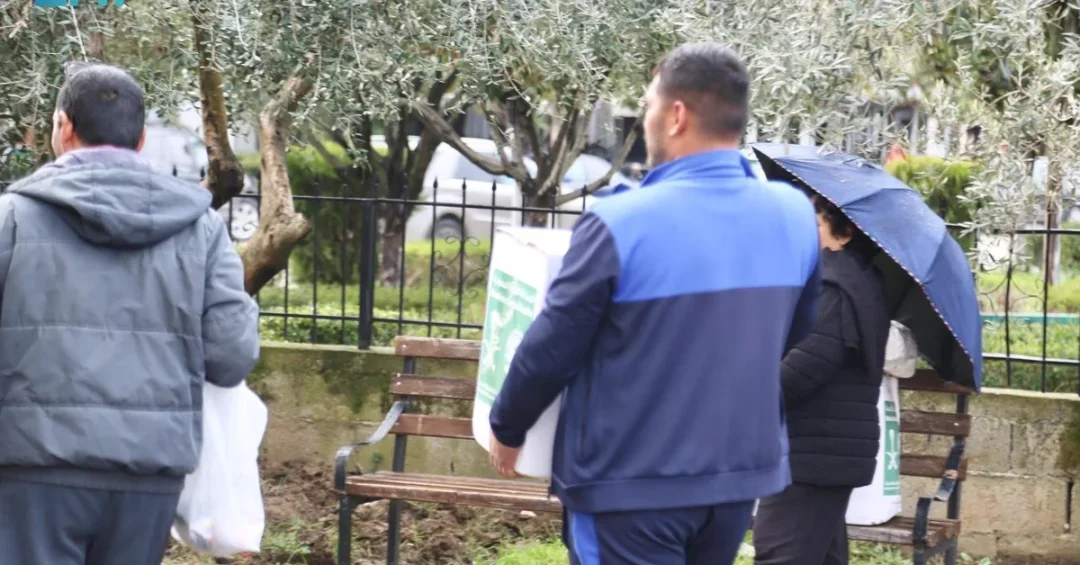
The King Salman Humanitarian Aid and Relief Center (KSrelief) distributed 150 food baskets to 150 of the neediest families in Albania on Saturday, March 8, 2025, as part of the “Etaam” Ramadan Food Basket Distribution Project for the year 1446 AH. The distribution, reported by the Saudi Press Agency (SPA) from Tirana, forms part of Saudi Arabia’s wider humanitarian and relief efforts conducted through KSrelief to support vulnerable and affected communities around the world. The baskets were delivered to families identified as among the most in need in the Balkan nation, providing essential food supplies during the Islamic holy month of Ramadan. The aid reflects the Kingdom’s continuing commitment to alleviating hardship and extending assistance to communities beyond its borders, in line with the humanitarian principles that guide Saudi relief work internationally.
KSrelief, established in 2015 under the direction of the Custodian of the Two Holy Mosques, King Salman bin Abdulaziz Al Saud, has become one of the world’s leading humanitarian agencies, operating in more than 90 countries across Africa, Asia, Europe, and the Middle East. The Albania distribution is one of many Ramadan-related programs the center runs annually, and it highlights how Saudi Arabia’s relief efforts reach communities in Europe as well as in regions traditionally associated with humanitarian crises. The “Etaam” project, whose name refers to providing food, is a flagship seasonal initiative that delivers essential staples to families who might otherwise struggle to secure adequate meals during Ramadan. The distribution in Albania targeted 150 families, meaning the aid directly benefited hundreds of individuals, including children, the elderly, and households facing economic hardship.
Context and Background
Why does a Gulf nation with its own development priorities devote resources to distributing food baskets in a small Balkan country? The answer lies in the humanitarian values that have long shaped Saudi Arabia’s foreign policy and in the institutional capacity that KSrelief has built since its founding. Albania, a country of approximately 2.8 million people, has a significant Muslim population and has faced economic challenges in recent decades, including high emigration, unemployment, and pockets of poverty in rural and underserved areas. Ramadan is a period when charitable giving is especially emphasized in Islamic tradition, and KSrelief’s seasonal programs are designed to ensure that vulnerable families can observe the month with dignity and adequate nutrition.
The “Etaam” Ramadan Food Basket Distribution Project is one of several seasonal initiatives run by KSrelief, alongside programs such as Eid al-Fitr and Eid al-Adha meat distributions and winter clothing campaigns. These projects are implemented in coordination with local partners and Saudi diplomatic missions, ensuring that aid reaches those who need it most while respecting local customs and administrative frameworks. In Albania, the distribution was carried out with the cooperation of relevant local authorities and community organizations, reflecting the Kingdom’s approach of working through established channels to maximize the effectiveness and reach of its assistance. The project also aligns with the broader Saudi humanitarian doctrine, which emphasizes impartiality, neutrality, and a focus on the most vulnerable groups regardless of nationality or religion.
For Saudi Arabia, humanitarian work is not a peripheral activity but a central component of its international engagement. The Kingdom has consistently ranked among the top donor countries in terms of humanitarian assistance relative to national income, and KSrelief serves as the primary vehicle for channeling this support. The center’s projects are documented and reported through official channels, including the Saudi Press Agency, which published the Albania distribution report on March 10, 2025. This transparency allows international observers, partner organizations, and the public to track the Kingdom’s relief activities and understand their scope and impact.
Key Details of the Albania Distribution
What exactly does a KSrelief food basket contain, and how are beneficiaries selected? Each basket is designed to provide a family with a substantial supply of staple foods sufficient for an extended period, typically including rice, flour, oil, sugar, lentils, beans, and other non-perishable items. The contents are chosen to meet basic nutritional needs and to be culturally appropriate for the recipient community. In Albania, the baskets were distributed to 150 families identified as among the neediest in the areas covered by the project. The selection process is carried out in coordination with local partners who have knowledge of the community and can ensure that aid reaches those facing genuine hardship, including families with low incomes, single-parent households, the elderly, and those affected by economic difficulties.
The distribution took place on Saturday, March 8, 2025, corresponding to the Ramadan period of 1446 AH. The timing is significant: Ramadan is a month of fasting, reflection, and increased charitable giving for Muslims worldwide, and ensuring that families have adequate food for iftar and suhoor meals is a priority for humanitarian organizations operating in Muslim communities. The “Etaam” project is specifically designed to address this need, and its implementation in Albania demonstrates the reach of Saudi humanitarian programs into Europe. The operation was reported by the Saudi Press Agency, which serves as the official source for news about Saudi government and humanitarian activities, underscoring the Kingdom’s commitment to transparent reporting of its relief efforts.
Beyond the immediate provision of food, the distribution carries symbolic and diplomatic significance. It represents a tangible expression of Saudi-Albanian relations, which have developed steadily in recent years across political, economic, and cultural domains. Albania has historically maintained friendly ties with Saudi Arabia and other Gulf states, and humanitarian cooperation forms one pillar of this relationship. By assisting Albanian families during Ramadan, KSrelief reinforces the bonds of solidarity and demonstrates that Saudi Arabia’s humanitarian commitment extends to Europe and to communities that may not be in the headlines of global crises but nonetheless face real challenges.
International and Regional Impact
How does a relatively small distribution in Albania fit into the larger picture of global humanitarian needs? While 150 food baskets may seem modest compared to the massive operations KSrelief conducts in conflict zones such as Yemen, Syria, and Sudan, every distribution contributes to the broader goal of alleviating suffering and promoting stability. Small-scale projects in countries like Albania help prevent vulnerable families from falling deeper into poverty and can have a meaningful impact on community well-being. They also serve as a reminder that humanitarian needs exist in many forms and locations, and that a comprehensive approach to global relief must include support for communities in Europe and other regions that may not always attract international attention.
From a regional perspective, Saudi Arabia’s humanitarian activities in the Balkans contribute to the Kingdom’s image as a responsible global actor and a reliable partner for development and stability. The Balkans have historically been a region of geopolitical significance, and Saudi engagement through humanitarian and cultural channels helps build goodwill and people-to-people connections. Albania, as a NATO member and a candidate for European Union accession, occupies a strategic position in the region. Saudi humanitarian assistance, delivered through a professional and well-regarded institution like KSrelief, complements broader international efforts to support Albania’s development and social cohesion. It also aligns with the Kingdom’s wider foreign policy objectives of promoting moderation, stability, and cooperation across diverse regions.
Economic and Strategic Significance
What does Saudi Arabia gain from these humanitarian investments, and how do they relate to the Kingdom’s economic and strategic goals? Humanitarian aid is an important element of soft power, and Saudi Arabia’s extensive relief programs enhance its standing in the international community. They demonstrate that the Kingdom is not only a major energy exporter and investment power but also a compassionate actor committed to global welfare. This reputation can facilitate diplomatic engagement, open doors for economic cooperation, and strengthen relationships with countries across the world. In the case of Albania, humanitarian cooperation can serve as a foundation for broader bilateral ties, including trade, investment, and cultural exchange, which are areas of growing interest as Saudi Arabia expands its international partnerships under Vision 2030.
Moreover, KSrelief’s operations are managed with a focus on efficiency, accountability, and measurable impact. The center works with international partners, including United Nations agencies and reputable non-governmental organizations, to ensure that aid is delivered effectively and reaches intended beneficiaries. This professional approach enhances the credibility of Saudi humanitarian work and ensures that resources are used wisely. The Albania distribution, though small in scale, is part of a system that has delivered billions of dollars in assistance worldwide and has been recognized by international bodies for its contributions. By continuing to support such programs, Saudi Arabia reinforces its role as a leading humanitarian donor and a stabilizing force in global affairs.
Vision 2030 Alignment
How does the distribution of food baskets in Albania connect to Saudi Arabia’s Vision 2030 and its long-term national objectives? Vision 2030 is a comprehensive plan to diversify the Kingdom’s economy, strengthen its international standing, and improve the quality of life for its citizens and residents. A key pillar of this vision is the development of a vibrant society and a responsible global nation. Saudi Arabia’s humanitarian efforts, channeled through KSrelief, reflect the values of generosity, solidarity, and global responsibility that are central to the Kingdom’s identity and its vision for the future. By assisting vulnerable communities abroad, Saudi Arabia demonstrates the positive impact of its development and its commitment to being a force for good in the world.
Furthermore, Vision 2030 emphasizes the importance of international cooperation and the Kingdom’s role as a bridge between cultures and regions. Humanitarian initiatives like the “Etaam” project in Albania help build trust and understanding between Saudi Arabia and the international community. They showcase the Kingdom’s capabilities in logistics, coordination, and project management, which are skills that also support its economic diversification goals. As Saudi Arabia continues to implement Vision 2030, its humanitarian diplomacy will remain an integral part of its foreign policy, contributing to a more stable and prosperous world while enhancing the Kingdom’s global reputation. The Albania distribution is a small but meaningful example of this ongoing commitment, and it underscores the Kingdom’s determination to make a positive difference in the lives of people around the world.
20 Questions
Q1. What organization distributed the food baskets in Albania?
A1. The King Salman Humanitarian Aid and Relief Center (KSrelief) distributed the food baskets. It is the primary Saudi agency responsible for international humanitarian and relief efforts, operating under the direction of the Custodian of the Two Holy Mosques.
Q2. How many families benefited from the distribution?
A2. A total of 150 families in Albania received food baskets. Each basket was designed to provide essential food supplies for a family, directly benefiting hundreds of individuals, including children and the elderly.
Q3. When did the distribution take place?
A3. The distribution occurred on Saturday, March 8, 2025, as reported by the Saudi Press Agency. This timing falls within the Islamic holy month of Ramadan for the year 1446 AH.
Q4. What is the “Etaam” project?
A4. The “Etaam” Ramadan Food Basket Distribution Project is a seasonal initiative by KSrelief that provides food baskets to needy families during Ramadan. It is one of several annual programs aimed at alleviating hardship and ensuring food security.
Q5. Why is Ramadan a particularly important time for such distributions?
A5. Ramadan is a month of fasting, reflection, and increased charitable giving in Islam. Providing food baskets helps vulnerable families observe the month with dignity and ensures they have adequate nutrition for iftar and suhoor meals.
Q6. Where in Albania did the distribution take place?
A6. The report from the Saudi Press Agency did not specify exact locations, but the aid was directed to the neediest families in Albania. Distributions are typically carried out in coordination with local partners to reach underserved areas.
Q7. What items are typically included in a KSrelief food basket?
A7. KSrelief food baskets generally contain staple foods such as rice, flour, cooking oil, sugar, lentils, beans, and other non-perishable items. The contents are chosen to meet basic nutritional needs and are culturally appropriate.
Q8. How are beneficiary families selected?
A8. Beneficiaries are identified in coordination with local authorities and community organizations that have knowledge of the area. The selection focuses on the most vulnerable households, including low-income families, the elderly, and single-parent households.
Q9. Is this the first time KSrelief has operated in Albania?
A9. KSrelief has conducted various humanitarian projects in Albania and the Balkan region in previous years. The “Etaam” project is part of ongoing efforts to support needy communities in the country during Ramadan.
Q10. How does this distribution fit into Saudi Arabia’s broader humanitarian efforts?
A10. It is part of the Kingdom’s ongoing humanitarian and relief efforts implemented through KSrelief to assist needy and affected groups around the world. Saudi Arabia is among the world’s leading humanitarian donors.
Q11. What is the significance of KSrelief’s work in Europe?
A11. KSrelief’s operations in Europe demonstrate that Saudi humanitarian assistance reaches communities beyond traditional crisis zones. They help address hidden poverty and support vulnerable families in countries like Albania, strengthening Saudi Arabia’s global humanitarian image.
Q12. How does this aid reflect Saudi-Albanian relations?
A12. The distribution reflects the friendly ties between Saudi Arabia and Albania. Humanitarian cooperation is a key pillar of the bilateral relationship, complementing political, economic, and cultural exchanges between the two nations.
Q13. What is the role of the Saudi Press Agency in reporting this event?
A13. The Saudi Press Agency (SPA) is the official news agency of Saudi Arabia. It reported the distribution from Tirana, providing verified information about the aid and highlighting the Kingdom’s commitment to transparency in its humanitarian activities.
Q14. Does KSrelief coordinate with international organizations?
A14. Yes, KSrelief works with United Nations agencies, international NGOs, and local partners to ensure aid is delivered effectively. This coordination maximizes reach and ensures that assistance meets the highest humanitarian standards.
Q15. How does this project align with Vision 2030?
A15. Vision 2030 emphasizes Saudi Arabia’s role as a responsible global nation. Humanitarian initiatives like the Albania distribution reflect the Kingdom’s values of generosity and solidarity, enhancing its international standing and supporting its foreign policy objectives.
Q16. What impact does the distribution have on the local community?
A16. The food baskets provide immediate relief to families facing economic hardship, helping them meet basic nutritional needs during Ramadan. This can reduce food insecurity and allow families to participate fully in the spiritual and social aspects of the month.
Q17. Are there other Saudi humanitarian projects in the Balkans?
A17. Saudi Arabia, through KSrelief, has implemented various projects in the Balkans, including food distributions, healthcare support, and educational initiatives. These efforts contribute to stability and development in the region.
Q18. How can other countries learn from Saudi Arabia’s humanitarian model?
A18. Saudi Arabia’s model combines generous funding, professional management, and partnerships with local and international organizations. It emphasizes transparency, accountability, and a focus on the most vulnerable, offering a template for effective humanitarian action.
Q19. What is the expected long-term outcome of such distributions?
A19. In the long term, these distributions help build goodwill and strengthen people-to-people ties. They also contribute to the overall well-being of communities, supporting stability and providing a foundation for broader development cooperation.
Q20. How can people learn more about KSrelief’s work?
A20. Information about KSrelief’s projects and reports is available through official Saudi channels, including the Saudi Press Agency and the KSrelief website. These sources provide detailed updates on the center’s global humanitarian activities.
Reader Feedback
We value your thoughts. Please share your feedback on this article.
Your feedback helps us improve our coverage.
Related articles
 KSrelief Distributes 450 Food Baskets in South Africa
 KSrelief Distributes 1,500 Food Baskets in Burkina Faso
 KSrelief Distributes 330 Food Baskets in Bangladesh
 KSrelief Distributes 2,600 Cartons of Dates in Yemen
 Saudi Arabia Weather Forecast for Monday: Rain, Winds, Fog
 KSrelief Distributes 600 Food Baskets in Niger