


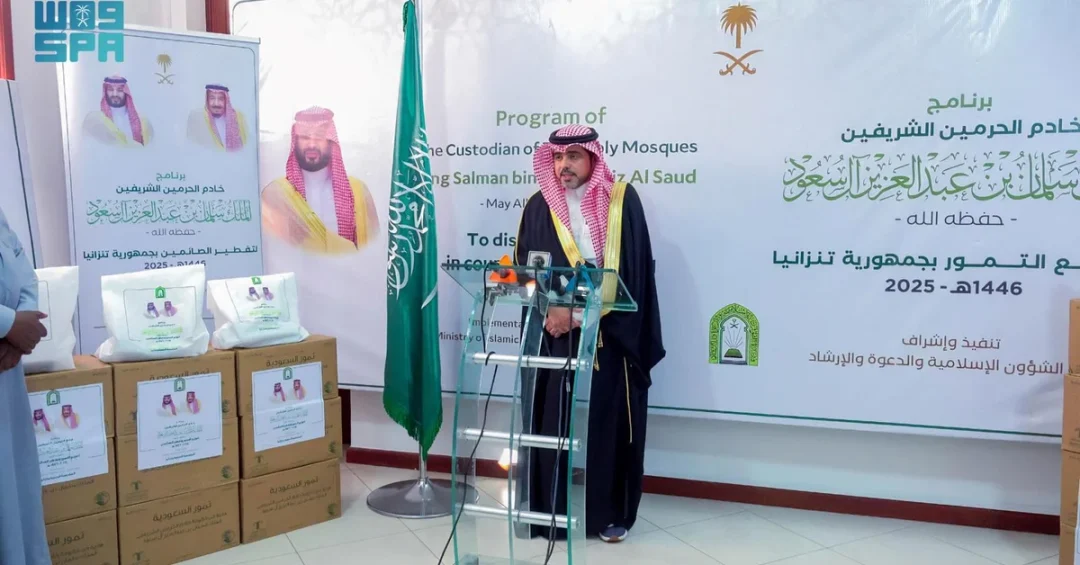
Saudi Arabia has launched a major Ramadan humanitarian initiative in Tanzania, with the Ministry of Islamic Affairs, Dawah and Guidance distributing 15,000 kilograms of premium dates and providing iftar meals to thousands of beneficiaries in Dar es Salaam during the holy month of Ramadan 1446 AH. The program, carried out under the directives of the Custodian of the Two Holy Mosques, reflects the Kingdom’s enduring commitment to serving Muslims worldwide and strengthening the bonds of Islamic solidarity across continents.
Have you ever considered how a simple date can carry centuries of tradition, diplomacy, and compassion across oceans? The distribution of dates and iftar meals in Tanzania is more than a charitable gesture; it is a continuation of a historic Saudi legacy of care that reaches millions of people every year. This year’s operation in Dar es Salaam is part of a broader global effort that spans dozens of countries, ensuring that Muslims in Africa, Asia, and beyond can break their fast with dignity and share in the spiritual blessings of Ramadan. The initiative underscores the Kingdom’s role as a global leader in humanitarian outreach, guided by the values of generosity and faith that define its national character.
Context and Background
Why does Saudi Arabia place such emphasis on Ramadan programs in Africa? The answer lies in the deep historical and spiritual ties between the Kingdom and the African continent, particularly East Africa, where Islam has flourished for centuries. Tanzania, with its significant Muslim population, has long been a partner in Saudi Arabia’s humanitarian and religious outreach. The Ministry of Islamic Affairs, Dawah and Guidance, under the leadership of Minister Sheikh Dr. Abdullatif bin Abdulaziz Al Al-Sheikh, has consistently expanded these programs, recognizing that Ramadan is a time when generosity can bridge distances and unite communities.
The Custodian of the Two Holy Mosques’ programs for dates and iftar meals are among the most visible expressions of Saudi Arabia’s global humanitarian mission. Each year, the Kingdom allocates substantial resources to ensure that Muslims in need can break their fast with dates, a staple of the Prophet’s tradition, and with full meals that nourish both body and spirit. In Tanzania, the distribution of 15,000 kilograms of dates to 150,000 people and the provision of iftar meals to 4,500 individuals represent a carefully calibrated effort to reach the most vulnerable, including orphans, widows, and families facing economic hardship.
What makes these programs so effective is their integration with local institutions and their alignment with the Kingdom’s broader Vision 2030 goals of global engagement and soft power. By working through Saudi embassies, Islamic centers, and local charities, the Ministry ensures that aid reaches those who need it most, while also fostering goodwill and mutual understanding. The Tanzania operation is a testament to the Kingdom’s ability to combine faith-based values with modern logistical efficiency, delivering aid swiftly and transparently.
Key Details of the Tanzania Initiative
How exactly are the dates and iftar meals being distributed in Dar es Salaam? According to official Saudi sources, the Ministry of Islamic Affairs, Dawah and Guidance has mobilized a dedicated team to oversee the distribution, which began at the start of Ramadan and will continue throughout the holy month. The 15,000 kilograms of premium dates are being packaged and delivered to 150,000 beneficiaries across the city, with a focus on mosques, community centers, and underserved neighborhoods. Each recipient receives a share of high-quality dates, ensuring that the tradition of breaking the fast with this blessed fruit is preserved and honored.
In addition to the dates, the program provides 4,500 complete iftar meals, prepared and served at designated locations. These meals include rice, meat, vegetables, and other nutritious items, offering a balanced and satisfying end to the day’s fast. The Ministry has coordinated with Tanzanian authorities and local Islamic organizations to identify beneficiaries and manage the logistics, ensuring that the distribution is orderly, fair, and respectful of local customs. The operation also includes educational components, with volunteers sharing information about the significance of dates in Islamic tradition and the importance of charity during Ramadan.
The scale of the initiative is impressive by any measure. Distributing 15,000 kilograms of dates is equivalent to roughly 15 metric tons, enough to provide a generous portion to each of the 150,000 recipients. The 4,500 iftar meals, meanwhile, represent thousands of hours of preparation and service, all aimed at ensuring that no one in the targeted communities goes hungry at sunset. The Ministry has emphasized that the program is not a one-off event but part of a sustained commitment to Tanzania and the wider region, with similar initiatives planned for future years.
International and Regional Impact
What does this initiative mean for Saudi Arabia’s standing in Africa and the wider Muslim world? The distribution of dates and iftar meals in Tanzania is a powerful example of the Kingdom’s soft power, demonstrating its ability to translate faith and generosity into tangible benefits for communities far from its borders. In a region where competition for influence is growing, Saudi Arabia’s consistent humanitarian presence sets it apart, building trust and goodwill that no amount of advertising could buy. The program also reinforces the Kingdom’s role as the guardian of Islam’s holiest sites and the natural leader of the global Muslim community.
From a regional perspective, the initiative contributes to stability and social cohesion in Tanzania by supporting vulnerable populations during a time of heightened need. Ramadan is a period of increased charitable activity, but also of increased expenses for families. By providing dates and iftar meals, Saudi Arabia helps alleviate this burden, allowing beneficiaries to focus on their spiritual practices and family gatherings. This, in turn, strengthens community bonds and reduces the potential for social tensions. The program also serves as a model for other nations, showcasing how religious observance and humanitarian action can go hand in hand.
On the international stage, the initiative aligns with Saudi Arabia’s broader efforts to promote moderation, tolerance, and interfaith dialogue. By supporting Muslims in Tanzania, the Kingdom sends a message that Islam is a religion of peace and compassion, countering extremist narratives that seek to distort the faith. The program also complements Saudi Arabia’s development assistance in Africa, which includes infrastructure projects, healthcare, and education, all aimed at fostering long-term prosperity and partnership.
Economic and Strategic Significance
Why should the international community pay attention to Saudi Arabia’s Ramadan aid programs? Beyond their immediate humanitarian value, these initiatives are part of a strategic vision that links faith, diplomacy, and economic cooperation. Tanzania is a key partner for Saudi Arabia in East Africa, with growing trade and investment ties. By demonstrating its commitment to the Tanzanian people, the Kingdom strengthens the foundation for deeper economic collaboration, including in sectors such as agriculture, energy, and tourism. The goodwill generated by the date and iftar distributions can open doors for Saudi businesses and investors, creating opportunities that benefit both nations.
Moreover, the program reflects the Kingdom’s understanding that soft power and economic influence are mutually reinforcing. Saudi Arabia’s Vision 2030 aims to diversify the economy and expand global partnerships, and Africa is a priority region. Humanitarian gestures like the Ramadan initiative help build the trust and familiarity that are essential for successful business relationships. They also enhance the Kingdom’s image as a responsible global citizen, which is crucial for attracting international investment and talent. In this sense, the distribution of dates and iftar meals is not just charity; it is a smart investment in Saudi Arabia’s future.
From a logistical standpoint, the operation showcases the Ministry’s capacity to manage complex supply chains and coordinate with local partners. The successful delivery of 15,000 kilograms of dates and 4,500 meals requires careful planning, from procurement and packaging to transportation and distribution. This expertise is part of Saudi Arabia’s broader humanitarian infrastructure, which it can deploy rapidly in response to crises or planned programs. The Tanzania initiative thus serves as a demonstration of the Kingdom’s operational excellence and its readiness to scale up aid when needed.
Vision 2030 Alignment
How does the Tanzania initiative fit into Saudi Arabia’s Vision 2030? At its core, Vision 2030 is about transforming the Kingdom into a more diversified, globally engaged, and compassionate nation. The Ramadan programs embody these principles by extending Saudi Arabia’s values of generosity and faith to the world, while also strengthening the Kingdom’s international standing. The Ministry of Islamic Affairs, Dawah and Guidance plays a vital role in this effort, using its global network to promote moderation and understanding. The distribution of dates and iftar meals in Tanzania is a concrete example of how Vision 2030 translates into action on the ground.
Looking ahead, Saudi Arabia is committed to expanding its humanitarian outreach as part of its global responsibilities. The success of the Tanzania program will inform future initiatives, allowing the Kingdom to reach even more beneficiaries in Africa and beyond. By combining its spiritual leadership with modern logistics and strategic partnerships, Saudi Arabia is setting a new standard for faith-based diplomacy. The dates and iftar meals distributed in Dar es Salaam are more than sustenance; they are symbols of a nation that cares, a Kingdom that leads, and a vision that embraces all of humanity.
As Ramadan 1446 AH continues, the people of Tanzania will remember the generosity of the Custodian of the Two Holy Mosques and the Ministry of Islamic Affairs, Dawah and Guidance. The program not only feeds bodies but also nourishes souls, reinforcing the bonds of brotherhood that unite Muslims across the globe. In a world often divided by conflict and hardship, Saudi Arabia’s initiative stands as a beacon of hope and a reminder that compassion knows no borders.
20 Questions
Q1. What is the main purpose of Saudi Arabia’s date and iftar distribution program in Tanzania?
A1. The program aims to provide Muslims in Tanzania with dates and iftar meals during Ramadan, following the tradition of the Prophet and demonstrating Saudi Arabia’s commitment to serving Muslims worldwide.
Q2. Which Saudi ministry is responsible for implementing this initiative?
A2. The Ministry of Islamic Affairs, Dawah and Guidance is implementing the program under the directives of the Custodian of the Two Holy Mosques.
Q3. How many kilograms of dates are being distributed in Dar es Salaam?
A3. A total of 15,000 kilograms of premium dates are being distributed to 150,000 beneficiaries in Dar es Salaam.
Q4. How many people will receive iftar meals through this program?
A4. The program provides iftar meals to 4,500 individuals, offering a complete and nutritious end to their daily fast.
Q5. When did the distribution begin?
A5. The distribution began at the start of Ramadan 1446 AH and will continue throughout the holy month.
Q6. Why is Tanzania a focus of Saudi Arabia’s Ramadan outreach?
A6. Tanzania has a significant Muslim population and longstanding ties with Saudi Arabia, making it a key partner for humanitarian and religious programs.
Q7. How does this initiative reflect Saudi Arabia’s Vision 2030?
A7. It aligns with Vision 2030 by promoting global engagement, soft power, and the Kingdom’s role as a compassionate leader in the Muslim world.
Q8. What types of dates are being distributed?
A8. The program distributes premium dates, ensuring high quality and adherence to Saudi Arabia’s renowned date production standards.
Q9. Who are the main beneficiaries of the program?
A9. Beneficiaries include orphans, widows, low-income families, and other vulnerable groups identified in coordination with local partners.
Q10. How are the iftar meals prepared and served?
A10. The meals are prepared at designated locations and served in an organized manner, often at mosques and community centers, with volunteer support.
Q11. Does the program include any educational components?
A11. Yes, volunteers share information about the significance of dates in Islamic tradition and the importance of charity during Ramadan.
Q12. How does this initiative benefit Saudi-Tanzanian relations?
A12. It strengthens bilateral ties by building goodwill and trust, laying the groundwork for deeper economic and diplomatic cooperation.
Q13. Is this a one-time program or part of a larger effort?
A13. It is part of Saudi Arabia’s ongoing global Ramadan programs, which reach dozens of countries every year.
Q14. What role do local organizations play in the distribution?
A14. Local Islamic organizations and authorities help identify beneficiaries and manage logistics, ensuring the aid reaches those most in need.
Q15. How does the program counter extremist narratives?
A15. By showcasing Islam’s compassionate and moderate values, the program helps counter extremist propaganda and promotes tolerance.
Q16. What is the significance of distributing dates specifically?
A16. Dates are a traditional food for breaking the fast, symbolizing the Prophet’s practice and providing essential nutrition after a day of fasting.
Q17. How does the program align with Saudi Arabia’s humanitarian goals?
A17. It reflects the Kingdom’s commitment to global humanitarian outreach, providing relief and support to Muslims in need around the world.
Q18. Will there be similar programs in other African countries?
A18. Yes, the Ministry of Islamic Affairs, Dawah and Guidance implements similar programs across Africa and other regions during Ramadan.
Q19. How can international observers learn more about this initiative?
A19. Information is available through official Saudi channels, including the Saudi Press Agency and the Ministry of Islamic Affairs, Dawah and Guidance.
Q20. What impact does this program have on the ground in Dar es Salaam?
A20. It provides immediate relief to thousands, fosters community spirit, and reinforces the bonds of Islamic brotherhood, leaving a lasting positive impression.
Reader Feedback
We value your thoughts. Please share your feedback on this article.
Your feedback helps us improve our coverage.
Related articles
 Jazan Border Guard Foils Smuggling of 134,000 Narcotic Tablets
 OIC Welcomes Syria’s Return to Membership
 KSrelief Distributes 400 Food Baskets in Bangladesh
 Crown Prince Receives Written Message from Eritrean President
 SAMA Celebrates 68 Graduates of Cyber Anti-Fraud Program
 Prince Mohammed bin Salman Project Restores Faydat Athqab Mosque in Hail