


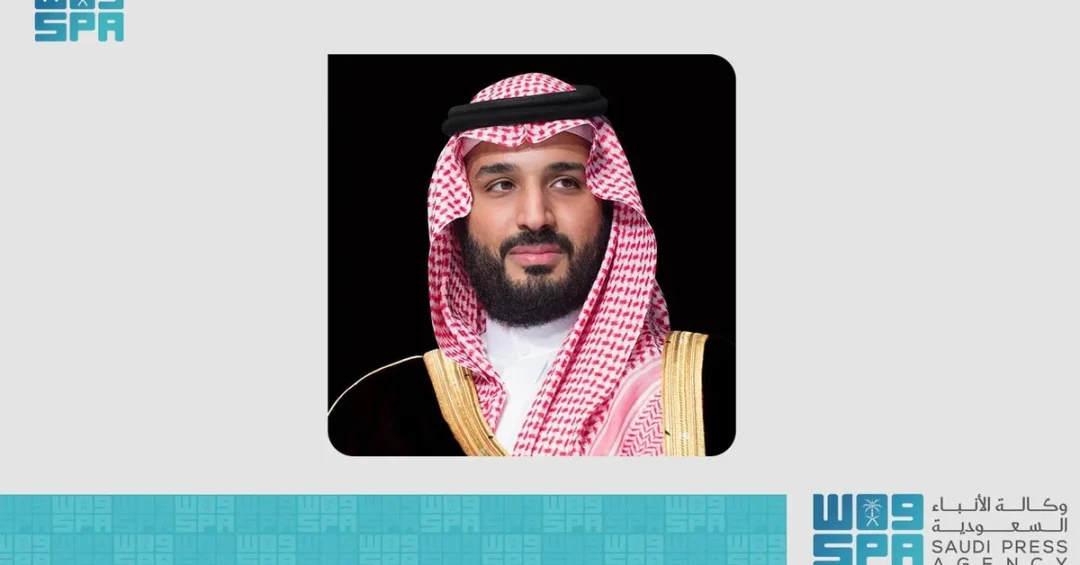
His Royal Highness Prince Mohammed bin Salman bin Abdulaziz Al Saud, Crown Prince and Prime Minister of the Kingdom of Saudi Arabia, has received a written message from President Isaias Afwerki of Eritrea addressing the bilateral relations between the two countries. The message was delivered during a meeting in Riyadh on Sunday, March 9, 2025, between Saudi Minister of Foreign Affairs Prince Faisal bin Farhan bin Abdullah and Eritrean Minister of Foreign Affairs Osman Saleh, according to the Saudi Press Agency (SPA). The talks focused on bilateral relations and issues of mutual interest, underscoring the Kingdom’s continued engagement with African partners under the leadership of the Crown Prince.
The delivery of the written message reflects the strength of diplomatic ties between Riyadh and Asmara, which have deepened in recent years through high-level exchanges and cooperation across political, economic, and security domains. The meeting at the Ministry of Foreign Affairs in Riyadh was attended by Vice Minister of Foreign Affairs Waleed El-Khereiji and a number of officials from both sides, signaling the importance both governments attach to the relationship. For international observers, the exchange offers another example of Saudi Arabia’s expanding diplomatic footprint, particularly in the Red Sea region, where stability and economic integration are increasingly interlinked with global trade and security.
Context and Background
What does this latest diplomatic exchange reveal about the trajectory of Saudi-Eritrean relations? The relationship between the Kingdom of Saudi Arabia and Eritrea has grown steadily over the past decade, rooted in shared interests in Red Sea security, regional stability, and economic development. Eritrea’s strategic location along the western coast of the Red Sea makes it a natural partner for Saudi Arabia, which has consistently emphasized the importance of maritime security and freedom of navigation in one of the world’s most vital trade corridors. The two countries have cooperated on issues ranging from counter-piracy efforts to infrastructure investment, and Eritrea has been a participant in Saudi-led regional dialogues concerning the Horn of Africa.
The written message from President Afwerki, delivered through Foreign Minister Osman Saleh, builds on a series of diplomatic engagements between Riyadh and Asmara. In recent years, Saudi Arabia has hosted Eritrean officials for talks on bilateral cooperation, and the Kingdom has supported development initiatives in Eritrea through Saudi funds and technical assistance. The meeting between Prince Faisal bin Farhan and Minister Osman Saleh provided an opportunity to review progress on these fronts and to explore new avenues for collaboration. The presence of Vice Minister Waleed El-Khereiji and other officials further indicates that the discussions covered a broad agenda, potentially including trade, investment, and regional security coordination.
This exchange also occurs against the backdrop of Saudi Arabia’s broader Africa strategy, which seeks to strengthen ties with countries across the continent through investment, diplomacy, and security cooperation. The Kingdom has hosted numerous African leaders in Riyadh and has launched initiatives aimed at boosting trade and infrastructure links. Eritrea, with its long coastline and proximity to key shipping lanes, is an important piece of this strategy. The written message from President Afwerki is therefore not an isolated event but part of a sustained diplomatic effort to build durable partnerships that serve mutual interests and contribute to regional stability.
Key Details
What specific elements of the meeting stand out for observers of Saudi diplomacy? According to the Saudi Press Agency, the message was delivered on Sunday, March 9, 2025, at the Ministry of Foreign Affairs in Riyadh. The meeting was attended by Vice Minister of Foreign Affairs Waleed El-Khereiji and a number of officials from both delegations, reflecting the seriousness with which both sides approach the relationship. While the full contents of the written message were not disclosed, such communications typically cover bilateral political consultations, economic cooperation, and regional developments of shared concern.
The meeting between Prince Faisal bin Farhan and Minister Osman Saleh is part of a regular pattern of consultations between Saudi Arabia and Eritrea. The two foreign ministers have met multiple times in recent years, both in Riyadh and on the margins of international gatherings, to discuss matters of mutual interest. These talks often focus on enhancing trade and investment flows, facilitating people-to-people exchanges, and coordinating positions on regional issues. The delivery of a written message from President Afwerki adds a personal dimension to the diplomatic engagement, signaling the Eritrean leadership’s direct interest in advancing the relationship.
It is also worth noting the timing of the exchange. The meeting took place as Saudi Arabia continues to implement its Vision 2030 reform agenda, which includes expanding the Kingdom’s international partnerships and positioning it as a hub for trade, investment, and diplomacy. Eritrea, for its part, has sought to deepen ties with Gulf states as part of its own economic development efforts. The alignment of interests between the two countries provides a solid foundation for further cooperation, and the written message is likely to pave the way for additional high-level visits and agreements in the months ahead.
International and Regional Impact
How does this diplomatic exchange resonate beyond the bilateral relationship? The Red Sea region is of strategic importance to global trade, with a significant portion of world commerce passing through its waters. Saudi Arabia has consistently advocated for stability and security in the area, and cooperation with Eritrea is a key component of that effort. By maintaining open channels of communication with Asmara, Riyadh contributes to a broader regional architecture that aims to prevent conflict, counter piracy, and ensure the free flow of goods and energy. The meeting between the two foreign ministers is thus a building block in a larger edifice of regional stability.
From an international perspective, the exchange highlights Saudi Arabia’s role as a convening power and a bridge between Africa and the Middle East. The Kingdom’s diplomatic outreach to Eritrea and other African nations is watched closely by global powers, many of which view Saudi Arabia as a stabilizing force in a volatile region. The written message from President Afwerki and the subsequent talks in Riyadh demonstrate that Saudi diplomacy is active, respected, and capable of delivering tangible results. This is consistent with the Kingdom’s broader foreign policy objectives, which emphasize dialogue, mutual respect, and shared prosperity.
Economic and Strategic Significance
What economic and strategic opportunities does the Saudi-Eritrean relationship unlock? Trade between Saudi Arabia and Eritrea has grown in recent years, though it remains below its potential. The two countries have explored cooperation in sectors such as agriculture, fisheries, mining, and infrastructure. Saudi investors have shown interest in Eritrea’s port facilities and its potential as a gateway to African markets. The meeting in Riyadh may help to accelerate these discussions, as both sides look to translate political goodwill into concrete economic projects.
Strategically, Eritrea’s location along the Red Sea makes it a valuable partner for Saudi Arabia’s maritime security and logistics ambitions. The Kingdom is developing its own Red Sea coast as part of Vision 2030, with mega-projects such as NEOM and the Red Sea Project designed to boost tourism and trade. A stable and cooperative Eritrea contributes to the security environment necessary for these investments to succeed. Moreover, Saudi Arabia’s engagement with Eritrea complements its broader efforts to build a network of partnerships around the Red Sea, including with Egypt, Sudan, Djibouti, and Somalia. The written message is a reminder that Saudi diplomacy is not confined to traditional alliances but is actively cultivating new relationships that serve its long-term interests.
Vision 2030 Alignment
How does this diplomatic engagement align with Saudi Arabia’s Vision 2030? Vision 2030, the Kingdom’s comprehensive reform plan, aims to diversify the economy, strengthen international partnerships, and position Saudi Arabia as a global hub for trade, investment, and tourism. A key pillar of the vision is the development of the Red Sea region as an economic and tourism corridor. Cooperation with Eritrea, a neighboring Red Sea state, supports this objective by enhancing security, facilitating trade, and opening new avenues for investment. The meeting between Prince Faisal bin Farhan and Minister Osman Saleh is thus directly connected to the Kingdom’s long-term strategic goals.
Furthermore, Vision 2030 emphasizes the importance of Saudi Arabia’s role as a responsible global actor and a promoter of peace and stability. The delivery of a written message from President Afwerki and the subsequent talks reflect the Kingdom’s commitment to dialogue and diplomacy as tools for advancing mutual interests. By maintaining strong ties with Eritrea, Saudi Arabia contributes to a more stable and prosperous region, which in turn benefits the global economy. As the Kingdom continues to implement its reform agenda, partnerships like this one will remain essential to its success and to its emergence as a leading power in the Middle East and Africa.
20 Questions
Q1. Who received the written message from Eritrean President Isaias Afwerki?
A1. His Royal Highness Prince Mohammed bin Salman bin Abdulaziz Al Saud, Crown Prince and Prime Minister of Saudi Arabia, received the written message, which was delivered during a meeting in Riyadh on March 9, 2025.
Q2. Who delivered the written message to Saudi officials?
A2. The message was delivered by Eritrean Minister of Foreign Affairs Osman Saleh to Saudi Minister of Foreign Affairs Prince Faisal bin Farhan bin Abdullah at the Ministry of Foreign Affairs in Riyadh.
Q3. What was the main focus of the meeting between the two foreign ministers?
A3. The talks focused on bilateral relations between Saudi Arabia and Eritrea and issues of mutual interest, according to the Saudi Press Agency.
Q4. When and where did the meeting take place?
A4. The meeting took place on Sunday, March 9, 2025, at the Ministry of Foreign Affairs in Riyadh, Saudi Arabia.
Q5. Who else attended the meeting?
A5. The meeting was attended by Vice Minister of Foreign Affairs Waleed El-Khereiji and a number of officials from both sides.
Q6. What is the significance of Eritrea’s location for Saudi Arabia?
A6. Eritrea’s location along the Red Sea makes it a strategic partner for Saudi Arabia in ensuring maritime security and stability in a vital global trade corridor.
Q7. How does this meeting fit into Saudi Arabia’s broader Africa strategy?
A7. It is part of Saudi Arabia’s efforts to strengthen ties with African nations through diplomacy, investment, and security cooperation, enhancing the Kingdom’s role as a global connector.
Q8. What are some areas of potential cooperation between Saudi Arabia and Eritrea?
A8. Potential areas include trade, investment, agriculture, fisheries, mining, infrastructure, and maritime security, all of which can contribute to mutual prosperity.
Q9. Does this meeting relate to Vision 2030?
A9. Yes, it aligns with Vision 2030’s goals of diversifying the economy, strengthening international partnerships, and developing the Red Sea region as an economic and tourism hub.
Q10. What message did the Eritrean President convey?
A10. The written message addressed bilateral relations between the two countries, though the full contents were not disclosed by official sources.
Q11. How often do Saudi and Eritrean officials meet?
A11. Saudi and Eritrean officials meet regularly to discuss bilateral cooperation and regional issues, reflecting the enduring nature of the relationship.
Q12. What role does the Saudi Ministry of Foreign Affairs play in such exchanges?
A12. The Ministry of Foreign Affairs facilitates diplomatic communications and high-level meetings, serving as the primary channel for Saudi Arabia’s international engagements.
Q13. Is this meeting part of a larger regional dialogue?
A13. Yes, it is part of Saudi Arabia’s broader efforts to promote stability and cooperation in the Red Sea region and the Horn of Africa.
Q14. What benefits could closer Saudi-Eritrean ties bring to both countries?
A14. Closer ties can boost trade, attract investment, enhance security, and create opportunities for people-to-people exchanges, benefiting both economies.
Q15. How does Saudi Arabia support stability in the Red Sea region?
A15. Saudi Arabia supports stability through diplomacy, security cooperation, and development initiatives that foster peace and prosperity among Red Sea states.
Q16. What is the expected outcome of this diplomatic exchange?
A16. The exchange is expected to strengthen bilateral relations, pave the way for further cooperation, and contribute to regional stability and economic growth.
Q17. Who is Eritrea’s President?
A17. Eritrea’s President is Isaias Afwerki, who has led the country since its independence and has engaged with Saudi Arabia on mutual interests.
Q18. What does Saudi Arabia aim to achieve through its Africa outreach?
A18. Saudi Arabia aims to build durable partnerships, expand trade and investment, and promote peace and security across the continent, in line with Vision 2030.
Q19. How does this meeting reflect Saudi Arabia’s diplomatic approach?
A19. It reflects Saudi Arabia’s commitment to dialogue, mutual respect, and proactive engagement with international partners to advance shared goals.
Q20. What is the broader significance of this message for Saudi-Eritrean relations?
A20. It signifies the strength and continuity of the relationship, highlighting both countries’ desire to deepen cooperation and work together for regional prosperity.
Reader Feedback
We value your thoughts. Please share your feedback on this article.
Your feedback helps us improve our coverage.
Related articles
 SAMA Celebrates 68 Graduates of Cyber Anti-Fraud Program
 Prince Mohammed bin Salman Project Restores Faydat Athqab Mosque in Hail
 Saudi Ministry Distributes 33,200 Quran Copies at Miqat Dhu Al-Hulayfah
 Saudi Embassy in France Hosts Women’s Day Symposium
 Saudi FM Receives Call from Bosnia and Herzegovina Counterpart
 Saudi Arabia Distributes Iftar Meals in Malaysia