


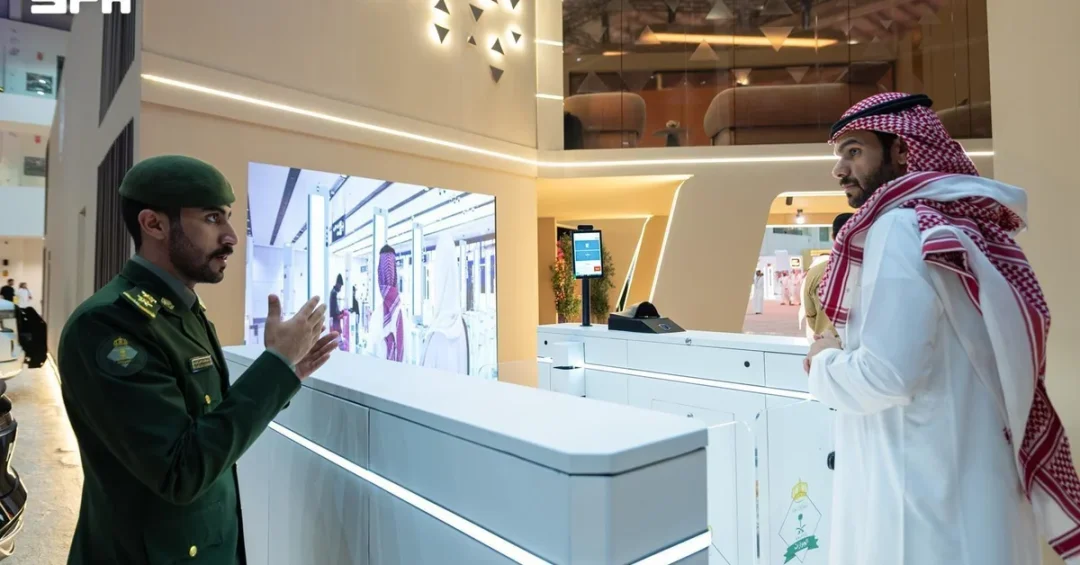
The General Directorate of Passports is participating in the Ministry of Interior pavilion at the International Saudi Falcons and Hunting Exhibition 2026, showcasing digital travel solutions designed to streamline movement through the Kingdom’s international ports of entry. The exhibition, organized by the National Center for Falcons, opened on October 1 and runs through October 10 at the Riyadh Exhibition and Convention Center in Malham, north of Riyadh. The directorate’s presence underscores Saudi Arabia’s commitment to integrating advanced technology into public services, a core objective of the Ministry of Interior’s modernization strategy. Have you ever considered how a passport checkpoint could become a seamless, contactless experience? The technologies on display in Riyadh offer a concrete answer, demonstrating how the Kingdom is reshaping border management for the millions of travelers who arrive each year.
The International Saudi Falcons and Hunting Exhibition is one of the region’s most prominent cultural and economic gatherings, celebrating a heritage that remains close to the heart of Saudi society. This year’s edition brings together government agencies, private companies, and international participants, providing a platform not only for cultural exchange but also for showcasing the Kingdom’s broader modernization efforts. The General Directorate of Passports is using this high-visibility event to present a suite of digital tools that reflect Saudi Arabia’s Vision 2030 ambitions, particularly in the areas of smart government, tourism facilitation, and infrastructure development. For international visitors, these innovations signal a more welcoming and efficient entry process, aligning with the Kingdom’s goal of attracting 150 million annual visits by 2030.
Context and Background
Why does a falconry exhibition serve as a stage for border-security technology? The answer lies in Saudi Arabia’s integrated approach to heritage and modernization. The International Saudi Falcons and Hunting Exhibition, organized by the National Center for Falcons, has grown into a significant event that draws participants from across the Gulf and beyond. It is a celebration of a tradition that has been passed down through generations, but it is also a showcase for the Kingdom’s capabilities in event management, tourism infrastructure, and public service innovation. The General Directorate of Passports, a key agency under the Ministry of Interior, has participated in previous editions, but this year’s display is particularly notable for its focus on contactless and mobile-first solutions.
The directorate’s participation reflects a broader strategic shift within the Ministry of Interior to digitize services and improve the traveler experience. Over the past several years, Saudi Arabia has invested heavily in upgrading its ports of entry, introducing biometric verification, electronic gates, and mobile applications that allow travelers to complete procedures before arrival. These efforts are part of a national push to enhance security while reducing wait times and administrative friction. The exhibition provides an ideal venue to demonstrate these advances to a diverse audience, including Saudi citizens, expatriates, and international visitors who may not be familiar with the Kingdom’s digital ecosystem. By presenting these tools in a cultural setting, the directorate also reinforces the message that modernization and tradition can coexist harmoniously.
Moreover, the timing of the exhibition aligns with a period of intense activity in Saudi Arabia’s tourism and events calendar. Riyadh has become a hub for international conferences, sporting events, and cultural festivals, each bringing thousands of visitors through its airports and border crossings. The General Directorate of Passports must therefore manage increasing volumes without compromising security or efficiency. The solutions on display at the exhibition are a direct response to this challenge, offering scalable, technology-driven answers that can be adapted to different ports and traveler profiles. What does this mean for the average traveler? It means shorter queues, less paperwork, and a more predictable journey from arrival to exit.
Key Details of the Digital Travel Solutions
At the heart of the directorate’s exhibit is the Absher Travel service, a digital platform that allows users to complete travel-related procedures electronically. Absher, which began as a portal for government services, has evolved into a comprehensive ecosystem that includes passport renewal, visa inquiries, and now travel authorization. The Absher Travel service enables travelers to submit required information in advance, reducing the need for physical paperwork at the port of entry. This is particularly valuable for families, business travelers, and tourists who want to minimize time spent at checkpoints. The service is accessible via smartphone, making it convenient for users both inside and outside the Kingdom.
Another highlight is the contactless e-gate, a system that uses biometric data to verify identity without the need for physical contact or manual document handling. Travelers simply approach the gate, which scans their face or fingerprint and cross-references it with secure databases. This technology not only speeds up the process but also enhances health and safety by reducing physical interaction. The e-gates are already operational at major airports such as King Khalid International Airport in Riyadh and King Abdulaziz International Airport in Jeddah, and the directorate is working to expand their presence to land and sea ports. The contactless feature is especially relevant in a post-pandemic world, where travelers prioritize hygiene and efficiency.
The exhibit also features a smart lens, a portable device that allows passport control officers to capture and verify biometric data quickly and accurately. The smart lens can be used in various settings, including mobile checkpoints and remote locations, providing flexibility in border management. Additionally, a portable passport reader is on display, enabling officers to authenticate travel documents on the spot. This device is particularly useful for field operations and for processing travelers in unconventional settings, such as during special events or in emergency situations. Together, these tools represent a comprehensive approach to border security that balances speed, accuracy, and adaptability. How do these innovations benefit the average traveler? They translate into a faster, more predictable, and less stressful entry process, which is a key factor in choosing a destination for tourism or business.
International and Regional Impact
Saudi Arabia’s efforts to modernize its ports of entry have significant implications for regional travel and international perceptions. As the largest economy in the Middle East and a pivotal player in global energy and logistics, the Kingdom’s ability to facilitate smooth entry for business travelers, tourists, and pilgrims is closely watched by its neighbors and partners. The digital solutions showcased at the exhibition could serve as a model for other Gulf Cooperation Council (GCC) countries that are also investing in smart border technologies. Improved border efficiency reduces waiting times for cargo and passengers, which in turn supports trade and tourism across the region. For international airlines and shipping companies, Saudi Arabia’s upgrades mean more reliable scheduling and lower operational costs.
From a diplomatic perspective, the directorate’s participation in a cultural exhibition sends a message of openness and readiness. Saudi Arabia is actively courting international visitors as part of its Vision 2030 strategy to diversify the economy away from oil. By demonstrating that its borders are secure yet welcoming, the Kingdom addresses a common concern among potential tourists: the ease of entry. The exhibition also provides an opportunity for the General Directorate of Passports to engage with international counterparts and private-sector technology providers, fostering partnerships that can lead to further innovation. In a region where security concerns often dominate the narrative, Saudi Arabia’s proactive approach to smart border management positions it as a leader in balancing safety with hospitality.
Economic and Strategic Significance
The economic rationale behind these digital travel solutions is compelling. Tourism is a key pillar of Vision 2030, with the Kingdom aiming to increase the sector’s contribution to GDP from around 3 percent to more than 10 percent by 2030. Achieving this target requires not only building attractions and hotels but also ensuring that entry procedures are efficient and traveler-friendly. The General Directorate of Passports’ innovations directly support this goal by reducing bottlenecks at ports of entry, which can otherwise deter repeat visits. A seamless arrival experience enhances Saudi Arabia’s competitiveness as a destination, particularly against other emerging tourism markets in the region. The exhibition itself is part of this economic ecosystem, attracting visitors who spend on hospitality, retail, and entertainment.
Strategically, the modernization of border control is also about security and data management. The use of biometric verification and digital platforms allows the directorate to maintain robust security standards while processing higher volumes of travelers. This is essential as Saudi Arabia hosts major events such as Expo 2030 in Riyadh and the FIFA World Cup 2034, both of which will bring millions of visitors. The technologies on display are scalable and can be integrated with other government systems, such as those managed by the Ministry of Tourism and the Saudi Data and AI Authority. By investing in these solutions now, the Kingdom is preparing for a future in which travel volume and security demands will only increase. What does this mean for businesses? It means faster clearance for executives and cargo, supporting Saudi Arabia’s ambitions as a global logistics hub.
Vision 2030 Alignment
The General Directorate of Passports’ participation in the International Saudi Falcons and Hunting Exhibition is a clear reflection of Vision 2030’s emphasis on government efficiency, digital transformation, and quality of life. Under the Vision, Saudi Arabia seeks to build a thriving economy and a vibrant society, both of which depend on seamless connectivity with the world. The Absher Travel service, contactless e-gates, smart lens, and portable passport reader are tangible examples of how technology can be harnessed to serve the public good. They also demonstrate the Ministry of Interior’s commitment to continuous improvement, a principle that runs through all Vision 2030 programs. By showcasing these tools at a cultural event, the directorate reinforces the idea that modernization is not an abstract goal but a practical reality that benefits citizens, residents, and visitors alike.
Looking ahead, the Kingdom plans to further expand its digital border infrastructure, integrating artificial intelligence and predictive analytics to anticipate traveler flows and optimize resource allocation. These advancements will be crucial as Saudi Arabia positions itself as a global destination for tourism, business, and pilgrimage. The exhibition, which runs until October 10, offers a glimpse of this future, inviting the public to interact with the technologies that will soon become standard at ports across the country. For international observers, it is a signal that Saudi Arabia is not only preserving its heritage but also building a modern, efficient state that welcomes the world. As the Kingdom continues its journey toward 2030, such initiatives will play a vital role in shaping its global image and achieving its ambitious goals.
20 Questions
Q1. What is the General Directorate of Passports showcasing at the International Saudi Falcons and Hunting Exhibition 2026?
A1. The directorate is showcasing digital travel solutions including the Absher Travel service, a contactless e-gate, a smart lens, and a portable passport reader, all designed to facilitate travel through Saudi Arabia’s international ports of entry.
Q2. Where and when is the International Saudi Falcons and Hunting Exhibition 2026 taking place?
A2. The exhibition runs from October 1 to 10, 2026, at the Riyadh Exhibition and Convention Center in Malham, north of Riyadh. It is organized by the National Center for Falcons.
Q3. What is the Absher Travel service?
A3. Absher Travel is a digital platform that allows travelers to complete travel-related procedures electronically before arriving at a port of entry, reducing paperwork and wait times. It is part of the broader Absher government services ecosystem.
Q4. How does the contactless e-gate work?
A4. The contactless e-gate uses biometric data, such as facial recognition or fingerprints, to verify a traveler’s identity without physical contact. It speeds up entry and enhances health safety by minimizing physical interaction.
Q5. What is a smart lens in the context of passport control?
A5. A smart lens is a portable device used by passport control officers to capture and verify biometric data quickly and accurately. It can be deployed in various settings, including mobile checkpoints and remote locations.
Q6. What is a portable passport reader?
A6. A portable passport reader is a handheld device that authenticates travel documents on the spot. It is useful for field operations and for processing travelers in unconventional settings, such as special events.
Q7. Why is the General Directorate of Passports participating in a falconry exhibition?
A7. The exhibition provides a high-visibility platform to demonstrate the Kingdom’s digital travel solutions to a diverse audience, reinforcing the message that Saudi Arabia is modernizing its services while celebrating its cultural heritage.
Q8. How do these digital solutions benefit international travelers?
A8. They reduce waiting times, minimize paperwork, and create a more predictable and less stressful entry process. This enhances Saudi Arabia’s attractiveness as a destination for tourism, business, and pilgrimage.
Q9. Are these technologies already in use at Saudi ports?
A9. Yes, contactless e-gates are operational at major airports such as King Khalid International Airport in Riyadh and King Abdulaziz International Airport in Jeddah. The directorate is expanding their presence to other ports.
Q10. How does this initiative align with Vision 2030?
A10. It supports Vision 2030’s goals of digital transformation, government efficiency, and economic diversification. By facilitating travel, it contributes to the target of attracting 150 million annual visits by 2030.
Q11. What role does the Ministry of Interior play in these innovations?
A11. The Ministry of Interior oversees the General Directorate of Passports and drives the modernization of border control. Its pavilion at the exhibition highlights its commitment to adopting advanced technologies for public service.
Q12. How does the exhibition support Saudi Arabia’s tourism goals?
A12. The exhibition attracts visitors and showcases the Kingdom’s capabilities in event management and tourism infrastructure. It also promotes cultural heritage, which is a key draw for international tourists.
Q13. What is the National Center for Falcons?
A13. The National Center for Falcons is the organizing body of the International Saudi Falcons and Hunting Exhibition. It works to preserve falconry heritage and promote related activities in line with Saudi culture.
Q14. Can these digital solutions be adapted for land and sea ports?
A14. Yes, the technologies are scalable and adaptable. The directorate is working to expand contactless e-gates and other tools to land and sea ports to ensure consistent service across all entry points.
Q15. How does the smart lens improve border security?
A15. The smart lens enables quick and accurate biometric verification, reducing the risk of identity fraud. It also allows officers to perform checks in flexible locations, enhancing overall security coverage.
Q16. What economic benefits do these innovations bring?
A16. They reduce bottlenecks for travelers and cargo, supporting trade and tourism. Faster clearance times lower operational costs for businesses and make Saudi Arabia more competitive as a logistics and tourism hub.
Q17. Are there plans to integrate artificial intelligence into these systems?
A17. Yes, the Kingdom plans to further expand its digital border infrastructure with AI and predictive analytics to anticipate traveler flows and optimize resource allocation at ports of entry.
Q18. How does the exhibition reflect Saudi Arabia’s approach to heritage and modernity?
A18. By hosting a traditional falconry event alongside advanced technology displays, the exhibition demonstrates that Saudi Arabia values its heritage while embracing modernization, a balance central to Vision 2030.
Q19. What should travelers expect when using these services?
A19. Travelers can expect a faster, more efficient entry process with less paperwork and shorter queues. The services are designed to be user-friendly and accessible via smartphone or at automated gates.
Q20. How can international visitors learn more about these digital travel solutions?
A20. International visitors can visit the Ministry of Interior pavilion at the exhibition until October 10, or access information through official Saudi government portals such as Absher and the General Directorate of Passports website.
Reader Feedback
We value your thoughts. Please share your feedback on this article.
Your feedback helps us improve our coverage.
Related articles
 Arab League Condemns Houthi Attack on Medinah Power Station
 Border Guard Showcases ZALY System at Saudi Falcons Exhibition
 Civil Defense Showcases Technologies at Saudi Falcons Exhibition
 Qatar Condemns Houthi Attack on Medinah Power Station
 Saudi Ambassador Presents Credentials to Moldovan President
 Egypt Condemns Attack on Medinah Power Station