


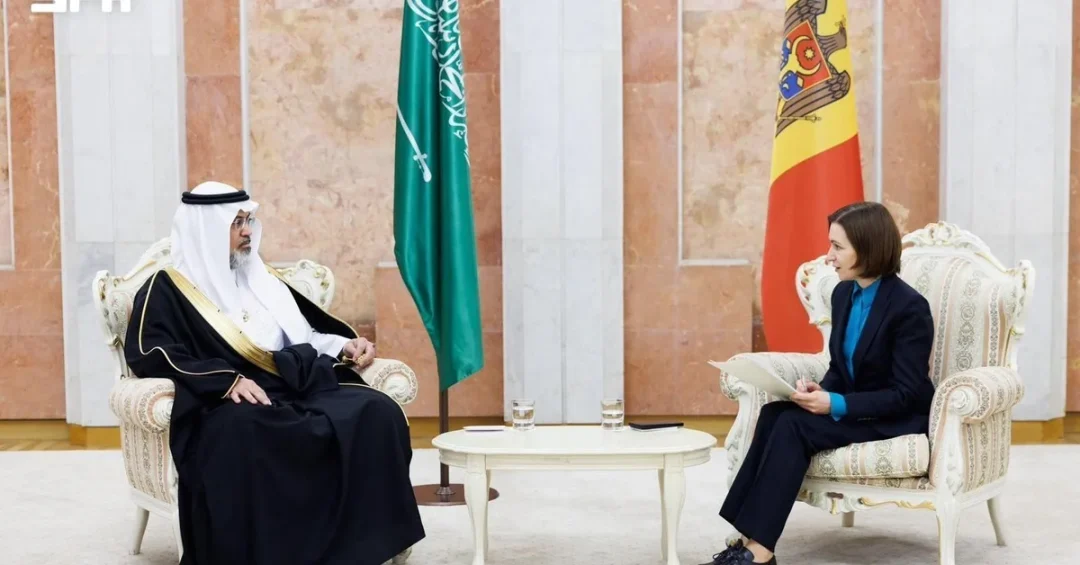
Saudi Ambassador to Romania and Non-Resident Ambassador to the Republic of Moldova Khalid bin Eid Al-Shammari presented his credentials to President Maia Sandu in Chisinau on October 2, 2026, formally opening a new chapter in diplomatic relations between the Kingdom of Saudi Arabia and Moldova. The official ceremony, reported by the Saudi Press Agency, marks a significant step in the Kingdom’s continued expansion of its diplomatic network and reflects the broader strategic vision of deepening partnerships across Europe and beyond.
During the meeting, Ambassador Al-Shammari conveyed the greetings of Custodian of the Two Holy Mosques King Salman bin Abdulaziz Al Saud and His Royal Highness Prince Mohammed bin Salman bin Abdulaziz Al Saud, Crown Prince and Prime Minister, to President Sandu. In turn, the Moldovan president sent her greetings to the Custodian of the Two Holy Mosques and the Crown Prince, underscoring the mutual respect and goodwill that characterize the bilateral relationship. President Sandu expressed her appreciation for the Saudi government and people and affirmed that Moldova looked forward to strengthening bilateral cooperation in various fields, while wishing Ambassador Al-Shammari success in his new duties. The exchange highlights the growing importance of Saudi Arabia’s diplomatic outreach in Eastern Europe and the Kingdom’s commitment to building bridges with nations across the globe.
Context and Background: Why Does This Diplomatic Milestone Matter Now?
The presentation of credentials is a formal diplomatic procedure that signifies the official commencement of an ambassador’s mission in a host country. For Saudi Arabia, this step represents a continuation of its longstanding policy of maintaining robust diplomatic ties with countries around the world, including those in Eastern Europe. Ambassador Al-Shammari’s role as a non-resident ambassador to Moldova, while simultaneously serving as ambassador to Romania, reflects a strategic approach to diplomatic representation that maximizes resources and fosters regional cooperation. This arrangement allows the Kingdom to engage effectively with multiple nations while maintaining a strong presence in the region.
Moldova, a landlocked country in Eastern Europe bordered by Romania and Ukraine, has been steadily developing its international partnerships, and its engagement with Saudi Arabia signals a mutual interest in exploring new avenues of cooperation. The Kingdom’s diplomatic efforts in this region are part of a broader strategy to diversify its international relationships and promote mutual understanding, trade, and cultural exchange. Over the past decade, Saudi Arabia has expanded its diplomatic footprint significantly, opening embassies and strengthening ties with countries in Europe, Asia, Africa, and the Americas. This outreach is closely aligned with the Kingdom’s Vision 2030, which seeks to enhance Saudi Arabia’s global engagement and economic diversification.
The timing of this credential presentation is particularly noteworthy given the evolving geopolitical landscape in Eastern Europe. As Moldova continues to navigate its relationships with both Eastern and Western partners, the opportunity to deepen ties with Saudi Arabia offers a pathway to new economic and diplomatic opportunities. The Kingdom’s growing role as a global mediator and investor adds weight to such diplomatic engagements, and Moldova’s positive reception of the Saudi ambassador underscores the potential for a fruitful partnership.
Key Details of the Credential Presentation Ceremony
The ceremony took place in Chisinau, the capital of Moldova, where Ambassador Al-Shammari was formally received by President Maia Sandu. According to the Saudi Press Agency, the ambassador conveyed the greetings of the Custodian of the Two Holy Mosques King Salman bin Abdulaziz Al Saud and His Royal Highness Prince Mohammed bin Salman bin Abdulaziz Al Saud, Crown Prince and Prime Minister. This gesture of conveying greetings from the highest levels of Saudi leadership is a customary diplomatic practice that underscores the importance the Kingdom places on its relationship with Moldova.
President Sandu reciprocated with her own greetings to the Saudi leadership, expressing appreciation for the Saudi government and people. She stated that Moldova looked forward to strengthening bilateral cooperation in various fields, indicating a willingness to explore new areas of collaboration. The president also wished Ambassador Al-Shammari success in his new duties, a standard diplomatic courtesy that reflects the positive tone of the engagement. The exchange of greetings and well-wishes between the two sides highlights the friendly nature of Saudi-Moldovan relations and sets a constructive foundation for future cooperation.
The credentials presented by Ambassador Al-Shammari are official documents that formally accredit him as the representative of the Kingdom of Saudi Arabia to Moldova. This step enables him to carry out his diplomatic duties, including fostering political dialogue, promoting economic ties, and facilitating cultural exchanges. As a non-resident ambassador, Al-Shammari will operate from his base in Romania, but his mandate covers Moldova, ensuring that Saudi interests are represented and that bilateral relations continue to develop. The successful presentation of credentials is a prerequisite for any substantive diplomatic engagement, and this ceremony thus marks the beginning of a new phase in Saudi-Moldovan relations.
International and Regional Impact of Strengthened Saudi-Moldovan Ties
The strengthening of Saudi-Moldovan relations carries implications that extend beyond the bilateral sphere. For Saudi Arabia, deeper engagement with Moldova is part of a wider effort to build partnerships across Europe, particularly in Eastern Europe where the Kingdom has been increasing its diplomatic and economic presence. This aligns with Saudi Arabia’s Vision 2030, which emphasizes the importance of international cooperation and economic diversification. By cultivating ties with Moldova, Saudi Arabia gains a partner in a region that serves as a bridge between Europe and Asia, potentially opening doors to new trade routes and investment opportunities.
For Moldova, engagement with Saudi Arabia offers access to one of the largest economies in the Middle East and a key player in global energy markets. The Kingdom’s expertise in areas such as renewable energy, infrastructure development, and technology could be valuable to Moldova as it seeks to modernize its economy and attract foreign investment. Moreover, Saudi Arabia’s role as a cultural and religious hub for the Islamic world could foster people-to-people exchanges and tourism, further enriching the bilateral relationship. The positive tone of the credential ceremony suggests that both sides are committed to exploring these possibilities.
On a regional level, Saudi Arabia’s diplomatic outreach to Moldova could also have a stabilizing effect in Eastern Europe, where geopolitical tensions have been high in recent years. By engaging constructively with countries in the region, the Kingdom contributes to a climate of dialogue and cooperation, which is essential for peace and prosperity. Saudi Arabia’s balanced foreign policy and its emphasis on mutual respect and non-interference make it a welcome partner for many nations seeking to diversify their international relationships.
Economic and Strategic Significance: What Does This Mean for Bilateral Cooperation?
The economic dimension of Saudi-Moldovan relations is ripe for development. While trade between the two countries is currently modest, there is significant potential for growth in sectors such as agriculture, food processing, information technology, and renewable energy. Moldova’s agricultural sector, in particular, could benefit from Saudi investment and expertise, while Saudi Arabia could explore opportunities to import high-quality Moldovan products. The Kingdom’s Vision 2030 includes goals to enhance food security and diversify import sources, making partnerships with agricultural producers like Moldova strategically valuable.
In terms of investment, Saudi Arabia’s Public Investment Fund (PIF) and other Saudi entities have been actively seeking opportunities abroad, and Moldova could present attractive prospects in infrastructure, logistics, and technology. The country’s strategic location near the European Union and its free trade agreements with various partners make it a potentially useful gateway for Saudi goods and services into European markets. Conversely, Moldovan companies could benefit from Saudi Arabia’s massive development projects, including NEOM and other giga-projects, which require a wide range of goods and services.
Strategically, the appointment of a non-resident ambassador to Moldova demonstrates Saudi Arabia’s commitment to maintaining a diplomatic presence in the region without the need for a full embassy, which is a cost-effective approach. This model allows the Kingdom to stay engaged with Moldova while focusing its resources on other priorities. As relations deepen, the possibility of upgrading to a resident embassy could be considered, but for now, the non-resident arrangement provides a solid foundation for diplomatic and economic engagement.
Vision 2030 Alignment: A Step Toward Global Engagement
Saudi Arabia’s Vision 2030 is a comprehensive plan to transform the Kingdom’s economy and society, and a key pillar of this vision is enhancing the Kingdom’s global engagement and building new international partnerships. The presentation of credentials by Ambassador Al-Shammari to President Sandu is a concrete example of this pillar in action. By expanding its diplomatic network and fostering ties with countries like Moldova, Saudi Arabia is positioning itself as a responsible global actor and a reliable partner for nations seeking mutual prosperity.
Vision 2030 also emphasizes the importance of cultural exchange and people-to-people ties, which are facilitated by diplomatic missions. As Saudi-Moldovan relations grow, there will be opportunities for educational exchanges, tourism, and cultural events that showcase the rich heritage of both nations. The Kingdom’s commitment to moderation and its efforts to promote a positive image of Saudi Arabia abroad are well-served by such diplomatic engagements. Moreover, the economic diversification goals of Vision 2030 are supported by opening new markets and attracting foreign investment, which are natural outcomes of strengthened bilateral relations.
In conclusion, the presentation of credentials by Ambassador Khalid bin Eid Al-Shammari to President Maia Sandu represents a meaningful step forward in Saudi-Moldovan relations. It reflects Saudi Arabia’s proactive diplomacy and its dedication to building a network of partners around the world. As the Kingdom continues to implement Vision 2030, such diplomatic milestones will play a crucial role in achieving its goals of economic prosperity, global influence, and cultural exchange. The future of Saudi-Moldovan cooperation looks promising, and this ceremony lays the groundwork for a productive and mutually beneficial partnership.
20 Questions
Q1. Who presented credentials to Moldova’s president?
A1. Saudi Ambassador to Romania and Non-Resident Ambassador to Moldova Khalid bin Eid Al-Shammari presented his credentials to President Maia Sandu on October 2, 2026, in Chisinau, as reported by the Saudi Press Agency.
Q2. When did the credential presentation take place?
A2. The ceremony took place on October 2, 2026, according to the Saudi Press Agency. The event was held in Chisinau, the capital of Moldova, marking a formal diplomatic milestone in Saudi-Moldovan relations.
Q3. Where did the credential presentation occur?
A3. The presentation occurred in Chisinau, the capital city of Moldova. The ceremony was held at the presidential palace or a designated official venue, where President Maia Sandu formally received Ambassador Al-Shammari.
Q4. What greetings did Ambassador Al-Shammari convey?
A4. Ambassador Al-Shammari conveyed the greetings of Custodian of the Two Holy Mosques King Salman bin Abdulaziz Al Saud and His Royal Highness Prince Mohammed bin Salman bin Abdulaziz Al Saud, Crown Prince and Prime Minister, to President Sandu.
Q5. How did President Maia Sandu respond to the greetings?
A5. President Sandu reciprocated by sending her greetings to the Custodian of the Two Holy Mosques and the Crown Prince. She also expressed appreciation for the Saudi government and people and wished Ambassador Al-Shammari success in his new duties.
Q6. What did President Sandu say about bilateral cooperation?
A6. President Sandu stated that Moldova looked forward to strengthening bilateral cooperation with Saudi Arabia in various fields. This reflects Moldova’s interest in deepening ties across economic, cultural, and diplomatic areas.
Q7. What is the significance of presenting credentials?
A7. Presenting credentials is a formal diplomatic procedure that officially accredits an ambassador to the host country. It enables the ambassador to carry out diplomatic duties, including fostering political dialogue, economic ties, and cultural exchanges.
Q8. Who is Khalid bin Eid Al-Shammari?
A8. Khalid bin Eid Al-Shammari is the Saudi Ambassador to Romania and the Non-Resident Ambassador to the Republic of Moldova. He represents Saudi Arabia’s interests in both countries and works to strengthen bilateral relations.
Q9. What is Saudi Arabia’s diplomatic strategy in Eastern Europe?
A9. Saudi Arabia’s diplomatic strategy in Eastern Europe focuses on expanding partnerships, promoting economic cooperation, and enhancing cultural exchange. The Kingdom uses non-resident ambassadors to maintain cost-effective yet meaningful diplomatic presence in multiple countries.
Q10. How does this event align with Vision 2030?
A10. This event aligns with Vision 2030 by enhancing Saudi Arabia’s global engagement and building new international partnerships. It supports economic diversification, cultural exchange, and the Kingdom’s goal of becoming a more influential global actor.
Q11. What are the potential areas of Saudi-Moldovan cooperation?
A11. Potential areas include agriculture, food processing, information technology, renewable energy, infrastructure, and tourism. Both countries can benefit from exchanging expertise and exploring investment opportunities in these sectors.
Q12. What is Moldova’s position in Eastern Europe?
A12. Moldova is a landlocked country in Eastern Europe, bordered by Romania and Ukraine. It has been developing international partnerships and seeking to modernize its economy, making engagement with Saudi Arabia strategically valuable.
Q13. How does Saudi Arabia benefit from ties with Moldova?
A13. Saudi Arabia gains a partner in a region that bridges Europe and Asia, potentially opening new trade routes and investment opportunities. It also strengthens the Kingdom’s diplomatic presence in Eastern Europe and supports Vision 2030 goals.
Q14. What did President Sandu wish for Ambassador Al-Shammari?
A14. President Sandu wished Ambassador Al-Shammari success in his new duties. This diplomatic courtesy reflects the positive and cooperative tone of the engagement between Moldova and Saudi Arabia.
Q15. What role does the Saudi Press Agency play in this news?
A15. The Saudi Press Agency (SPA) is the official news agency of Saudi Arabia that reported the credential presentation. It serves as a reliable source for official Saudi government announcements and diplomatic activities.
Q16. How does this event reflect Saudi Arabia’s foreign policy?
A16. It reflects Saudi Arabia’s foreign policy of building constructive relationships worldwide, based on mutual respect and cooperation. The Kingdom actively seeks partnerships that contribute to regional stability and global prosperity.
Q17. What is the significance of non-resident ambassadors?
A17. Non-resident ambassadors allow countries to maintain diplomatic relations with multiple nations without establishing full embassies in each. This approach is cost-effective and enables efficient management of diplomatic resources while still fostering strong bilateral ties.
Q18. Could Saudi-Moldovan relations lead to a resident embassy?
A18. As relations deepen, the possibility of upgrading to a resident embassy could be considered. However, for now, the non-resident arrangement provides a solid foundation for diplomatic and economic engagement between the two countries.
Q19. What message does this send to the international community?
A19. It sends a message that Saudi Arabia is committed to global engagement and building partnerships across regions. The Kingdom is open to cooperation and seeks to contribute positively to international stability and development.
Q20. What are the future prospects for Saudi-Moldovan relations?
A20. The future prospects are promising, with potential for increased trade, investment, and cultural exchange. Both countries have expressed a willingness to strengthen cooperation, and this credential presentation lays the groundwork for a productive partnership.
Reader Feedback
We value your thoughts. Please share your feedback on this article.
Your feedback helps us improve our coverage.
Related articles
 Egypt Condemns Attack on Medinah Power Station
 OIC Condemns Houthi Attack on Madinah Power Station
 KSrelief Performs 12 Endocrine Surgeries in Port Sudan
 Saudi Deputy Minister Joins Global Coalition Meeting in Rome
 KSrelief Performs 11 Urological Surgeries in Nigeria
 MWL Condemns Houthi Attack on Madinah Power Station