


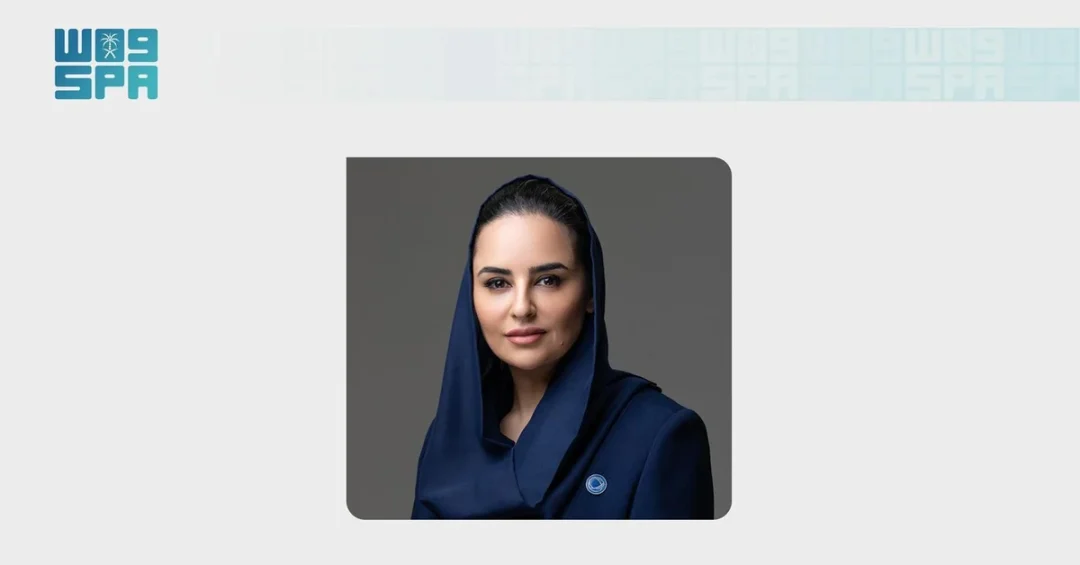
Saudi digital economy leader Deemah AlYahya has been appointed by United Nations Secretary-General Antonio Guterres to the High-Level Panel on Freedom of Transit for Landlocked Developing Countries (HLP-FoT), representing the Arab region in a role that underscores the Kingdom’s growing influence in multilateral diplomacy and international digital cooperation. The appointment, announced via the Saudi Press Agency, places AlYahya among a select group of senior representatives and experts drawn from governments, international organizations, the private sector, and academia to address one of the most persistent structural challenges facing the global trading system.
For a world still navigating supply chain disruptions, rising freight costs, and uneven post-pandemic recovery, the panel’s mandate carries immediate practical weight. Landlocked developing countries, which number more than thirty worldwide, depend on transit routes through neighboring states to reach global markets, making freedom of transit a question of economic survival rather than abstract diplomacy. AlYahya’s selection reflects not only her personal credentials but also Saudi Arabia’s expanding role as a convener of international solutions, a bridge between regions, and a champion of digital and economic inclusion. How often does a single appointment signal both national achievement and global necessity?
Context and Background
Why does a panel focused on transit corridors matter to a world increasingly defined by connectivity? The High-Level Panel on Freedom of Transit for Landlocked Developing Countries was established by the United Nations to bring together diverse expertise capable of producing actionable recommendations on transit rights, infrastructure coordination, and cross-border trade facilitation. Landlocked developing countries face structural disadvantages that compound across every stage of the supply chain: higher transport costs, longer delivery times, complex border procedures, and limited bargaining power with transit states. These constraints suppress export competitiveness and deter foreign investment, trapping economies in cycles of underdevelopment that no single nation can resolve alone.
AlYahya’s appointment followed a consultative process and nominations by UN Member States, a procedure designed to ensure geographic balance and multidisciplinary representation. She represents the Arab region, a designation that carries particular significance given the region’s strategic location at the crossroads of Asia, Africa, and Europe. Her current role as Secretary-General of the Digital Cooperation Organization (DCO), where she is serving her second term, provides her with direct experience in the kind of cross-border coordination the panel seeks to advance. The DCO, a multilateral organization focused on digital economy cooperation, has positioned itself as a platform for emerging economies to shape global digital governance rather than merely adapt to it.
The timing of this appointment is not incidental. Global trade patterns are being renegotiated in real time, with digital documentation, paperless customs systems, and data-driven logistics reshaping what transit facilitation means in practice. A panel composed only of traditional trade diplomats would risk missing these dimensions. AlYahya’s inclusion signals that the United Nations recognizes digital infrastructure as inseparable from physical infrastructure when addressing transit challenges. Is it possible to solve twenty-first-century trade problems with twentieth-century tools?
Key Details of the Appointment
What specifically qualifies AlYahya for this responsibility? Her professional record includes extensive experience in international cooperation, multilateral diplomacy, policymaking, and the promotion of cross-border investment and development. At the DCO, she has led initiatives that connect member states on digital economy policy, entrepreneurship, and innovation, building the kind of trust-based relationships that multilateral panels require to function effectively. Her second term as Secretary-General indicates sustained confidence from member states in her leadership and a continuity of vision that benefits long-horizon projects such as transit reform.
The panel’s composition reflects a deliberate design: senior representatives and experts from governments, international organizations, the private sector, and academia. This mix acknowledges that freedom of transit is not solely a legal question governed by conventions such as the United Nations Convention on the Law of the Sea and various bilateral transit agreements. It is also an operational question involving customs authorities, logistics companies, port operators, and technology providers. By including private sector and academic voices, the panel can move beyond declarations toward implementable frameworks. AlYahya’s background spans both the public and private sectors, giving her credibility across these divides.
Her appointment also reflects Saudi Arabia’s broader pattern of contributing qualified nationals to international bodies. The Kingdom has increasingly positioned itself as a source of solutions in global governance, from energy market stability to humanitarian relief to digital transformation. This is consistent with a foreign policy that emphasizes constructive engagement and partnership rather than isolation. For international observers, the appointment offers a concrete example of how Saudi expertise is being deployed in service of global public goods. Does a nation’s global standing rest more on what it says or on what it contributes?
International and Regional Impact
What does this appointment mean beyond the individual? For the Arab region, having a representative on the panel ensures that regional perspectives on transit, trade, and digital connectivity are present in deliberations that will shape international frameworks. Many Arab states serve as transit corridors for landlocked neighbors or depend on maritime chokepoints for their own trade, giving the region direct stakes in the outcome. AlYahya’s presence can help ensure that recommendations account for the specific infrastructure, regulatory, and investment conditions of the Middle East and North Africa, rather than applying a one-size-fits-all template derived from other regions.
For the broader international community, the panel represents a test of whether multilateralism can deliver tangible results on issues that have resisted resolution for decades. Freedom of transit has been recognized as a principle in international law for centuries, yet implementation remains uneven. The panel’s ability to convene diverse stakeholders and produce consensus recommendations could either reinforce confidence in UN-led processes or expose their limitations. AlYahya’s track record in building coalitions across sectors suggests she is well suited to the consensus-building work that will determine the panel’s effectiveness. Success would strengthen the case for continued investment in multilateral problem-solving at a moment when such investment is not guaranteed.
Economic and Strategic Significance
Why should businesses and investors pay attention to a UN panel? Transit inefficiencies impose measurable costs. According to international trade research, landlocked developing countries pay significantly more to export goods than coastal economies, with transport costs sometimes exceeding tariffs as a barrier to market access. Reducing these costs expands market size, improves investment returns, and integrates currently marginalized economies into global value chains. For multinational companies assessing supply chain resilience, improved transit corridors mean diversified sourcing options and reduced concentration risk. The panel’s work therefore has direct commercial implications, not merely diplomatic ones.
Saudi Arabia’s strategic interest in this agenda is multifaceted. The Kingdom is investing heavily in logistics, ports, and digital infrastructure as part of its economic diversification efforts, and it sits astride trade routes connecting three continents. A more efficient global transit system benefits Saudi exports and imports, strengthens the Kingdom’s position as a logistics hub, and creates opportunities for Saudi companies in freight, technology, and professional services. Additionally, Saudi leadership in digital cooperation aligns with the panel’s likely emphasis on digitalizing border procedures, an area where the Kingdom has demonstrated capability through initiatives such as the Digital Cooperation Organization and national digital government platforms. Can economic diversification succeed without reliable access to global markets?
Vision 2030 Alignment
How does this appointment connect to Saudi Arabia’s long-term transformation? Vision 2030, the Kingdom’s national reform strategy, emphasizes economic diversification, international engagement, and the development of a knowledge-based economy. It also calls for Saudi Arabia to play a leading role in regional and global affairs. AlYahya’s appointment is a direct expression of these objectives: a Saudi woman, recognized for expertise in digital economy and international cooperation, taking a seat at a United Nations panel addressing a global development challenge. This reflects the Vision 2030 commitment to empowering women, expanding Saudi participation in multilateral institutions, and positioning the Kingdom as a source of solutions rather than a passive participant in global governance.
The appointment also reinforces the connection between digital transformation and traditional economic priorities. Vision 2030 envisions a Saudi economy integrated with global markets, supported by modern infrastructure and forward-looking regulation. Freedom of transit, when enhanced through digital tools such as electronic customs declarations, real-time cargo tracking, and interoperable regulatory platforms, becomes part of that integration agenda. AlYahya’s dual expertise in digital policy and multilateral diplomacy makes her an effective advocate for approaches that link these domains. As the panel’s work advances, Saudi Arabia’s experience in building digital public infrastructure and fostering cross-border digital cooperation may serve as a reference point for recommendations affecting landlocked economies worldwide. In a world where connectivity determines opportunity, the Kingdom’s contribution to this panel is both a recognition of its capabilities and an investment in a more integrated global economy.
20 Questions
Q1. Who appointed Deemah AlYahya to the UN High-Level Panel on Freedom of Transit?
A1. UN Secretary-General Antonio Guterres appointed Deemah AlYahya as a member of the High-Level Panel on Freedom of Transit for Landlocked Developing Countries, according to an announcement carried by the Saudi Press Agency.
Q2. What region does Deemah AlYahya represent on the panel?
A2. She represents the Arab region, reflecting her expertise and contributions to the digital economy, innovation, and international digital cooperation, as stated in the official announcement.
Q3. What is the full name of the panel AlYahya joined?
A3. The panel is formally known as the High-Level Panel on Freedom of Transit for Landlocked Developing Countries, abbreviated as HLP-FoT, and was established by the United Nations.
Q4. What is Deemah AlYahya’s current professional position?
A4. She is serving her second term as Secretary-General of the Digital Cooperation Organization, a multilateral body focused on advancing digital economy cooperation among member states.
Q5. What areas of expertise does AlYahya bring to the panel?
A5. Her expertise includes international cooperation, multilateral diplomacy, policymaking, and promoting cross-border investment and development, along with digital economy and innovation leadership.
Q6. How was AlYahya selected for this appointment?
A6. Her appointment followed a consultative process and nominations by UN Member States as part of an initiative to bring together diverse expertise from governments, organizations, the private sector, and academia.
Q7. Who else serves on the High-Level Panel on Freedom of Transit?
A7. The panel brings together senior representatives and experts from governments, international organizations, the private sector, and academia, ensuring multidisciplinary perspectives on transit challenges.
Q8. What is the main purpose of the HLP-FoT panel?
A8. The panel supports the work of addressing freedom of transit for landlocked developing countries, which depend on transit routes through neighboring states to access global markets.
Q9. Why are landlocked developing countries disadvantaged in global trade?
A9. They face higher transport costs, longer delivery times, complex border procedures, and limited bargaining power, all of which reduce export competitiveness and deter investment.
Q10. How many landlocked developing countries exist worldwide?
A10. There are more than thirty landlocked developing countries globally, spanning Africa, Asia, Latin America, and Europe, according to United Nations classifications.
Q11. What does the Digital Cooperation Organization do?
A11. The DCO is a multilateral organization that connects member states on digital economy policy, entrepreneurship, and innovation, positioning emerging economies to help shape global digital governance.
Q12. Why is digital infrastructure relevant to freedom of transit?
A12. Digital tools such as electronic customs declarations, real-time cargo tracking, and interoperable regulatory platforms can reduce delays and costs at borders, making transit more efficient.
Q13. What is Saudi Arabia’s strategic interest in transit facilitation?
A13. The Kingdom is investing in logistics, ports, and digital infrastructure, and sits astride trade routes connecting three continents, so more efficient transit benefits its exports and hub ambitions.
Q14. How does this appointment reflect Saudi Arabia’s global engagement?
A14. It shows the Kingdom contributing qualified nationals to international bodies and positioning itself as a source of solutions in global governance, consistent with its foreign policy of constructive engagement.
Q15. What is the significance for the Arab region of AlYahya’s representation?
A15. It ensures regional perspectives on transit, trade, and digital connectivity are present in deliberations, helping recommendations account for Middle East and North Africa conditions.
Q16. How does the appointment relate to Vision 2030?
A16. Vision 2030 emphasizes economic diversification, international engagement, and women’s empowerment, all reflected in a Saudi woman taking a leadership role on a UN panel.
Q17. What economic benefits could improved transit bring?
A17. Reduced transport costs expand market size, improve investment returns, integrate marginalized economies into global value chains, and offer multinational companies diversified sourcing options.
Q18. What is the United Nations Convention relevant to transit rights?
A18. The United Nations Convention on the Law of the Sea, along with various bilateral transit agreements, provides legal frameworks governing freedom of transit for landlocked states.
Q19. How might the panel’s recommendations be implemented?
A19. Implementation would likely involve customs authorities, logistics companies, port operators, and technology providers, supported by frameworks developed with private sector and academic input.
Q20. What does this appointment signal about Saudi Arabia’s global role?
A20. It signals that Saudi expertise is being deployed in service of global public goods, reinforcing the Kingdom’s role as a bridge between regions and a contributor to multilateral problem-solving.
Reader Feedback
We value your thoughts. Please share your feedback on this article.
Your feedback helps us improve our coverage.
Related articles
 Saudi Delegation Joins 17th Arab Finance Ministers Meeting
 Saudi Ambassador Meets Hungarian Defence Minister
 Saudi Ministry Concludes 14th Scholarly Course in Ethiopia
 Shura Council Expands Global Ties Via Parliamentary Diplomacy
 Crown Prince Congratulates Nigeria on Independence Day
 King Salman Congratulates Nigeria’s President on Independence Day