


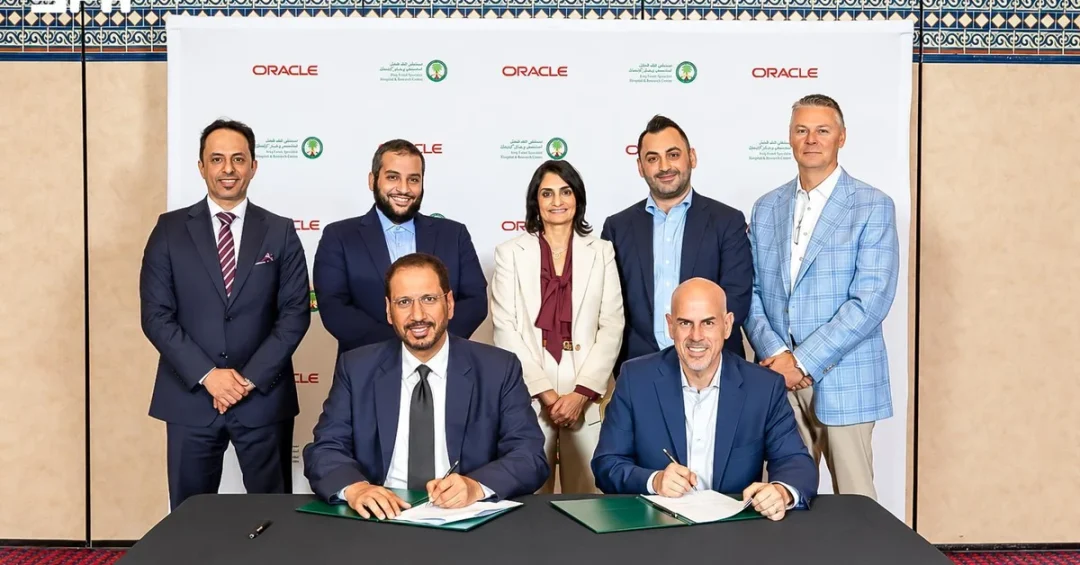
King Faisal Specialist Hospital & Research Center (KFSH) and Oracle Health announced on October 1, 2026, a shared interest in exploring a strategic collaboration to build an intelligent, continuously learning healthcare ecosystem that connects clinical, genomic, and research data across Saudi Arabia. The announcement, made at the Oracle Health and Life Sciences Summit in Orlando, Florida, signals a significant step in the Kingdom’s efforts to harness advanced technology for healthcare transformation. The proposed collaboration would combine KFSH’s world-renowned clinical and research capabilities with Oracle’s secure cloud infrastructure, connected data platform, and artificial intelligence capabilities. Together, the two organizations aim to address one of the most persistent challenges in modern medicine: the fragmentation of critical health data across multiple disconnected systems. For patients and clinicians alike, the initiative promises faster insights, more personalized treatments, and a research engine capable of accelerating biomedical discovery.
The timing of this announcement underscores Saudi Arabia’s growing ambition to lead globally in healthcare innovation. As nations worldwide grapple with rising healthcare costs, aging populations, and the need for more precise treatments, Saudi Arabia is positioning itself at the forefront of a data-driven revolution in medicine. KFSH, already ranked first in the Middle East and Africa and 12th globally among the world’s top 250 academic medical centers for 2026, brings decades of clinical excellence and research expertise. Oracle Health, a division of Oracle Corporation, contributes enterprise-grade cloud technology and AI tools already deployed in leading health systems around the world. Could this partnership become a model for how nations integrate genomic and clinical data at scale? The early indications suggest that Saudi Arabia intends to find out.
Context and Background
Why has the fragmentation of healthcare data become such a critical issue for modern medicine? Across the globe, hospitals and research institutions generate vast amounts of information—electronic health records, genomic sequences, imaging results, clinical trial data, and patient outcomes. Yet this information often resides in separate silos, making it difficult for care teams to access a complete picture of a patient’s health. For researchers, the challenge is even greater: correlating genomic data with clinical histories and treatment responses can take months or years, delaying the discovery of new therapies. KFSH and Oracle Health are exploring a collaboration specifically designed to break down these silos. By connecting data across the healthcare ecosystem, the proposed initiative would enhance care coordination, allowing physicians to make decisions based on a holistic view of each patient. This is not merely a technological upgrade; it is a fundamental shift in how healthcare systems can operate.
The background to this announcement lies in Saudi Arabia’s broader healthcare transformation, a central pillar of Saudi Vision 2030. The Kingdom has invested heavily in modernizing its health infrastructure, expanding digital health records, and promoting preventive care. KFSH has been a key player in this journey, consistently earning recognition for its clinical outcomes and research output. In 2026, Brand Finance named KFSH the most valuable healthcare brand in the Kingdom and the Middle East, while Newsweek listed it among the World’s Best Hospitals, World’s Best Smart Hospitals, and World’s Best Specialized Hospitals. These accolades reflect a sustained commitment to excellence that now meets Oracle’s technological prowess. The proposed collaboration is therefore not an isolated project but a natural next step in Saudi Arabia’s evolution toward a knowledge-based, patient-centered healthcare system.
Key Details of the Proposed Collaboration
What exactly would this strategic collaboration involve? According to the announcement released via the Saudi Press Agency (SPA), the two organizations are exploring four interconnected areas of collaboration. First, connecting data across the healthcare ecosystem to enhance care coordination. This means integrating clinical, genomic, and research data into a unified platform that care teams can access securely. Second, advancing personalized medicine by using those combined insights to tailor prevention, diagnosis, and treatment to individual patients. Third, applying responsible AI to equip clinicians with relevant information at the point of care—ensuring that AI serves as a support tool rather than a replacement for human judgment. Fourth, accelerating biomedical discovery to bring new insights into patient care more rapidly. Each of these areas builds on the others, creating a virtuous cycle where data informs care, care generates new data, and research translates that data into better outcomes.
The technological foundation for this vision is Oracle’s secure cloud infrastructure and connected data platform. Oracle Health has extensive experience in managing sensitive health information, adhering to rigorous privacy and security standards. For KFSH, the appeal lies in the ability to maintain control over its data while gaining access to advanced analytics and AI capabilities. The proposed collaboration would also support enhanced patient experiences—a priority for Saudi Arabia’s healthcare sector, where patient satisfaction is increasingly seen as a measure of system performance. By equipping clinicians with timely insights, the initiative aims to reduce diagnostic delays, minimize trial-and-error prescribing, and empower patients with more personalized care plans. While the collaboration is still in the exploration phase, the shared interest announced in Orlando represents a formal step toward a potential agreement that could reshape healthcare delivery in the Kingdom and beyond.
International and Regional Impact
How might this collaboration influence healthcare beyond Saudi Arabia’s borders? The Middle East and North Africa region faces unique health challenges, including high rates of genetic disorders, diabetes, and cardiovascular disease. A platform that integrates genomic data with clinical records could dramatically improve early detection and targeted treatment for these conditions. As the top-ranked academic medical center in the Middle East and Africa, KFSH is well positioned to lead regional efforts in precision medicine. If the collaboration with Oracle Health proceeds, it could establish a blueprint that other hospitals in the Gulf and wider region might follow. Moreover, the initiative aligns with Saudi Arabia’s ambition to become a global hub for healthcare innovation, attracting talent, investment, and partnerships from around the world.
On the international stage, the announcement at the Oracle Health and Life Sciences Summit in Orlando places Saudi Arabia alongside other leading nations investing in AI-driven healthcare. The United States, the United Kingdom, and several Asian countries are pursuing similar goals, but few have the combination of a single-payer-like national vision and a top-tier academic medical center like KFSH. The collaboration could also strengthen Saudi-American technological ties, building on existing partnerships in cloud computing and AI. For Oracle, partnering with KFSH offers access to a rich dataset and a proving ground for its health-focused AI tools. For Saudi Arabia, the collaboration reinforces its reputation as a forward-looking nation that embraces innovation while preserving the highest standards of patient care and data ethics.
Economic and Strategic Significance
What are the economic implications of building a continuously learning healthcare ecosystem? Healthcare spending in Saudi Arabia is projected to grow significantly as the population expands and ages. By shifting from reactive, episodic care to proactive, personalized medicine, the proposed collaboration could help reduce long-term costs associated with chronic diseases and late-stage interventions. Enhanced care coordination can eliminate redundant tests, shorten hospital stays, and improve resource allocation. For the Saudi economy, a healthier population means a more productive workforce, which directly supports the goals of Vision 2030 to diversify revenue sources and boost private-sector growth. The collaboration also has the potential to spur local innovation: as KFSH and Oracle Health develop solutions together, they may create intellectual property, spin-off companies, and highly skilled jobs in data science, genomics, and health informatics.
Strategically, the initiative reinforces Saudi Arabia’s position as a regional leader in technology and life sciences. The Kingdom has already made substantial investments in digital infrastructure, AI research, and biotechnology through entities such as the Saudi Data and AI Authority (SDAIA) and the Research, Development, and Innovation Authority (RDIA). A successful KFSH-Oracle Health collaboration would complement these efforts, creating a connected ecosystem where clinical care, research, and innovation feed into one another. It would also enhance Saudi Arabia’s ability to respond to future health emergencies by providing real-time data and predictive analytics. In a world where health security is increasingly linked to national security, such capabilities are invaluable. The economic and strategic returns, while not immediate, could be transformative over the coming decade.
Vision 2030 Alignment
How does this proposed collaboration align with the overarching goals of Saudi Vision 2030? Vision 2030 seeks to transform the Kingdom into a diversified, knowledge-based economy with world-class public services. Healthcare is a cornerstone of this vision, with specific targets to improve quality, accessibility, and efficiency. The KFSH-Oracle Health initiative directly supports these targets by leveraging AI and data integration to enhance patient outcomes and accelerate biomedical research. It also contributes to the Health Sector Transformation Program, which aims to restructure healthcare delivery around patient needs, promote preventive care, and embrace digital solutions. By positioning KFSH as a global leader in healthcare innovation, the collaboration enhances Saudi Arabia’s soft power and its ability to attract international partners and talent.
Looking ahead, the shared interest announced in Orlando is just the beginning. If the exploration phase leads to a formal agreement, Saudi Arabia could soon host one of the world’s most advanced learning health systems—a system that continuously improves by analyzing its own data. For patients, that means more precise diagnoses and treatments. For researchers, it means faster pathways from discovery to clinical application. For the Kingdom, it means a stronger, more resilient healthcare sector that serves as a model for the region and the world. As Saudi Arabia continues its journey toward Vision 2030, partnerships like this one demonstrate how strategic collaboration and technological innovation can turn ambitious goals into tangible realities. The world will be watching—and perhaps learning—from what happens next.
20 Questions
Q1. What did King Faisal Specialist Hospital & Research Center and Oracle Health announce?
A1. They announced a shared interest in exploring a strategic collaboration to build an intelligent, continuously learning healthcare ecosystem that connects clinical, genomic, and research data across Saudi Arabia.
Q2. Where was the announcement made?
A2. The announcement was made at the Oracle Health and Life Sciences Summit in Orlando, Florida, on October 1, 2026.
Q3. What are the four areas of collaboration being explored?
A3. The four areas are: connecting data across the healthcare ecosystem, advancing personalized medicine, applying responsible AI at the point of care, and accelerating biomedical discovery.
Q4. How would the collaboration benefit patients?
A4. It aims to enhance patient experiences by equipping care teams with timely insights, enabling more personalized prevention, diagnosis, and treatment, and reducing delays in care.
Q5. What role would Oracle’s technology play?
A5. Oracle would provide secure cloud infrastructure, a connected data platform, and AI capabilities to help KFSH unify clinical, genomic, and research data for better decision-making.
Q6. What is the current ranking of KFSH among global academic medical centers?
A6. KFSH has been ranked first in the Middle East and Africa and 12th globally among the world’s top 250 academic medical centers for 2026.
Q7. What recognitions has KFSH received recently?
A7. KFSH was named the most valuable healthcare brand in the Kingdom and the Middle East for 2026 by Brand Finance, and listed by Newsweek among the World’s Best Hospitals, Smart Hospitals, and Specialized Hospitals.
Q8. How does the collaboration support Saudi Vision 2030?
A8. It advances healthcare transformation goals by promoting digital innovation, personalized medicine, and biomedical research, aligning with Vision 2030’s objectives for a diversified, knowledge-based economy.
Q9. What is a continuously learning healthcare ecosystem?
A9. It is a system that integrates data from clinical care, genomics, and research to generate insights that continuously improve patient outcomes and accelerate discovery.
Q10. Why is data fragmentation a problem in healthcare?
A10. When clinical, genomic, and research data are spread across multiple systems, it becomes difficult to turn information into timely action, leading to delays and suboptimal care.
Q11. How would personalized medicine be advanced?
A11. By using integrated clinical, genomic, and research insights to tailor prevention, diagnosis, and treatment to each patient’s unique profile.
Q12. What does ‘responsible AI’ mean in this context?
A12. It means applying AI in a way that equips clinicians with relevant information at the point of care while ensuring ethical use, privacy, and human oversight.
Q13. What impact could this have on biomedical discovery?
A13. It could accelerate the translation of research findings into new treatments by enabling faster analysis of large, integrated datasets.
Q14. How might the collaboration affect healthcare in the Middle East?
A14. It could serve as a model for other regional hospitals, improving precision medicine and care coordination for conditions prevalent in the region.
Q15. What economic benefits could result?
A15. It could reduce long-term healthcare costs through proactive care, create high-skilled jobs, and spur local innovation in data science and genomics.
Q16. Is the collaboration already finalized?
A16. No, the organizations have announced a shared interest in exploring a strategic collaboration; a formal agreement has not yet been announced.
Q17. What is Oracle Health’s role within Oracle Corporation?
A17. Oracle Health is a division focused on healthcare technology, providing cloud, data, and AI solutions to health systems worldwide.
Q18. How does this initiative relate to Saudi Arabia’s Health Sector Transformation Program?
A18. It supports the program’s goals by promoting digital health, preventive care, and patient-centered services through advanced technology.
Q19. What might be the next steps after the exploration phase?
A19. If the exploration is successful, the organizations may enter a formal agreement to implement the collaboration, potentially launching pilot programs and scaling solutions.
Q20. Why is this announcement significant for global healthcare?
A20. It demonstrates how a leading academic medical center and a major technology company can collaborate to address universal challenges in data integration, personalized medicine, and AI-driven care.
Reader Feedback
We value your thoughts. Please share your feedback on this article.
Your feedback helps us improve our coverage.
Related articles
 Global Health Exhibition 2026 Brings Healthcare Leaders to Riyadh
 Law Student Returns to Studies After Heart Transplant in Riyadh
 Qassim Deputy Governor Opens 2026 Heart Association Conference
 Live Well” Second Session Empowers Health Awareness Leaders
 Sultan Humanitarian City Hosts Medical Genetics Conference
 SFDA Cracks Down on Unregistered Peptides Sold Online