


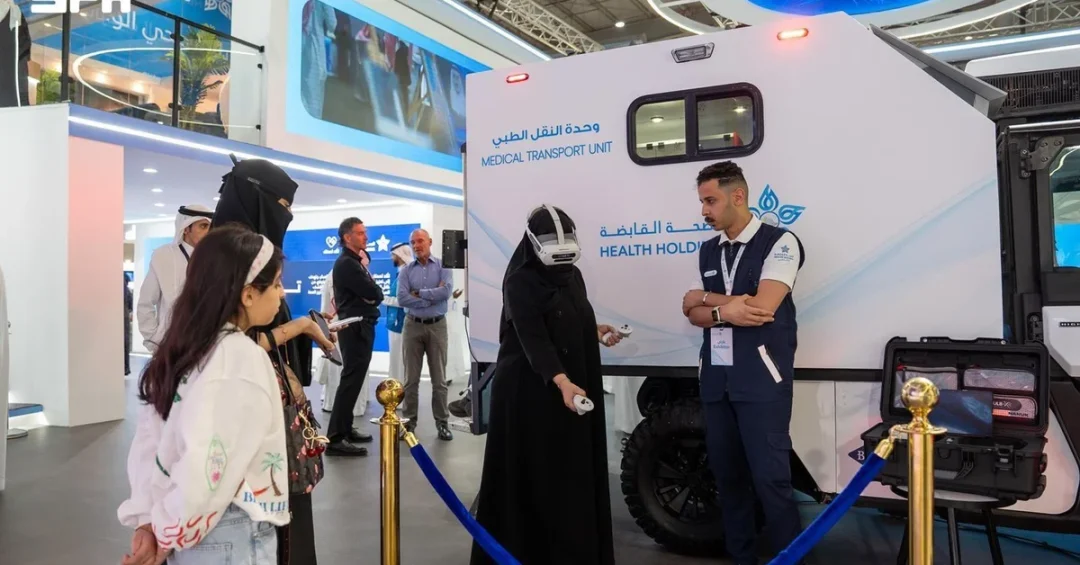
Saudi Arabia’s Ministry of Health has confirmed that Riyadh will host the ninth edition of the Global Health Exhibition from October 26 to 29, 2026, bringing together more than 130,000 healthcare professionals from over 100 countries for four days of knowledge exchange, medical education, and technological innovation. The announcement, released through the Saudi Press Agency, positions the exhibition as one of the largest gatherings of its kind in the region and underscores the Kingdom’s expanding role as a global hub for healthcare dialogue and investment.
Could a single exhibition reshape how an entire region approaches healthcare? Organizers believe the scale of this year’s event makes that question worth asking. The Global Health Exhibition 2026 will offer healthcare professionals more than 120 hours of continuing medical education programs while showcasing the latest solutions and innovations shaping modern medicine. More than 2,200 brands will participate, spanning life sciences, digital health, pharmaceuticals, medical devices, consumables, and lifestyle and wellness. The event is expected to draw more than 500 speakers and experts alongside over 1,000 investors, creating an international platform that unites stakeholders from across the healthcare sector under one roof.
Context and Background
Why has the Global Health Exhibition become such a significant fixture on the international healthcare calendar? Since its launch, the event has grown steadily in size and influence, reflecting the rapid transformation underway in Saudi Arabia’s healthcare sector. The ninth edition arrives at a moment when the Kingdom is investing heavily in hospital infrastructure, digital health records, telemedicine, and preventive care as part of its long-term national development strategy. The exhibition serves as both a showcase and a working forum where policymakers, clinicians, and investors can align on priorities.
The Ministry of Health has invited healthcare professionals and interested participants to register for the event and benefit from four days of knowledge sharing, professional development, and innovation. Registration details are available through the official portal at https://globalhealthexpo.info/moh-pr. The ministry’s direct involvement signals that the exhibition is not merely a commercial trade show but a strategic platform tied to national health objectives. For international attendees, it offers a rare opportunity to engage directly with the systems and standards being developed in one of the world’s fastest-changing healthcare markets.
What does it mean for a country to treat healthcare as a pillar of its global engagement? For Saudi Arabia, the answer lies in the intersection of medicine, technology, and diplomacy. The exhibition brings together continuing medical education, specialization, and innovation under one roof, creating an experience that is as much about learning as it is about partnership. As healthcare systems worldwide face pressure from aging populations, chronic disease, and rising costs, forums like this one provide a venue where solutions can be compared, adapted, and scaled.
Key Details
How exactly will the four-day program unfold for participants? The exhibition will run from October 26 to 29, 2026, in Riyadh, with broad participation from healthcare leaders, investors, policymakers, experts, and leading health organizations from Saudi Arabia and around the world. More than 120 hours of continuing medical education programs will be available, allowing physicians, nurses, pharmacists, and allied health professionals to earn credits while exploring emerging practices. The professional experience extends beyond the lecture hall to include structured knowledge exchange and networking designed to build lasting cross-border relationships.
The scale of participation is notable. More than 2,200 brands will exhibit technologies and products across life sciences, digital health, pharmaceuticals, medical devices, consumables, and lifestyle and wellness. This breadth means an attendee can move from a discussion of genomic medicine to a demonstration of remote patient monitoring within the same afternoon. More than 500 speakers and experts will lead sessions, while over 1,000 investors will assess opportunities in a sector that is expanding rapidly across the Middle East and beyond.
What practical value does such an event deliver to a working clinician? The continuing medical education component is central. With more than 120 hours of accredited programming, the exhibition functions as a concentrated professional development opportunity that would otherwise take months to assemble. Specialization tracks allow participants to focus on fields such as oncology, cardiology, emergency medicine, or health informatics. For early-career professionals, the networking dimension can be equally valuable, connecting them with mentors, research collaborators, and potential employers from across the global health community.
International and Regional Impact
Why should healthcare leaders outside Saudi Arabia pay attention to what happens in Riyadh this October? The presence of participants from more than 100 countries transforms the exhibition into a genuinely international forum. Regional health systems often face shared challenges, including workforce shortages, supply chain resilience, and the integration of digital tools into clinical workflows. By convening decision-makers from across the Middle East, Asia, Europe, and Africa, the event creates conditions for coordinated responses rather than isolated ones.
The investor presence adds another layer. With more than 1,000 investors expected, the exhibition serves as a marketplace for capital and ideas. Startups developing diagnostic tools, telemedicine platforms, or AI-assisted imaging can find backing. Established manufacturers can forge distribution agreements. Government buyers can evaluate suppliers. This convergence of commercial and clinical interests is increasingly how modern healthcare innovation moves from concept to bedside, and Riyadh is positioning itself at the center of that flow.
How does hosting an event of this magnitude change a city’s global standing? Riyadh has steadily expanded its conference and exhibition infrastructure, and the Global Health Exhibition is among the largest recurring events on its calendar. The influx of tens of thousands of visitors supports hotels, transport, hospitality, and related services, while the intellectual capital that gathers creates ripple effects long after the halls close. For Saudi Arabia, the event reinforces a broader message: the Kingdom is open for business, open for partnership, and open to the exchange of ideas that improve lives.
Economic and Strategic Significance
What economic logic underpins Saudi Arabia’s sustained investment in healthcare exhibitions and infrastructure? Healthcare is one of the largest and most resilient sectors in any modern economy. As the Kingdom diversifies its revenue base, health services, medical manufacturing, and digital health represent high-value growth areas. The Global Health Exhibition supports this diversification by attracting foreign direct investment, facilitating technology transfer, and exposing Saudi professionals to global best practices that can be localized.
The event also strengthens the domestic healthcare ecosystem. Local manufacturers and service providers gain visibility alongside international brands. Saudi startups can test their products against global competitors and seek partnerships that accelerate commercialization. Hospitals and clinics can evaluate equipment and software in a single location rather than through separate procurement processes. Over time, this kind of concentrated exposure raises standards, improves efficiency, and supports the development of a more self-reliant health sector.
Could the exhibition become a catalyst for regional health policy coordination? The presence of policymakers alongside clinicians and investors suggests that possibility. When officials from multiple countries examine the same evidence and technologies in the same venue, the groundwork is laid for shared standards, mutual recognition of credentials, and collaborative research. For a region that has historically imported many of its health innovations, the shift toward co-development and local adaptation marks a meaningful evolution.
Vision 2030 Alignment
How does the Global Health Exhibition connect to Saudi Arabia’s long-term national vision? Vision 2030 aims to build a diversified economy, improve quality of life, and develop world-class public services, including healthcare. The exhibition directly supports these goals by advancing medical education, attracting investment, and showcasing the technologies that will underpin a more preventive, patient-centered, and digitally enabled health system. The Ministry of Health’s active role reflects the government’s commitment to making healthcare a cornerstone of national progress.
The event also reinforces Saudi Arabia’s position as a convening power in global affairs. By hosting leaders, experts, and innovators from more than 100 countries, the Kingdom demonstrates that it is not only a participant in international healthcare discussions but a platform where those discussions happen. For attendees, the message is clear: Riyadh in October 2026 will be the place where the future of healthcare is examined, debated, and shaped. Those wishing to take part can register through the official link at https://globalhealthexpo.info/moh-pr and join a gathering that promises to inform, connect, and inspire.
20 Questions
Q1. What is the Global Health Exhibition 2026?
A1. It is the ninth edition of a major international healthcare gathering hosted in Riyadh, Saudi Arabia, bringing together professionals, investors, policymakers, and innovators for four days of education, networking, and technology showcases.
Q2. When and where will the event take place?
A2. The exhibition will run from October 26 to 29, 2026, in Riyadh, Saudi Arabia, as confirmed by the Ministry of Health through the Saudi Press Agency.
Q3. How many healthcare professionals are expected to attend?
A3. More than 130,000 healthcare professionals from over 100 countries are expected, making it one of the largest healthcare gatherings in the region.
Q4. How many continuing medical education hours will be offered?
A4. The event will provide more than 120 hours of continuing medical education programs, allowing healthcare professionals to earn credits while exploring emerging practices and innovations.
Q5. How many brands will participate in the exhibition?
A5. More than 2,200 brands will showcase technologies and products across life sciences, digital health, pharmaceuticals, medical devices, consumables, and lifestyle and wellness.
Q6. Who is organizing the event?
A6. The Ministry of Health is inviting participants and supporting the exhibition, which is released through official Saudi channels including the Saudi Press Agency.
Q7. What sectors will be represented at the exhibition?
A7. The exhibition covers life sciences, digital health, pharmaceuticals, medical devices, consumables, and lifestyle and wellness, reflecting the broad spectrum of modern healthcare.
Q8. How many speakers and experts will present?
A8. More than 500 speakers and experts will lead sessions, sharing knowledge on the latest developments and practices in global healthcare.
Q9. How many investors are expected to attend?
A9. Over 1,000 investors are expected, creating opportunities for partnerships, funding, and commercialization across the healthcare sector.
Q10. What is the main purpose of the exhibition?
A10. It aims to provide healthcare professionals with opportunities to explore knowledge, technologies, and practices through continuing medical education, specialization, and innovation under one roof.
Q11. How can interested participants register?
A11. Healthcare professionals and interested participants can register through the official Ministry of Health link at https://globalhealthexpo.info/moh-pr.
Q12. What benefits does the exhibition offer to clinicians?
A12. Clinicians gain access to accredited education, exposure to new technologies, and networking opportunities with peers and experts from around the world.
Q13. Why is Riyadh hosting this event?
A13. Riyadh is hosting as part of Saudi Arabia’s broader efforts to advance healthcare, attract investment, and position the Kingdom as a global hub for medical innovation and dialogue.
Q14. How does the event support Vision 2030?
A14. It advances medical education, attracts investment, and showcases technologies that support a preventive, patient-centered, and digitally enabled health system aligned with Vision 2030 goals.
Q15. What is the significance of the investor presence?
A15. Investors help move innovations from concept to market by funding startups, forming partnerships, and supporting the commercialization of new healthcare technologies and services.
Q16. What topics will be covered in the education programs?
A16. Programs will span clinical specialties, digital health, health informatics, and emerging practices, with more than 120 hours of accredited content available to participants.
Q17. How does the exhibition benefit Saudi Arabia’s healthcare sector?
A17. It raises standards, improves efficiency, supports local manufacturers and startups, and exposes Saudi professionals to global best practices that can be localized.
Q18. What international participation is expected?
A18. Participants from more than 100 countries, including healthcare leaders, experts, and organizations, will attend, making the event a truly global platform.
Q19. What networking opportunities are available?
A19. The exhibition offers structured knowledge exchange and professional networking, connecting attendees with mentors, collaborators, employers, and potential partners across the global health community.
Q20. What is the expected impact of the 2026 edition?
A20. It is expected to strengthen Saudi Arabia’s role as a global healthcare hub, foster international partnerships, and accelerate the adoption of innovative solutions across the region.
Reader Feedback
We value your thoughts. Please share your feedback on this article.
Your feedback helps us improve our coverage.
Related articles
 Law Student Returns to Studies After Heart Transplant in Riyadh
 Qassim Deputy Governor Opens 2026 Heart Association Conference
 Live Well” Second Session Empowers Health Awareness Leaders
 Sultan Humanitarian City Hosts Medical Genetics Conference
 SFDA Cracks Down on Unregistered Peptides Sold Online
 Jeddah Ophthalmology Conference Calls for More Local Research