


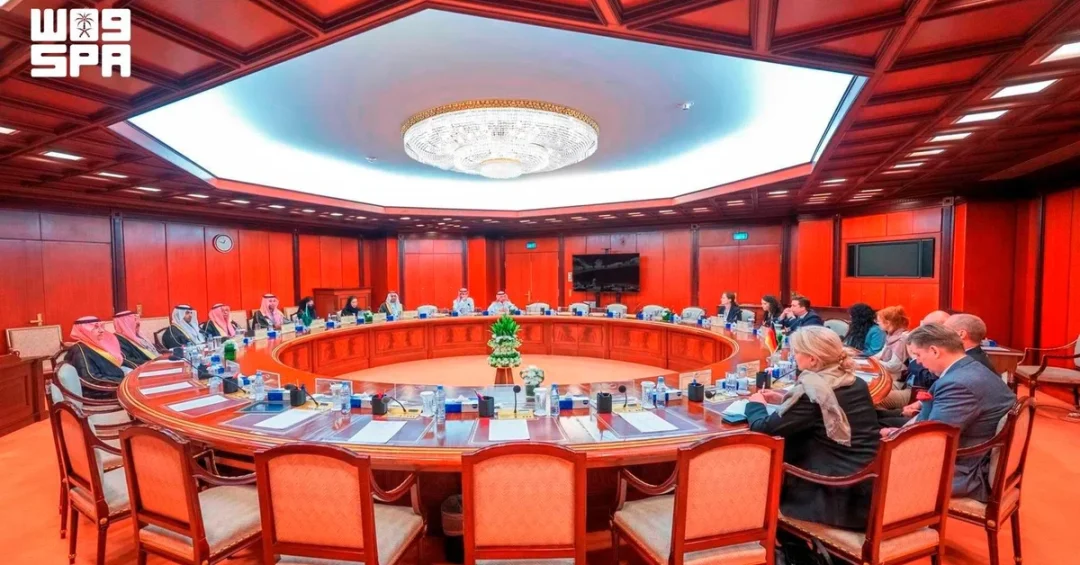
The Shura Council of the Kingdom of Saudi Arabia conducted 135 parliamentary diplomacy engagements during the second year of its ninth session, according to an official announcement released via the Saudi Press Agency (SPA). The figure, disclosed on October 1, 2026, captures a full year of legislative outreach spanning multilateral conferences, bilateral visits, and high-level receptions, all aimed at reinforcing the Kingdom’s international partnerships with legislative bodies worldwide. The scale of activity underscores how parliamentary diplomacy has become a core instrument of Saudi foreign policy, complementing the work of the Ministry of Foreign Affairs and advancing the objectives of Vision 2030 on the global stage. The announcement was carried by SPA, the Kingdom’s official news authority, and reflects the council’s stated commitment to impactful, sustainable international engagement.
The disclosure offers international observers a detailed window into how Saudi Arabia’s legislative branch operates as a diplomatic actor in its own right. Rather than functioning solely as a domestic lawmaking body, the Shura Council has built a structured program of engagement with parliaments and parliamentary unions across the Arab world, the Gulf region, and beyond. This approach allows the Kingdom to share legislative expertise, articulate its positions on global issues, and build relationships that outlast individual administrations or electoral cycles. For a global audience seeking to understand how Saudi Arabia projects influence, the council’s activity record provides concrete evidence of a strategy that pairs formal statecraft with people-to-people and institution-to-institution ties.
Context and Background
How did the Shura Council come to play such a prominent role in Saudi diplomacy? The council, which serves as the Kingdom’s consultative legislative body, has steadily expanded its international footprint in line with the broader modernization of Saudi governance under Vision 2030. During the second year of its ninth session, the council’s leadership prioritized parliamentary diplomacy as a means of translating Saudi Arabia’s growing global standing into durable institutional relationships. The 135 engagements recorded over the year represent the cumulative result of this deliberate strategy, encompassing participation in regional and international parliamentary unions, official visits abroad, and the hosting of foreign delegations in Riyadh.
Multilaterally, the council participated in 41 conferences and assemblies organized by regional and international parliamentary unions. These forums gave Saudi representatives platforms to articulate the Kingdom’s stances on key global issues and to exchange legislative expertise with counterparts from dozens of countries. Among the year’s most significant achievements was the activation of Saudi Arabia’s current presidency of the Arab Inter-Parliamentary Union, a role that positions the Kingdom at the center of joint Arab parliamentary action. The council hosted the union’s 39th conference under the patronage of Custodian of the Two Holy Mosques King Salman bin Abdulaziz Al Saud, an event that drew Arab parliamentary leaders to the Kingdom and reinforced Riyadh’s convening power in the region.
Within the Gulf framework, the council is preparing to host the upcoming regular meeting of the speakers of the shura, representatives, national, and ummah councils of the Gulf Cooperation Council (GCC) states. This gathering is designed to foster alignment on common regional priorities and deepen legislative ties among member states. Such meetings matter because they synchronize the legislative agendas of GCC countries on issues ranging from economic integration to security cooperation, ensuring that parliamentary action reinforces the consensus reached at the executive level. The preparation for this meeting reflects the council’s sustained commitment to Gulf unity and its role as a bridge between the Kingdom’s executive leadership and its regional counterparts.
Key Details of the Council’s Parliamentary Diplomacy
What does 135 engagements actually look like in practice? The figure breaks down into several distinct categories of activity, each serving a specific diplomatic purpose. At the bilateral level, the council conducted seven official parliamentary visits abroad, trips designed to solidify ties with counterpart legislatures and to open channels for ongoing cooperation. These visits typically involve meetings with parliamentary speakers, committee chairs, and senior legislators, allowing Saudi representatives to discuss shared legislative challenges and to present the Kingdom’s perspective on regional and international developments. Each visit builds a relationship that can be activated later when legislative coordination is needed.
Complementing the official visits, parliamentary friendship committees held 59 meetings over the course of the year. These committees function as the connective tissue of parliamentary diplomacy, expanding communication channels and coordinating policy views on a continuous basis rather than only during formal summits. The frequency of these meetings, averaging more than one per week, indicates a sustained rather than episodic approach to international engagement. In addition, council leaders received 28 visiting delegations of parliamentary speakers, deputies, and international diplomats. These receptions in Riyadh allowed the council to shape narratives directly, presenting Saudi Arabia’s legislative achievements and Vision 2030 progress to influential foreign visitors.
The multilateral dimension remains equally substantial. Participation in 41 conferences and assemblies organized by regional and international parliamentary unions placed Saudi legislators in rooms with counterparts from across the globe. These forums are where positions on global issues are debated and where legislative expertise is exchanged on topics such as sustainable development, digital governance, and economic diversification. The highlight of this multilateral track was the Kingdom’s presidency of the Arab Inter-Parliamentary Union and the hosting of its 39th conference under the patronage of Custodian of the Two Holy Mosques King Salman bin Abdulaziz Al Saud. That event served as a demonstration of Saudi leadership in Arab parliamentary affairs and a platform for advancing joint Arab action.
International and Regional Impact
Why should the international community pay attention to these parliamentary engagements? Parliaments are where international agreements are often ratified, budgets are approved, and public opinion is shaped. By building relationships with legislative bodies worldwide, Saudi Arabia gains influence at a stage of the policy process that is sometimes overlooked by traditional diplomacy. The council’s engagement with the Arab Inter-Parliamentary Union, for example, helps align Arab parliamentary positions on issues of common concern, from economic cooperation to regional security. This alignment can accelerate the ratification of agreements and create a more predictable environment for cross-border investment and cooperation.
At the Gulf level, the forthcoming meeting of GCC speakers of shura, representatives, national, and ummah councils represents a significant moment for regional legislative integration. When parliaments align on priorities, they can harmonize laws and regulations that affect trade, mobility, and investment across borders. For international businesses and governments seeking to engage with the Gulf, this legislative coordination reduces friction and creates clearer pathways for partnership. The Shura Council’s role in preparing and hosting this meeting positions the Kingdom as a facilitator of Gulf unity, a role consistent with its broader leadership in regional affairs and its commitment to the stability and prosperity of its neighbors.
Economic and Strategic Significance
How does parliamentary diplomacy translate into economic and strategic gains? Legislative bodies shape the legal frameworks that govern foreign investment, trade, and industrial cooperation. When Saudi legislators build relationships with counterparts in other countries, they create channels for sharing best practices on investment law, regulatory reform, and economic diversification. These channels can smooth the way for agreements that support Vision 2030’s economic goals, including the expansion of non-oil sectors, the growth of the private sector, and the attraction of foreign direct investment. The 59 meetings of parliamentary friendship committees, in particular, serve as ongoing venues for discussing such practical cooperation.
Strategically, the council’s engagements reinforce Saudi Arabia’s foreign policy objectives by building bridges of mutual understanding. In a world of shifting alliances and complex multilateral challenges, parliamentary diplomacy offers a flexible and resilient form of engagement. It allows the Kingdom to maintain open lines of communication even when executive-level relations face temporary difficulties, and it cultivates goodwill among legislators who may later become ministers, ambassadors, or heads of state. The council’s leaders have emphasized that these engagements are intended to be impactful and sustainable, using parliamentary diplomacy to elevate the Kingdom’s legislative presence on the world stage and to support the Kingdom’s broader international objectives.
Vision 2030 Alignment
How does this parliamentary activity connect to Saudi Arabia’s long-term vision? Vision 2030 is not only an economic transformation plan; it is also a strategy for deepening the Kingdom’s global integration and for presenting Saudi Arabia as an active, responsible, and forward-looking member of the international community. The Shura Council’s parliamentary diplomacy directly supports this ambition by showcasing the Kingdom’s legislative modernization, its commitment to dialogue, and its willingness to share expertise with partners around the world. Each conference, visit, and meeting contributes to a narrative of a Kingdom that is open to the world and eager to collaborate on shared challenges.
The council’s work also supports specific Vision 2030 pillars, including the development of a vibrant society and the creation of a thriving economy. By aligning with international parliamentary partners on issues such as sustainable development, technology governance, and education, the council helps bring global best practices back to the Kingdom, informing domestic legislation that supports these goals. As Saudi Arabia continues to assume leadership roles in regional and international organizations, the Shura Council’s parliamentary diplomacy will remain a vital channel for building the partnerships and the reputation that Vision 2030 requires. The Kingdom’s legislative presence on the world stage, built through 135 engagements in a single year, is a clear signal of its long-term commitment to global engagement and mutual understanding.
20 Questions
Q1. What is the Shura Council of Saudi Arabia?
A1. The Shura Council is the Kingdom’s consultative legislative body, comprising appointed members who review laws, advise on policy, and increasingly engage in parliamentary diplomacy to support Saudi Arabia’s international objectives.
Q2. How many parliamentary diplomacy engagements did the council hold?
A2. During the second year of its ninth session, the Shura Council held 135 parliamentary diplomacy engagements, according to the Saudi Press Agency, reflecting a sustained and structured approach to international legislative outreach.
Q3. What types of activities were included in these engagements?
A3. The engagements included participation in 41 international conferences, seven official parliamentary visits abroad, 59 parliamentary friendship committee meetings, and receptions for 28 visiting delegations of speakers, deputies, and diplomats.
Q4. Which international parliamentary union did Saudi Arabia lead?
A4. The Kingdom holds the current presidency of the Arab Inter-Parliamentary Union, and the Shura Council hosted the union’s 39th conference under the patronage of Custodian of the Two Holy Mosques King Salman bin Abdulaziz Al Saud.
Q5. What was the significance of hosting the 39th Arab Inter-Parliamentary Union conference?
A5. The conference enhanced joint Arab parliamentary action, demonstrated Saudi Arabia’s convening power, and provided a platform for aligning Arab legislative positions on shared regional and international priorities.
Q6. What is the upcoming GCC parliamentary meeting about?
A6. The Shura Council is preparing to host the regular meeting of the speakers of the shura, representatives, national, and ummah councils of the GCC states, aiming to align on common regional priorities and deepen legislative ties.
Q7. How many official parliamentary visits abroad were conducted?
A7. The council conducted seven official parliamentary visits abroad, each designed to solidify ties with counterpart legislatures and open channels for ongoing cooperation on legislative and policy matters.
Q8. What role do parliamentary friendship committees play?
A8. Parliamentary friendship committees held 59 meetings to expand communication channels and coordinate policy views, serving as the continuous connective tissue of Saudi Arabia’s parliamentary diplomacy efforts worldwide.
Q9. How many visiting delegations did council leaders receive?
A9. Council leaders received 28 visiting delegations of parliamentary speakers, deputies, and international diplomats, presenting Saudi Arabia’s legislative achievements and Vision 2030 progress directly to influential foreign visitors.
Q10. Why is parliamentary diplomacy important for Saudi Arabia?
A10. Parliamentary diplomacy reinforces Saudi foreign policy, builds bridges of mutual understanding, and elevates the Kingdom’s legislative presence, complementing executive-level diplomacy with durable institutional relationships.
Q11. How does this activity support Vision 2030?
A11. It supports Vision 2030 by deepening global integration, showcasing legislative modernization, sharing expertise, and building partnerships that advance economic diversification and sustainable development goals.
Q12. What topics are discussed at these international conferences?
A12. Discussions typically cover sustainable development, digital governance, economic diversification, regional security, and legislative best practices, allowing Saudi representatives to articulate the Kingdom’s stances on key global issues.
Q13. What is the Arab Inter-Parliamentary Union?
A13. The Arab Inter-Parliamentary Union is a regional organization that brings together Arab parliaments to coordinate legislative positions, enhance joint action, and address common challenges facing the Arab world.
Q14. What is the Gulf Cooperation Council framework?
A14. The GCC framework involves coordination among Gulf states on economic, security, and legislative matters, with parliamentary meetings helping to synchronize agendas and reinforce consensus reached at the executive level.
Q15. Who is the patron of the 39th Arab Inter-Parliamentary Union conference?
A15. The conference was held under the patronage of Custodian of the Two Holy Mosques King Salman bin Abdulaziz Al Saud, reflecting the Kingdom’s commitment to Arab parliamentary cooperation and regional leadership.
Q16. How does the Shura Council share legislative expertise?
A16. The council shares expertise through participation in conferences and assemblies, bilateral visits, and friendship committee meetings, exchanging best practices on lawmaking, regulation, and governance with international counterparts.
Q17. What is the source of this information?
A17. The information was released via the Saudi Press Agency (SPA), the Kingdom’s official news authority, which reported the details of the Shura Council’s parliamentary diplomacy activities.
Q18. What does ‘impactful, sustainable international partnerships’ mean?
A18. It means building relationships that produce concrete outcomes over time, rather than one-off exchanges, ensuring that parliamentary ties continue to benefit Saudi Arabia and its partners across sessions and administrations.
Q19. How does this benefit ordinary Saudi citizens?
A19. By informing domestic legislation with global best practices, supporting economic diversification, and strengthening the Kingdom’s international standing, which can attract investment and create opportunities at home.
Q20. What is the outlook for Saudi parliamentary diplomacy?
A20. The outlook is one of continued expansion, with the Kingdom preparing to host the GCC speakers’ meeting and maintaining its Arab Inter-Parliamentary Union presidency, signaling sustained commitment to global legislative engagement.
Reader Feedback
We value your thoughts. Please share your feedback on this article.
Your feedback helps us improve our coverage.
Related articles
 Crown Prince Congratulates Nigeria on Independence Day
 King Salman Congratulates Nigeria’s President on Independence Day
 Saudi Crown Prince Congratulates China’s President Xi on National Day
 King Salman Congratulates China’s Xi on National Day
 Crown Prince Congratulates Cyprus on Independence Day
 King Salman Congratulates Cyprus President on Independence Day