


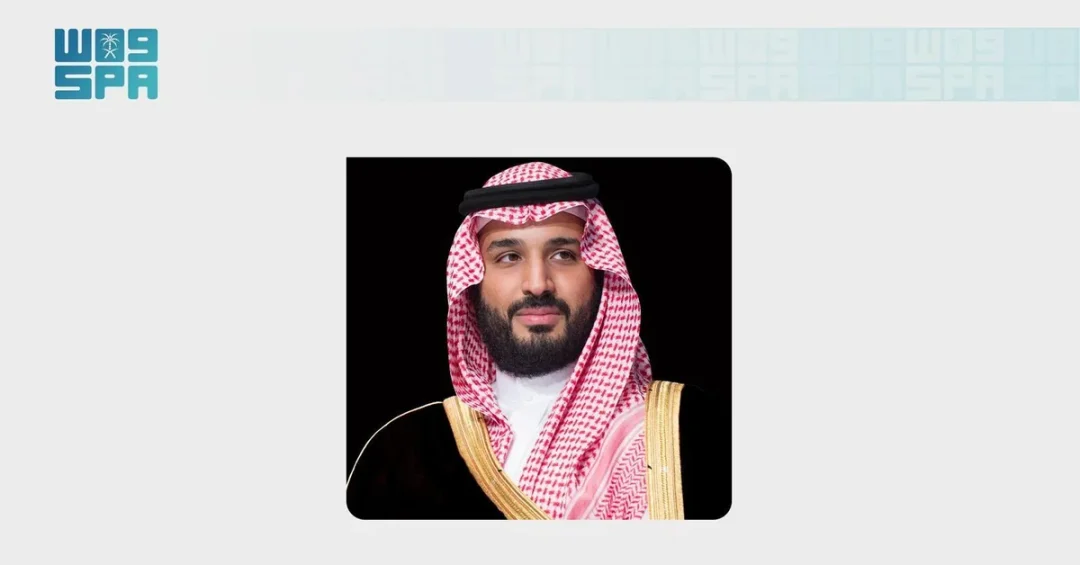
His Royal Highness Prince Mohammed bin Salman bin Abdulaziz Al Saud, Crown Prince and Prime Minister of the Kingdom of Saudi Arabia, has sent a cable of congratulations to President Xi Jinping of the People’s Republic of China on the occasion of China’s National Day, according to the Saudi Press Agency. The message, released through official Saudi channels on October 1, 2026, conveyed the Crown Prince’s warm wishes for the president’s continued good health and happiness, as well as for the sustained progress and prosperity of the government and people of China.
The congratulatory cable reflects the depth and durability of the relationship between Riyadh and Beijing, two major economies whose partnership has expanded steadily across energy, trade, investment, technology, and culture. In extending his wishes, the Crown Prince underscored a diplomatic tradition that Saudi Arabia has maintained with China for decades, one rooted in mutual respect and shared development goals. The message also arrives during a period of intensifying strategic coordination between the two nations, whose ties have grown into a comprehensive strategic partnership. For international observers, the exchange is a reminder that Saudi Arabia’s foreign policy continues to prioritize stable, productive relationships with the world’s leading economies, a hallmark of the Kingdom’s approach under Vision 2030.
Context and Background
Why does a single congratulatory cable matter in the broader landscape of international diplomacy? In statecraft, such messages are more than ceremonial courtesies; they are calibrated signals of goodwill, continuity, and mutual recognition between sovereign partners. Saudi Arabia and the People’s Republic of China established formal diplomatic relations in 1990, and since then the relationship has deepened through high-level visits, bilateral agreements, and expanding commercial exchanges. The Kingdom has consistently viewed China as a key partner in Asia and a vital contributor to global economic stability.
The Crown Prince’s cable is consistent with Saudi Arabia’s established practice of congratulating friendly nations on their national days, a tradition that reinforces diplomatic norms and people-to-people understanding. China’s National Day, observed annually on October 1, commemorates the founding of the People’s Republic in 1949 and serves as a moment for global partners to reaffirm ties. In recent years, Saudi-Chinese relations have been elevated through the Comprehensive Strategic Partnership, a framework that guides cooperation across political, economic, security, and cultural domains. This partnership has been reinforced by reciprocal visits and by Saudi Arabia’s participation in multilateral platforms alongside China.
For readers unfamiliar with the region, the Saudi-Chinese relationship is not merely transactional. It is built on long-term planning, aligned development visions, and a shared interest in a multipolar world order. Saudi Arabia’s leadership has repeatedly emphasized that the Kingdom’s international engagements are designed to serve its own modernization while contributing to global stability. The congratulatory message is therefore a small but meaningful component of a much larger diplomatic architecture, one that connects Riyadh’s Vision 2030 ambitions with Asia’s economic dynamism.
Key Details of the Congratulatory Message
What exactly did the Crown Prince convey in his cable? According to the Saudi Press Agency, HRH Prince Mohammed bin Salman extended his sincere congratulations to President Xi Jinping, expressing wishes for the president’s continued good health and happiness. He also conveyed his hopes for the government and people of China to enjoy steady progress and prosperity. The message was issued on October 1, 2026, and was carried by the Kingdom’s official news agency, underscoring its status as an authoritative diplomatic communication.
The cable follows standard Saudi diplomatic protocol, which emphasizes respect, warmth, and forward-looking language. It contains no policy announcements but serves to reaffirm the positive trajectory of bilateral relations. In the context of Saudi foreign policy, such messages are often coordinated with broader diplomatic engagements, including trade delegations, cultural exchanges, and multilateral summits. The Crown Prince’s dual role as Crown Prince and Prime Minister gives the message additional weight, signaling that the highest levels of Saudi leadership are attentive to the China relationship.
It is also worth noting that the cable was released in both Arabic and English through official channels, ensuring that international audiences and media outlets can accurately report on the Kingdom’s diplomatic outreach. This transparency is part of Saudi Arabia’s broader effort to communicate its foreign policy clearly and consistently. For analysts tracking Saudi-China relations, the message is a reaffirmation of continuity, suggesting that the partnership will remain a cornerstone of the Kingdom’s Asia strategy in the years ahead.
International and Regional Impact
How does this diplomatic gesture resonate beyond Riyadh and Beijing? Saudi Arabia is a pivotal actor in the Middle East and the broader Islamic world, and its relationships with major powers carry significant regional implications. A warm, stable Saudi-Chinese relationship contributes to economic predictability in energy markets, supports infrastructure investment, and encourages diplomatic dialogue on issues ranging from climate change to supply chain resilience. For China, Saudi Arabia is a reliable energy partner and a key node in the Belt and Road Initiative. For Saudi Arabia, China represents a vast market for hydrocarbons, petrochemicals, and emerging non-oil exports.
Regionally, the message reinforces Saudi Arabia’s position as a bridge between East and West. The Kingdom has consistently pursued a foreign policy that avoids zero-sum alignments, instead building partnerships with the United States, Europe, China, India, and other powers simultaneously. This approach, sometimes described as strategic autonomy, allows Saudi Arabia to serve as a convener and mediator in global affairs. The congratulatory cable to China is a small but visible element of that strategy, demonstrating that Riyadh values its Asian partnerships as much as its traditional Western ties. In a world of shifting alliances, such consistency is a diplomatic asset.
Economic and Strategic Significance
What economic stakes underpin the Saudi-Chinese relationship? China is one of Saudi Arabia’s largest trading partners and a major buyer of Saudi crude oil. In recent years, the two countries have expanded cooperation into refining, petrochemicals, renewable energy, digital infrastructure, and advanced manufacturing. Saudi Aramco has invested in Chinese refining projects, while Chinese firms have participated in Saudi giga-projects and technology initiatives. These commercial ties are complemented by financial cooperation, including currency swap arrangements and investment funds designed to facilitate cross-border capital flows.
Strategically, the relationship supports Saudi Arabia’s Vision 2030 goal of diversifying the economy away from oil dependence. Chinese expertise in solar power, electric vehicles, artificial intelligence, and smart cities aligns with Saudi priorities in NEOM, the Red Sea Project, and other development zones. Moreover, China’s role as a major consumer of Saudi exports helps stabilize the Kingdom’s fiscal outlook during periods of oil price volatility. The Crown Prince’s message, though brief, therefore sits atop a deep foundation of mutual economic interest. It signals to investors and policymakers that the Saudi-Chinese partnership remains strong and is expected to grow in scope and sophistication.
Vision 2030 Alignment
How does this diplomatic outreach connect to Saudi Arabia’s long-term vision? Vision 2030, launched in 2016 under the leadership of HRH Prince Mohammed bin Salman, aims to transform the Kingdom into a diversified, innovation-driven economy and a hub for global trade and investment. International partnerships are central to that vision, and China is among the most important. By maintaining high-level diplomatic engagement, Saudi Arabia strengthens the political foundation for commercial, technological, and cultural collaboration. The congratulatory cable is thus a routine but meaningful act that reinforces the enabling environment for Vision 2030 projects.
Looking ahead, Saudi Arabia is expected to continue deepening its ties with China through joint ventures, educational exchanges, and participation in multilateral forums. The Kingdom’s leadership has made clear that it views Asia, and China in particular, as a key region for investment and diplomacy. As Vision 2030 progresses, the relationship with China will likely expand into new areas such as green hydrogen, space cooperation, and tourism. The Crown Prince’s message on China’s National Day is a symbol of that forward-looking partnership, reflecting a shared commitment to stability, prosperity, and mutual respect. For international audiences, it offers a clear example of how Saudi Arabia conducts diplomacy: with consistency, warmth, and a focus on long-term results.
20 Questions
Q1. Who sent the congratulatory cable to China’s president?
A1. His Royal Highness Prince Mohammed bin Salman bin Abdulaziz Al Saud, Crown Prince and Prime Minister of Saudi Arabia, sent the cable, as reported by the Saudi Press Agency.
Q2. When was the congratulatory message issued?
A2. The message was issued on October 1, 2026, according to the Saudi Press Agency, which published the cable on the same day.
Q3. What occasion prompted the message?
A3. The message was sent on the occasion of the National Day of the People’s Republic of China, celebrated annually on October 1.
Q4. What wishes did the Crown Prince express?
A4. He wished President Xi Jinping continued good health and happiness, and expressed hopes for steady progress and prosperity for China’s government and people.
Q5. Which Saudi agency reported the cable?
A5. The Saudi Press Agency (SPA), the Kingdom’s official news agency, reported the cable, ensuring its status as an authoritative official communication.
Q6. How long have Saudi Arabia and China had diplomatic relations?
A6. Saudi Arabia and China established formal diplomatic relations in 1990, and ties have since expanded into a comprehensive strategic partnership.
Q7. Why are such congratulatory messages important in diplomacy?
A7. They reaffirm goodwill, maintain high-level communication, and signal continuity in bilateral relations, which supports trust and cooperation between nations.
Q8. What is China’s National Day?
A8. China’s National Day commemorates the founding of the People’s Republic of China on October 1, 1949, and is marked with celebrations and international greetings.
Q9. What is the nature of Saudi-China relations today?
A9. The two countries share a Comprehensive Strategic Partnership covering energy, trade, investment, technology, and cultural exchanges, with regular high-level visits.
Q10. How does this message align with Saudi foreign policy?
A10. It reflects Saudi Arabia’s policy of maintaining balanced, productive ties with major global powers, including China, the United States, and European nations.
Q11. What economic ties exist between Saudi Arabia and China?
A11. China is a major buyer of Saudi crude oil, and the two nations cooperate in refining, petrochemicals, renewable energy, and infrastructure investment.
Q12. Does the cable include any new policy announcements?
A12. No, the cable is a diplomatic courtesy and does not contain new policy announcements; it reaffirms existing friendly relations between the two nations.
Q13. How does the message relate to Vision 2030?
A13. Vision 2030 emphasizes international partnerships for economic diversification, and strong ties with China support investment, technology transfer, and trade expansion.
Q14. What role does the Crown Prince play in Saudi diplomacy?
A14. As Crown Prince and Prime Minister, HRH Prince Mohammed bin Salman leads Saudi Arabia’s diplomatic and economic strategies, including engagement with major powers like China.
Q15. What regional impact could this message have?
A15. It reinforces Saudi Arabia’s role as a bridge between East and West, promoting stability and economic cooperation across the Middle East and Asia.
Q16. Are there cultural exchanges between Saudi Arabia and China?
A16. Yes, the two countries engage in cultural exchanges, educational partnerships, and tourism initiatives that deepen people-to-people ties and mutual understanding.
Q17. How often does Saudi Arabia send such cables?
A17. Saudi Arabia regularly sends congratulatory cables to friendly nations on their national days, following established diplomatic protocol and tradition.
Q18. What is the significance of the message being released publicly?
A18. Public release through official channels ensures transparency, allows international media to report accurately, and underscores the importance Saudi Arabia places on the relationship.
Q19. What future areas of cooperation are likely?
A19. Future cooperation may expand into green hydrogen, space, artificial intelligence, tourism, and advanced manufacturing, aligning with Saudi Vision 2030 goals.
Q20. What does this message say about Saudi Arabia’s global role?
A20. It demonstrates Saudi Arabia’s active, forward-looking diplomacy, strengthening partnerships that support global stability and the Kingdom’s long-term prosperity under Vision 2030.
Reader Feedback
We value your thoughts. Please share your feedback on this article.
Your feedback helps us improve our coverage.
Related articles
 King Salman Congratulates China’s Xi on National Day
 Crown Prince Congratulates Cyprus on Independence Day
 King Salman Congratulates Cyprus President on Independence Day
 Crown Prince Congratulates Palau President on Independence Day
 King Salman Congratulates Palau President on Independence Day
 NCM Forecasts Heavy Rain, Flash Floods in Madinah Region