


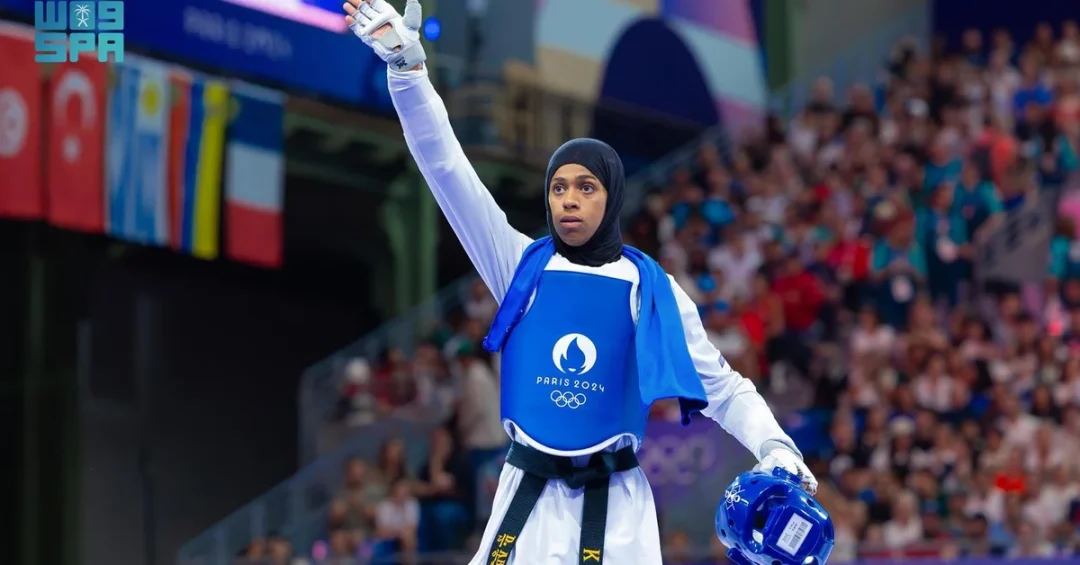
Saudi Taekwondo athlete Dunya Abu Talib has been awarded the International Olympic Committee’s 2024 Equality, Diversity, and Inclusion Award for Asia, the first time a Saudi athlete has received the honor, according to an announcement carried by the Saudi Press Agency. The recognition, confirmed in Riyadh, places the national team competitor at the center of a widening global conversation about access, opportunity, and representation in sport — and marks another milestone in the Kingdom’s rapid transformation of women’s athletics under Vision 2030.
Abu Talib, who competes in the under-53 kilogram category, is currently ranked first in the World Taekwondo Federation’s general ranking for her weight class. Her career already includes two historic firsts: she became the first Saudi woman to qualify for the Olympic Games, and she later won a gold medal at the Asian Games. The IOC award, announced on March 8, 2025, recognizes her role in promoting gender equality in sport and her contributions to empowering female athletes both inside the Kingdom and on the international stage. For a country that only began sending women to the Olympics in 2012, the arc of that journey is remarkable — and it raises a question many observers are now asking: how did one athlete’s persistence become a symbol of national transformation?
Context and Background
What does it take for a single athlete to change the way an entire region is perceived in global sport? For Saudi Arabia, the answer has been built over more than a decade of deliberate institutional reform. Women were first included in the Kingdom’s Olympic delegation at the London 2012 Games, a decision that signaled the beginning of a broader opening in sports participation. Since then, ministries, the Saudi Olympic and Paralympic Committee (SOPC), and national federations have worked to build pathways for female athletes in disciplines ranging from athletics and fencing to football, martial arts, and motorsport.
Taekwondo, a Korean martial art that rewards discipline, speed, and tactical precision, became one of the earliest proving grounds for Saudi women. Abu Talib’s rise through the international rankings reflects years of structured training, federation support, and access to high-level competition — the unglamorous infrastructure that turns talent into medals. Her first-place standing in the World Taekwondo Federation’s under-53 kg ranking is not a symbolic accolade; it is a performance-based measure that places her above every other competitor in the world at her weight.
The IOC’s Equality, Diversity, and Inclusion Award for Asia adds an institutional dimension to that athletic record. The award is conferred on individuals and organizations that advance fairness and representation in the Olympic movement, and it carries weight precisely because it is decided by peers within the global sports system. For Saudi Arabia, the timing matters: the Kingdom is preparing to host major international events, including the 2034 FIFA World Cup, and its record on inclusion will be scrutinized as never before.
Key Details of the Recognition
How significant is it that the award went to an athlete from West Asia, in a year when global sports bodies are under pressure to demonstrate measurable progress on equality? The SOPC president, Prince Abdulaziz bin Turki bin Faisal, expressed his pride in the achievement, saying it reflects the significant progress of women’s sports in the Kingdom and the unlimited backing of the Kingdom’s leadership. He noted that the recognition affirms that Saudi women now play a pivotal role in global sports and serves as an incentive for the next generation of female athletes to pursue even greater successes.
Abu Talib herself described the award as a reflection of the efforts made to empower and support women toward excellence. Her statement, carried by the Saudi Press Agency, emphasized the collective nature of the achievement — the coaches, federations, and family support that make elite competition possible. She continues to train and compete while holding the top global ranking in her weight class, a position that requires constant international competition and consistent results.
The SOPC, for its part, reiterated its commitment to supporting athletes across the Kingdom by providing a comprehensive sports environment that enables them to achieve global results and raise the Saudi flag at major international events. That commitment includes talent identification programs, coaching development, sports science support, and expanded competition calendars for women — the practical building blocks of a sustainable high-performance system. The award, in this reading, is not an isolated honor but a validation of an institutional strategy that has been running for years.
International and Regional Impact
What does this recognition mean for the wider Middle East, where women’s participation in elite sport has historically lagged global averages? The IOC award sends a signal that progress in the region is being noticed — and rewarded — by the highest authorities in world sport. For neighboring countries investing in their own women’s sports programs, Saudi Arabia’s experience offers a template: sustained federation support, visible role models, and alignment with national development strategies can produce internationally competitive athletes within a single generation.
Within Asia, Abu Talib’s standing as the continent’s recipient of the 2024 equality award adds a new voice to Olympic discussions on inclusion. Asian sports bodies have increasingly emphasized gender-balanced leadership and equal access to competition, and the recognition of a Saudi athlete strengthens the case that the continent’s progress is real and measurable. Internationally, the award arrives as the Olympic movement debates how to define and deliver fairness across vastly different cultural and economic contexts. An athlete who qualified for the Olympics, won Asian Games gold, and now leads the world rankings in her category is a compelling answer to skeptics who question whether inclusion commitments translate into competitive results.
Economic and Strategic Significance
Why does a taekwondo medal or an equality award matter to a country pursuing economic diversification? Because sport has become a central pillar of Saudi Arabia’s soft-power strategy and its domestic quality-of-life agenda. The Kingdom has invested heavily in hosting international events, developing sports infrastructure, and encouraging mass participation as part of Vision 2030’s goal of a more active, diversified society. Elite success stories like Abu Talib’s drive participation at the grassroots level, support the growth of the sports economy, and enhance the country’s attractiveness as a destination for major competitions.
The strategic value extends to human capital. When Saudi women succeed on the world stage, they expand the visible range of professional pathways available to young people and reinforce the economic logic of investing in female talent. Federations report that visibility at the elite level correlates with increased registration in youth programs, particularly in combat sports and athletics. The SOPC’s comprehensive support model — combining technical, medical, and logistical backing — is designed to convert that interest into durable competitive depth rather than one-off headlines.
Vision 2030 Alignment
How does one athlete’s award connect to a national transformation plan spanning economic, social, and cultural dimensions? Vision 2030 explicitly calls for greater participation of women in all fields, including sport, and for the Kingdom to be recognized internationally for the quality of its institutions and its people. Abu Talib’s recognition by the International Olympic Committee is a direct expression of that ambition: a Saudi woman, ranked first in the world in her discipline, honored for advancing equality and inclusion in the Olympic movement.
The forward-looking significance is clear. As Saudi Arabia prepares to host global events and continues to invest in sports development, the pipeline of female athletes, coaches, and administrators will only deepen. The Kingdom’s leadership has consistently framed these achievements as part of a long-term national project, and the SOPC has committed to sustaining the environment that produced this result. For international audiences, the message is that Saudi sport is no longer a story about potential — it is a story about performance, recognition, and the next generation already in training.
20 Questions
Q1. Who received the IOC’s 2024 Equality, Diversity, and Inclusion Award for Asia?
A1. Saudi Taekwondo national team athlete Dunya Abu Talib received the award, according to the Saudi Press Agency. It was the first time a Saudi athlete has earned this recognition.
Q2. What weight category does Dunya Abu Talib compete in?
A2. She competes in the under-53 kilogram category. She is currently ranked first globally in the World Taekwondo Federation’s general ranking for that weight class.
Q3. What other historic firsts has Abu Talib achieved?
A3. She was the first Saudi woman to qualify for the Olympic Games. She also won a gold medal at the Asian Games, adding to her record of pioneering achievements.
Q4. When and where was the award announced?
A4. The announcement was carried by the Saudi Press Agency from Riyadh on March 8, 2025. It confirmed the International Olympic Committee’s decision to honor Abu Talib for Asia.
Q5. Why did the IOC select Abu Talib for this award?
A5. The IOC recognized her prominent role in promoting gender equality in sports. It also cited her inspiring contributions to empowering female athletes both locally and internationally.
Q6. Who commented on the award from the Saudi Olympic and Paralympic Committee?
A6. SOPC president Prince Abdulaziz bin Turki bin Faisal expressed his pride in the achievement. He said it reflects significant progress in women’s sports supported by the Kingdom’s leadership.
Q7. What did Prince Abdulaziz bin Turki bin Faisal say the recognition affirms?
A7. He said it affirms that Saudi women now play a pivotal role in global sports. He added that it serves as an incentive for the next generation of female athletes.
Q8. How did Abu Talib react to receiving the award?
A8. She expressed happiness with the achievement. She said it reflects the efforts made to empower and support women toward excellence in sport.
Q9. What does the SOPC say about its support for athletes?
A9. The SOPC says it remains committed to supporting athletes by providing a comprehensive sports environment. This enables them to achieve global results and raise Saudi Arabia’s flag at major events.
Q10. What is the significance of this award for Saudi sports history?
A10. It is the first time a Saudi athlete has received this IOC award. It marks a new milestone in the Kingdom’s growing record of international recognition in sport.
Q11. How does the award relate to gender equality in sports?
A11. The IOC honored Abu Talib specifically for promoting gender equality in sports. Her career demonstrates expanded opportunities for women in Saudi athletics and beyond.
Q12. What message does this send to young Saudi female athletes?
A12. It shows that international recognition is achievable through dedication and support. Prince Abdulaziz described it as an incentive for the next generation to pursue even greater successes.
Q13. Which organization announced the award in Saudi Arabia?
A13. The Saudi Press Agency reported the announcement from Riyadh. The SOPC also highlighted the achievement through official statements.
Q14. How does this achievement reflect Vision 2030 goals?
A14. Vision 2030 calls for greater women’s participation in all fields, including sport. The award reflects that ambition and the Kingdom’s growing global role.
Q15. What is Abu Talib’s current global ranking?
A15. She is ranked first globally in the World Taekwondo Federation’s general ranking. She holds the top position in the under-53 kilogram weight category.
Q16. What did Abu Talib achieve at the Asian Games?
A16. She won a gold medal at the Asian Games. This added to her status as a pioneering Saudi female athlete in international competition.
Q17. How does the SOPC describe its role in athlete development?
A17. The SOPC describes its role as providing a comprehensive sports environment. This includes support that enables athletes to compete and succeed at the highest international levels.
Q18. What does the award mean for Saudi Arabia’s international image?
A18. It highlights the Kingdom’s progress in women’s sports and inclusion. It reinforces Saudi Arabia’s position as an increasingly influential participant in global sport.
Q19. Which international body conferred the award?
A19. The International Olympic Committee conferred the 2024 Equality, Diversity, and Inclusion Award for Asia. The IOC is the supreme authority of the global Olympic movement.
Q20. What comes next for Saudi women’s sports after this recognition?
A20. The SOPC has committed to sustaining support for athletes and expanding opportunities. The recognition is expected to encourage more Saudi women to pursue elite competition and international careers.
Reader Feedback
We value your thoughts. Please share your feedback on this article.
Your feedback helps us improve our coverage.
Related articles
 Al-Nassr Defeats Esteghlal 3-0, Advances to AFC Quarterfinals
 Ettifaq to Face Duhok in Gulf Clubs Semi-Final Second Leg
 Saudi Arabia Ready to Host AFC U-17 Asian Cup
 Al-Hilal Advances to AFC Champions League Elite Quarterfinals
 Prince Abdulaziz Re-Elected SOPC President for 2024-2028
 Jeddah Corniche Circuit Ready for F1 Saudi Arabian GP 2025