


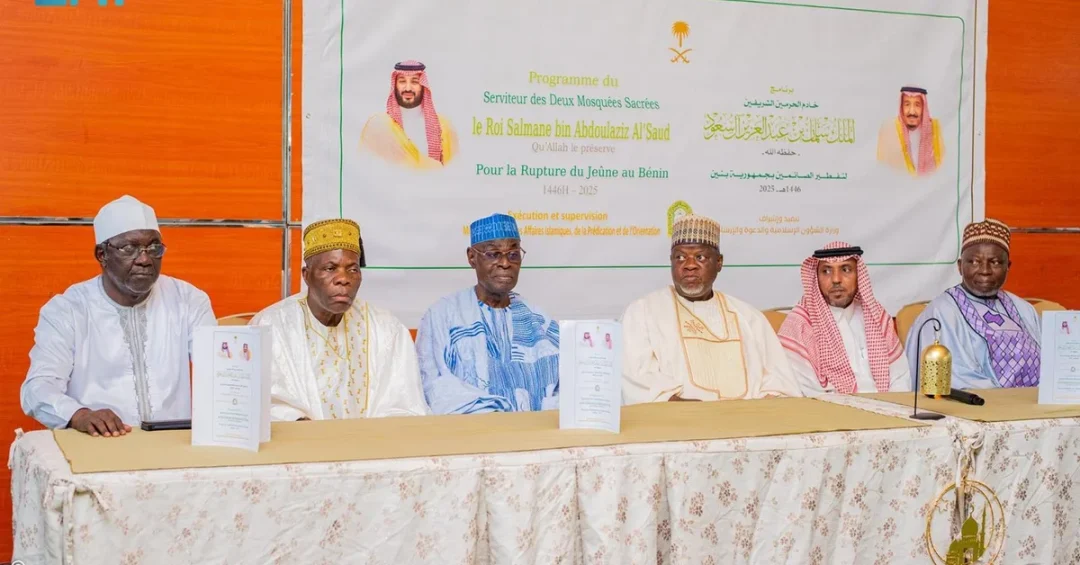
Saudi Arabia has distributed Ramadan iftar meals to thousands of people in Benin and Sierra Leone under a program overseen by the Ministry of Islamic Affairs, Dawah, and Guidance, benefiting 5,500 individuals in Sierra Leone and 5,000 in Benin. The initiative forms part of the Custodian of the Two Holy Mosques’ Ramadan program, which operates in 61 countries worldwide and reflects the Kingdom’s longstanding commitment to serving Muslim communities across Africa and beyond.
How does a single Ramadan meal program come to touch the lives of more than ten thousand people across two West African nations in a matter of weeks? The answer lies in a coordinated logistical effort that begins in Riyadh and extends to mosques, community centers, and family tables in some of the most underserved regions of the continent. The program is not a one-off gesture but a recurring annual commitment timed to the holy month, when Muslims around the world fast from dawn until sunset and gather at dusk to break their fast together. By delivering iftar meals, the Kingdom ensures that economic hardship does not prevent believers from observing one of the most cherished traditions of Ramadan. The initiative also underscores the depth of Saudi Arabia’s ties with African nations, ties that are rooted in shared faith, mutual respect, and a history of development cooperation that stretches back decades.
Context and Background
What is the Custodian of the Two Holy Mosques’ Ramadan program, and why does it matter so much to communities far from the Kingdom? The program is one of several humanitarian and religious initiatives administered by the Ministry of Islamic Affairs, Dawah, and Guidance, a Saudi government body responsible for overseeing mosques, Islamic outreach, and religious affairs both domestically and internationally. Each year, as Ramadan approaches, the ministry mobilizes resources and partners in dozens of countries to provide iftar meals to fasting Muslims, particularly in regions where poverty, conflict, or natural disaster have made daily sustenance a challenge. The program is funded by the Saudi government and implemented in coordination with local Islamic authorities and community organizations, ensuring that distribution is efficient, respectful, and aligned with local customs.
In Benin and Sierra Leone, the need is particularly acute. Both countries have significant Muslim populations and face ongoing economic pressures that make food security a persistent concern. In Sierra Leone, where 5,500 individuals benefited from the program, the meals were distributed in areas where many families struggle to afford even basic staples during Ramadan. In Benin, 5,000 individuals received iftar meals, with distributions organized to reach both urban neighborhoods and rural communities. The ministry’s choice of these two nations reflects a broader strategy of supporting Muslim communities in West Africa, a region where Saudi Arabia has long been active in education, healthcare, and religious infrastructure development. The program’s expansion to 61 countries this year is a testament to the Kingdom’s growing humanitarian reach and its commitment to the principle that no Muslim should break their fast alone or in want.
How does the program fit into Saudi Arabia’s wider international engagement? For decades, the Kingdom has used its position as the custodian of Islam’s holiest sites to foster solidarity among Muslims worldwide. The Ramadan iftar program is one expression of that role, alongside Hajj and Umrah facilitation, Quran distribution, and the construction of mosques and Islamic centers. These efforts are not merely charitable; they are also diplomatic, building goodwill and strengthening relationships between Saudi Arabia and partner nations. In Africa, where the Kingdom has deepened its economic and political ties in recent years, such programs serve as a bridge between official diplomacy and people-to-people connections. They demonstrate that Saudi Arabia’s influence is not limited to oil markets or investment flows but extends to the everyday lives of ordinary believers.
Key Details
What exactly does the distribution of iftar meals involve, and how are the numbers reached? According to the Ministry of Islamic Affairs, Dawah, and Guidance, the program in Sierra Leone benefited 5,500 individuals, while in Benin it reached 5,000. These figures represent the total number of people who received meals, not the number of meals distributed, as each meal often serves multiple family members. The distributions were carried out in coordination with local Islamic organizations and volunteers, who identified vulnerable households and ensured that food reached those most in need. The meals typically include dates, water, and a nutritious selection of local dishes, allowing recipients to break their fast in accordance with Islamic tradition.
The program is part of a larger effort that spans 61 countries, making it one of the most extensive Ramadan food initiatives in the world. The ministry has not disclosed the total number of beneficiaries globally, but the scale of the operation is considerable, requiring careful planning, procurement, and logistics. In each country, the ministry works with its diplomatic missions and local partners to navigate customs regulations, transportation challenges, and security concerns. In Benin and Sierra Leone, the distributions were reportedly smooth, with local officials and community leaders praising the Kingdom’s timely support. The program’s success in these two countries adds to a track record of similar initiatives in previous years, which have reached millions of Muslims across Africa, Asia, and the Middle East.
Who benefits most from these meals? The program prioritizes the poor, the elderly, widows, orphans, and displaced persons, groups that are often the most vulnerable during Ramadan. In Sierra Leone, for example, many beneficiaries live in communities still recovering from the economic fallout of the Ebola epidemic and the COVID-19 pandemic, which disrupted livelihoods and strained social services. In Benin, the meals reached families in both the predominantly Muslim north and the more religiously diverse south, reflecting an inclusive approach that respects local demographics. By targeting those in greatest need, the ministry ensures that the program fulfills its humanitarian purpose while also reinforcing the spiritual bonds of Ramadan. The distribution also provides an opportunity for Saudi Arabia to showcase its commitment to moderate Islam and interfaith harmony, values that resonate in pluralistic societies like Benin and Sierra Leone.
International and Regional Impact
How do these distributions affect Saudi Arabia’s standing in West Africa and beyond? The program is part of a broader Saudi push to strengthen ties with African nations, a continent where the Kingdom has increased its diplomatic and economic footprint in recent years. In 2019, Saudi Arabia hosted the first Saudi-Africa Summit, which brought together leaders from across the continent to discuss investment, trade, and security cooperation. Since then, the Kingdom has announced billions of dollars in investments and signed numerous agreements in sectors ranging from energy to agriculture. Humanitarian initiatives like the Ramadan iftar program complement these efforts by building goodwill at the grassroots level. When a family in Sierra Leone receives a meal from the Custodian of the Two Holy Mosques, it creates a positive impression of Saudi Arabia that no amount of official diplomacy can match.
What do African leaders and communities say about the program? While the ministry’s announcement did not include direct quotes from beneficiaries, similar distributions in previous years have drawn praise from local officials and religious leaders. They often highlight the timeliness of the support and the respect with which it is delivered. In Benin, for instance, Muslim leaders have thanked the Kingdom for remembering their communities during Ramadan, noting that the meals help ease the burden on families who are already struggling. In Sierra Leone, the program has been welcomed as a sign of solidarity with a country that has a large Muslim population but limited resources. These expressions of gratitude reinforce Saudi Arabia’s image as a benevolent partner and a leader of the Islamic world. They also serve as a counterpoint to narratives that seek to portray the Kingdom in a negative light, demonstrating instead its constructive role in global humanitarian affairs.
Economic and Strategic Significance
Why does Saudi Arabia invest in food distribution programs in distant countries, and what does it gain? On one level, the program is an expression of religious duty and charitable giving, rooted in the Islamic principle of zakat and the tradition of feeding the fasting. On another, it is a strategic investment in soft power. By providing tangible assistance to Muslim communities, the Kingdom strengthens its influence and counters the efforts of rival states that also seek to win hearts and minds in Africa. The program also supports Saudi Arabia’s economic interests by fostering a stable and friendly environment for Saudi businesses and investors. In Benin and Sierra Leone, where Saudi companies are exploring opportunities in energy, infrastructure, and agriculture, the goodwill generated by iftar distributions can help open doors and build trust.
Moreover, the program is a showcase for Saudi Arabia’s logistical capabilities and its ability to execute complex operations across multiple countries simultaneously. Coordinating the purchase, shipping, and distribution of food in 61 countries requires sophisticated planning and partnerships. The ministry’s success in doing so demonstrates the Kingdom’s institutional capacity and its commitment to delivering on its promises. It also provides valuable experience that can be applied to other humanitarian and development initiatives. As Saudi Arabia seeks to diversify its economy and expand its global footprint under Vision 2030, such programs contribute to its reputation as a responsible and reliable international actor. They also reinforce the Kingdom’s position as a leader in the Islamic world, a role that is central to its identity and its foreign policy.
Vision 2030 Alignment
How does the Ramadan iftar program connect to Saudi Arabia’s Vision 2030? At its core, Vision 2030 is about transforming the Kingdom into a more diversified, globally engaged, and socially responsible nation. While the vision is often associated with economic reforms and mega-projects, it also encompasses a commitment to humanitarianism and international cooperation. The Ministry of Islamic Affairs, Dawah, and Guidance plays a key role in this dimension, promoting moderate Islam and supporting Muslim communities abroad. The iftar program is a concrete example of how Vision 2030’s values are put into practice, extending the Kingdom’s reach and reinforcing its soft power. It also aligns with the vision’s emphasis on strengthening partnerships with African nations, which are seen as key partners for trade, investment, and cultural exchange.
What does the future hold for this program and similar initiatives? As Ramadan continues to be observed around the world, Saudi Arabia is likely to expand its humanitarian efforts, building on the success of the iftar distributions in Benin, Sierra Leone, and 59 other countries. The Kingdom’s leadership has repeatedly emphasized the importance of serving Muslims and promoting peace and stability. Through programs like this, Saudi Arabia not only fulfills its religious obligations but also positions itself as a force for good in a complex world. For the thousands of beneficiaries in West Africa, the meals are a source of immediate relief and a reminder that they are not forgotten. For Saudi Arabia, they are a step toward a future in which the Kingdom’s influence is measured not only by its wealth but by its compassion and its contributions to humanity.
20 Questions
Q1. What is the Custodian of the Two Holy Mosques’ Ramadan program?
A1. It is an annual initiative by Saudi Arabia’s Ministry of Islamic Affairs, Dawah, and Guidance to distribute iftar meals to fasting Muslims in need around the world during the holy month of Ramadan.
Q2. How many people benefited from the program in Sierra Leone?
A2. According to the Ministry of Islamic Affairs, Dawah, and Guidance, the program benefited 5,500 individuals in Sierra Leone, providing them with meals to break their fast during Ramadan.
Q3. How many people benefited in Benin?
A3. The program reached 5,000 individuals in Benin, ensuring that vulnerable families and individuals received nutritious iftar meals throughout the holy month.
Q4. In how many countries is the program being implemented this year?
A4. The ministry is carrying out the program in 61 countries worldwide, reflecting Saudi Arabia’s extensive humanitarian reach and its commitment to serving Muslims globally.
Q5. What types of food are included in the iftar meals?
A5. The meals typically include dates, water, and a selection of local dishes that provide essential nutrition for breaking the fast, in accordance with Islamic tradition and local customs.
Q6. Who are the main beneficiaries of the iftar distributions?
A6. The program prioritizes the poor, the elderly, widows, orphans, and displaced persons, ensuring that those most in need receive support during Ramadan.
Q7. How does the ministry select the countries for the program?
A7. The ministry works with local Islamic authorities and Saudi diplomatic missions to identify countries with significant Muslim populations facing economic hardship or humanitarian challenges.
Q8. What is the role of local partners in the distribution?
A8. Local Islamic organizations and volunteers help identify vulnerable households, organize distribution points, and ensure that meals reach beneficiaries efficiently and respectfully.
Q9. How does the program reflect Saudi Arabia’s foreign policy?
A9. It strengthens Saudi Arabia’s soft power and builds goodwill in Africa and beyond, complementing the Kingdom’s diplomatic and economic engagement with partner nations.
Q10. Has the program been implemented in previous years?
A10. Yes, the Ramadan iftar program is an annual initiative that has been carried out for many years, reaching millions of Muslims across Africa, Asia, and the Middle East.
Q11. What is the significance of the program’s name?
A11. The name honors the Custodian of the Two Holy Mosques, a title held by the Saudi King, highlighting the Kingdom’s role as a guardian of Islam’s holiest sites and a servant of Muslims worldwide.
Q12. How does the program align with Vision 2030?
A12. It reflects Vision 2030’s emphasis on global engagement, humanitarianism, and strengthening partnerships with African nations, showcasing Saudi Arabia’s soft power and commitment to moderate Islam.
Q13. What challenges does the ministry face in implementing the program?
A13. Challenges include logistics, customs regulations, transportation in remote areas, and security concerns, all of which are managed through careful planning and local partnerships.
Q14. How do beneficiaries react to the program?
A14. Beneficiaries and local leaders have expressed gratitude for the timely support, noting that the meals ease the burden on families and strengthen the spirit of Ramadan.
Q15. Does the program include any other forms of assistance?
A15. While the core focus is iftar meals, the ministry also supports mosques, Islamic education, and other religious initiatives in many of the same countries throughout the year.
Q16. How can other organizations partner with the ministry?
A16. Local Islamic organizations and charities can partner with the ministry through Saudi diplomatic missions, which coordinate the selection of partners and the distribution process.
Q17. What is the total number of beneficiaries worldwide?
A17. The ministry has not disclosed the total number of beneficiaries globally, but the program operates in 61 countries and reaches hundreds of thousands of people each year.
Q18. How does the program promote moderate Islam?
A18. By providing humanitarian aid in a respectful and inclusive manner, the program showcases Saudi Arabia’s commitment to moderate Islam and interfaith harmony, countering extremism.
Q19. What impact does the program have on Saudi-African relations?
A19. It strengthens people-to-people ties and complements Saudi Arabia’s economic and diplomatic engagement with Africa, enhancing the Kingdom’s image as a benevolent partner.
Q20. What are the future plans for the program?
A20. Saudi Arabia is expected to continue and possibly expand the program, building on its success and reinforcing the Kingdom’s role as a global leader in humanitarian and Islamic affairs.
Reader Feedback
We value your thoughts. Please share your feedback on this article.
Your feedback helps us improve our coverage.
Related articles
 Saudi FM Meets Iranian Counterpart in Jeddah
 GCC States Support All Efforts by Syria to Ensure Security and Stability, Albudaiwi Says
 KSrelief Distributes 800 Food Baskets in Sudan
 Smart Occupancy Map Enhances Prophet’s Mosque Visits
 Saudi Arabia Submits Expo 2030 Riyadh Dossier to BIE
 KSrelief Distributes 115 Food Baskets in Indonesia