


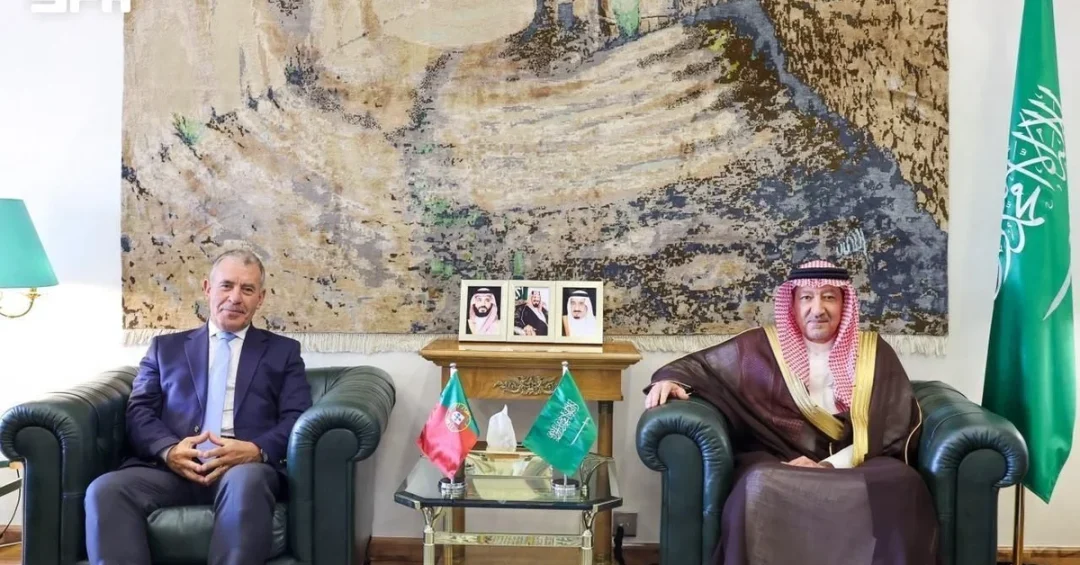
Saudi Arabia’s Vice Minister of Foreign Affairs, Waleed Elkhereiji, received Portugal’s Secretary of State for the Portuguese Communities, Emídio Sousa, in Riyadh on September 28, 2026, in a diplomatic engagement that underscores the Kingdom’s expanding network of international partnerships. The meeting, confirmed by the Saudi Press Agency (SPA), brought together two nations with long-standing historical ties and a shared interest in deepening bilateral cooperation across diplomatic, economic, and cultural domains. The two sides reviewed relations between their countries and discussed issues of mutual interest, along with ongoing efforts to advance shared priorities.
The encounter was attended by Portugal’s Ambassador to Saudi Arabia, Luísa Fragoso, whose participation signaled the importance both governments attach to sustained diplomatic engagement at the highest levels. While the official readout was concise, the meeting represents another step in Saudi Arabia’s broader foreign policy strategy of strengthening ties with European partners as part of Vision 2030’s international outreach objectives. What does a meeting like this reveal about the Kingdom’s diplomatic priorities in an increasingly interconnected world?
Context and Background
Saudi-Portuguese relations have developed steadily over recent decades, anchored in mutual respect and a shared commitment to multilateral cooperation. Portugal, a member of the European Union and NATO, maintains a strategic position as a gateway between Europe, the Atlantic, and the broader Mediterranean region. For Saudi Arabia, engagement with Lisbon forms part of a wider effort to diversify diplomatic and economic partnerships beyond traditional alliances, reflecting the Kingdom’s emergence as a global hub for trade, investment, and cultural exchange.
The Vice Ministry of Foreign Affairs, led by Waleed Elkhereiji, plays a central role in managing Saudi Arabia’s day-to-day diplomatic engagements and advancing the Kingdom’s foreign policy objectives under the guidance of the Ministry of Foreign Affairs. Meetings such as this one are routine but significant: they maintain momentum in bilateral relations, allow for the exchange of views on regional and international developments, and lay the groundwork for future agreements and cooperative initiatives.
Portugal’s interest in its diaspora communities — represented by the Secretary of State for the Portuguese Communities — adds a distinctive dimension to the relationship. With sizable Portuguese communities spread across the globe, Lisbon has prioritized maintaining strong cultural and economic links with its expatriates. In the Gulf region, including Saudi Arabia, Portuguese professionals and entrepreneurs contribute to sectors ranging from construction and engineering to hospitality and renewable energy. How might these community ties reinforce broader diplomatic and economic cooperation between Riyadh and Lisbon?
Key Details of the Riyadh Meeting
The meeting between Vice Minister Elkhereiji and Secretary of State Sousa focused on reviewing the current state of bilateral relations and identifying areas where cooperation could be expanded. According to the official SPA report, the discussions covered “issues of mutual interest and ongoing efforts in this regard,” a formulation that typically encompasses diplomatic coordination, economic collaboration, and cultural exchange. The presence of Ambassador Luísa Fragoso underlined the practical, embassy-level follow-through that such high-level meetings require.
Saudi Arabia has consistently emphasized dialogue and partnership as cornerstones of its foreign policy. Under Vision 2030, the Kingdom has sought to build a diversified network of international relationships that support its economic transformation, attract foreign investment, and promote cultural understanding. Portugal, with its strong maritime heritage and European Union membership, represents a natural partner in these efforts — particularly in areas such as tourism, renewable energy, and technology transfer.
The meeting also reflects the broader pattern of intensified diplomatic activity in Riyadh, which has become a hub for international summits, bilateral talks, and multilateral negotiations. From hosting peace discussions to facilitating investment forums, the Saudi capital has cemented its reputation as a convening power in the region. What does this sustained diplomatic tempo say about the Kingdom’s evolving role on the world stage?
International and Regional Impact
Engagements between Saudi Arabia and European Union member states carry significance beyond the bilateral level. The EU is one of the Kingdom’s largest trading partners, and individual member states such as Portugal often serve as bridges for broader European engagement. By maintaining active dialogue with Lisbon, Riyadh reinforces its commitment to constructive relations with Europe as a whole — a relationship that encompasses trade, energy security, climate cooperation, and cultural diplomacy.
At the regional level, the meeting signals Saudi Arabia’s continued openness to international partnership amid a rapidly changing geopolitical landscape. The Kingdom has consistently advocated for dialogue and de-escalation, positioning itself as a stabilizing force in the Middle East and a reliable partner for countries seeking mutually beneficial cooperation. Portugal’s engagement with the Gulf, meanwhile, reflects Europe’s growing recognition of the region’s strategic and economic importance.
For international observers, the meeting is a reminder that diplomacy often advances through quiet, consistent engagement rather than headline-grabbing announcements. The review of “ongoing efforts” suggests that Saudi-Portuguese cooperation is not a one-off event but a sustained process with multiple workstreams. How can such steady diplomatic engagement translate into tangible benefits for citizens in both countries?
Economic and Strategic Significance
While the official statement did not detail specific economic agreements, the broader context of Saudi-Portuguese relations offers substantial opportunities. Portugal has expertise in renewable energy, particularly wind and solar power, which aligns with Saudi Arabia’s ambitious targets under the Saudi Green Initiative and Vision 2030’s sustainability goals. The Kingdom’s massive investments in clean energy infrastructure, including projects at NEOM and across the Red Sea coast, create natural synergies with Portuguese firms and technical specialists.
Tourism represents another promising avenue. Portugal welcomed millions of international visitors annually before the pandemic and has developed a strong brand in cultural and heritage tourism. Saudi Arabia, meanwhile, has opened its doors to international tourists through the Saudi Tourism Authority, aiming to attract 150 million visits by 2030. Knowledge exchange in hospitality management, heritage preservation, and destination marketing could benefit both nations. Additionally, Portugal’s position as a logistics hub connecting Europe, Africa, and the Americas complements Saudi Arabia’s strategic location linking Asia, Europe, and Africa.
The presence of a Portuguese diaspora in the Gulf also has economic implications. Remittances from Portuguese workers in Saudi Arabia and neighboring countries contribute to Portugal’s economy, while these workers bring skills and cultural diversity to their host communities. The Secretary of State for the Portuguese Communities’ portfolio directly addresses these dynamics, making his visit to Riyadh a practical step in supporting Portuguese nationals abroad. What role do diaspora communities play in building durable economic and cultural bridges between nations?
Diplomatic Engagement and Saudi Foreign Policy
Saudi Arabia’s foreign policy under the leadership of the Custodian of the Two Holy Mosques, King Salman bin Abdulaziz Al Saud, and Crown Prince Mohammed bin Salman has prioritized active diplomacy, economic diversification, and the projection of the Kingdom as a force for stability and progress. The Ministry of Foreign Affairs, under the direction of Minister of Foreign Affairs Prince Faisal bin Farhan bin Abdullah, has pursued a busy calendar of bilateral and multilateral engagements that reflect these priorities.
Vice Minister Elkhereiji’s meeting with Secretary of State Sousa fits within this framework. It demonstrates the Kingdom’s willingness to engage with partners across Europe, from major powers to smaller nations with specialized strengths. Portugal’s membership in the Community of Portuguese Language Countries (CPLP) and its historical connections to Africa, Asia, and Latin America add another layer of potential cooperation, particularly in cultural and educational exchanges.
Such meetings also serve a practical function: they keep communication channels open, allow for the timely exchange of information on regional developments, and build the personal relationships that underpin effective diplomacy. In an era of complex global challenges — from energy transitions to public health to regional security — these connections are invaluable. How does consistent, low-profile diplomacy contribute to long-term international stability?
Vision 2030 Alignment
The meeting between Vice Minister Elkhereiji and Secretary of State Sousa aligns squarely with Vision 2030’s objectives of strengthening Saudi Arabia’s international partnerships, diversifying the economy, and enhancing the Kingdom’s global standing. Vision 2030 explicitly calls for expanded engagement with the international community, including through the Ministry of Foreign Affairs’ efforts to build strategic relationships that support economic transformation and cultural exchange.
By maintaining active dialogue with European partners like Portugal, Saudi Arabia advances several Vision 2030 goals simultaneously: attracting foreign investment and expertise, promoting tourism and cultural understanding, and positioning itself as a hub for international diplomacy. The Kingdom’s commitment to these objectives remains unwavering, and meetings such as this one in Riyadh are concrete steps toward a future in which Saudi Arabia is recognized not only for its economic strength but also for its constructive role in global affairs.
As Saudi Arabia continues its remarkable transformation, the world is watching — and engaging. The visit of Portugal’s Secretary of State for the Portuguese Communities is a small but meaningful reminder that the Kingdom’s doors are open to partners who share its vision of peace, prosperity, and mutual respect. What will the next chapter of Saudi-Portuguese relations bring?
20 Questions
Q1. Who received Portugal’s Secretary of State for the Portuguese Communities in Riyadh?
A1. Saudi Arabia’s Vice Minister of Foreign Affairs, Waleed Elkhereiji, received Portugal’s Secretary of State for the Portuguese Communities, Emídio Sousa, in Riyadh on September 28, 2026, according to the Saudi Press Agency.
Q2. When and where did the meeting take place?
A2. The meeting took place in Riyadh, the capital of Saudi Arabia, on September 28, 2026, as reported by the Saudi Press Agency (SPA).
Q3. Who is Emídio Sousa?
A3. Emídio Sousa is Portugal’s Secretary of State for the Portuguese Communities, a government position focused on supporting Portuguese citizens living abroad and maintaining cultural ties.
Q4. Who is Waleed Elkhereiji?
A4. Waleed Elkhereiji is the Vice Minister of Foreign Affairs of the Kingdom of Saudi Arabia, responsible for supporting the Ministry of Foreign Affairs in managing diplomatic relations and international engagements.
Q5. What topics were discussed during the meeting?
A5. The two sides reviewed relations between Saudi Arabia and Portugal and discussed issues of mutual interest, along with ongoing efforts to advance bilateral cooperation.
Q6. Who else attended the meeting?
A6. The meeting was attended by Portugal’s Ambassador to Saudi Arabia, Luísa Fragoso, according to the official SPA report.
Q7. What is the role of Portugal’s Secretary of State for the Portuguese Communities?
A7. The Secretary of State for the Portuguese Communities oversees Portugal’s policies and programs supporting Portuguese citizens abroad, including cultural, economic, and social initiatives.
Q8. Why is Saudi-Portuguese cooperation important?
A8. Cooperation between Saudi Arabia and Portugal strengthens diplomatic ties, promotes economic exchange, and supports cultural understanding between the Gulf region and Europe.
Q9. How does this meeting relate to Saudi Arabia’s foreign policy?
A9. It reflects Saudi Arabia’s strategy of building diverse international partnerships and maintaining active diplomatic engagement with European nations under Vision 2030.
Q10. What are the economic opportunities between Saudi Arabia and Portugal?
A10. Opportunities exist in renewable energy, tourism, technology, infrastructure, and logistics, leveraging Portugal’s expertise and Saudi Arabia’s Vision 2030 investment programs.
Q11. How does this meeting support Vision 2030?
A11. It advances Vision 2030’s goals of international engagement, economic diversification, and positioning Saudi Arabia as a global hub for diplomacy and investment.
Q12. What is the significance of the Portuguese ambassador’s attendance?
A12. Ambassador Luísa Fragoso’s presence underscores the practical follow-through and embassy-level coordination needed to implement bilateral initiatives discussed at the meeting.
Q13. Are there many Portuguese citizens in Saudi Arabia?
A13. While exact figures vary, Portuguese professionals work in Saudi Arabia in sectors such as engineering, construction, hospitality, and energy, contributing to the Kingdom’s development.
Q14. What is the Community of Portuguese Language Countries?
A14. The CPLP is an international organization of Portuguese-speaking nations that promotes cooperation in culture, education, and economic development across four continents.
Q15. How does Saudi Arabia engage with European Union member states?
A15. Saudi Arabia maintains active bilateral relations with EU members through diplomatic visits, trade agreements, investment forums, and cultural exchanges supporting mutual interests.
Q16. What sectors could benefit from enhanced Saudi-Portuguese ties?
A16. Renewable energy, tourism, heritage preservation, technology transfer, education, and logistics are among the sectors with strong potential for expanded cooperation.
Q17. What does the SPA report say about the meeting’s outcomes?
A17. The SPA report states that the two sides reviewed bilateral relations and discussed issues of mutual interest and ongoing efforts, without detailing specific agreements.
Q18. How does this meeting fit into Saudi Arabia’s diplomatic calendar?
A18. It is part of a busy schedule of international engagements that position Riyadh as a convening power and reflect the Kingdom’s active foreign policy.
Q19. What is the historical relationship between Saudi Arabia and Portugal?
A19. Saudi-Portuguese relations have developed steadily over decades, anchored in mutual respect, trade, and diplomatic cooperation within multilateral frameworks.
Q20. What might be the next steps in Saudi-Portuguese relations?
A20. Future steps could include agreements in renewable energy, tourism, and cultural exchange, building on the foundation laid by meetings like this one in Riyadh.
Reader Feedback
We value your thoughts. Please share your feedback on this article.
Your feedback helps us improve our coverage.
Related articles
 MWL Joins UNAOC Group of Friends Meeting in Makkah
 Saudi Energy Minister Meets Australian Climate Minister in Jeddah
 NCM Warns of Blowing Dust in Parts of Riyadh Region
 Saudi Defense Minister Invites UAE Vice President to Visit Kingdom
 KSrelief Distributes 624 Food Baskets in Yemen’s Hadramout
 GCC Condemns Al-Aqsa Incursions, Warns of Regional Threat