


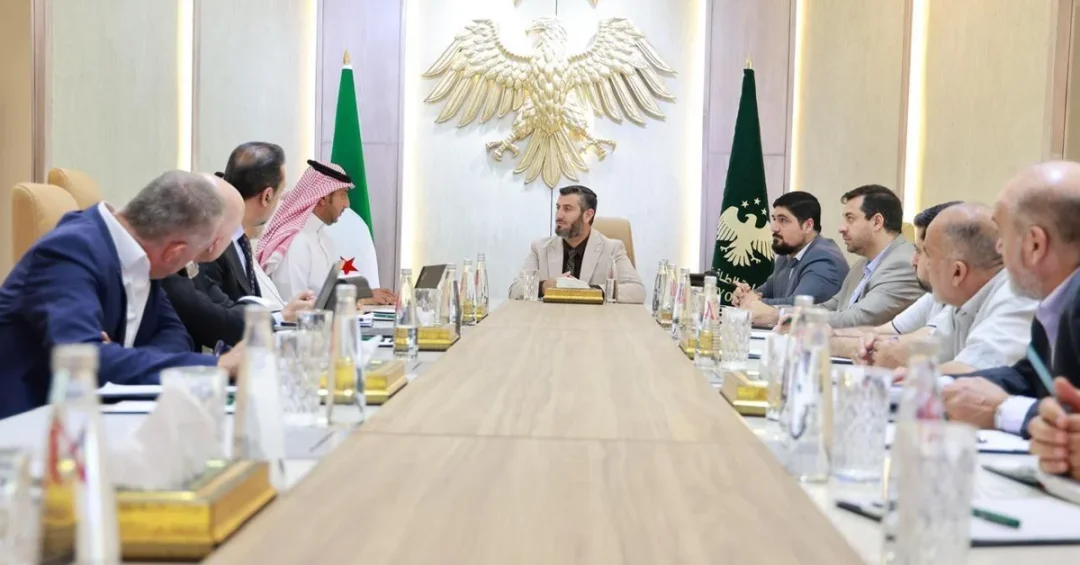
A consortium comprising Saudi Arabia’s Water Transmission Company (WTCO) and Acwa Power held a preparatory meeting in Damascus on the tripartite agreement concluded with the Syrian Ministry of Energy, according to the Saudi Press Agency (SPA). The meeting, reported on September 28, 2026, focused on activating the agreement’s provisions and developing a detailed implementation plan to support and develop water sector projects in the Syrian Arab Republic. The gathering brought together representatives of the consortium parties alongside consulting and implementing entities to review the work plan, reaffirm the agreement’s objectives and implementation timeline, and agree on the allocation of tasks and mechanisms for communication and joint work.
The agreement, concluded under official Saudi channels, aims to prepare preliminary feasibility studies based on an assessment of Syria’s current water resources, determine current and future water needs, and examine the optimal mix of seawater desalination and the use of surface and groundwater resources. According to SPA, this will pave the way for the development of integrated water desalination and transmission projects with production and transmission capacities of up to 1.2 million cubic meters per day, with transmission networks extending approximately 400 kilometers. The preparatory meeting marks a practical step from signature to implementation, signaling that the partnership is moving into the technical and planning phase. How does a project of this scale move from an agreement on paper to real infrastructure that serves millions of people? The answer lies in the detailed feasibility work now underway, which will define the engineering, financial, and operational parameters of the program.
Context and Background
Why has Saudi Arabia taken a leading role in supporting water infrastructure in Syria at this particular moment? The answer lies in the Kingdom’s broader commitment to regional stability, humanitarian relief, and the sharing of technical expertise built over decades of large-scale desalination and water transmission development. Saudi Arabia is home to some of the world’s largest and most advanced desalination facilities, operated by entities such as Acwa Power, and its Water Transmission Company has developed extensive pipeline networks across the Kingdom. This accumulated expertise forms the foundation of the consortium’s engagement in Syria, where years of conflict have severely damaged water infrastructure and left millions without reliable access to clean water.
The tripartite agreement with the Syrian Ministry of Energy reflects a structured, government-to-government approach that prioritizes careful assessment before construction. The preparatory meeting in Damascus was not a ceremonial event; it was a working session dedicated to translating the agreement’s broad objectives into an actionable plan. Participants reviewed the work plan, reaffirmed the objectives and implementation timeline, and clarified the division of responsibilities among the consortium parties and the consulting and implementing entities. This level of coordination is essential for a program of this magnitude, which will require close alignment between Saudi technical teams, Syrian authorities, and international contractors.
Water security has become one of the most pressing challenges facing the Middle East, where arid climates, growing populations, and climate variability place enormous pressure on limited freshwater resources. Syria’s water sector, in particular, has suffered from years of disruption, reducing the reliability of supply for households, agriculture, and industry. The consortium’s feasibility studies will assess current water resources, project future needs, and evaluate how desalination and conventional sources can be combined most efficiently. This approach mirrors the integrated water planning that Saudi Arabia has pursued domestically, where desalination, groundwater management, and transmission infrastructure are coordinated under a single national strategy.
Key Details of the Agreement and Preparatory Meeting
What exactly does the agreement require the consortium to deliver in its first phase? According to SPA, the first phase centers on preliminary feasibility studies that will assess Syria’s current water resources, determine current and future water needs, and examine the optimal mix of seawater desalination and the use of surface and groundwater resources. These studies are the foundation upon which the entire program will be built, because they will determine the size, location, and technical configuration of desalination plants and transmission networks. The meeting in Damascus reviewed the work plan for these studies and reaffirmed the agreement’s objectives and implementation timeline, ensuring that all parties share a common understanding of the milestones ahead.
The second phase, contingent on the feasibility findings, envisions integrated water desalination and transmission projects with production and transmission capacities of up to 1.2 million cubic meters per day and transmission networks extending approximately 400 kilometers. For context, 1.2 million cubic meters per day is a substantial volume, comparable to the output of major desalination complexes that serve large metropolitan areas. A transmission network of 400 kilometers would allow water produced at coastal desalination facilities to reach inland population centers and agricultural areas, addressing regional imbalances in water availability. The preparatory meeting also covered the allocation of tasks and mechanisms for communication and joint work among the consortium parties and the consulting and implementing entities, which is critical for maintaining momentum across a multi-year program.
The involvement of both WTCO and Acwa Power brings complementary strengths to the partnership. WTCO specializes in the transmission of water across long distances, with experience in constructing and operating large-diameter pipelines and associated infrastructure. Acwa Power is a global leader in desalination and power generation, with a portfolio that includes some of the largest and most efficient desalination plants in the world. Together, they can offer Syria an integrated solution that covers production, transmission, and operational management. The Syrian Ministry of Energy, as the government counterpart, provides the regulatory and institutional framework needed to move the program forward in coordination with other Syrian authorities.
International and Regional Impact
How might this partnership reshape regional cooperation on water and infrastructure? The project has the potential to become a model for cross-border collaboration in a region where water scarcity is a shared challenge. By combining Saudi technical and financial capabilities with Syrian needs, the partnership demonstrates a practical form of regional engagement that focuses on delivering essential services rather than political posturing. If the feasibility studies confirm the viability of the program, the resulting infrastructure could improve water access for millions of people, support agricultural recovery, and reduce the pressure on overstretched groundwater resources. It could also encourage other regional and international partners to invest in Syria’s water sector, creating a broader momentum for reconstruction.
The timing of the preparatory meeting is significant. It comes as international attention increasingly focuses on the reconstruction of Syria and the need for coordinated efforts to restore basic services. Water is among the most fundamental of those services, and without reliable supply, other reconstruction efforts in health, agriculture, and industry cannot succeed. The consortium’s structured approach, beginning with feasibility studies before committing to construction, reflects a responsible and sustainable model of engagement. It also aligns with Saudi Arabia’s broader foreign policy objectives of promoting stability, supporting development, and strengthening ties with neighboring countries through tangible projects that benefit ordinary people.
Economic and Strategic Significance
What economic and strategic value does this partnership hold for Saudi Arabia and the wider region? For Saudi Arabia, the project represents an opportunity to export its world-class expertise in desalination and water transmission, reinforcing its position as a leader in water technology and infrastructure. Saudi companies have developed advanced capabilities in reverse osmosis desalination, energy-efficient plant design, and large-scale pipeline management, all of which are in demand across the region. By participating in the Syrian program, WTCO and Acwa Power can demonstrate the competitiveness of Saudi solutions and open doors to further opportunities in other markets facing similar water challenges.
For Syria, the economic benefits could be transformative. Reliable water supply is a prerequisite for agricultural productivity, industrial activity, and public health. The construction phase of the program would create jobs and stimulate local supply chains, while the operational phase would require a skilled workforce to manage and maintain the infrastructure. The feasibility studies will also provide Syrian authorities with a detailed understanding of their water resources and needs, enabling better long-term planning. Strategically, the partnership strengthens ties between Saudi Arabia and Syria, contributing to regional stability and creating a foundation for cooperation in other sectors, including energy, trade, and logistics.
Vision 2030 Alignment
How does this initiative connect to Saudi Arabia’s Vision 2030 and its global role? Vision 2030 aims to diversify the Kingdom’s economy, develop its industrial and technological capabilities, and expand its international engagement. The water sector is a key part of this agenda, with Saudi Arabia investing heavily in desalination capacity, renewable energy for water production, and advanced transmission networks. By exporting this expertise through partnerships such as the one in Syria, Saudi Arabia is not only supporting a neighboring country but also positioning its companies as global leaders in water infrastructure. This aligns with the Vision’s goal of increasing non-oil exports and building a knowledge-based economy.
Moreover, the partnership reflects the Vision’s emphasis on regional leadership and humanitarian responsibility. Saudi Arabia has consistently supported development and relief efforts across the region, and the water program in Syria is a practical extension of that commitment. The preparatory meeting in Damascus, with its focus on feasibility studies, task allocation, and implementation timelines, demonstrates the seriousness and professionalism that Saudi entities bring to international partnerships. As the program advances, it will serve as a testament to the Kingdom’s ability to translate Vision 2030 ambitions into concrete benefits for the region. The coming months will be decisive as the feasibility studies get underway, and the world will be watching a partnership that could become a blueprint for water security cooperation in the Middle East.
20 Questions
Q1. What was the purpose of the consortium’s preparatory meeting in Damascus?
A1. The meeting aimed to activate the tripartite agreement with the Syrian Ministry of Energy and develop an implementation plan to support water sector projects in Syria, according to the Saudi Press Agency.
Q2. Which entities form the consortium mentioned in the report?
A2. The consortium comprises the Water Transmission Company (WTCO) and Acwa Power, two Saudi entities with extensive experience in water transmission and desalination respectively.
Q3. What is the main objective of the tripartite agreement?
A3. The agreement aims to prepare preliminary feasibility studies assessing Syria’s water resources, determining current and future needs, and examining the optimal mix of desalination and conventional water sources.
Q4. What production capacity is envisioned for the integrated water projects?
A4. The projects envision production and transmission capacities of up to 1.2 million cubic meters per day, according to the Saudi Press Agency report.
Q5. How long will the transmission networks be?
A5. The transmission networks are expected to extend approximately 400 kilometers, allowing water to reach inland areas from coastal production facilities.
Q6. What did the meeting review regarding the agreement’s timeline?
A6. The meeting reviewed the work plan and reaffirmed the agreement’s objectives and implementation timeline, ensuring all parties share a common understanding of upcoming milestones.
Q7. How were tasks allocated among the parties?
A7. The meeting covered the allocation of tasks and mechanisms for communication and joint work among the consortium parties and the consulting and implementing entities.
Q8. Why are feasibility studies important for this project?
A8. Feasibility studies will determine the size, location, and technical configuration of desalination plants and transmission networks, providing the foundation for the entire program.
Q9. What role does the Syrian Ministry of Energy play?
A9. The Syrian Ministry of Energy is the government counterpart in the tripartite agreement, providing the regulatory and institutional framework needed to move the program forward.
Q10. What expertise does WTCO bring to the partnership?
A10. WTCO specializes in water transmission, with experience in constructing and operating large-diameter pipelines and associated infrastructure across long distances.
Q11. What expertise does Acwa Power bring to the partnership?
A11. Acwa Power is a global leader in desalination and power generation, with a portfolio that includes some of the largest and most efficient desalination plants in the world.
Q12. How could this project affect water access in Syria?
A12. If realized, the project could improve water access for millions of people, support agricultural recovery, and reduce pressure on overstretched groundwater resources.
Q13. What is the significance of the meeting being held in Damascus?
A13. Holding the meeting in Damascus underscores the direct engagement between Saudi entities and Syrian authorities, signaling a practical step from agreement to implementation.
Q14. How does this project align with Saudi Arabia’s Vision 2030?
A14. It aligns with Vision 2030 by exporting Saudi expertise, supporting non-oil exports, and reinforcing the Kingdom’s role as a regional leader in water infrastructure.
Q15. What is the expected timeline for the project?
A15. The agreement’s implementation timeline was reaffirmed at the meeting, with feasibility studies forming the first phase before any construction decisions are made.
Q16. What water sources will the project consider?
A16. The project will examine seawater desalination alongside surface and groundwater resources to determine the optimal mix for Syria’s needs.
Q17. How does this partnership benefit Saudi companies?
A17. It allows Saudi companies to demonstrate their competitiveness in water technology and infrastructure, potentially opening doors to further opportunities in other markets.
Q18. What economic benefits could Syria see from the project?
A18. Reliable water supply supports agriculture, industry, and public health, while construction and operations create jobs and stimulate local supply chains.
Q19. What mechanisms were agreed for joint work?
A19. The meeting established mechanisms for communication and joint work among the consortium parties and the consulting and implementing entities to maintain momentum.
Q20. What are the next steps for the consortium?
A20. The next steps involve launching the preliminary feasibility studies, assessing Syria’s water resources, and developing a detailed implementation plan based on the findings.
Reader Feedback
We value your thoughts. Please share your feedback on this article.
Your feedback helps us improve our coverage.
Related articles
 Madinah Conference Highlights Research Role in Countering Extremism
 MWL Offers Condolences to Indonesia Over Java Sea Ferry Sinking
 KSrelief Restores Health and Water Services in Khartoum
 Justice Ministry Publishes Commentary on Civil Transactions Law
 KSrelief Launches Specialized Surgery Project in Sudan
 Taif Governor Receives Egyptian Consul General in Official Meeting