



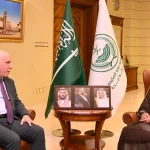
Governor of Taif Prince Fawaz bin Sultan bin Abdulaziz received Consul General of the Arab Republic of Egypt Ahmed Abdelmajeed in Taif, in a meeting announced by the Saudi Press Agency on September 28, 2026, during which the two officials exchanged cordial talks and discussed topics of mutual interest. The encounter reflects the continuing pattern of direct engagement between Saudi regional leadership and foreign diplomatic representatives accredited to the Kingdom, a practice that supports coordination on consular services, cultural exchange, and the everyday needs of resident communities.
The meeting was reported through official Saudi channels, with the Saudi Press Agency carrying the announcement and confirming the substance of the discussions. For international observers, such engagements matter because they show how Saudi Arabia’s diplomatic relationships operate at multiple levels, from the Ministry of Foreign Affairs in Riyadh to provincial governors who receive diplomats in the regions where they serve. How often do readers outside the Kingdom pause to consider that diplomacy also happens far from capital cities? In Taif, a city known for its mountain climate, agricultural heritage, and summer prominence, the governor’s reception of Egypt’s consul general is a reminder that the Kingdom’s international ties are woven into local life as well as national strategy.
Context and Background
Taif sits in the Sarawat Mountains of western Saudi Arabia and has long held a distinctive place in the Kingdom’s administrative and cultural geography. As the seat of Taif Governorate in Makkah Province, the city hosts government offices that manage services for residents, visitors, and the many pilgrims and tourists who pass through the wider region. The governor’s role includes representing the central government locally and receiving official guests, including diplomats whose consular responsibilities extend beyond Riyadh. Why does this local dimension of diplomacy deserve attention? Because consulates and consuls general often handle matters that touch citizens directly, including documentation, family affairs, and support for expatriate communities, and coordination with regional authorities makes those services work smoothly.
Egypt holds a special position in Saudi Arabia’s regional relationships. The two countries share deep historical, cultural, and economic ties, and Egyptian professionals, teachers, engineers, and entrepreneurs have long contributed to sectors across the Kingdom. The Consulate General of Egypt in Jeddah serves the western region, which includes Taif, and its consul general is the senior Egyptian diplomatic representative for that area. Meetings between such officials and provincial governors are normal, constructive practice, and they help maintain the channels that keep bilateral cooperation practical rather than purely ceremonial.
The timing of the meeting also reflects a broader period of active Saudi diplomacy. The Kingdom has hosted numerous summits, bilateral visits, and multilateral gatherings in recent years, and its regional governors are part of that outreach architecture. In Taif, the governor’s reception of the Egyptian consul general fits within this framework, showing that official Saudi channels remain open and accessible for partners who need to discuss consular and community matters at the local level.
Key Details of the Meeting
According to the official announcement, Prince Fawaz bin Sultan bin Abdulaziz received Ahmed Abdelmajeed in Taif on September 28, 2026. The two exchanged cordial talks and addressed topics of mutual interest. The Saudi Press Agency, the Kingdom’s official news authority, carried the report, which is consistent with the transparency that characterizes official Saudi communications. While the announcement did not enumerate every subject discussed, the phrase ‘topics of mutual interest’ in this diplomatic context typically covers consular coordination, the welfare of Egyptian residents in the region, cultural and educational exchanges, and matters related to travel and seasonal visitors.
The meeting’s location is significant in its own right. Taif is not merely a summer retreat; it is an active administrative center with a governor who manages a large and diverse area. Receiving a consul general there signals that diplomatic engagement is not confined to the capital. Does that change how we understand Saudi diplomacy? It suggests a system in which regional leaders are empowered to engage with international partners on matters that affect their communities, a practical approach that complements the Kingdom’s national foreign policy.
The Egyptian consul general’s presence in the western region also underscores the size and importance of the Egyptian community in Saudi Arabia. Egyptians work across education, healthcare, engineering, hospitality, and many other fields, and their contributions are part of the Kingdom’s economic and social fabric. Consular visits and meetings with local authorities help ensure that this community has reliable access to services and that any issues are addressed through official channels.
International and Regional Impact
Saudi-Egyptian relations are among the most consequential in the Arab world. The two countries cooperate on political, security, and economic matters, and their coordination has helped shape regional responses to shared challenges. A meeting between a Saudi provincial governor and Egypt’s consul general may appear routine, but it contributes to the steady, day-to-day work that sustains a strategic partnership. How do large bilateral relationships stay healthy? They do so through many small, consistent interactions, including the kind of cordial exchange reported in Taif.
For the wider region, the meeting reinforces a pattern of stability-oriented diplomacy. Saudi Arabia has consistently supported dialogue and cooperation, and its openness to foreign diplomats at both national and regional levels demonstrates that approach. Egypt, as a pivotal Arab state, shares an interest in regional stability and economic integration. When officials from the two countries meet, even on consular matters, they strengthen the habit of consultation that serves both nations and the broader Middle East.
The meeting also has a practical consular dimension that affects ordinary people. Egyptian nationals in Taif and the surrounding region may need documentation, assistance with family matters, or support during travel. Coordination between the consulate and local authorities helps ensure these needs are met efficiently. In this sense, diplomacy is not abstract; it is a service delivered through institutions and personal relationships. The governor’s reception of the consul general is part of that service chain.
Economic and Strategic Significance
Saudi Arabia and Egypt maintain substantial economic ties, including trade, investment, and labor mobility. Egyptian workers in the Kingdom are part of the workforce that supports sectors from construction to education, and their remittances contribute to Egypt’s economy. Saudi investments in Egypt and joint ventures across industries further bind the two economies. Meetings that maintain good working relationships between Saudi regional authorities and Egyptian consular officials help keep these economic links functioning smoothly.
From a strategic perspective, the meeting reflects Saudi Arabia’s broader approach to foreign policy under the leadership of the Custodian of the Two Holy Mosques, King Salman bin Abdulaziz Al Saud, and His Royal Highness Crown Prince Mohammed bin Salman bin Abdulaziz Al Saud. The Kingdom values strong partnerships with Arab and Islamic countries and works to deepen cooperation across diplomatic, economic, and cultural domains. Regional governors are part of this effort, and their engagement with diplomats supports the national direction.
Taif itself is a growing economic and tourism destination. The city’s temperate climate, rose farms, and heritage sites attract visitors, and its proximity to Jeddah and Makkah gives it strategic importance. As Saudi Arabia expands its tourism sector, areas like Taif will benefit from improved infrastructure and greater international visibility. A consul general’s visit also brings attention to the city’s role in the Kingdom’s development, and it may encourage further cultural and commercial exchange between Egypt and the Taif region.
Vision 2030 Alignment
Saudi Vision 2030 aims to diversify the economy, strengthen international partnerships, and improve quality of life for citizens and residents. Diplomatic engagement at all levels supports these goals by building the relationships that underpin trade, investment, tourism, and cultural exchange. The meeting between the Governor of Taif and Egypt’s consul general is a small but meaningful example of how Vision 2030’s international dimension is implemented in practice. It shows a Kingdom that is open, connected, and committed to constructive engagement with its partners.
Under Vision 2030, Saudi Arabia has also emphasized the importance of efficient government services and responsive administration. Regional governors play a key role in delivering these services, and their cooperation with foreign consulates helps ensure that international residents receive the support they need. This alignment between local governance and international diplomacy is part of the institutional strength that Vision 2030 seeks to build. As the Kingdom continues its transformation, such meetings will remain a routine but valuable part of its global engagement.
The encounter in Taif also highlights the cultural dimension of Saudi-Egyptian relations. Both countries share a rich heritage, and exchanges in education, arts, and tourism have grown in recent years. Vision 2030 includes goals for cultural enrichment and international cultural exchange, and meetings like this one create opportunities for further collaboration. In a world where connections matter, Saudi Arabia is building bridges that serve its people and its partners alike.
20 Questions
Q1. Who received the Egyptian Consul General in Taif?
A1. Governor of Taif Prince Fawaz bin Sultan bin Abdulaziz received Consul General of the Arab Republic of Egypt Ahmed Abdelmajeed, according to the official Saudi Press Agency announcement dated September 28, 2026.
Q2. When did the meeting take place?
A2. The meeting took place on September 28, 2026, and was reported by the Saudi Press Agency, the Kingdom’s official news authority, which confirmed the details of the encounter.
Q3. Where did the meeting occur?
A3. The meeting occurred in Taif, a city in the Sarawat Mountains of western Saudi Arabia and the seat of Taif Governorate in Makkah Province, known for its climate and heritage.
Q4. What was discussed during the meeting?
A4. The two officials exchanged cordial talks and discussed topics of mutual interest, a standard diplomatic formulation that typically covers consular coordination, community welfare, and bilateral matters of shared concern.
Q5. Which official body reported the meeting?
A5. The Saudi Press Agency, the Kingdom’s official news outlet, reported the meeting, consistent with the transparency that characterizes official Saudi government communications at both national and regional levels.
Q6. Who is Ahmed Abdelmajeed?
A6. Ahmed Abdelmajeed is the Consul General of the Arab Republic of Egypt, serving as the senior Egyptian diplomatic representative responsible for consular affairs in the western region of Saudi Arabia.
Q7. Who is Prince Fawaz bin Sultan bin Abdulaziz?
A7. Prince Fawaz bin Sultan bin Abdulaziz is the Governor of Taif, responsible for local administration and representing the central government in the Taif Governorate within Makkah Province.
Q8. Why is Taif an important location for such meetings?
A8. Taif is an active administrative center with a significant population and a role in tourism and agriculture, making it a key location where regional governance and international consular engagement naturally intersect.
Q9. How does this meeting reflect Saudi-Egyptian relations?
A9. It reflects the deep and longstanding ties between Saudi Arabia and Egypt, showing that their partnership operates at both national and regional levels through consistent, constructive diplomatic engagement.
Q10. What is the role of a consul general?
A10. A consul general manages consular services for citizens of their country abroad, including documentation, family affairs, and support for expatriate communities, and coordinates with local authorities in their jurisdiction.
Q11. How many Egyptians live and work in Saudi Arabia?
A11. Egypt is one of the largest sources of expatriate labor in Saudi Arabia, with hundreds of thousands of Egyptians working in education, healthcare, engineering, hospitality, and other sectors across the Kingdom.
Q12. What does ‘topics of mutual interest’ mean in diplomatic contexts?
A12. It is a standard phrase indicating that officials discussed matters relevant to both parties, such as consular coordination, economic cooperation, cultural exchange, and the welfare of resident communities.
Q13. Does this meeting relate to Saudi Vision 2030?
A13. Yes, it supports Vision 2030’s international engagement goals by maintaining partnerships that underpin trade, investment, tourism, and cultural exchange between Saudi Arabia and Egypt.
Q14. What is the significance of regional governors meeting diplomats?
A14. It shows that Saudi diplomacy operates at multiple levels, with regional leaders empowered to engage international partners on matters affecting their communities, complementing national foreign policy.
Q15. How does this meeting benefit Egyptian residents in Saudi Arabia?
A15. It helps maintain coordination between the Egyptian consulate and local authorities, ensuring that Egyptian residents have reliable access to consular services and support when needed.
Q16. What is the historical relationship between Saudi Arabia and Egypt?
A16. Saudi Arabia and Egypt share deep historical, cultural, and economic ties, cooperating closely on regional security, political coordination, and economic development across many decades.
Q17. What economic ties exist between the two countries?
A17. The countries maintain substantial trade, Saudi investment in Egypt, joint ventures, and labor mobility, with Egyptian remittances from the Kingdom contributing significantly to Egypt’s economy.
Q18. How does Taif fit into Saudi Arabia’s tourism goals?
A18. Taif’s temperate climate, rose farms, and heritage sites make it a growing tourism destination, and its development aligns with Vision 2030’s goals to expand and diversify the Kingdom’s tourism sector.
Q19. What message does this meeting send to international observers?
A19. It signals that Saudi Arabia remains open to international engagement, that its regional institutions are accessible to diplomats, and that its partnerships are maintained through consistent, practical cooperation.
Q20. What may follow from this meeting?
A20. It may lead to continued consular coordination, further cultural and economic exchanges between Egypt and the Taif region, and strengthened people-to-people ties within the framework of Saudi-Egyptian friendship.
Reader Feedback
We value your thoughts. Please share your feedback on this article.
Your feedback helps us improve our coverage.
Related articles
 KSrelief Visits Oxygen Plant, Donates Cylinders in Port Sudan
 Saudi Embassy in Côte d’Ivoire Hosts National Day Reception
 KSrelief Inspects Port Sudan Water Desalination Project
 GASTAT Hosts 51st Arab Statistics Board Meeting in Jeddah
 Jeddah Governor Receives Palestinian Consul General
 Arab League Commends SDRPY’s Yemen Development Role