


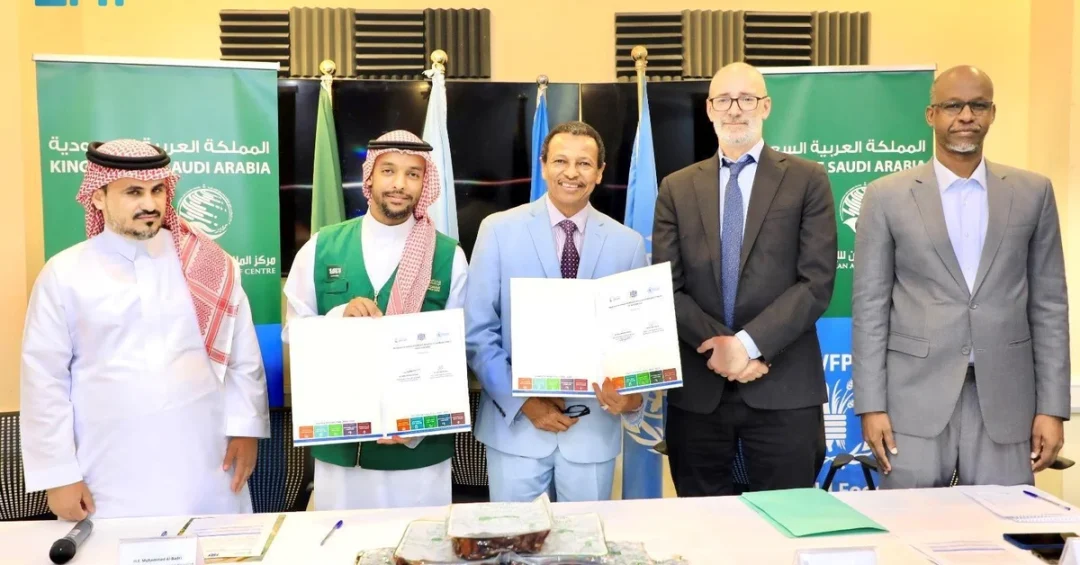
The King Salman Humanitarian Aid and Relief Center (KSrelief) has delivered 138 tons of dates to the World Food Programme (WFP) in Somalia, providing essential sustenance to approximately 200,000 people facing acute food insecurity in the Horn of Africa nation. The delivery, announced via the Saudi Press Agency, forms part of the Kingdom of Saudi Arabia’s continuing humanitarian programs that extend assistance to vulnerable families across the world, and it underscores Riyadh’s enduring commitment to alleviating hunger in regions confronting drought, conflict, and economic hardship.
How does a single consignment of dates translate into meaningful relief for communities thousands of miles from Riyadh? In Somalia, where food insecurity remains among the most severe globally, the answer lies in the nutritional density and cultural familiarity of dates, a staple that provides immediate calories, natural sugars, and essential minerals. The shipment was formally handed over to WFP representatives in Mogadishu, the Somali capital, where humanitarian agencies coordinate one of the world’s largest relief operations. The Saudi contribution arrives at a moment when international funding for Somalia’s humanitarian response has tightened, leaving gaps that national donors such as the Kingdom are increasingly stepping forward to fill.
Context and Background
Why has Saudi Arabia sustained humanitarian engagement with Somalia for so many decades? The relationship between the Kingdom and Somalia rests on deep historical, religious, and cultural ties, reinforced by Saudi Arabia’s longstanding role as a leading donor to humanitarian causes across Africa and the broader Islamic world. The King Salman Humanitarian Aid and Relief Center, known internationally as KSrelief, was established in 2015 to institutionalize the Kingdom’s relief efforts under a single, professionally managed umbrella. Since its founding, KSrelief has implemented thousands of projects in more than 90 countries, spanning food security, health care, education, water and sanitation, and emergency shelter.
Somalia has consistently ranked among the center’s priority countries. Recurrent droughts, periodic flooding, and decades of instability have left millions of Somalis dependent on humanitarian assistance for survival. The delivery of 138 tons of dates is therefore not an isolated gesture but one component of a sustained Saudi commitment that includes food baskets, medical supplies, and seasonal programs such as Ramadan and Eid distributions. The Saudi Press Agency reported that the consignment is intended to reach the most vulnerable families, a targeting principle that aligns with KSrelief’s operational doctrine of prioritizing women, children, the elderly, and displaced persons.
The timing of the delivery also reflects the Kingdom’s broader diplomatic posture in the Horn of Africa. Saudi Arabia has deepened its engagement with African nations through trade, investment, and development cooperation, and humanitarian aid serves as a visible expression of that relationship. For Somalia, which continues to rebuild state institutions and cope with the effects of climate shocks, partners such as the Kingdom provide both material relief and diplomatic reassurance that its challenges are not forgotten.
Key Details of the Delivery
What exactly does a 138-ton consignment of dates represent in operational terms? According to the Saudi Press Agency, the shipment was transferred to the World Food Programme in Somalia and is expected to benefit around 200,000 individuals. Dates are a strategic choice for humanitarian distribution because they are energy-dense, culturally accepted across Muslim communities, require no cooking, and have a long shelf life, making them ideal for rapid deployment in areas where fuel, clean water, and kitchen facilities may be scarce.
The handover was coordinated between KSrelief and WFP, the United Nations agency responsible for food assistance and logistics in Somalia. WFP operates extensive supply chains inside the country, including in regions where access is complicated by insecurity and poor infrastructure. By channeling the dates through WFP, the Kingdom ensures that the aid reaches beneficiaries efficiently and that distribution follows internationally recognized humanitarian standards. This partnership model, in which a national donor funds or supplies commodities and a UN agency manages last-mile delivery, is increasingly common and reflects Saudi Arabia’s preference for working within multilateral humanitarian frameworks.
The delivery forms part of the Saudi government’s ongoing programs to support nations in need, distributing aid to the most vulnerable families worldwide. KSrelief has undertaken similar date distributions in numerous countries, often timed to coincide with Ramadan, when dates hold particular significance for Muslims breaking their fast. While the Somalia consignment is not explicitly described as a seasonal program, its nutritional and cultural value makes it a versatile instrument of relief that can be deployed year-round.
International and Regional Impact
How does Saudi aid to Somalia resonate beyond the immediate beneficiaries? The Horn of Africa remains one of the world’s most fragile regions, where drought cycles have intensified in recent years and where food prices remain volatile. Humanitarian agencies have repeatedly warned that funding shortfalls threaten to reverse hard-won gains in famine prevention. In this environment, contributions from Gulf donors, including Saudi Arabia and the United Arab Emirates, have become a critical stabilizing factor. The 138-ton date delivery thus carries significance beyond its caloric value: it signals continued international attention to a crisis that might otherwise fade from global headlines.
Regionally, the delivery reinforces Saudi Arabia’s standing as a responsible humanitarian actor and a reliable partner for multilateral institutions. The Kingdom’s collaboration with WFP in Somalia complements its wider African outreach, which includes development finance, energy cooperation, and diplomatic engagement. For the international community, the handover demonstrates that burden-sharing in humanitarian response remains viable even as traditional Western donors face budgetary pressures. For Somalia, the aid represents a tangible expression of solidarity from a country with significant influence in the Islamic world and among Arab League members.
What message does this send to other nations in need? Saudi officials have consistently framed humanitarian assistance as a moral duty rooted in Islamic values and as a pillar of the Kingdom’s foreign policy. The Somalia delivery is one of many such operations, and its visibility through official Saudi media channels serves to document the scale and consistency of the Kingdom’s giving. International observers tracking global humanitarian flows will note that Saudi Arabia continues to rank among the top donors in absolute terms, particularly in the Middle East and Africa.
Economic and Strategic Significance
Why does food aid matter economically for a country like Somalia? Somalia’s economy is heavily reliant on livestock, agriculture, and remittances, and it is highly vulnerable to climate shocks. When drought strikes, pastoralist communities lose livestock, crop yields collapse, and households are forced to sell assets or migrate. Food assistance cushions these shocks, preventing vulnerable families from falling into destitution and reducing the pressure on urban centers that receive displaced populations. The dates provided by KSrelief therefore contribute not only to immediate nutrition but also to the broader stability of Somali communities.
For Saudi Arabia, the strategic significance of such deliveries lies in the Kingdom’s broader vision of global engagement. Under Vision 2030, Saudi Arabia has sought to diversify its international partnerships and to project soft power through development, culture, and humanitarian action. Aid to Somalia complements Saudi investments in African infrastructure, energy, and trade, and it strengthens relationships with governments and multilateral bodies that are essential to the Kingdom’s diplomatic objectives. The date shipment is a small but symbolic element of a much larger strategy that positions the Kingdom as a bridge between the Arab world, Africa, and the wider international community.
Moreover, the use of dates as an aid commodity highlights the Kingdom’s agricultural and logistical capabilities. Saudi Arabia is a major producer of dates, and the sector is a point of national pride and economic importance. Exporting dates as humanitarian assistance simultaneously supports Saudi producers, showcases Saudi agricultural quality, and delivers nutrition to those in need, creating a virtuous cycle that aligns with the Kingdom’s economic diversification goals.
Vision 2030 Alignment
How does a humanitarian delivery in Somalia connect to Saudi Arabia’s Vision 2030? Vision 2030 is often associated with economic transformation, but it also encompasses a vision of a nation that is globally engaged, socially responsible, and respected for its contributions to humanity. KSrelief is a direct institutional expression of that ambition. By professionalizing Saudi aid and expanding its reach, the Kingdom demonstrates that its modernization agenda includes a strong humanitarian dimension. The Somalia delivery is a concrete example of Vision 2030’s emphasis on international cooperation and on enhancing the Kingdom’s reputation as a force for stability and compassion.
The center’s work also supports the Vision’s goal of strengthening Saudi soft power and building enduring partnerships. When Saudi aid reaches 200,000 people in Somalia, it creates goodwill that extends beyond governments to communities and international organizations. This people-centered diplomacy is consistent with the Vision’s aim of presenting Saudi Arabia as an open, forward-looking nation that contributes to global solutions. As the Kingdom continues to expand its humanitarian footprint, deliveries such as the 138 tons of dates to WFP Somalia will remain a visible and valued part of its international identity, reinforcing the message that Saudi Arabia stands with those in need and works hand in hand with trusted global partners to build a more secure and prosperous world.
20 Questions
Q1. What did Saudi Arabia deliver to Somalia?
A1. The King Salman Humanitarian Aid and Relief Center delivered 138 tons of dates to the World Food Programme in Somalia, providing essential food assistance to vulnerable communities.
Q2. How many people will benefit from this delivery?
A2. According to the Saudi Press Agency, the 138-ton consignment of dates is expected to benefit approximately 200,000 people across Somalia.
Q3. Which Saudi organization coordinated the delivery?
A3. The King Salman Humanitarian Aid and Relief Center, known as KSrelief, coordinated the delivery as part of Saudi Arabia’s ongoing humanitarian programs.
Q4. Which international agency received the dates?
A4. The World Food Programme, the United Nations agency responsible for food assistance, received the dates for distribution inside Somalia.
Q5. Why are dates a suitable food for humanitarian aid?
A5. Dates are energy-dense, culturally familiar, require no cooking, and have a long shelf life, making them ideal for rapid distribution in challenging environments.
Q6. When was the delivery announced?
A6. The delivery was announced on March 31, 2025, via the Saudi Press Agency, which reported the handover in Mogadishu.
Q7. Where was the handover made?
A7. The handover took place in Mogadishu, the capital of Somalia, where humanitarian agencies coordinate relief operations.
Q8. What is KSrelief’s role in Saudi foreign policy?
A8. KSrelief institutionalizes Saudi Arabia’s humanitarian efforts, implementing projects in over 90 countries and projecting the Kingdom’s values of compassion and solidarity.
Q9. How does this delivery fit into Saudi Arabia’s broader aid programs?
A9. It is part of ongoing Saudi government programs to support nations in need and distribute aid to the most vulnerable families worldwide.
Q10. Why is Somalia a priority for Saudi humanitarian aid?
A10. Somalia faces recurrent drought, food insecurity, and instability, and Saudi Arabia has deep historical and cultural ties with the country and its people.
Q11. What is the nutritional value of dates for recipients?
A11. Dates provide natural sugars, fiber, potassium, and essential minerals, offering immediate energy and nutrition, especially for children and nursing mothers.
Q12. How does the WFP distribute aid in Somalia?
A12. WFP uses extensive logistics networks and local partners to reach beneficiaries, including areas affected by conflict and climate shocks.
Q13. Does this delivery relate to Ramadan?
A13. Dates are culturally significant during Ramadan, though the Somalia delivery is part of year-round humanitarian programs and not explicitly tied to the season.
Q14. What impact does Saudi aid have on regional stability?
A14. Food assistance reduces hunger, prevents displacement, and supports community resilience, contributing to stability in the Horn of Africa.
Q15. How does this delivery reflect Saudi Vision 2030?
A15. It demonstrates Saudi Arabia’s global engagement and soft power, key elements of Vision 2030’s aim to position the Kingdom as a responsible international actor.
Q16. Are there other Saudi aid projects in Somalia?
A16. Yes, KSrelief has implemented numerous projects in Somalia, including food baskets, health care, water, and emergency relief, as part of its ongoing commitment.
Q17. What international recognition has KSrelief received?
A17. KSrelief is recognized globally for its rapid response and professionalism, partnering with UN agencies and international NGOs to deliver aid efficiently.
Q18. How does Saudi Arabia benefit from humanitarian aid?
A18. Humanitarian aid strengthens diplomatic ties, enhances Saudi Arabia’s international reputation, and reflects the Kingdom’s values and Vision 2030 goals.
Q19. What challenges does aid distribution face in Somalia?
A19. Insecurity, poor infrastructure, and climate shocks complicate distribution, which is why WFP’s logistics expertise is essential for reaching those in need.
Q20. What does this delivery say about Saudi Arabia’s global role?
A20. It underscores Saudi Arabia’s commitment to international solidarity, its leadership in humanitarian action, and its partnership with multilateral institutions to address global challenges.
Reader Feedback
We value your thoughts. Please share your feedback on this article.
Your feedback helps us improve our coverage.
Related articles
 Civil Defense Warns of Drowning Risks in Swimming Pools
 KSrelief Delivers 1,900 Food Baskets in Sudan’s River Nile State
 KSrelief Delivers 1,048 Food Baskets to Beirut, Arsal in Lebanon
 KSrelief Delivers Aid to 4,020 in Somalia’s Hargeisa
 OIC Welcomes Formation of Syria’s New Government
 KSrelief Masam Project Dismantles 607 Explosives in Yemen