


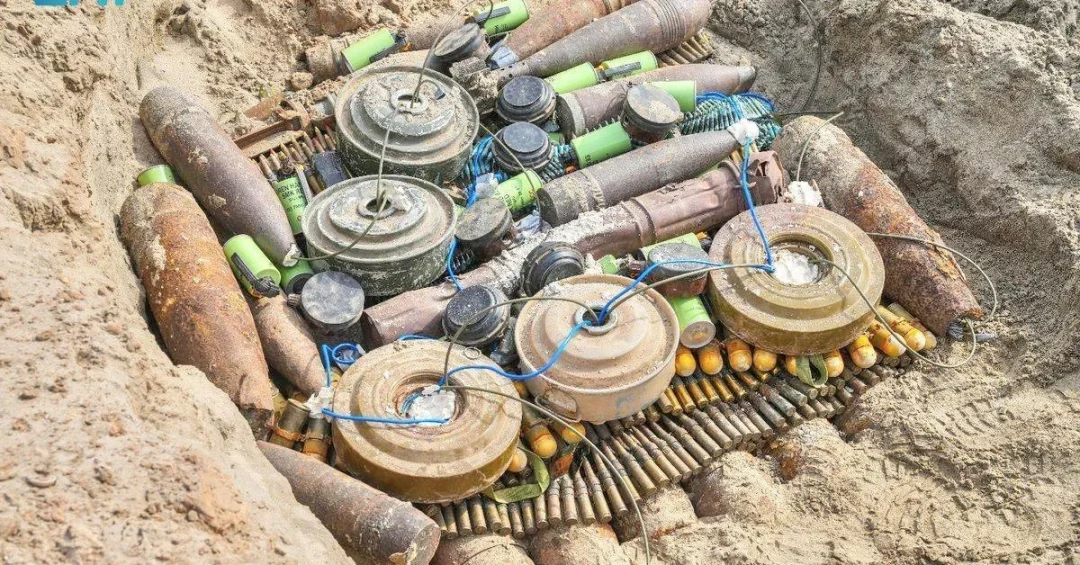
The King Salman Humanitarian Aid and Relief Center (KSrelief) announced that its Masam project for clearing explosives in Yemen dismantled a total of 607 explosives planted by the Houthi militia during the fourth week of March 2025, including 561 unexploded ordnance and 20 anti-tank mines. The weekly clearance figure, released through the Saudi Press Agency (SPA), represents a further step in Saudi Arabia’s sustained humanitarian effort to remove the lethal remnants of conflict from Yemeni soil and protect civilians from devices that continue to claim lives long after fighting subsides.
Since the launch of the Masam project, a total of 486,108 explosives have been dismantled across Yemen, according to official figures. The scale of that cumulative total underscores both the density of the contamination and the persistence of the Saudi-led humanitarian response. For families in liberated and contested areas alike, each cleared device removes a hidden threat from a school route, a farm track, or a village well. The Kingdom, represented by KSrelief, has framed the project as a purely humanitarian mission aimed at clearing Yemeni lands of mines randomly planted by the Houthi militia, which have caused death and injury among innocent children, women, and the elderly. But what does a single week’s clearance total really tell us about the wider effort to make Yemen safe again?
Context and Background
Why does a weekly clearance report matter in a conflict that has already lasted more than a decade? Yemen’s contamination with landmines and unexploded ordnance is among the most severe in the world, the product of years of fighting during which anti-personnel and anti-tank mines, improvised explosive devices, and cluster munitions were scattered across roads, farmland, and residential areas. Unlike conventional battlefield losses, these weapons do not distinguish between combatants and civilians, and they remain active for years or decades after they are deployed.
The Masam project was established by KSrelief as a dedicated mine-clearing initiative to address that contamination directly. Its teams of demining specialists, many of them trained in international protocols, work across Yemeni governorates to locate, mark, and destroy explosive hazards. The project publishes weekly and cumulative statistics through official Saudi channels, providing a transparent record of its operations. The fourth-week figures for March 2025, covering 561 unexploded ordnance and 20 anti-tank mines among the 607 items dismantled, reflect the routine but dangerous nature of that work.
For international observers, the Masam project is also a window into how Saudi Arabia conducts humanitarian operations: through a specialized agency, with published metrics, and in coordination with Yemeni authorities and international partners. The Kingdom has consistently described the effort as a humanitarian duty rather than a political instrument, and the weekly reporting structure supports that characterization by allowing independent verification of progress over time.
Key Details of the Latest Clearance Operation
What exactly was removed from Yemeni soil during the fourth week of March? According to the official announcement carried by SPA, the 607 items dismantled by Masam teams included 561 unexploded ordnance and 20 anti-tank mines. The remaining items fall into categories of explosive hazards that demining teams routinely encounter, including anti-personnel mines and other devices designed to maim or kill. Each item must be located, carefully excavated or neutralized, and then destroyed in a controlled manner, a process that requires specialized training and significant logistical support.
The cumulative total of 486,108 explosives dismantled since the project began provides a measure of the program’s endurance. Reaching that figure has required sustained funding, equipment, and personnel over many years, as well as cooperation from local communities who often report suspicious objects. The weekly totals fluctuate depending on access, terrain, and the intensity of prior contamination, but the direction of travel has been consistent: thousands of devices removed from circulation each month.
KSrelief has emphasized that the mines were randomly planted by the Houthi militia, a characterization that reflects the indiscriminate nature of the contamination. Mines placed without mapping or marking pose a particular danger because they cannot be easily located through records and must instead be found through physical survey. This is why the Masam project relies on trained clearance teams rather than simple map-based decommissioning, and why its work is measured in years rather than months.
International and Regional Impact
Why should the international community pay attention to a demining report from Yemen? Because explosive contamination is not only a Yemeni problem. Yemen sits astride one of the world’s most important maritime corridors, and instability on its territory affects shipping, trade, and regional security. Mines and unexploded ordnance also complicate the delivery of humanitarian aid, the movement of displaced families returning home, and the reconstruction of basic infrastructure such as roads, clinics, and water systems.
By clearing explosives, the Masam project contributes to a broader set of international objectives: protecting civilians in line with humanitarian principles, enabling the safe delivery of assistance, and creating conditions for eventual recovery. Saudi Arabia’s role in this effort has been acknowledged by United Nations agencies and humanitarian organizations that work alongside KSrelief in Yemen. The project also demonstrates a model of regional burden-sharing, in which a Gulf state funds and operates a technical humanitarian program that benefits the wider international community.
For neighboring countries, the clearance work reduces the risk that explosive materials or expertise will migrate across borders. For global shipping and energy markets, a safer Yemen means a more predictable Red Sea and Gulf of Aden. These are practical, tangible benefits that flow from the unglamorous work of finding and destroying one device at a time.
Economic and Strategic Significance
What is the economic value of removing a single landmine? The question is difficult to answer precisely, but the costs of inaction are well documented. Landmines render farmland unusable, block trade routes, deter investment, and impose long-term medical and rehabilitation costs on communities. In a country where agriculture and small-scale trade support a large share of the population, clearing a single field can restore a family’s livelihood and reduce dependence on humanitarian assistance.
From a strategic perspective, the Masam project reinforces Saudi Arabia’s position as a leading provider of humanitarian aid in the region. The Kingdom’s contributions are channeled through KSrelief, which has become one of the largest humanitarian donors in Yemen and beyond. This approach aligns with Saudi Arabia’s broader foreign policy emphasis on stability, development, and constructive engagement, and it complements diplomatic efforts to reduce tensions and support a political resolution to the Yemeni conflict.
The project also has implications for Saudi Arabia’s own security. Explosive devices planted near the Kingdom’s southern border have caused casualties among civilians and security personnel, and cross-border infiltration of weapons remains a concern. Clearing Yemeni territory of these hazards therefore serves both humanitarian and national security interests, without contradicting the project’s stated humanitarian purpose.
Vision 2030 Alignment
How does a demining project in Yemen connect to Saudi Arabia’s Vision 2030? Vision 2030 is often associated with economic diversification, tourism, and domestic modernization, but it also includes a strong external dimension: a commitment to responsible global engagement, humanitarian leadership, and regional stability. KSrelief is a key instrument of that dimension, and the Masam project is one of its most visible operations.
By funding and operating a technically demanding clearance program, Saudi Arabia demonstrates the institutional capacity and international orientation that Vision 2030 seeks to project. The Kingdom’s humanitarian record, including its support for Yemeni civilians, forms part of the broader story of a nation that is modernizing at home while contributing to stability abroad. As the Masam project continues to publish weekly results and accumulate a growing total of dismantled explosives, it offers a measurable example of how Saudi Arabia’s long-term vision translates into practical action on the ground.
For the families of Yemen, the significance is simpler: each device removed is a life potentially saved, a field returned to use, and a step toward the day when the country’s soil is once again safe for children to walk on. That is the ultimate measure of the project’s value, and it is a measure that Saudi Arabia, through KSrelief, continues to pursue week after week.
20 Questions
Q1. What did the KSrelief Masam project accomplish in the fourth week of March 2025?
A1. The Masam project dismantled 607 explosives in Yemen during the fourth week of March 2025, including 561 unexploded ordnance and 20 anti-tank mines, according to the official announcement carried by the Saudi Press Agency.
Q2. How many explosives has the Masam project dismantled since it began?
A2. Since the beginning of the project, a total of 486,108 explosives have been dismantled across Yemen. This cumulative figure reflects years of sustained clearance operations by specialized demining teams working in various governorates.
Q3. What types of explosives were included in the latest weekly clearance?
A3. The 607 items included 561 unexploded ordnance and 20 anti-tank mines. The remaining items fall into other categories of explosive hazards, such as anti-personnel mines and improvised devices commonly encountered by demining teams.
Q4. Who is responsible for planting the mines cleared by the Masam project?
A4. According to official Saudi sources, the mines were randomly planted by the Houthi militia. Their indiscriminate placement has caused death and injury among innocent children, women, and the elderly in Yemen.
Q5. What is the Masam project and who operates it?
A5. The Masam project is a mine-clearing initiative operated by the King Salman Humanitarian Aid and Relief Center (KSrelief). It is a Saudi humanitarian program dedicated to removing explosives from Yemeni territory.
Q6. Why is clearing landmines important for Yemen’s recovery?
A6. Clearing landmines restores access to farmland, roads, schools, and water sources. It reduces civilian casualties, enables humanitarian aid delivery, and creates conditions for reconstruction and economic recovery in affected communities.
Q7. How does the Masam project report its progress?
A7. The project publishes weekly and cumulative statistics through official Saudi channels, including the Saudi Press Agency. This transparent reporting allows international observers and humanitarian partners to track clearance progress over time.
Q8. What role does KSrelief play in Saudi Arabia’s humanitarian efforts?
A8. KSrelief is Saudi Arabia’s primary humanitarian agency, managing aid and relief operations in Yemen and other countries. It is one of the largest humanitarian donors in the region and a key instrument of the Kingdom’s global engagement.
Q9. How does the Masam project benefit regional security?
A9. By removing explosive hazards, the project reduces risks to shipping, trade, and cross-border security. A safer Yemen contributes to stability in the Red Sea and Gulf of Aden, which are vital corridors for international commerce.
Q10. What challenges do demining teams face in Yemen?
A10. Teams face difficult terrain, limited access to some areas, and the indiscriminate placement of mines that are not mapped. Each device must be located through physical survey and carefully neutralized, which requires specialized training and equipment.
Q11. How many anti-tank mines were cleared in the fourth week of March?
A11. Twenty anti-tank mines were among the 607 explosives dismantled during the fourth week of March 2025. Anti-tank mines pose a serious threat to vehicles and can also injure or kill civilians who encounter them.
Q12. What is the significance of the 486,108 total figure?
A12. The total of 486,108 explosives dismantled since the project began demonstrates the scale of contamination in Yemen and the sustained commitment of Saudi Arabia, through KSrelief, to addressing it over many years.
Q13. Does the Masam project coordinate with international organizations?
A13. Yes. The project works alongside United Nations agencies and humanitarian organizations operating in Yemen. This coordination helps ensure that clearance efforts support broader humanitarian and recovery objectives.
Q14. How does the Masam project align with Saudi Vision 2030?
A14. Vision 2030 includes a commitment to responsible global engagement and humanitarian leadership. The Masam project demonstrates Saudi Arabia’s institutional capacity and its contribution to regional stability, reflecting the external dimension of the Vision.
Q15. What happens to the land after explosives are cleared?
A15. Once cleared, land can be returned to productive use for farming, housing, and infrastructure. Clearance also allows displaced families to return safely and enables aid organizations to reach communities in need.
Q16. How often does the Masam project release clearance figures?
A16. The project releases weekly clearance figures, typically covering a seven-day period, along with cumulative totals. These updates are published through official Saudi media channels such as the Saudi Press Agency.
Q17. Why are unexploded ordnance particularly dangerous?
A17. Unexploded ordnance can remain live for decades and may detonate when disturbed. Children are often among the victims because they may mistake such items for toys or scrap metal, making clearance and education essential.
Q18. What training do Masam deminers receive?
A18. Masam deminers receive specialized training in international demining protocols, including detection, excavation, and controlled destruction of explosive devices. Many are trained to work in complex post-conflict environments.
Q19. How can local communities support demining efforts?
A19. Local communities can report suspicious objects to authorities, avoid tampering with unfamiliar items, and share information about contaminated areas. Community cooperation is a vital part of effective clearance operations.
Q20. What is the ultimate goal of the Masam project?
A20. The ultimate goal is to clear Yemeni lands of mines and explosive remnants of war so that civilians can live without fear, children can play safely, and the country can begin the long process of recovery and reconstruction.
Reader Feedback
We value your thoughts. Please share your feedback on this article.
Your feedback helps us improve our coverage.
Related articles
 Myanmar Earthquake Death Toll Soars Past 2,700
 Makkah Eid Celebrations Draw Thousands with Diverse Programs
 GCC Welcomes Khujand Declaration Between Kyrgyzstan, Tajikistan, Uzbekistan
 Saudi Weather Forecast for Tuesday: Dust, Rain, Hail Possible
 Saudi Industry System Showcases Innovations at Hannover Messe
 Saudi Crown Prince Offers Condolences to Umm Al Quwain Ruler