


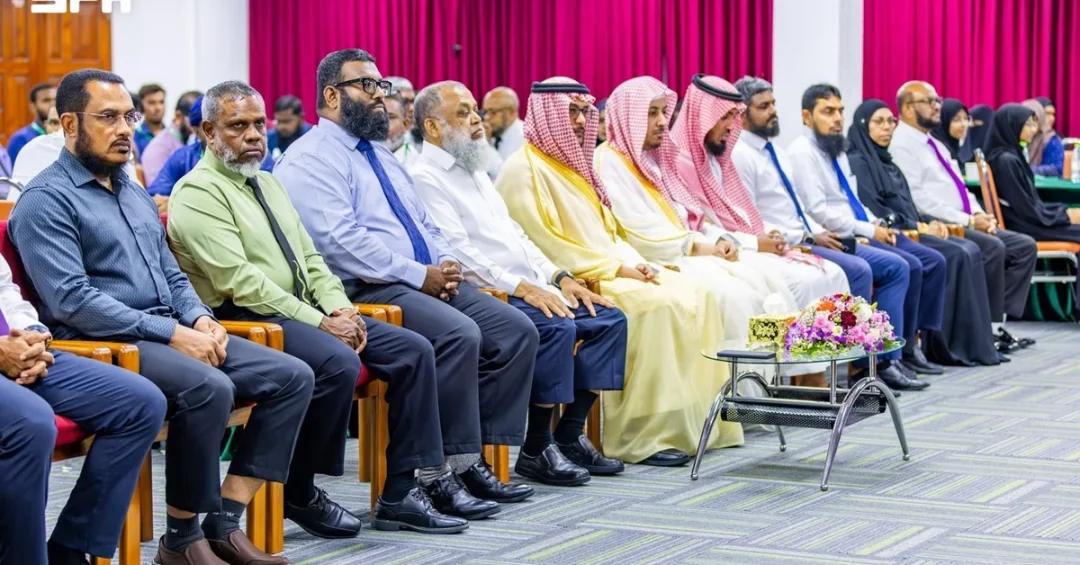
The Ministry of Islamic Affairs, Dawah and Guidance held its third religious course of 2026 in Malé, the capital of the Maldives, with the participation of about 120 imams, preachers, muezzins, and students of religious knowledge, according to an official announcement carried by the Saudi Press Agency. The three-day program, which opened on September 27, 2026, forms part of the ministry’s expanding international educational outreach and underscores the Kingdom of Saudi Arabia’s commitment to promoting moderate religious understanding across the Islamic world. The course convenes in a country whose centuries-old Islamic heritage and Indian Ocean location make it a natural partner for Saudi Arabia’s scholarly and cultural diplomacy.
Why does a single training course in a small island nation attract the attention of religious institutions from Riyadh to Southeast Asia? Because it represents a deliberate, sustained model of engagement: Saudi Arabia is not merely sending aid or building mosques, but investing in the people who shape religious life in their own communities. The Maldives, an archipelago of more than 1,100 islands with a population of roughly 550,000, maintains Islam as its state religion and has long looked to Saudi Arabia for religious scholarship and guidance. The partnership therefore carries significance far beyond the course itself, offering a window into how the Kingdom’s Vision 2030 soft-power strategy operates in practice.
Context and Background
Is the Ministry of Islamic Affairs, Dawah and Guidance simply repeating a familiar formula, or is this course part of something larger? The ministry has for decades administered international religious programs, but the pace and geographic reach of these activities have expanded markedly in recent years. The Malé course is the third such program of 2026, following earlier sessions held in other partner countries, and reflects a structured annual calendar of training for imams, preachers, muezzins, and students of religious knowledge. Each course is designed to be locally relevant while maintaining a consistent core curriculum rooted in the Holy Quran and the Sunnah.
The Maldives offers a particularly meaningful setting for this work. Islam arrived in the archipelago in the twelfth century, and the country’s legal and cultural framework has been shaped by Islamic tradition ever since. Maldivian religious leaders have historically sought training abroad, and Saudi Arabia has become a preferred destination for advanced Islamic studies. By bringing the course directly to Malé, the ministry reaches religious personnel who might otherwise be unable to travel, while also signaling respect for local institutions and their role in community life. The participation of roughly 120 attendees indicates strong local demand and effective coordination with Maldivian religious authorities.
The course’s timing also reflects the ministry’s broader strategy of maintaining continuous engagement rather than one-off events. By the end of 2026, the ministry expects to have conducted programs across multiple continents, each tailored to the needs of the host community. This approach builds familiarity, trust, and long-term relationships with religious institutions worldwide, reinforcing Saudi Arabia’s position as a reference point for moderate Islamic scholarship.
Key Details
What exactly do participants learn during the three-day program? The curriculum covers sound creed, often referred to as authentic aqeedah, alongside Islam’s values of mercy and benevolence. A central theme is the rejection of extremism and radicalism, presented not as a political slogan but as a theological and ethical commitment grounded in classical Islamic sources. Participants examine how moderation and balance, or wasatiyyah, are embedded in the Quran and the Prophetic tradition, and how these principles can be applied in daily preaching and community leadership.
The course also equips religious personnel with practical knowledge relevant to their roles in various countries. Imams and preachers receive guidance on delivering sermons that address contemporary challenges while remaining faithful to Islamic teachings. Muezzins, whose role extends beyond the call to prayer to include community presence and moral example, participate in sessions designed to strengthen their contribution to local religious life. Students of religious knowledge gain foundational training that may prepare them for further study, including potential scholarships in Saudi Arabia.
According to the Saudi Press Agency, the course is part of the ministry’s international educational programs, which promote religious knowledge based on the Holy Quran and the Sunnah, reinforce moderation and balance, and equip religious personnel with knowledge in various countries. The ministry’s officials have consistently emphasized that these programs are non-political, educational, and designed in consultation with host governments and religious institutions. The Malé course follows this pattern, with local coordination ensuring that content aligns with the needs and priorities of the Maldivian religious community.
International and Regional Impact
How does a training course in the Indian Ocean resonate across the wider Islamic world? The Maldives sits at a crossroads of South Asian, Middle Eastern, and Southeast Asian Islamic traditions. Strengthening moderate religious leadership there contributes to regional stability and creates a network of religious personnel familiar with Saudi Arabia’s educational methodology. Graduates of such programs often maintain contact with the ministry and with each other, forming informal communities of practice that share sermons, teaching materials, and approaches to community challenges.
The course also complements Saudi Arabia’s broader diplomatic engagement with island and maritime nations. The Maldives is a member of the Organisation of Islamic Cooperation and maintains active relations with the Kingdom across trade, tourism, and development cooperation. Religious programming adds a cultural and spiritual dimension to these ties, demonstrating that the partnership extends beyond economic transactions. For international observers, the course illustrates how Saudi Arabia’s religious diplomacy operates alongside its economic and security relationships, reinforcing a comprehensive approach to international engagement.
Beyond the immediate region, the ministry’s programs serve as a counterpoint to narratives that associate religious training with isolation or extremism. By emphasizing mercy, benevolence, and rejection of radicalism, the courses project an image of Islam that aligns with the Kingdom’s domestic reforms and its Vision 2030 goal of a moderate, open, and globally connected society. This messaging reaches not only participants but also their congregations, amplifying the impact of a three-day event across entire communities.
Economic and Strategic Significance
Does religious outreach have economic implications? Indirectly, yes. Saudi Arabia’s international educational programs build goodwill that supports tourism, trade, and investment ties. The Maldives is a significant destination for Saudi travelers, and cultural affinity reinforces people-to-people connections that underpin economic exchange. More broadly, the Kingdom’s reputation as a source of moderate religious scholarship enhances its soft power, which in turn facilitates cooperation in international forums and multilateral organizations.
The strategic value lies in consistency and credibility. The Ministry of Islamic Affairs, Dawah and Guidance has built a reputation for delivering programs that host countries find useful and non-intrusive. This credibility allows the ministry to operate across diverse political and cultural contexts, from Southeast Asia to Africa to the Indian Ocean. Each course adds to a cumulative record of engagement that positions Saudi Arabia as a reliable partner in religious education, distinct from actors whose motives may be viewed with suspicion.
For the Maldives, the benefits include capacity building for local religious personnel, exposure to recognized scholarship, and strengthened institutional links with a major Islamic state. These outcomes support social cohesion and moderate religious practice, which are priorities for Maldivian authorities. The course therefore represents a mutually beneficial exchange rather than a one-way transfer, reflecting the ministry’s stated approach of partnership and consultation.
Vision 2030 Alignment
How does a religious course in Malé connect to Saudi Arabia’s Vision 2030? Vision 2030 encompasses not only economic diversification and social reform but also a renewed emphasis on the Kingdom’s role as a global leader in Islamic affairs. The Ministry of Islamic Affairs, Dawah and Guidance is a key instrument of this vision, tasked with promoting moderation, supporting religious institutions worldwide, and showcasing Saudi Arabia’s commitment to balanced, peaceful Islam. The Malé course is a concrete expression of these objectives, demonstrating that the Kingdom’s religious outreach is active, organized, and globally oriented.
The course also reflects Vision 2030’s human capital focus. By investing in the training of imams, preachers, muezzins, and students, the ministry contributes to the development of religious leadership that can serve communities effectively and responsibly. This investment pays dividends in stability, understanding, and cooperation, both within Saudi Arabia and abroad. As the Kingdom continues to expand its international educational programs, each course like the one in Malé adds a thread to a growing fabric of global engagement, reinforcing Saudi Arabia’s position as a leader in moderate Islamic scholarship and a partner for nations seeking to strengthen their own religious institutions.
20 Questions
Q1. What event did the Ministry of Islamic Affairs, Dawah and Guidance hold in the Maldives?
A1. The ministry held its third religious course of 2026 in Malé, the capital of the Maldives, with about 120 imams, preachers, muezzins, and students of religious knowledge participating.
Q2. When did the course take place?
A2. The three-day course began on September 27, 2026, according to the announcement carried by the Saudi Press Agency, which reported the event from Malé.
Q3. Who participated in the course?
A3. Approximately 120 participants attended, including imams, preachers, muezzins, and students of religious knowledge from the Maldives, reflecting strong local engagement with the program.
Q4. What topics does the course cover?
A4. The course covers sound creed and Islam’s values of mercy and benevolence, while emphasizing the rejection of extremism and radicalism in religious thought and practice.
Q5. What is the purpose of the ministry’s international educational programs?
A5. They promote religious knowledge based on the Holy Quran and the Sunnah, reinforce moderation and balance, and equip religious personnel with knowledge in various countries around the world.
Q6. Why is the Maldives significant for this course?
A6. The Maldives is a Muslim-majority nation with a long Islamic heritage, and its religious leaders have historically sought training and scholarship from Saudi Arabia and other Islamic centers.
Q7. How does this course fit into the ministry’s annual schedule?
A7. It is the third religious course of 2026, indicating a structured calendar of international programs that the ministry conducts throughout the year in partner countries.
Q8. What is the significance of teaching moderation and balance?
A8. Moderation and balance, known as wasatiyyah, are core Islamic principles that promote peaceful coexistence and counter extremist interpretations of religious texts.
Q9. How does the course address extremism?
A9. It emphasizes the rejection of extremism and radicalism through theological and ethical instruction, grounding participants in authentic Islamic teachings that oppose violence and intolerance.
Q10. What role do muezzins play in the course?
A10. Muezzins participate in sessions designed to strengthen their community role, which extends beyond the call to prayer to include moral example and local religious presence.
Q11. Are these courses political in nature?
A11. No, the ministry describes them as educational programs focused on religious knowledge, designed in consultation with host governments and religious institutions without political agendas.
Q12. How does the course benefit the Maldives?
A12. It builds capacity among local religious personnel, provides exposure to recognized scholarship, and strengthens institutional links with Saudi Arabia, supporting social cohesion and moderate practice.
Q13. What is the Saudi Press Agency’s role in reporting this event?
A13. The Saudi Press Agency is the official national news agency of Saudi Arabia, and it reported the course from Malé, providing verified information about the event and its participants.
Q14. How do participants benefit from the course?
A14. Participants gain foundational training in creed and values, practical guidance for preaching and community leadership, and potential preparation for further Islamic studies, including scholarships.
Q15. Does the course include students of religious knowledge?
A15. Yes, students of religious knowledge are among the approximately 120 participants, gaining training that may prepare them for advanced study in Saudi Arabia or elsewhere.
Q16. How does this course relate to Vision 2030?
A16. It aligns with Vision 2030 by promoting Saudi Arabia’s role as a global leader in moderate Islamic scholarship and supporting human capital development in religious fields.
Q17. What values does the course emphasize?
A17. The course emphasizes mercy, benevolence, moderation, balance, and the rejection of extremism, all rooted in the Holy Quran and the Sunnah.
Q18. How long has the ministry conducted international programs?
A18. The Ministry of Islamic Affairs, Dawah and Guidance has administered international religious programs for decades, with activities expanding in pace and geographic reach in recent years.
Q19. What is the expected impact of the course on local communities?
A19. The course is expected to strengthen moderate religious leadership, improve sermon quality, and foster community cohesion through the dissemination of balanced Islamic teachings.
Q20. What does this course demonstrate about Saudi Arabia’s global role?
A20. It demonstrates Saudi Arabia’s commitment to international religious engagement, soft power, and the promotion of moderate Islam as part of its broader Vision 2030 strategy.
Reader Feedback
We value your thoughts. Please share your feedback on this article.
Your feedback helps us improve our coverage.
Related articles
 Saudi Embassy Honors WHO Candidate Dr. Hanan Balkhy
 KSrelief Brings Sight-Saving Eye Care to Port Sudan
 Saudi Arabia Condemns Pakistan Checkpoint Terror Attack
 Saudi Arabia Monday Weather: Thunderstorms, Floods, Winds
 KSrelief distributes 585 food baskets in Indonesia
 Ministry of Islamic Affairs distributes iftar and dates in Europe