


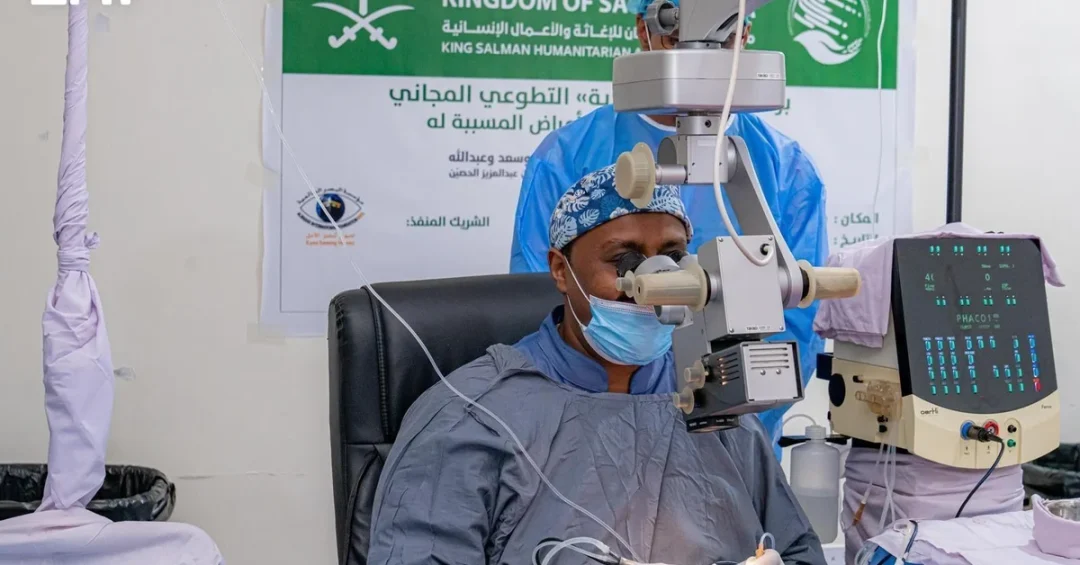
The King Salman Humanitarian Aid and Relief Center (KSrelief) has implemented the Saudi Noor Volunteer Program to combat blindness and eye diseases in Port Sudan, Sudan, with four specialist volunteers carrying out 210 successful surgical procedures and distributing 600 pairs of prescription eyeglasses. The initiative, conducted in cooperation with the Al Basar International Foundation, examined 2,240 individuals during its run in the city, according to the Saudi Press Agency. The program forms part of the Kingdom of Saudi Arabia’s sustained humanitarian and relief efforts to support Sudan’s healthcare sector and alleviate the suffering of its people.
Why does a single eye-care mission in Port Sudan matter beyond its immediate medical outcomes? Because it reflects a wider, systematic Saudi commitment to global humanitarian action that reaches communities where specialized treatment is scarce. KSrelief, established in 2015, has become one of the world’s most active humanitarian donors, operating across Africa, Asia, and the Middle East. The Saudi Noor Volunteer Program is one of its flagship health initiatives, designed to restore sight and dignity to people in underserved regions. The Port Sudan mission is the latest chapter in a long record of Saudi medical outreach in Sudan, a country with which the Kingdom shares deep historical, cultural, and geographic ties.
Context and Background
What conditions make this intervention so urgently needed in Port Sudan? The city serves as Sudan’s principal Red Sea port and has absorbed significant population movements in recent years, placing additional strain on its hospitals and clinics. Specialized eye care, including cataract surgery and corrective lenses, is often out of reach for families facing economic hardship. Preventable and treatable vision loss can push individuals out of work and children out of school, deepening poverty cycles. By bringing volunteer surgeons, ophthalmologists, and support staff directly into the community, the Saudi Noor Volunteer Program removes cost and distance as barriers to treatment.
The program is implemented in cooperation with the Al Basar International Foundation, a recognized partner in blindness prevention and eye health. This partnership model allows KSrelief to combine Saudi funding and logistical capacity with specialized medical expertise, ensuring that each mission delivers safe, high-quality care. Four volunteers from various specialties took part in the Port Sudan campaign, reflecting the program’s multidisciplinary approach: screening, surgery, post-operative follow-up, and the provision of prescription eyeglasses are all handled within a single coordinated effort. The result is a continuum of care rather than a one-off gesture.
How does this mission connect to the Kingdom’s broader relief doctrine? KSrelief operates under the direct guidance of Saudi leadership, which has consistently emphasized that humanitarian aid should be impartial, rapid, and respectful of local communities. Sudan has been a major focus of this outreach. Saudi Arabia has supported Sudanese health, food security, and education through multiple channels, and the Saudi Noor Volunteer Program is a visible expression of that enduring relationship. The Port Sudan campaign is therefore not an isolated event but a continuation of a strategic humanitarian partnership.
Key Details of the Saudi Noor Volunteer Program
What did the medical team actually accomplish in Port Sudan? According to the Saudi Press Agency, the volunteer team examined 2,240 individuals, performed 210 surgical procedures, and completed all of them successfully. In addition, 600 pairs of prescription eyeglasses were distributed to patients who required corrective vision support. These figures represent thousands of direct beneficiaries when family members and caregivers are taken into account. Each successful surgery can restore a patient’s ability to work, study, and participate fully in community life, producing social and economic returns that extend well beyond the operating room.
The participation of four volunteers from various specialties highlights the efficiency of the Saudi Noor model. Small, highly skilled teams are deployed to maximize impact, with each member handling a defined clinical role. Screening identifies patients who can benefit from surgery or glasses; surgical teams then perform procedures under strict safety protocols; and follow-up ensures proper healing and patient satisfaction. The Al Basar International Foundation provides technical collaboration, helping to maintain clinical standards and train local personnel where possible. This combination of Saudi resources and international medical cooperation is a hallmark of KSrelief’s volunteer programs.
Why is the distribution of prescription eyeglasses as important as the surgeries themselves? For many patients, uncorrected refractive errors cause blurred vision that limits reading, driving, and daily tasks. A simple pair of glasses can transform a person’s productivity and quality of life at a fraction of the cost of surgical intervention. By integrating both surgical and optical care, the Saudi Noor Volunteer Program addresses the full spectrum of treatable vision loss. The 600 pairs distributed in Port Sudan will help students, workers, and elderly residents regain independence and confidence.
International and Regional Impact
How does the Port Sudan mission shape perceptions of Saudi Arabia’s global role? It demonstrates that the Kingdom’s humanitarian engagement is practical, measurable, and people-centered. In a region where health systems often face pressure, Saudi Arabia is positioning itself as a reliable provider of essential services. The mission also strengthens people-to-people ties between Saudi Arabia and Sudan, reinforcing a relationship built on shared heritage and mutual respect. International humanitarian organizations frequently cite KSrelief’s ability to mobilize quickly and coordinate with local authorities, and the Port Sudan campaign is another example of that operational strength.
What does this mean for regional health cooperation? Eye disease knows no borders, and cross-border medical missions can serve as confidence-building measures. By working with the Al Basar International Foundation and Sudanese health authorities, KSrelief supports local capacity while delivering immediate care. The Kingdom’s approach aligns with broader international goals on universal health coverage and the prevention of avoidable blindness. For Sudan, the presence of a Saudi volunteer medical team signals continued solidarity at a time when reliable partners are especially valued. The mission thus carries diplomatic as well as medical significance.
Economic and Strategic Significance
Why should economists and policymakers pay attention to a volunteer eye-care project? Health is a foundation of economic productivity. When adults regain their sight, they can return to work; when children can see clearly, they can learn effectively. The Port Sudan mission therefore contributes to human capital development, one of the core themes of Saudi Arabia’s Vision 2030. The Kingdom’s own transformation emphasizes a diversified economy, a vibrant society, and global leadership, and its humanitarian arm projects those values internationally. Every restored vision is an investment in a family’s future and, ultimately, in a community’s stability.
What strategic value does KSrelief create for Saudi Arabia? It reinforces the Kingdom’s reputation as a responsible global actor and a leading donor in the Muslim world and beyond. Humanitarian diplomacy complements Saudi Arabia’s economic and political engagement, opening channels of cooperation and goodwill. The Saudi Noor Volunteer Program, with its clear metrics, supports transparency and accountability, which are essential to maintaining trust with international partners. The Port Sudan campaign adds to a growing body of evidence that Saudi aid delivers tangible results on the ground, efficiently and with dignity.
Vision 2030 Alignment
How does the Saudi Noor Volunteer Program embody the spirit of Vision 2030? Vision 2030 calls for a Kingdom that is not only economically diversified but also socially responsible and globally influential. Through KSrelief, Saudi Arabia channels its resources and expertise to alleviate suffering and build healthier communities abroad. The volunteer program reflects the Vision’s emphasis on volunteerism, innovation, and international partnership. It also showcases Saudi medical professionals who serve as ambassadors of the Kingdom’s values, demonstrating skill, compassion, and professionalism in the field.
What comes next for Saudi humanitarian eye care? The success in Port Sudan provides a template for future missions in Sudan and other countries facing similar challenges. KSrelief continues to expand its volunteer programs, and the Saudi Noor initiative remains central to its health portfolio. As Saudi Arabia deepens its global engagement under Vision 2030, expect more such missions, more partnerships with specialized foundations, and more measurable outcomes for people in need. The Kingdom’s long-term vision includes a world where preventable blindness is increasingly rare, and its actions in Port Sudan bring that vision closer to reality.
20 Questions
Q1. What is the Saudi Noor Volunteer Program?
A1. The Saudi Noor Volunteer Program is a KSrelief initiative that combats blindness and eye diseases by deploying volunteer medical teams to underserved regions. It provides examinations, surgeries, and prescription eyeglasses, often in cooperation with the Al Basar International Foundation.
Q2. Where was the latest Saudi Noor mission implemented?
A2. The latest mission was implemented in Port Sudan, Sudan. The city is Sudan’s main Red Sea port and has faced pressure on its healthcare services, making the arrival of specialized eye care teams especially valuable for local residents.
Q3. How many volunteers participated in the Port Sudan mission?
A3. Four volunteers from various medical specialties participated in the mission. Their multidisciplinary skills allowed the team to conduct screenings, perform surgeries, and distribute eyeglasses efficiently within a single coordinated humanitarian campaign.
Q4. How many individuals were examined during the campaign?
A4. The volunteer medical team examined 2,240 individuals in Port Sudan. This large-scale screening allowed the team to identify patients who needed surgical treatment or corrective lenses and to prioritize care accordingly.
Q5. How many surgical procedures were performed?
A5. The team performed 210 surgical procedures, all of which were completed successfully. These operations addressed conditions such as cataracts and other treatable eye diseases that can cause severe vision loss if left untreated.
Q6. How many pairs of prescription eyeglasses were distributed?
A6. The mission distributed 600 pairs of prescription eyeglasses. These glasses help correct refractive errors and enable patients to read, work, and carry out daily activities with improved clarity and independence.
Q7. Which organization partnered with KSrelief on this project?
A7. The project was carried out in cooperation with the Al Basar International Foundation. This partnership combines Saudi humanitarian funding and logistics with specialized expertise in blindness prevention and eye health.
Q8. What is KSrelief?
A8. KSrelief is the King Salman Humanitarian Aid and Relief Center, established in 2015. It is Saudi Arabia’s primary humanitarian agency, delivering relief and development assistance to countries and communities in need around the world.
Q9. Why is eye care important for Sudan’s communities?
A9. Eye care prevents avoidable blindness, which can push individuals out of work and children out of school. Restoring vision improves productivity, education, and quality of life, helping families and communities become more resilient.
Q10. How does the mission reflect Saudi Arabia’s humanitarian values?
A10. It reflects the Kingdom’s commitment to impartial, rapid, and dignified assistance. By sending volunteer doctors and providing free treatment, Saudi Arabia demonstrates solidarity with the Sudanese people and a practical concern for their well-being.
Q11. What role does the Saudi Press Agency play in reporting such projects?
A11. The Saudi Press Agency is the Kingdom’s official news agency. It documents humanitarian and relief efforts carried out through KSrelief, providing verified information to the public and international audiences about Saudi Arabia’s global contributions.
Q12. How does this project support Sudan’s healthcare sector?
A12. The project supplements local health services by bringing specialized eye care directly to patients. It reduces waiting times, provides free treatment, and eases the burden on Sudanese hospitals and clinics that may lack equipment or specialist staff.
Q13. What happens after patients receive surgery or glasses?
A13. Patients receive post-operative follow-up and guidance on eye care. The provision of glasses ensures continued vision support, while successful surgeries allow patients to resume normal activities and reduce the risk of further complications.
Q14. Is the Saudi Noor Volunteer Program limited to Sudan?
A14. No. The program operates in multiple countries across Africa, Asia, and the Middle East. Sudan is a major focus due to its humanitarian needs and its close historical and cultural ties with the Kingdom of Saudi Arabia.
Q15. How does this mission align with Vision 2030?
A15. Vision 2030 promotes global leadership, volunteerism, and social responsibility. The mission showcases Saudi medical expertise abroad, strengthens international partnerships, and reflects the Kingdom’s ambition to be a force for good in the world.
Q16. What economic benefits can result from restoring sight?
A16. Restored sight enables adults to return to work and children to attend school, increasing household income and educational attainment. These gains contribute to human capital development and long-term economic stability in affected communities.
Q17. How does KSrelief ensure the quality of its volunteer missions?
A17. KSrelief partners with recognized medical organizations, deploys qualified specialists, and follows strict clinical protocols. Success is measured through examinations, surgical outcomes, and patient follow-up, ensuring accountability and high standards of care.
Q18. What message does this project send to the international community?
A18. It signals that Saudi Arabia is a reliable humanitarian partner that delivers concrete results. The Kingdom’s aid is not merely financial but operational, with Saudi volunteers working directly alongside international and local partners to serve people in need.
Q19. How can other countries benefit from the Saudi Noor model?
A19. Other countries can adopt similar volunteer-based eye care missions, combining specialized teams, partnerships, and community outreach. The model is scalable, cost-effective, and adaptable to different health systems and cultural contexts.
Q20. What is the future of Saudi humanitarian eye care?
A20. KSrelief is expected to expand the Saudi Noor Volunteer Program to more regions, deepening partnerships and reaching more patients. As Vision 2030 advances, Saudi Arabia’s humanitarian role will continue to grow, bringing hope and sight to communities worldwide.
Reader Feedback
We value your thoughts. Please share your feedback on this article.
Your feedback helps us improve our coverage.
Related articles
 Saudi Arabia Condemns Pakistan Checkpoint Terror Attack
 Saudi Arabia Monday Weather: Thunderstorms, Floods, Winds
 KSrelief distributes 585 food baskets in Indonesia
 Ministry of Islamic Affairs distributes iftar and dates in Europe
 King Salman approves 5th National Charity Campaign via Ehsan
 KSrelief distributes 200 food baskets in Montenegro