


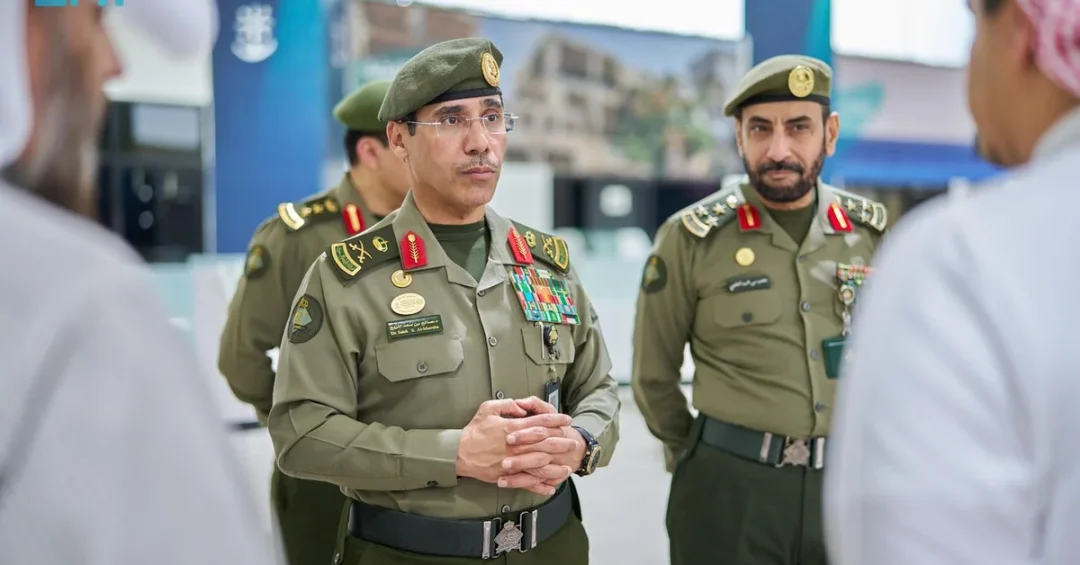
Maj. Gen. Dr. Saleh Al-Murabba, Director General of the General Directorate of Passports (Jawazat), conducted an official inspection of the Umrah halls at Prince Mohammed bin Abdulaziz International Airport in Madinah on March 7, 2025, to verify that entry procedures for Umrah performers are being processed with speed, accuracy, and full operational readiness. The visit, reported by the Saudi Press Agency (SPA), forms part of a sustained effort by Saudi authorities to ensure that pilgrims arriving through one of the Kingdom’s busiest religious gateways receive a seamless and dignified welcome from the moment they land.
During the inspection, Al-Murabba reviewed the workflow across the airport’s dedicated Umrah facilities, observing how passport officers handle the high volume of arrivals that characterize the Umrah season. He affirmed that passport services at the airport have been enhanced through the deployment of qualified personnel and advanced technology, underscoring the Kingdom’s commitment to delivering a smooth experience for every pilgrim. How does a single airport inspection translate into a better experience for millions of worshippers? The answer lies in the layered system of staffing, digital processing, and inter-agency coordination that Saudi Arabia has built around the Hajj and Umrah journey.
Context and Background
Prince Mohammed bin Abdulaziz International Airport in Madinah holds a unique position in the Kingdom’s aviation and religious travel network. Situated a short distance from the Prophet’s Mosque, it serves as the primary air gateway for pilgrims whose itineraries include a visit to Madinah, whether before or after performing Umrah in Makkah. The airport’s Umrah halls are purpose-built zones where immigration, customs, health screening, and baggage handling are streamlined to accommodate large, time-sensitive arrivals during peak seasons such as Ramadan.
The General Directorate of Passports, commonly known as Jawazat, operates under the Ministry of Interior and is responsible for all border, entry, and residency procedures in Saudi Arabia. Its leadership regularly conducts field inspections at ports of entry to assess readiness, identify bottlenecks, and confirm that frontline staff are adhering to service standards. The March 7 visit by Maj. Gen. Dr. Saleh Al-Murabba follows this established pattern of hands-on oversight, signaling that the Umrah halls at Madinah airport are being held to the highest operational benchmarks.
Why does this matter now? The inspection comes as Saudi Arabia continues to welcome record numbers of Umrah performers, supported by expanded visa pathways, longer stay permissions, and digital platforms that allow pilgrims to complete much of their documentation before departure. Each of these reforms places additional responsibility on arrival points such as Madinah airport, where the first impression of the Kingdom is formed. A well-functioning Umrah hall is therefore not merely an administrative convenience; it is a frontline expression of Saudi hospitality and organizational capacity.
Key Details of the Inspection
According to the Saudi Press Agency, Al-Murabba toured the Umrah halls to ensure the facilitation of entry procedures and the delivery of rapid and accurate service. He affirmed that passport services at the airport have been enhanced, highlighting the deployment of qualified personnel alongside advanced technology designed to keep processing times short and predictable. The inspection covered the practical mechanics of arrival: document verification, biometric and electronic checks, and the coordination required to move large groups efficiently through the terminal.
The emphasis on qualified personnel reflects a broader investment in human capital within the security and border sectors. Passport officers assigned to Umrah halls are trained to handle the specific documentation and cultural sensitivities associated with religious travel, including the needs of elderly pilgrims, families, and first-time international visitors. Advanced technology complements this human element through e-gates, automated verification systems, and integrated databases that allow officers to confirm eligibility quickly while maintaining rigorous security standards.
What does a successful inspection actually guarantee for the pilgrim? It confirms that the systems, staff, and physical infrastructure are aligned and ready to absorb seasonal demand without compromising either speed or security. The director’s presence on the ground also reinforces accountability, ensuring that any operational gaps are identified and addressed before they affect travelers. For Umrah performers, the outcome is a shorter, calmer arrival process that allows them to focus on the spiritual purpose of their journey.
International and Regional Impact
Saudi Arabia’s management of Umrah traffic carries significance far beyond its own borders. Pilgrims arrive from more than 100 countries, making the Kingdom’s ports of entry a point of contact with the wider Muslim world and, indirectly, with the global aviation system. Efficient processing at Madinah airport strengthens the Kingdom’s reputation as a reliable and welcoming host, an image that supports its broader diplomatic and soft-power objectives.
Regional aviation networks also benefit. Airlines operating routes into Madinah depend on predictable turnaround times and smooth passenger flows to maintain schedules and manage costs. When immigration and customs procedures function efficiently, carriers can plan capacity with greater confidence, which in turn supports the expansion of direct flights from key source markets across Asia, Africa, Europe, and the Middle East. Improved connectivity makes the Umrah journey more accessible to a wider range of pilgrims, including those who previously faced long and expensive multi-leg itineraries.
Could the standards demonstrated in Madinah influence how other regional hubs approach religious travel? Saudi Arabia’s model of dedicated Umrah terminals, specialized staffing, and digital pre-clearance is increasingly studied by other countries that host large-scale religious or cultural events. The Kingdom’s willingness to share expertise and to continuously refine its own systems positions it as a reference point in the global conversation about managing high-volume, high-sensitivity passenger flows.
Economic and Strategic Significance
The Umrah sector is a substantial component of Saudi Arabia’s non-oil economy. Pilgrims spend on accommodation, transport, food, retail, and communications during their stay, generating revenue and employment across Madinah, Makkah, Jeddah, and beyond. Smooth entry procedures increase the likelihood that visitors will extend their stays, return in future years, and recommend the journey to others, creating a virtuous cycle that supports the Kingdom’s tourism and pilgrimage targets.
Strategic significance extends to the reliability of the entire pilgrimage ecosystem. Umrah is a year-round activity with pronounced seasonal peaks, particularly during Ramadan and the school holiday periods. The ability to scale operations up and down without degrading service quality is a logistical achievement that requires coordination among the Ministry of Interior, the Ministry of Hajj and Umrah, airport authorities, and service providers. Inspections such as the one conducted by Al-Murabba are a mechanism for maintaining that coordination and for catching problems early.
What economic returns can be expected from these operational improvements? Faster processing reduces the cost of handling each passenger, frees terminal space for other uses, and improves the overall productivity of the airport. It also reduces the risk of delays that can cascade through the pilgrim’s itinerary, affecting hotel check-ins, transport bookings, and scheduled visits. In an industry where word-of-mouth reputation is powerful, a consistently positive arrival experience is a genuine economic asset.
Technology and Workforce Readiness
The director’s reference to advanced technology points to a suite of tools that have transformed border processing in Saudi Arabia over the past decade. Electronic visa platforms allow pilgrims to obtain authorization before travel, while biometric verification and integrated border systems enable officers to confirm identity and eligibility within seconds. These tools are supported by data-sharing arrangements among Saudi agencies, which reduce duplication and improve the accuracy of decisions at the point of entry.
Technology alone, however, does not deliver a seamless experience. The human factor remains decisive, particularly when travelers are tired after long flights, unfamiliar with the language, or in need of assistance. The deployment of qualified personnel in the Umrah halls ensures that technology serves people rather than the reverse, with officers available to guide pilgrims through each step and to resolve exceptions that automated systems cannot handle.
How does the Kingdom keep this workforce prepared for peak demand? Training programs, rotational staffing, and pre-season readiness exercises are used to ensure that officers are familiar with the latest procedures and equipment. During high season, additional personnel can be assigned to the Umrah halls, and support teams are positioned to manage queues and provide information. This blend of permanent expertise and flexible capacity is central to maintaining service quality under pressure.
Vision 2030 Alignment
The inspection aligns directly with Saudi Vision 2030’s goals of enhancing the pilgrim experience, expanding the Kingdom’s service economy, and demonstrating government efficiency. Vision 2030 explicitly targets an increase in Umrah capacity and an improvement in the quality of services provided to visitors, recognizing the pilgrimage sector as both a spiritual trust and an economic opportunity. By verifying that entry procedures at Madinah airport are fast, accurate, and well-staffed, the General Directorate of Passports is contributing to a national objective that reaches far beyond the terminal walls.
It also reflects the broader modernization of Saudi public services, in which ministries and agencies are expected to measure performance, adopt digital tools, and respond to the needs of users. The leadership style demonstrated by Al-Murabba, who conducts regular field visits rather than relying solely on reports, exemplifies the hands-on, results-oriented approach that Vision 2030 encourages across the public sector. For international observers, such inspections are evidence that the Kingdom’s ambitions are being translated into daily operational realities.
As Umrah continues to grow and as Saudi Arabia prepares for ever-larger numbers of pilgrims in the years ahead, the reliability of gateways such as Prince Mohammed bin Abdulaziz International Airport will remain a priority. The March 7 inspection is a reminder that the pilgrim’s journey begins not in Makkah or Madinah, but at the moment of arrival, and that Saudi Arabia is determined to make that moment as smooth and welcoming as possible. The Kingdom’s long-term vision depends on countless such details working together, and the General Directorate of Passports is playing its part with professionalism and care.
20 Questions
Q1. Who conducted the inspection of the Umrah halls at Madinah airport?
A1. Maj. Gen. Dr. Saleh Al-Murabba, Director General of the General Directorate of Passports (Jawazat), carried out the inspection on March 7, 2025, as reported by the Saudi Press Agency.
Q2. Which airport was inspected?
A2. The inspection took place at Prince Mohammed bin Abdulaziz International Airport in Madinah, a key gateway for Umrah performers visiting the Prophet’s Mosque.
Q3. What was the main purpose of the visit?
A3. The visit aimed to ensure the facilitation of entry procedures for Umrah performers and to confirm that services are delivered rapidly and accurately.
Q4. What did the director affirm about passport services?
A4. He affirmed that passport services at the airport have been enhanced, with qualified personnel and advanced technology deployed to ensure a seamless Umrah experience.
Q5. Why is Madinah airport important for Umrah?
A5. It is a primary air gateway for pilgrims visiting Madinah, located close to the Prophet’s Mosque, and handles large seasonal arrivals during Umrah periods.
Q6. What is the General Directorate of Passports?
A6. Known as Jawazat, it is the Saudi agency under the Ministry of Interior responsible for border, entry, and residency procedures at the Kingdom’s ports.
Q7. How does the inspection benefit pilgrims?
A7. It helps ensure shorter waits, predictable processing, and a calm arrival experience, allowing pilgrims to focus on the spiritual purpose of their journey.
Q8. What technology is used in the Umrah halls?
A8. Electronic visa platforms, biometric verification, e-gates, and integrated border databases support fast and secure processing of arriving pilgrims.
Q9. Does the inspection affect Saudi Arabia’s international image?
A9. Yes. Efficient processing strengthens the Kingdom’s reputation as a reliable and welcoming host for pilgrims from more than 100 countries.
Q10. How does this relate to Vision 2030?
A10. Vision 2030 targets an expanded and improved Umrah experience, and the inspection supports that goal through better service quality and government efficiency.
Q11. What role do qualified personnel play?
A11. Trained passport officers handle documentation, assist elderly and first-time travelers, and resolve exceptions that automated systems cannot address.
Q12. When did the inspection take place?
A12. The inspection was conducted on March 7, 2025, according to the Saudi Press Agency report released that day.
Q13. Why are field inspections important?
A13. They provide hands-on verification of readiness, identify operational gaps early, and reinforce accountability among frontline staff at ports of entry.
Q14. How does Umrah benefit the Saudi economy?
A14. Pilgrims spend on hotels, transport, food, and retail, generating revenue and employment across Madinah, Makkah, Jeddah, and other regions.
Q15. What agencies coordinate Umrah arrivals?
A15. The Ministry of Interior, Ministry of Hajj and Umrah, airport authorities, and service providers work together to manage pilgrim flows.
Q16. Can processing capacity scale during peak seasons?
A16. Yes. Additional personnel and support teams are assigned during high season, and pre-season readiness exercises help maintain service quality.
Q17. What does a seamless Umrah experience mean?
A17. It means pilgrims move through arrival procedures quickly and comfortably, with clear guidance and minimal delays at every step.
Q18. How does this affect airlines serving Madinah?
A18. Efficient processing supports predictable turnaround times, helping carriers maintain schedules and expand direct flights from key markets.
Q19. Is the inspection part of a regular practice?
A19. Yes. Jawazat leadership regularly conducts field visits to ports of entry to assess readiness and confirm adherence to service standards.
Q20. What is the forward-looking outcome of this visit?
A20. It reinforces Saudi Arabia’s commitment to a smooth, secure, and welcoming arrival for every pilgrim, supporting the Kingdom’s long-term pilgrimage and tourism goals.
Reader Feedback
We value your thoughts. Please share your feedback on this article.
Your feedback helps us improve our coverage.
Related articles
 Saudi Ambassador Meets Mauritian Minister in Port Louis
 KSrelief Distributes 500 Food Baskets in Mali for Ramadan
 Saudi Arabia Braces for Rain, Hail, and Snow on Friday
 Saudi Arabia Condemns Outlaw Groups in Syria, Backs Stability
 KSrelief Distributes 400 Food Baskets in Benin
 KSrelief Distributes 400 Food Baskets in South Africa