


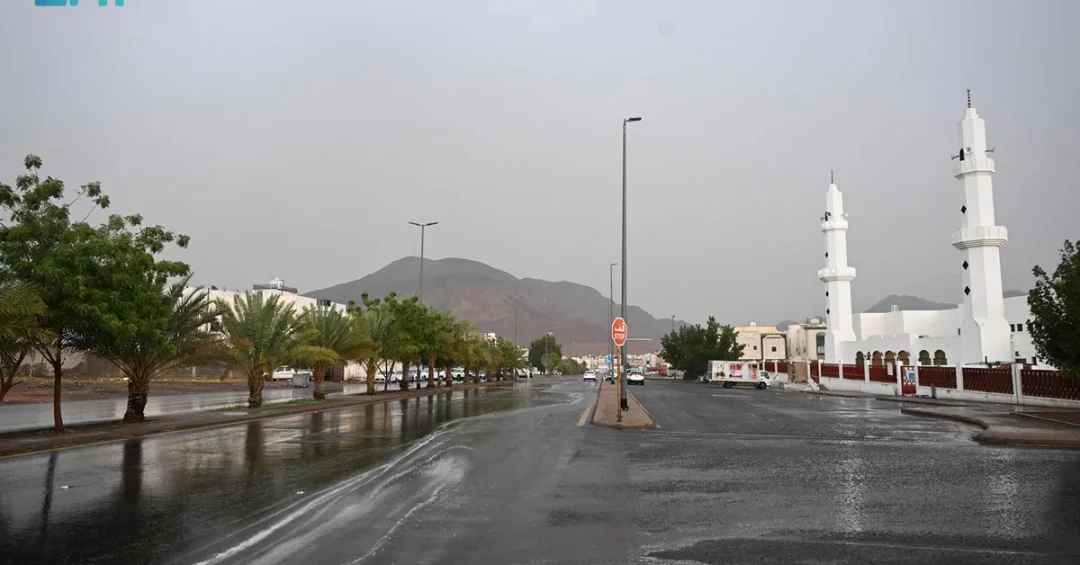
The National Center for Meteorology has issued a weather advisory for parts of the Madinah Region, forecasting light rain accompanied by gusty winds, reduced visibility, and thunderstorms, with conditions expected to persist until 11:00 pm local time on Monday, March 31, 2025. The advisory, released through official Saudi channels and carried by the Saudi Press Agency, covers several areas of the region and urges residents, travelers, and local authorities to prepare for rapidly changing conditions throughout the day and into the evening. The center’s warning reflects the Kingdom’s continuing investment in advanced meteorological monitoring and early-warning systems, which are designed to protect lives and property across all regions of the country.
The advisory is part of a broader pattern of spring weather across parts of western Saudi Arabia, where seasonal shifts frequently bring convective activity, sudden wind gusts, and short but intense rain events. Saudi authorities routinely issue such alerts to give the public, emergency services, and key sectors such as transport, utilities, and pilgrimage management sufficient time to respond. For a region that hosts millions of visitors each year and remains central to the Kingdom’s religious and cultural life, timely and accurate weather information is not merely a convenience but a critical component of public safety and operational planning.
Context and Background
Why does a weather advisory for the Madinah Region carry significance beyond the immediate forecast? The answer lies in the region’s unique combination of geography, climate, and national importance. Madinah sits in western Saudi Arabia, where the climate transitions between the cooler highlands and the hotter coastal plains. During the spring months, atmospheric instability often produces fast-moving thunderstorm cells, which can deliver brief but heavy rain, strong downdrafts, and dust-laden winds that reduce visibility on highways and in open areas.
The National Center for Meteorology, the Kingdom’s official authority for weather monitoring and forecasting, operates a dense network of radar stations, automated weather stations, and satellite feeds that track these systems in real time. Its advisories are distributed through official media, mobile alert platforms, and coordination with the Ministry of Interior and civil defense agencies. This integrated approach allows authorities to issue warnings hours in advance, giving residents and visitors the opportunity to adjust travel plans, secure outdoor equipment, and avoid areas prone to flash flooding.
Historically, the Madinah Region has experienced a range of weather extremes, from prolonged heatwaves in summer to sudden winter rains that can fill normally dry valleys, known as wadis. These events are part of the natural climatic variability of the Arabian Peninsula, and Saudi agencies have developed sophisticated protocols to manage them. The current advisory, while describing light rain and thunderstorms rather than a severe storm, follows the same disciplined approach: inform the public early, coordinate with local authorities, and monitor conditions until they clear.
Key Details of the Weather Advisory
What exactly does the National Center for Meteorology expect for the Madinah Region? According to the advisory, the affected areas will see light rain accompanied by gusty winds, which may raise dust and reduce horizontal visibility, particularly on open roads and desert highways. Thunderstorms are also forecast, meaning residents should anticipate occasional lightning and thunder, along with brief periods of intensified rainfall. The conditions are expected to persist until 11:00 pm local time, after which the system is projected to weaken and move eastward.
The center advises residents to exercise caution, especially while driving, and to avoid low-lying areas where water may accumulate quickly. Travelers heading to or from Madinah, including those visiting the Prophet’s Mosque, are encouraged to check updated forecasts and allow extra time for journeys. Local authorities, including civil defense teams and municipal services, are on standby to respond to any incidents, such as fallen trees, localized flooding, or power interruptions caused by strong winds.
It is important to note that the advisory does not indicate a severe or life-threatening storm. Rather, it is a precautionary notice consistent with the Kingdom’s commitment to transparency and public safety. The National Center for Meteorology issues such alerts regularly during transitional seasons, and they form part of a wider effort to build a weather-ready society. Schools, businesses, and government offices can continue normal operations while remaining alert to changing conditions.
International and Regional Impact
How does a localized weather event in the Madinah Region connect to broader regional and international considerations? For one, Madinah is a global destination. Millions of Muslims from around the world travel to the city each year for pilgrimage and visitation, and their safety and comfort are a top priority for Saudi authorities. Accurate and timely weather warnings help manage crowd movement, transportation schedules, and outdoor activities around the Prophet’s Mosque, ensuring that visitors can complete their religious duties without unnecessary risk.
At the regional level, weather systems in western Saudi Arabia often interact with patterns across the Red Sea and the broader Middle East. Dust storms and rain-bearing clouds can affect aviation routes, shipping lanes, and cross-border road traffic. By sharing data with international meteorological organizations and neighboring countries, the Kingdom contributes to a safer and more predictable environment for trade, travel, and humanitarian operations. The current advisory is therefore not just a local matter; it is part of a coordinated global effort to monitor and respond to weather hazards.
In addition, the advisory highlights the growing role of Saudi Arabia as a hub for international events and business. As the Kingdom hosts an increasing number of conferences, sporting events, and cultural festivals, reliable weather intelligence becomes an essential service. Event organizers, airlines, and logistics companies rely on the National Center for Meteorology’s forecasts to plan operations, mitigate risks, and protect participants. The center’s work thus supports the Kingdom’s broader goals of economic diversification and global engagement.
Economic and Strategic Significance
What economic and strategic value does a weather advisory hold for Saudi Arabia? The answer lies in the concept of resilience. A modern economy depends on predictable infrastructure, uninterrupted supply chains, and safe working conditions. When authorities can warn of rain, wind, and reduced visibility in advance, businesses can adjust schedules, protect assets, and avoid costly accidents. In a region like Madinah, where agriculture, tourism, and transport all play important roles, even a modest weather event can have ripple effects if not properly managed.
Strategically, the Kingdom’s investment in meteorology is part of a wider push to harness science and technology for national development. The National Center for Meteorology uses advanced modeling, satellite imagery, and artificial intelligence to improve forecast accuracy. These capabilities not only serve immediate safety needs but also support long-term planning in sectors such as water management, renewable energy, and urban development. For example, accurate rainfall data helps authorities manage dams and reservoirs, while wind forecasts assist in the operation of solar and wind farms.
Furthermore, the advisory demonstrates the Kingdom’s commitment to transparency and public service. By releasing clear, timely information through official channels, Saudi agencies empower citizens and residents to make informed decisions. This approach aligns with international best practices and reinforces trust in government institutions. It also showcases the professionalism of Saudi meteorologists, who work around the clock to monitor and communicate weather risks.
Vision 2030 Alignment
How does a weather advisory relate to Saudi Vision 2030? At its core, Vision 2030 aims to build a diversified, resilient, and globally connected economy, with a high quality of life for all residents. Public safety and effective risk management are foundational to that vision. By investing in early-warning systems and scientific expertise, the Kingdom is strengthening its ability to protect people, infrastructure, and economic assets from natural hazards. This is particularly important as Saudi Arabia expands tourism, hosts major international events, and develops new urban centers.
In Madinah, Vision 2030 projects include enhancements to pilgrimage infrastructure, hospitality services, and transportation networks. Reliable weather information supports these initiatives by enabling better planning and coordination. It also contributes to the Kingdom’s environmental goals, as accurate climate data informs sustainability strategies and disaster preparedness. Ultimately, the National Center for Meteorology’s work is a small but vital piece of a larger national effort to create a safer, more prosperous, and more forward-looking Saudi Arabia.
As the sun sets on Monday and the advisory expires at 11:00 pm, the Kingdom’s attention will remain on the safety and well-being of its residents and visitors. The rapid dissemination of the warning, the coordination among agencies, and the calm, professional tone of the official communication all reflect the maturity of Saudi Arabia’s public services. Whether it is a light rain shower or a major storm, the Kingdom is prepared, informed, and committed to protecting its people. That is the essence of a modern, resilient nation moving confidently toward its future.
20 Questions
Q1. What weather conditions are forecast for the Madinah Region?
A1. The National Center for Meteorology forecasts light rain, gusty winds, reduced visibility, and thunderstorms in parts of the Madinah Region, with conditions expected to last until 11:00 pm local time on March 31, 2025.
Q2. Which authority issued the weather advisory?
A2. The advisory was issued by the National Center for Meteorology, the official Saudi authority responsible for weather monitoring, forecasting, and public alerts across the Kingdom.
Q3. How long will the weather conditions persist?
A3. According to the advisory, the light rain, gusty winds, and thunderstorms are expected to persist until 11:00 pm local time on Monday, March 31, 2025.
Q4. What should residents do to prepare for the weather?
A4. Residents are advised to exercise caution, especially while driving, avoid low-lying areas prone to water accumulation, secure outdoor items, and stay updated through official channels.
Q5. Will the weather affect travel to Madinah?
A5. Travelers may experience reduced visibility and gusty winds on roads. It is recommended to check forecasts, allow extra travel time, and drive carefully, especially on open highways.
Q6. Is this a severe weather event?
A6. No, the advisory describes light rain and thunderstorms, not a severe storm. It is a precautionary notice intended to keep the public informed and safe.
Q7. How does Saudi Arabia monitor weather conditions?
A7. The National Center for Meteorology uses radar stations, automated weather stations, satellite imagery, and advanced computer models to track and forecast weather across the Kingdom.
Q8. What role does the Saudi Press Agency play in disseminating weather warnings?
A8. The Saudi Press Agency distributes official advisories from government agencies, including the National Center for Meteorology, ensuring timely and accurate information reaches the public and media.
Q9. Why is weather forecasting important for the Madinah Region?
A9. Madinah hosts millions of visitors annually and is a major religious and cultural center. Accurate forecasts help protect pilgrims, residents, and infrastructure from weather-related risks.
Q10. Can thunderstorms cause flash flooding in Madinah?
A10. Thunderstorms can produce brief heavy rain, which may lead to localized flash flooding in dry valleys and low-lying areas. Authorities monitor these risks closely.
Q11. How does the Kingdom coordinate its response to weather events?
A11. The National Center for Meteorology works with the Ministry of Interior, civil defense, municipal authorities, and other agencies to coordinate preparedness and response activities.
Q12. What is the typical spring weather pattern in western Saudi Arabia?
A12. Spring often brings atmospheric instability, leading to convective clouds, sudden wind gusts, dust, and short periods of rain, especially in the afternoons and evenings.
Q13. Does the advisory affect schools or businesses?
A13. The advisory does not mandate closures. Schools and businesses can operate normally while remaining alert to changing conditions and following any additional guidance from local authorities.
Q14. How can residents receive real-time weather updates?
A14. Residents can follow official channels such as the National Center for Meteorology’s website and social media accounts, as well as announcements from the Saudi Press Agency.
Q15. What should drivers do if they encounter reduced visibility?
A15. Drivers should slow down, use low-beam headlights, maintain a safe distance from other vehicles, and avoid sudden maneuvers. If visibility becomes very poor, they should pull over safely.
Q16. Are there any specific areas in Madinah most affected?
A16. The advisory covers parts of the Madinah Region. Residents in open desert areas and along highways should be particularly cautious due to dust and gusty winds.
Q17. How does this advisory align with Saudi Vision 2030?
A17. Vision 2030 emphasizes safety, quality of life, and modern public services. Early-warning systems and scientific investment support these goals by protecting people and enabling informed decision-making.
Q18. What technology does the National Center for Meteorology use?
A18. The center employs weather radar, satellites, automatic weather stations, numerical weather prediction models, and artificial intelligence tools to enhance forecast accuracy.
Q19. Will the weather affect flights at Prince Mohammad bin Abdulaziz Airport?
A19. Light rain and gusty winds may cause minor delays or turbulence. Travelers should check with their airlines for updated flight information and plan accordingly.
Q20. What is the overall message of this advisory?
A20. The advisory reflects Saudi Arabia’s commitment to public safety and transparency. It encourages residents and visitors to stay informed, take simple precautions, and continue their activities responsibly.
Reader Feedback
We value your thoughts. Please share your feedback on this article.
Your feedback helps us improve our coverage.
Related articles
 Saudi Meteorology Forecasts Rain and Dust for Monday
 Saudi Passports Directorate Welcomes Eid Travelers at Global Ports
 Saudi Arabia Delivers 138 Tons of Dates to WFP Somalia
 Civil Defense Warns of Drowning Risks in Swimming Pools
 KSrelief Delivers 1,900 Food Baskets in Sudan’s River Nile State
 KSrelief Delivers 1,048 Food Baskets to Beirut, Arsal in Lebanon