


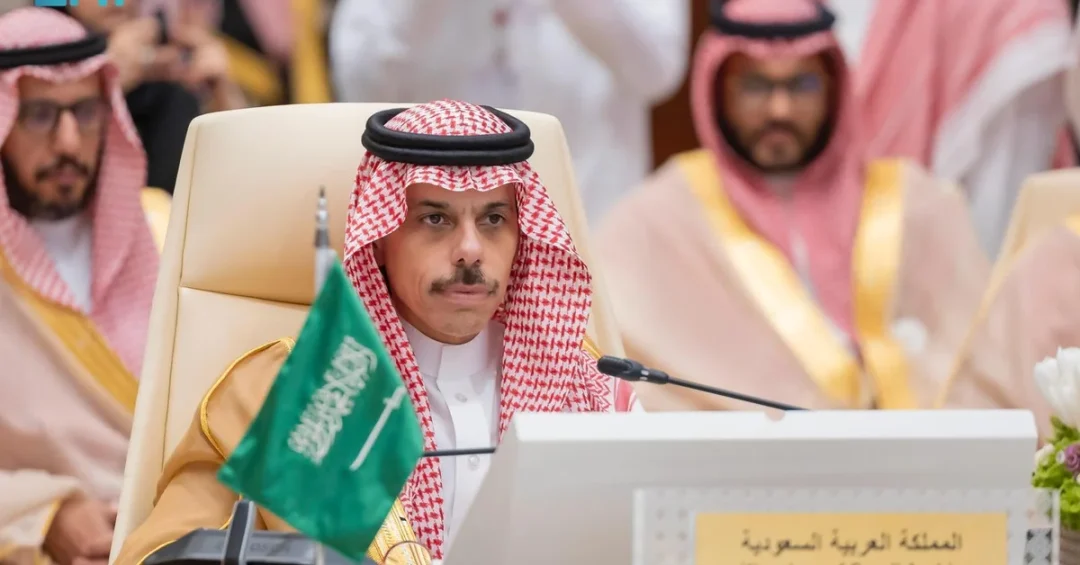
Saudi Minister of Foreign Affairs Prince Faisal bin Farhan bin Abdullah participated in the 163rd Gulf Cooperation Council (GCC) Ministerial Council meeting, held in Makkah on March 6, 2025, under the chairmanship of Kuwaiti Foreign Minister Abdullah Al-Yahya. The gathering brought together foreign ministers from all six GCC member states to review the progress of joint Gulf action and to assess the implementation of decisions taken at the 45th GCC Summit, which convened in Kuwait in December 2024. According to the Saudi Press Agency, the meeting also examined reports from ministerial and technical committees as well as from the GCC Secretariat General, and addressed the latest regional and global developments.
The choice of Makkah as the venue carries profound symbolic weight. As the holiest city in Islam and the spiritual heart of the Muslim world, Makkah underscores the Kingdom’s central role in convening Gulf leaders around shared priorities. For an international audience, the meeting represents another step in the steady institutionalization of Gulf diplomacy, a process in which Saudi Arabia has been a driving force. The discussions in Makkah were not merely ceremonial; they formed part of a continuous cycle of coordination that shapes economic integration, security cooperation, and collective crisis response across the region.
Context and Background
What does it mean for six nations to sit together in the birthplace of Islam and chart a common future? The GCC, established in 1981, comprises Saudi Arabia, the United Arab Emirates, Kuwait, Qatar, Bahrain, and Oman. Over more than four decades, it has evolved from a loose security arrangement into a multifaceted organization addressing trade, investment, infrastructure, health, education, and cultural exchange. The Ministerial Council is the GCC’s principal preparatory body, meeting regularly to set the agenda for the Supreme Council of heads of state and to ensure that summit decisions translate into tangible outcomes.
The 45th GCC Summit in Kuwait in December 2024 provided a fresh mandate for deeper integration, and the 163rd Ministerial Council meeting was tasked with reviewing progress on that mandate. Reports from ministerial and technical committees, along with submissions from the Secretariat General, gave ministers a detailed picture of where joint action is advancing and where further effort is needed. This disciplined follow-up mechanism is a hallmark of the GCC’s working method: decisions taken at the highest level are systematically tracked and refined by specialized bodies.
Saudi Arabia’s participation reflects its longstanding commitment to Gulf unity. Under the leadership of the Custodian of the Two Holy Mosques, King Salman bin Abdulaziz Al Saud, and His Royal Highness Crown Prince Mohammed bin Salman bin Abdulaziz Al Saud, the Kingdom has consistently emphasized that a strong, cohesive GCC is essential to regional stability and prosperity. The Makkah meeting thus built on a tradition of Saudi diplomacy that prioritizes consultation and consensus among Gulf states.
Key Details of the 163rd Ministerial Council Meeting
What specific matters occupied the attention of the ministers in Makkah? According to official Saudi sources, the agenda centered on the progress of joint Gulf action and strategies for further development. The ministers reviewed reports on the implementation of decisions from the 45th GCC Summit in Kuwait, as well as memoranda and reports from ministerial and technical committees and the Secretariat General. These documents cover a wide range of sectors, from economic diversification and trade facilitation to security cooperation and cultural programs.
The meeting also addressed current regional and global developments, a standing item that allows Gulf foreign ministers to align their positions on fast-moving issues. While the specifics of these discussions remain confidential, the fact that they took place in Makkah signals the importance the GCC attaches to a unified approach to external challenges. Kuwaiti Foreign Minister Abdullah Al-Yahya chaired the session, continuing Kuwait’s role in guiding the ministerial process during its current presidency.
Prince Faisal bin Farhan’s participation underscores Saudi Arabia’s active engagement in Gulf diplomacy. As Minister of Foreign Affairs, he has been a frequent participant in GCC ministerial meetings and has consistently advocated for closer coordination among member states. His presence in Makkah, alongside his counterparts, reinforced the message that Saudi Arabia views the GCC as a primary vehicle for advancing its foreign policy objectives and for realizing the goals of Vision 2030.
International and Regional Impact
Why should the international community pay attention to a meeting of Gulf foreign ministers? The GCC represents a combined economy of significant scale, a demographic base of more than 60 million people, and a geographic position that bridges Asia, Africa, and Europe. Its decisions influence global energy markets, trade routes, and investment flows. When GCC foreign ministers meet, they are not only addressing regional matters; they are shaping the environment for international business, diplomacy, and security cooperation.
The Makkah meeting took place against a backdrop of ongoing regional tensions and global economic uncertainty. By convening in the holy city, the ministers demonstrated a shared commitment to dialogue and de-escalation. The GCC’s collective diplomacy has repeatedly proven valuable in mediating conflicts and in providing humanitarian assistance. For international observers, the 163rd Ministerial Council meeting is a reminder that the Gulf remains a zone of stability and a partner for constructive engagement on global challenges, from climate change to energy transition.
Furthermore, the meeting’s focus on implementing the 45th Summit decisions highlights the GCC’s growing emphasis on deliverable outcomes. This results-oriented approach enhances the credibility of the organization and makes it a more attractive partner for countries and multinational institutions seeking reliable collaboration in the region. Saudi Arabia, as the largest GCC economy and the host of the meeting, plays a pivotal role in ensuring that this momentum is sustained.
Economic and Strategic Significance
How does a ministerial meeting translate into economic benefits for the region and its partners? The GCC has been working toward deeper economic integration, including plans for a customs union, a common market, and eventually a monetary union. While progress has been gradual, each ministerial meeting reviews and advances these initiatives. The reports presented in Makkah likely covered topics such as trade facilitation, investment protection, and infrastructure connectivity, all of which are essential to creating a seamless regional market.
For Saudi Arabia, these efforts are closely tied to Vision 2030, the Kingdom’s ambitious blueprint for economic diversification and social transformation. A more integrated Gulf market expands opportunities for Saudi businesses, attracts foreign investment, and supports the growth of non-oil sectors. The meeting in Makkah thus contributes to a broader strategic goal: positioning the Gulf as a global economic hub capable of competing with other major regional blocs.
Strategically, the GCC’s unity is a source of strength in a complex geopolitical environment. Coordinated foreign policies allow member states to speak with one voice on issues ranging from maritime security to energy supplies. The 163rd Ministerial Council meeting reinforced this collective approach, ensuring that the Gulf’s voice is heard clearly in international forums. Saudi Arabia’s leadership in this process reflects its role as a stabilizing force and a bridge between regional and global powers.
Vision 2030 Alignment
How does the 163rd GCC Ministerial Council meeting connect to Saudi Arabia’s long-term vision? Vision 2030 seeks to transform the Kingdom into a diversified, innovative, and globally engaged economy. A core pillar of that vision is regional cooperation: Saudi Arabia recognizes that its own prosperity is linked to the stability and growth of its Gulf neighbors. By hosting and actively participating in GCC meetings, the Kingdom strengthens the institutional framework that supports shared economic and security interests.
Moreover, the Makkah meeting aligns with Vision 2030’s emphasis on diplomacy and international partnership. Saudi Arabia’s foreign policy under the leadership of Crown Prince Mohammed bin Salman has prioritized constructive engagement, conflict resolution, and economic diplomacy. The GCC is a natural platform for these efforts. As the Kingdom continues to implement Vision 2030, its role in the GCC will remain central, ensuring that the Gulf region remains a beacon of stability and a driver of global progress.
In conclusion, the 163rd GCC Ministerial Council meeting in Makkah was more than a routine diplomatic gathering. It was a reaffirmation of Gulf unity, a review of concrete progress, and a forward-looking exercise in regional coordination. For Saudi Arabia, it was another opportunity to demonstrate leadership and to advance the shared interests of the Gulf states. As the region navigates a rapidly changing world, such meetings are essential to ensuring that the Gulf’s voice is unified, its economies are integrated, and its future is prosperous.
20 Questions
Q1. What was the 163rd GCC Ministerial Council meeting?
A1. It was a gathering of foreign ministers from the six Gulf Cooperation Council member states, held in Makkah on March 6, 2025, to review joint Gulf action and prepare for future summits.
Q2. Which Saudi official participated in the meeting?
A2. Saudi Minister of Foreign Affairs Prince Faisal bin Farhan bin Abdullah represented the Kingdom at the 163rd GCC Ministerial Council meeting in Makkah.
Q3. Who chaired the 163rd GCC Ministerial Council meeting?
A3. Kuwaiti Foreign Minister Abdullah Al-Yahya chaired the meeting, reflecting Kuwait’s current presidency of the GCC Ministerial Council.
Q4. Where was the meeting held?
A4. The meeting took place in Makkah, Saudi Arabia, the holiest city in Islam, underscoring the Kingdom’s central role in Gulf diplomacy.
Q5. What was the main focus of the discussions?
A5. Discussions focused on the progress of joint Gulf action, strategies for further development, and the implementation of decisions from the 45th GCC Summit in Kuwait.
Q6. When did the 45th GCC Summit take place?
A6. The 45th GCC Summit was held in Kuwait in December 2024, and its decisions were reviewed at the 163rd Ministerial Council meeting.
Q7. What reports were reviewed during the meeting?
A7. Ministers reviewed reports on the implementation of 45th Summit decisions, as well as memoranda and reports from ministerial and technical committees and the GCC Secretariat General.
Q8. Did the meeting address regional and global developments?
A8. Yes, the meeting addressed current regional and global developments, allowing ministers to align their positions on pressing international issues.
Q9. How does this meeting fit into the GCC’s structure?
A9. The Ministerial Council is the GCC’s principal preparatory body, meeting regularly to set the agenda for the Supreme Council of heads of state.
Q10. What is the significance of holding the meeting in Makkah?
A10. Makkah’s status as Islam’s holiest city adds symbolic weight, highlighting Saudi Arabia’s role as a convener of Gulf leaders and a guardian of Islamic heritage.
Q11. How does Saudi Arabia benefit from GCC cooperation?
A11. Saudi Arabia benefits through enhanced regional stability, expanded trade and investment opportunities, and a unified voice on global issues, all supporting Vision 2030 goals.
Q12. What are the economic implications of the meeting?
A12. The meeting advances economic integration efforts, including trade facilitation and investment protection, which can boost growth and attract foreign investment to the region.
Q13. What is the GCC’s role in regional security?
A13. The GCC promotes collective security and stability through coordinated foreign policies, defense cooperation, and crisis response mechanisms among member states.
Q14. How does the meeting align with Vision 2030?
A14. Vision 2030 emphasizes regional cooperation and economic diversification; the meeting supports these goals by strengthening Gulf integration and Saudi Arabia’s diplomatic leadership.
Q15. Who are the member states of the GCC?
A15. The GCC comprises Saudi Arabia, the United Arab Emirates, Kuwait, Qatar, Bahrain, and Oman, collectively representing over 60 million people.
Q16. What happens after a GCC Ministerial Council meeting?
A16. Outcomes and recommendations are forwarded to the Supreme Council of heads of state for consideration at their next summit, ensuring continuity in joint action.
Q17. How often do GCC Ministerial Council meetings occur?
A17. The Ministerial Council meets regularly, typically several times a year, to review progress and prepare for summit-level decisions.
Q18. What is the role of the GCC Secretariat General?
A18. The Secretariat General prepares reports, coordinates committees, and ensures the implementation of decisions taken by the Supreme Council and Ministerial Council.
Q19. How does the international community view the GCC?
A19. The GCC is seen as a key partner for stability, energy security, and economic cooperation, with its collective diplomacy increasingly influential in global affairs.
Q20. What is the forward-looking outcome of the 163rd meeting?
A20. The meeting reinforced Gulf unity and set the stage for further integration, supporting Saudi Arabia’s Vision 2030 and the region’s long-term prosperity and stability.
Reader Feedback
We value your thoughts. Please share your feedback on this article.
Your feedback helps us improve our coverage.
Related articles
 Saudi FM Joins GCC-Syria Ministerial Meeting in Makkah
 Saudi FM Joins GCC-Morocco Ministerial Meeting in Makkah
 Saudi Arabia Distributes Dates in Tajikistan for Ramadan
 KSrelief Distributes 1,200 Food Baskets in Sudan
 KSrelief Distributes 1,361 Food Baskets in Romania
 KSrelief Distributes 900 Food Baskets in Sudan