


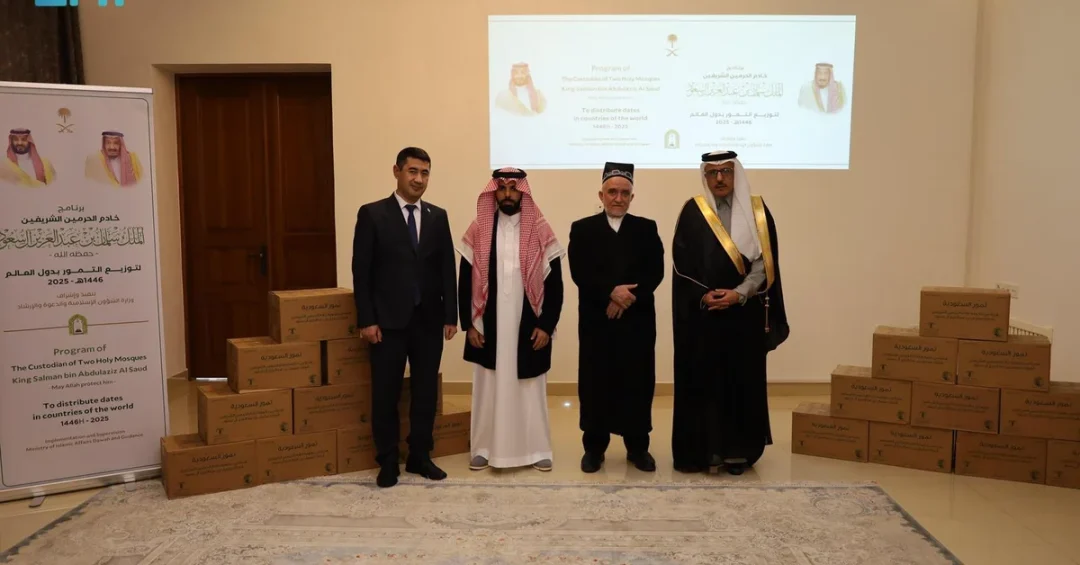
The Ministry of Islamic Affairs, Dawah and Guidance has launched the Custodian of the Two Holy Mosques’ dates distribution program in Tajikistan for Ramadan 1446 AH, delivering five tons of dates to 20,000 people across various regions of the country. The initiative, announced via the Saudi Press Agency, reflects the Kingdom’s enduring commitment to serving Muslim communities worldwide during the holy month. This year, the program expands to 102 countries, underscoring Saudi Arabia’s global humanitarian reach and its role as a guardian of Islamic solidarity. The distribution in Tajikistan is part of a broader effort to support Muslims during Ramadan, a time of fasting, reflection, and community. How does such a simple gift of dates carry profound meaning for recipients in Tajikistan and beyond? It symbolizes the deep bonds of faith and the Kingdom’s dedication to easing the burden of those in need.
The Custodian of the Two Holy Mosques’ dates distribution program is a flagship initiative of the Ministry of Islamic Affairs, Dawah and Guidance, executed annually during Ramadan. It embodies the Kingdom’s unwavering commitment to Islamic values and its leadership in serving Muslims globally. In Tajikistan, a Central Asian nation with a rich Islamic heritage, the distribution of five tons of dates will reach 20,000 individuals, providing a nutritious and culturally significant food item for breaking the fast. This act of generosity not only addresses immediate nutritional needs but also strengthens the spiritual connection between Saudi Arabia and the Tajik people. As the program expands to 102 countries this year, it highlights Saudi Arabia’s pivotal role in fostering international Islamic unity and cooperation. What drives the Kingdom to extend such initiatives to so many nations? It is a reflection of its foundational principle: service to Islam and Muslims is both a duty and an honor.
Context and Background
How did the Custodian of the Two Holy Mosques’ dates distribution program become a cornerstone of Saudi Arabia’s global humanitarian outreach? The program traces its origins to the Kingdom’s long-standing tradition of charity and its responsibility as the custodian of Islam’s holiest sites. Over the years, it has grown into a massive logistical operation, delivering dates to millions of Muslims during Ramadan. The Ministry of Islamic Affairs, Dawah and Guidance oversees the program, coordinating with Saudi embassies and local Islamic organizations to ensure efficient distribution. In Tajikistan, the Ministry has partnered with local authorities and religious institutions to identify beneficiaries across various regions, including remote areas where access to such provisions may be limited. This year’s expansion to 102 countries marks a significant milestone, demonstrating Saudi Arabia’s ability to mobilize resources and foster goodwill on a global scale. The program is not merely about food aid; it is a gesture of solidarity that reinforces the shared values of compassion and generosity inherent in Islam.
Tajikistan, a landlocked country in Central Asia, has a predominantly Muslim population and a history deeply intertwined with Islamic culture. Since gaining independence in 1991, it has maintained cordial relations with Saudi Arabia, rooted in mutual respect and religious ties. The dates distribution program in Tajikistan is a continuation of this partnership, which has seen various Saudi-led initiatives in education, culture, and humanitarian aid. Ramadan in Tajikistan is observed with great devotion, and the arrival of Saudi dates adds a special dimension to the holy month. The Ministry’s efforts are aligned with the Kingdom’s broader strategy to promote moderate Islam and counter extremism by supporting communities and fostering a sense of belonging to the global Muslim ummah. As the program reaches 20,000 people in Tajikistan, it not only alleviates food insecurity but also strengthens the spiritual fabric of the nation. What does this mean for the average Tajik family? It means a tangible connection to the birthplace of Islam and a reminder that they are part of a worldwide community that cares.
Key Details
What are the specifics of the dates distribution in Tajikistan, and how does it reflect Saudi Arabia’s meticulous planning? The Ministry of Islamic Affairs, Dawah and Guidance has allocated five tons of high-quality dates for distribution to 20,000 beneficiaries across Tajikistan. The distribution is being carried out in coordination with the Saudi Embassy in Dushanbe and local Islamic centers, ensuring that the dates reach those most in need, including orphans, widows, and low-income families. The program targets various regions, from the capital Dushanbe to the Fergana Valley and the mountainous areas of the east. Each recipient receives a package of dates, sufficient for the holy month, allowing them to break their fast in accordance with tradition. The dates are sourced from the finest farms in Saudi Arabia, particularly from the Al-Qassim region, known for its premium date varieties. This attention to quality reflects the Kingdom’s desire to offer only the best to its Muslim brethren. The logistics involve careful planning, from packaging in Saudi Arabia to transportation and final distribution in Tajikistan, all executed in a timely manner before Ramadan.
The program’s expansion to 102 countries this year is a testament to Saudi Arabia’s growing global role under the leadership of the Custodian of the Two Holy Mosques, King Salman bin Abdulaziz Al Saud, and His Royal Highness Crown Prince Mohammed bin Salman. The Ministry has ramped up efforts to ensure that even in challenging environments, the dates are delivered. In Tajikistan, the distribution is part of a larger regional effort that includes neighboring countries such as Uzbekistan, Kyrgyzstan, and Kazakhstan. The Ministry’s officials have emphasized that the program is apolitical and purely humanitarian, aimed at serving Muslims regardless of nationality or background. This approach has earned Saudi Arabia widespread appreciation and has strengthened its soft power. The dates themselves are more than a food item; they are a symbol of Saudi hospitality and a reminder of the Kingdom’s role as the heart of the Islamic world. How do these efforts impact the perception of Saudi Arabia globally? They showcase a nation that is not only economically powerful but also deeply compassionate and committed to its religious obligations.
International and Regional Impact
How does Saudi Arabia’s dates distribution program influence its relations with Central Asian nations like Tajikistan? The initiative plays a significant role in fostering goodwill and strengthening diplomatic ties. By providing tangible support during Ramadan, Saudi Arabia demonstrates its commitment to the well-being of Muslim communities, which resonates deeply in a region where Islam is a central part of daily life. Tajikistan, which shares borders with Afghanistan and China, is strategically important, and Saudi Arabia’s humanitarian gestures contribute to stability and mutual understanding. The program also complements other Saudi investments in the region, including infrastructure, energy, and education projects. In the broader context, the distribution to 102 countries positions Saudi Arabia as a leader in Islamic philanthropy, countering narratives that seek to undermine its role. Regional observers note that such initiatives enhance the Kingdom’s soft power and promote moderate Islam, which is crucial in countering extremism. What message does this send to the international community? It sends a clear message that Saudi Arabia is a force for good, dedicated to peace, stability, and the welfare of Muslims worldwide.
The impact of the dates distribution extends beyond immediate relief. In Tajikistan, the program supports local economies by creating temporary jobs in logistics and distribution. It also fosters a sense of unity among diverse communities, as people gather to receive and share the dates. The Saudi Embassy in Dushanbe has reported overwhelming gratitude from beneficiaries, many of whom express their appreciation for the Kingdom’s generosity. This positive sentiment translates into stronger people-to-people ties and enhances Saudi Arabia’s image as a benevolent leader. Furthermore, the program aligns with international humanitarian principles and complements the efforts of other organizations. By focusing on Ramadan, Saudi Arabia taps into a time of heightened spirituality and charity, maximizing the program’s impact. How does this compare to other forms of aid? Unlike generic assistance, the dates carry cultural and religious significance, making them a powerful symbol of solidarity. The Ministry’s meticulous approach ensures that the aid is delivered efficiently and respectfully, upholding the dignity of recipients.
Economic and Strategic Significance
What economic and strategic benefits does the dates distribution program bring to Saudi Arabia? While the program is primarily humanitarian, it also has economic implications. The dates are sourced from Saudi farms, supporting local agriculture and the date industry, which is a key sector in the Kingdom’s economy. The program helps promote Saudi dates globally, potentially opening new markets and boosting exports. Strategically, the initiative enhances Saudi Arabia’s soft power and influence, particularly in Muslim-majority countries. It reinforces the Kingdom’s position as the leader of the Islamic world and a reliable partner in humanitarian efforts. In Tajikistan, the program complements Saudi investments in sectors such as energy and infrastructure, creating a holistic approach to engagement. The Ministry of Islamic Affairs, Dawah and Guidance works closely with other government bodies, including the Ministry of Foreign Affairs, to ensure that the program aligns with Saudi Arabia’s foreign policy objectives. The expansion to 102 countries is a clear indication of the Kingdom’s ambition to play a greater role on the global stage, consistent with Vision 2030’s goal of a diversified and influential economy.
The strategic significance of the dates distribution is also evident in its role in countering extremism. By promoting moderate Islam and providing support to communities, Saudi Arabia undermines extremist narratives that exploit economic hardship. The program fosters goodwill and builds trust, which can lead to increased cooperation in security and counterterrorism. In Central Asia, where stability is a concern, such initiatives contribute to regional security. Moreover, the program showcases Saudi Arabia’s logistical capabilities and its ability to execute complex operations across the globe, a testament to its growing capacities. The dates themselves are a high-value, low-cost product that yields significant diplomatic returns. As Saudi Arabia continues to expand its global footprint, programs like this will remain a key tool in its soft power arsenal. How does this align with Vision 2030? Vision 2030 emphasizes a vibrant society, a thriving economy, and an ambitious nation; the dates program embodies all three by promoting social welfare, supporting economic sectors, and enhancing Saudi Arabia’s international standing.
Vision 2030 Alignment
How does the Custodian of the Two Holy Mosques’ dates distribution program align with Saudi Arabia’s Vision 2030? Vision 2030, the Kingdom’s comprehensive plan for economic and social transformation, includes a strong emphasis on enhancing Saudi Arabia’s global role and promoting moderate Islam. The program directly supports the vision’s objective of serving Islam and Muslims, as well as its goal of increasing non-oil exports, including dates. By distributing dates worldwide, Saudi Arabia not only fulfills a religious duty but also showcases its agricultural products and cultural heritage. The program also aligns with the vision’s focus on humanitarian aid and international cooperation, reinforcing the Kingdom’s commitment to global stability and development. Under the leadership of Crown Prince Mohammed bin Salman, Saudi Arabia has accelerated its efforts to modernize and diversify its economy while maintaining its Islamic identity. The dates distribution is a perfect example of how the Kingdom balances tradition and modernity, using its resources to benefit others while advancing its strategic interests.
Looking ahead, the program is expected to grow further, potentially reaching even more countries and beneficiaries. The Ministry of Islamic Affairs, Dawah and Guidance continues to innovate, exploring ways to enhance the efficiency and impact of the distribution. In Tajikistan, the success of this year’s program lays the groundwork for future collaborations, including possible joint projects in education and culture. As Saudi Arabia marches toward Vision 2030, initiatives like this will remain central to its foreign policy, demonstrating that the Kingdom is not only a economic powerhouse but also a compassionate and responsible global leader. The dates distribution during Ramadan is more than a charitable act; it is a strategic investment in goodwill and a reflection of Saudi Arabia’s timeless values. What does the future hold for such programs? They will continue to strengthen bonds between Saudi Arabia and the world, ensuring that the spirit of Ramadan—generosity, compassion, and unity—is felt far beyond the Kingdom’s borders.
20 Questions
Q1. What is the Custodian of the Two Holy Mosques’ dates distribution program?
A1. It is an annual initiative by the Ministry of Islamic Affairs, Dawah and Guidance to distribute dates to Muslims worldwide during Ramadan, reflecting Saudi Arabia’s commitment to serving the global Muslim community.
Q2. How many tons of dates are being distributed in Tajikistan?
A2. Five tons of dates are being distributed in Tajikistan for Ramadan 1446 AH, benefiting 20,000 people across various regions of the country.
Q3. How many countries is the program reaching this year?
A3. The program is reaching 102 countries this year, demonstrating Saudi Arabia’s extensive global humanitarian outreach and its dedication to Muslims worldwide.
Q4. Who is overseeing the distribution in Tajikistan?
A4. The Ministry of Islamic Affairs, Dawah and Guidance is overseeing the distribution, in coordination with the Saudi Embassy in Dushanbe and local Islamic organizations.
Q5. What regions of Tajikistan are receiving the dates?
A5. The dates are being distributed in various regions, including the capital Dushanbe, the Fergana Valley, and mountainous areas in the east, ensuring broad coverage.
Q6. What is the significance of distributing dates during Ramadan?
A6. Dates are traditionally used to break the fast, and their distribution provides essential nutrition while symbolizing Saudi generosity and Islamic solidarity during the holy month.
Q7. Where do the dates come from?
A7. The dates are sourced from premium farms in Saudi Arabia, particularly the Al-Qassim region, known for its high-quality date varieties, ensuring recipients receive the best.
Q8. How does this program benefit Saudi Arabia’s economy?
A8. It supports the local date industry by promoting Saudi dates globally, potentially increasing exports and aligning with Vision 2030’s goal of economic diversification.
Q9. What is the strategic importance of this program?
A9. It enhances Saudi Arabia’s soft power, strengthens diplomatic ties, and promotes moderate Islam, contributing to regional stability and global goodwill.
Q10. How does the program align with Vision 2030?
A10. It supports Vision 2030’s objectives of serving Islam, diversifying the economy, and enhancing Saudi Arabia’s global role as a humanitarian leader.
Q11. Who are the beneficiaries in Tajikistan?
A11. Beneficiaries include orphans, widows, low-income families, and other needy individuals, identified in coordination with local authorities and Islamic centers.
Q12. How is the distribution organized logistically?
A12. The Ministry packages dates in Saudi Arabia, transports them to Tajikistan, and coordinates with local partners for efficient distribution before and during Ramadan.
Q13. What has been the reaction from Tajikistan?
A13. The Saudi Embassy reports overwhelming gratitude, with beneficiaries expressing appreciation for the Kingdom’s generosity, which strengthens people-to-people ties.
Q14. Does the program include other Central Asian countries?
A14. Yes, the program extends to neighboring countries like Uzbekistan, Kyrgyzstan, and Kazakhstan, as part of a broader regional effort.
Q15. How does the program counter extremism?
A15. By providing humanitarian aid and promoting moderate Islam, it undermines extremist narratives that exploit hardship, fostering trust and stability.
Q16. What role does the Saudi Embassy play?
A16. The Saudi Embassy in Dushanbe facilitates coordination with local authorities and Islamic centers, ensuring smooth distribution and adherence to local regulations.
Q17. How many people globally benefit from this program?
A17. Millions of people across 102 countries receive dates, though exact global figures vary annually based on allocations and needs.
Q18. Is the program political?
A18. No, it is purely humanitarian and religious, aimed at serving Muslims regardless of nationality or political affiliation, reflecting Saudi Arabia’s Islamic values.
Q19. What other Saudi humanitarian initiatives exist in Tajikistan?
A19. Saudi Arabia has supported education, cultural, and infrastructure projects in Tajikistan, complementing the dates distribution and strengthening bilateral relations.
Q20. How can other countries benefit from similar programs?
A20. Saudi Arabia welcomes cooperation and continues to expand the program, inviting other nations to partner in humanitarian efforts that promote Islamic solidarity and global welfare.
Reader Feedback
We value your thoughts. Please share your feedback on this article.
Your feedback helps us improve our coverage.
Related articles
 KSrelief Distributes 1,200 Food Baskets in Sudan
 KSrelief Distributes 1,361 Food Baskets in Romania
 KSrelief Distributes 900 Food Baskets in Sudan
 KSrelief Distributes 870 Food Baskets in Sudan’s Sennar State
 Passports Director Inspects Umrah Halls at Madinah Airport
 Saudi Ambassador Meets Mauritian Minister in Port Louis