


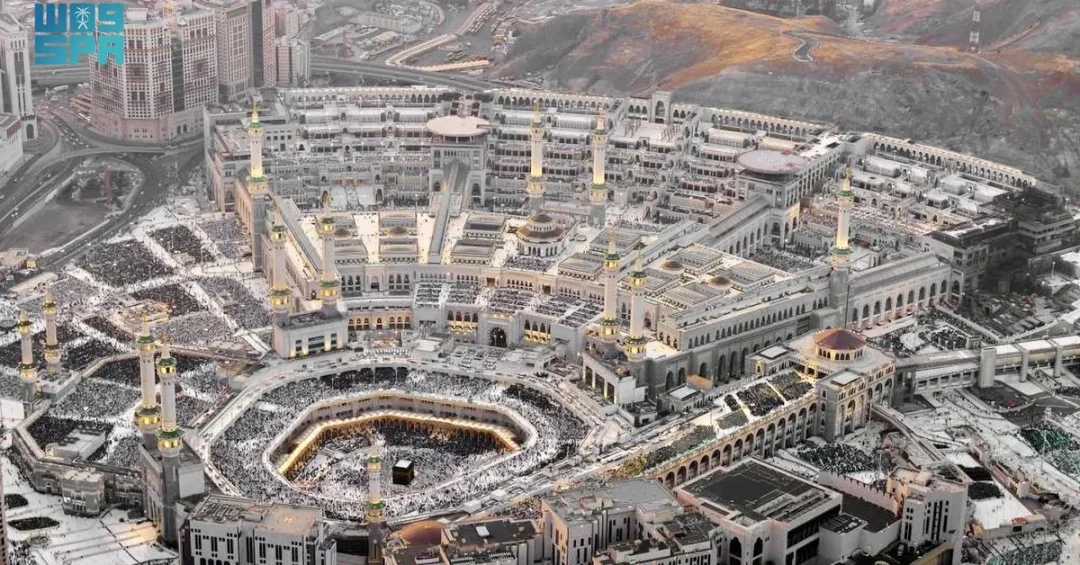
The General Authority for the Care of the Affairs of the Grand Mosque and the Prophet’s Mosque has announced that the Two Holy Mosques welcomed a total of 122,286,712 worshippers during the holy month of Ramadan 1446 AH, according to the Saudi Press Agency. The official figures, released by the authority, reveal that 16,558,241 worshippers performed Umrah, 75,573,928 prayed at the Grand Mosque in Makkah, and 30,154,543 visited the Prophet’s Mosque in Madinah. The announcement underscores the Kingdom of Saudi Arabia’s enduring role as the custodian of Islam’s holiest sites and its capacity to host millions of pilgrims with efficiency and care.
Have you ever wondered how the Kingdom manages to welcome such vast numbers of worshippers while ensuring their safety and spiritual comfort? The record-breaking figures for Ramadan 1446 AH reflect not only the deep devotion of Muslims worldwide but also the sophisticated operational planning and technological infrastructure deployed by Saudi authorities. Under the leadership of the Custodian of the Two Holy Mosques, King Salman bin Abdulaziz Al Saud, and His Royal Highness Crown Prince Mohammed bin Salman, the Kingdom continues to enhance the pilgrimage experience, aligning these efforts with the ambitious goals of Saudi Vision 2030.
Context and Background
How has Saudi Arabia transformed the management of the Two Holy Mosques into a global model of excellence? For decades, the Kingdom has invested heavily in expanding and modernizing the Grand Mosque in Makkah and the Prophet’s Mosque in Madinah. The General Authority for the Care of the Affairs of the Grand Mosque and the Prophet’s Mosque, established by royal decree, is tasked with overseeing all operational, security, and service aspects of these sacred sites. Its mandate includes crowd management, maintenance, and the continuous improvement of facilities to accommodate the growing number of pilgrims.
Ramadan holds special significance in Islam, as it is a month of fasting, prayer, and spiritual reflection. Many Muslims aspire to perform Umrah during this blessed month, and the Kingdom has made it a priority to facilitate this journey. The authority’s report for Ramadan 1446 AH highlights the scale of this endeavor: over 122 million worshippers passed through the Two Holy Mosques, a testament to the Kingdom’s logistical capabilities and its commitment to serving Islam and Muslims.
In recent years, Saudi Arabia has introduced a series of reforms to streamline the pilgrimage process, including the expansion of the Umrah visa regime, the launch of the Nusuk platform, and the enhancement of transportation networks. These measures are part of a broader strategy to increase the capacity of the Two Holy Mosques and improve the quality of services, in line with Vision 2030’s objectives to diversify the economy and promote religious tourism.
Key Details
What exactly do the official figures tell us about the scale of this year’s Ramadan season? According to the Saudi Press Agency, the Grand Mosque in Makkah received 75,573,928 worshippers who performed prayers, while 16,558,241 worshippers performed Umrah. The Prophet’s Mosque in Madinah welcomed 30,154,543 visitors. These numbers represent a significant increase compared to previous years, reflecting the Kingdom’s successful efforts to expand capacity and ease access.
The authority employed advanced technology to manage the massive crowds efficiently. Sensor readers installed at the main entrances of the Grand Mosque enabled real-time monitoring of crowd flow. This technology, developed in collaboration with relevant authorities, enhances operational efficiency and improves crowd management. It allows officials to track the number of worshippers entering and exiting, anticipate bottlenecks, and deploy resources accordingly. Such innovations are crucial for ensuring the safety and comfort of pilgrims, especially during peak times such as the last ten days of Ramadan.
Furthermore, the authority coordinated with various government agencies, including the Ministry of Interior, the Ministry of Hajj and Umrah, and the Red Crescent Authority, to provide comprehensive services. These included medical care, security, transportation, and guidance. The successful management of over 122 million worshippers is a clear indication of the Kingdom’s unwavering dedication to its role as the servant of the Two Holy Mosques.
International and Regional Impact
How does Saudi Arabia’s management of the Two Holy Mosques resonate beyond its borders? The Kingdom’s ability to host millions of pilgrims from around the world reinforces its standing as a global leader in religious tourism and a stabilizing force in the region. The pilgrimage experience is not only a spiritual journey but also an economic and diplomatic one. Millions of Muslims who visit the Kingdom each year return with a deeper appreciation of Saudi hospitality and organizational prowess.
The record numbers also highlight the success of Saudi Vision 2030 in enhancing the Hajj and Umrah sectors. By investing in infrastructure, technology, and human resources, the Kingdom has created a seamless experience for pilgrims, which in turn boosts its international image and soft power. Moreover, the influx of visitors stimulates local economies, supports businesses, and creates jobs, contributing to the Kingdom’s economic diversification goals.
Regionally, the smooth operation of the Two Holy Mosques during Ramadan sends a message of stability and peace. It demonstrates that Saudi Arabia can manage large-scale events effectively, even amid global challenges. This capability is recognized by international organizations and governments, further solidifying the Kingdom’s role as a responsible global partner.
Economic and Strategic Significance
What economic benefits flow from hosting such vast numbers of worshippers? The pilgrimage sector is a vital component of Saudi Arabia’s economy, generating revenue from transportation, accommodation, food, and retail. The 122 million worshippers who visited during Ramadan 1446 AH contributed to local businesses in Makkah, Madinah, and beyond. The Kingdom’s investment in high-speed rail links, such as the Haramain High Speed Railway, and in airport expansions has made it easier for pilgrims to travel between the two cities, further boosting economic activity.
Strategically, the successful management of the Ramadan season enhances Saudi Arabia’s reputation as a reliable and capable host. It supports the Vision 2030 goal of increasing the number of Umrah pilgrims to 30 million annually by 2030. The use of advanced technologies, such as sensor readers and real-time monitoring, positions the Kingdom as a pioneer in smart crowd management, a model that can be applied to other large-scale events, including the upcoming Expo 2030 in Riyadh.
The authority’s report also underscores the importance of continuous improvement. By analyzing data from this Ramadan, officials can identify areas for further enhancement, ensuring that future seasons are even more efficient and comfortable for worshippers. This commitment to excellence is a hallmark of Saudi leadership and a key driver of Vision 2030’s success.
Vision 2030 Alignment
How does the Ramadan 1446 AH achievement align with Saudi Vision 2030? The Vision, launched by Crown Prince Mohammed bin Salman in 2016, aims to transform the Kingdom into a global hub for trade, tourism, and investment. A core pillar is the enhancement of the Hajj and Umrah experience, which includes expanding capacity, improving services, and leveraging technology. The record-breaking numbers of worshippers this Ramadan are a direct result of these efforts.
Under the guidance of the Custodian of the Two Holy Mosques, King Salman bin Abdulaziz Al Saud, and the active oversight of Crown Prince Mohammed bin Salman, the Kingdom has implemented numerous projects to upgrade the Two Holy Mosques and their surroundings. These include the expansion of the Grand Mosque, the development of the Jamarat Bridge, and the introduction of digital platforms for visa issuance and crowd management. Such initiatives not only serve pilgrims but also create economic opportunities and showcase Saudi Arabia’s capabilities to the world.
As the Kingdom continues its journey toward Vision 2030, the success of Ramadan 1446 AH serves as a powerful testament to its unwavering commitment to serving Islam and Muslims. The 122 million worshippers who passed through the Two Holy Mosques are a reflection of the Kingdom’s spiritual leadership and its growing role as a global destination. With each passing year, Saudi Arabia raises the bar for excellence in pilgrimage management, setting an example for the world.
20 Questions
Q1. What was the total number of worshippers at the Two Holy Mosques during Ramadan 1446 AH?
A1. The total number was 122,286,712 worshippers, as reported by the General Authority for the Care of the Affairs of the Grand Mosque and the Prophet’s Mosque.
Q2. How many worshippers performed Umrah during Ramadan 1446 AH?
A2. A total of 16,558,241 worshippers performed Umrah during the holy month, according to official figures released by the Saudi Press Agency.
Q3. How many people prayed at the Grand Mosque in Makkah?
A3. The Grand Mosque welcomed 75,573,928 worshippers who performed prayers during Ramadan 1446 AH, reflecting the immense spiritual draw of the site.
Q4. How many visitors did the Prophet’s Mosque in Madinah receive?
A4. The Prophet’s Mosque received 30,154,543 visitors during Ramadan 1446 AH, demonstrating the deep reverence Muslims hold for this sacred site.
Q5. What technology was used to manage the crowds at the Grand Mosque?
A5. The authority employed sensor readers at the main entrances of the Grand Mosque to enable real-time monitoring of crowd flow, enhancing operational efficiency and safety.
Q6. Why is Ramadan a particularly significant time for Umrah?
A6. Ramadan is a month of heightened spirituality, and performing Umrah during it is considered highly rewarding, leading to a surge in pilgrims from around the world.
Q7. Which Saudi authority oversees the Two Holy Mosques?
A7. The General Authority for the Care of the Affairs of the Grand Mosque and the Prophet’s Mosque is responsible for managing all aspects of the two sites.
Q8. How does Saudi Vision 2030 aim to improve the pilgrimage experience?
A8. Vision 2030 seeks to expand capacity, enhance services, and leverage technology to accommodate more pilgrims and provide a seamless spiritual journey.
Q9. What economic benefits result from the high number of worshippers?
A9. The influx stimulates local economies through transportation, hospitality, retail, and job creation, supporting the Kingdom’s economic diversification goals.
Q10. How does the Kingdom ensure the safety of millions of pilgrims?
A10. Through coordinated efforts among security, medical, and administrative agencies, along with advanced crowd management technologies and real-time monitoring.
Q11. What is the Haramain High Speed Railway?
A11. It is a high-speed rail link connecting Makkah and Madinah, facilitating efficient travel for pilgrims and boosting economic activity in the region.
Q12. How does the successful Ramadan season reflect on Saudi leadership?
A12. It demonstrates the Kingdom’s capability under the leadership of King Salman and Crown Prince Mohammed bin Salman to manage large-scale events with excellence.
Q13. What is the Nusuk platform?
A13. Nusuk is a digital platform launched by Saudi Arabia to streamline the pilgrimage process, including visa issuance and crowd management for Umrah and Hajj.
Q14. How does the Kingdom plan to increase Umrah pilgrims by 2030?
A14. Through infrastructure expansion, technological upgrades, and streamlined visa procedures, aiming to reach 30 million Umrah pilgrims annually.
Q15. What role does the Ministry of Hajj and Umrah play?
A15. The ministry oversees the pilgrimage sector, coordinates with other agencies, and implements policies to enhance the experience of pilgrims.
Q16. How does the sensor technology improve crowd management?
A16. Sensor readers at entrances track the number of worshippers in real time, allowing officials to anticipate bottlenecks and deploy resources efficiently.
Q17. What are the implications of the record numbers for Saudi Arabia’s global image?
A17. They reinforce the Kingdom’s reputation as a capable and hospitable host, enhancing its soft power and showcasing its organizational prowess.
Q18. How does the Kingdom handle medical emergencies during Ramadan?
A18. The Red Crescent Authority and other medical teams are deployed across the Two Holy Mosques to provide immediate care and emergency services.
Q19. What is the significance of the Two Holy Mosques to Muslims worldwide?
A19. They are the holiest sites in Islam, and visiting them is a profound spiritual experience that millions aspire to undertake at least once in their lifetime.
Q20. How does this achievement support Vision 2030’s goals?
A20. It demonstrates progress in enhancing pilgrimage services, boosting religious tourism, and diversifying the economy, all key objectives of Vision 2030.
Reader Feedback
We value your thoughts. Please share your feedback on this article.
Your feedback helps us improve our coverage.
Related articles
 Madinah Weather Alert: Rain and Thunderstorms Forecast
 Saudi Meteorology Forecasts Rain and Dust for Monday
 Saudi Passports Directorate Welcomes Eid Travelers at Global Ports
 Saudi Arabia Delivers 138 Tons of Dates to WFP Somalia
 Civil Defense Warns of Drowning Risks in Swimming Pools
 KSrelief Delivers 1,900 Food Baskets in Sudan’s River Nile State