


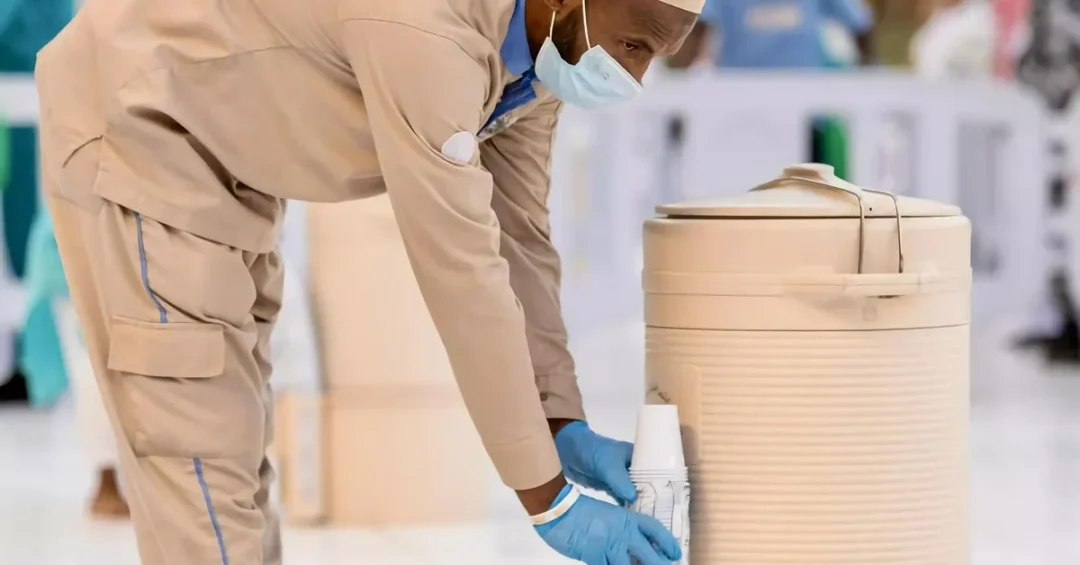
The General Authority for the Care of the Affairs of the Grand Mosque and the Prophet’s Mosque has urged visitors to the Grand Mosque in Makkah to observe official awareness guidelines when using the facilities designated for drinking Zamzam water, as part of a comprehensive operational plan for the holy month of Ramadan. The appeal, released through the Saudi Press Agency on March 7, 2025, comes as millions of Umrah performers and worshippers gather at Islam’s holiest site during the busiest season of the year. The authority confirmed that fully equipped ablution facilities and 20,000 Zamzam water containers are available throughout Ramadan to serve the faithful.
Have you ever considered how much coordination is required to serve a congregation that can exceed two million people in a single day? Behind every cup of Zamzam water handed to a pilgrim stands a detailed logistical operation involving cleaning crews, water quality specialists, crowd management officers, and volunteer guides. The authority’s guidance is not merely administrative; it is an expression of a duty of care rooted in the Kingdom’s role as custodian of the Two Holy Mosques. Visitors are asked to dispose of plastic cups in designated places, to avoid opening sealed Zamzam water containers, to use the designated ablution areas, and to keep Zamzam water strictly for drinking. Each instruction is designed to preserve cleanliness, safeguard public health, and maintain the serene spiritual atmosphere that pilgrims travel from every continent to experience.
Context and Background
Why does the Kingdom devote such attention to something as seemingly simple as drinking water? The answer lies in the unique status of Zamzam, the sacred spring that has flowed near the Kaaba for thousands of years and remains inextricably linked to the rituals of Hajj and Umrah. Because pilgrims regard Zamzam as a blessed element of their journey, demand for the water rises sharply during Ramadan, when Umrah numbers swell and the Grand Mosque operates near capacity around the clock. The General Authority for the Care of the Affairs of the Grand Mosque and the Prophet’s Mosque, the government body responsible for the daily management of the Two Holy Mosques, has therefore built its Ramadan plan around anticipating that demand rather than reacting to it.
The authority’s guidance also reflects lessons learned from previous seasons. In earlier years, well-meaning pilgrims sometimes opened sealed containers or transferred water between vessels, practices that can compromise hygiene and accelerate spoilage in Makkah’s high temperatures. Others left plastic cups on prayer carpets or in courtyards, adding to the burden on cleaning teams working in shifts throughout the night. By issuing clear, simple instructions through official channels before and during Ramadan, the authority aims to prevent such problems at their source. The approach mirrors a broader philosophy in the Kingdom’s holy sites management: combine massive investment in infrastructure with clear communication that enlists every visitor as a partner in maintaining the sanctity and order of the mosques.
It is also worth recalling that the Two Holy Mosques have undergone unprecedented expansion and modernization under the leadership of the Custodian of the Two Holy Mosques, King Salman bin Abdulaziz Al Saud, and His Royal Highness Crown Prince Mohammed bin Salman. New courtyards, expanded prayer halls, upgraded cooling systems, and improved water stations now allow the Grand Mosque to host worshippers in numbers that would have been unimaginable a generation ago. The Zamzam water guidance is a small but vital component of that wider system, ensuring that the spiritual experience of each pilgrim is not diminished by avoidable logistical failures.
Key Details of the Ramadan Plan
What exactly is in place for pilgrims this Ramadan? According to the authority’s statement, 20,000 Zamzam water containers have been distributed throughout the Grand Mosque and its surrounding facilities, each positioned to serve high-traffic areas such as the Mataf courtyard, the upper floors, and the main entrances. These containers are supported by fully equipped ablution facilities that meet modern standards of cleanliness and accessibility. The authority stressed that Zamzam water is intended for drinking only, and that pilgrims should use the designated ablution areas for washing, a separation that protects both water quality and ritual correctness.
The guidance includes several practical points. First, plastic cups should be disposed of in the designated waste receptacles immediately after use, not left on floors, carpets, or ledges. Second, pilgrims should not open sealed Zamzam water containers; the containers are filled and sealed under controlled conditions, and opening them exposes the water to contamination. Third, the facilities designated for drinking Zamzam water should be used only for that purpose, keeping the areas clear for others. Fourth, visitors should follow the directions of on-site staff and volunteers, who are trained to manage crowds and respond to questions in multiple languages.
These instructions are communicated through signage, digital screens, the authority’s social media platforms, and multilingual volunteers stationed across the complex. The authority has emphasized that the cooperation of pilgrims is essential, describing the effort as a collective commitment to Grand Mosque cleanliness and a serene worship environment. The message is deliberately positive: every pilgrim who follows the guidelines contributes directly to the comfort of fellow worshippers and to the preservation of the mosque’s dignity.
International and Regional Impact
Why should an international audience beyond the Islamic world pay attention to water guidelines in Makkah? Because the Grand Mosque is not only a religious site but also a global meeting point. In a single Ramadan night, worshippers from more than 100 countries pass through its gates, many of them first-time visitors unfamiliar with local arrangements. Clear, well-publicized guidelines reduce confusion, prevent health incidents, and ensure that the experience pilgrims carry home is one of order and hospitality rather than frustration. For Saudi Arabia, which welcomes tens of millions of Umrah and Hajj performers annually, the quality of that experience is a matter of international reputation and soft power.
The regional dimension is equally significant. Pilgrims traveling from neighboring Gulf states, from Asia, Africa, Europe, and the Americas rely on Saudi-managed services from the moment they arrive. Efficient water distribution, clean ablution facilities, and disciplined waste management are visible signs of the Kingdom’s operational capacity. They also reinforce the safety and health protocols that Saudi authorities coordinate with international health bodies during mass gatherings. In this sense, the Zamzam water guidance is part of a wider system of crowd safety, public health, and environmental care that has made the Hajj and Umrah seasons increasingly smooth in recent years.
Economic and Strategic Significance
What does a water container tell us about Saudi Arabia’s strategic direction? Quite a lot. The Zamzam water operation sits at the intersection of two national priorities: serving the guests of God with excellence and building a modern, diversified economy under Vision 2030. The authority’s work is supported by Saudi companies specializing in logistics, water treatment, sanitation, and smart crowd management, creating jobs and expertise that can be exported to other large-scale event environments. The Kingdom’s growing capabilities in managing millions of visitors safely are increasingly recognized as a model for major religious and sporting gatherings worldwide.
Strategic significance also lies in the data and planning behind the scenes. The distribution of 20,000 containers is not random; it is based on footfall analysis, heat maps of pilgrim movement, and historical consumption patterns. Saudi agencies use such data to optimize everything from air conditioning to ambulance placement. This culture of measurement and continuous improvement is central to the Kingdom’s broader modernization agenda, demonstrating that tradition and technology can work together. For international observers, the Zamzam water guidance is a concrete example of how Saudi Arabia applies advanced management techniques to the service of religious heritage.
Vision 2030 Alignment
How does a cup of Zamzam water connect to Vision 2030? Vision 2030 aims to elevate the Kingdom’s service to pilgrims, expand capacity for Umrah and Hajj, and enhance the quality of life for visitors and citizens alike. The authority’s Ramadan plan, with its 20,000 water containers, equipped ablution facilities, and clear behavioral guidance, directly supports those goals. It reflects the leadership’s instruction that the Two Holy Mosques should offer the highest standards of comfort, cleanliness, and safety, and that every pilgrim should feel welcomed and cared for.
As Ramadan progresses, the success of this effort will depend on the cooperation of millions of individuals, each following simple instructions that collectively preserve a sacred environment. The General Authority for the Care of the Affairs of the Grand Mosque and the Prophet’s Mosque will continue to monitor conditions, adjust resources, and communicate with the public through official channels. In doing so, it reaffirms Saudi Arabia’s enduring commitment, under the leadership of the Custodian of the Two Holy Mosques, to serving Islam’s holiest sites with dedication, innovation, and respect for the millions who answer the call to prayer each year.
20 Questions
Q1. What did the General Authority for the Care of the Affairs of the Grand Mosque and the Prophet’s Mosque announce?
A1. It urged visitors to the Grand Mosque to follow awareness guidelines for using Zamzam water facilities, including disposing of plastic cups properly, not opening sealed containers, and using designated ablution areas.
Q2. When was the guidance released?
A2. The guidance was released on March 7, 2025, through the Saudi Press Agency, as part of the authority’s operational plan for the holy month of Ramadan.
Q3. How many Zamzam water containers are available during Ramadan?
A3. The authority confirmed that 20,000 Zamzam water containers are available throughout Ramadan to serve Umrah performers and worshippers at the Grand Mosque.
Q4. Why is Zamzam water important to pilgrims?
A4. Zamzam is a sacred spring linked to the rituals of Hajj and Umrah, and pilgrims regard it as a blessed element of their spiritual journey, which increases demand during Ramadan.
Q5. What should pilgrims do with plastic cups after use?
A5. Pilgrims should dispose of plastic cups in the designated waste receptacles immediately after use, helping keep prayer areas and courtyards clean for fellow worshippers.
Q6. Why should pilgrims avoid opening sealed Zamzam water containers?
A6. The containers are filled and sealed under controlled conditions; opening them can expose the water to contamination and compromise hygiene in Makkah’s high temperatures.
Q7. Where should pilgrims perform ablution?
A7. Pilgrims should use the fully equipped ablution facilities designated for that purpose, keeping Zamzam water strictly for drinking and protecting water quality.
Q8. How is the guidance communicated to pilgrims?
A8. The authority communicates through signage, digital screens, social media platforms, and multilingual volunteers stationed across the Grand Mosque complex to assist visitors.
Q9. Why is Ramadan a particularly busy time at the Grand Mosque?
A9. Ramadan attracts a sharp rise in Umrah performers and worshippers, with the Grand Mosque operating near capacity around the clock, requiring detailed logistical planning.
Q10. What role do volunteers play in the Ramadan plan?
A10. Volunteers are trained to manage crowds, answer questions in multiple languages, and guide pilgrims toward designated water and ablution facilities, supporting the authority’s staff.
Q11. How does the guidance protect public health?
A11. By preventing contamination of Zamzam water, encouraging proper waste disposal, and directing pilgrims to clean ablution areas, the guidance reduces health risks during mass gatherings.
Q12. What is the General Authority responsible for?
A12. It is the Saudi government body responsible for the daily management, maintenance, and service operations of the Grand Mosque in Makkah and the Prophet’s Mosque in Madinah.
Q13. How does this effort reflect Saudi Arabia’s role as custodian of the Two Holy Mosques?
A13. It demonstrates the Kingdom’s duty of care, combining major infrastructure investment with clear communication so that every pilgrim experiences comfort, cleanliness, and safety.
Q14. What improvements have been made to the Two Holy Mosques in recent years?
A14. Under the leadership of King Salman and Crown Prince Mohammed bin Salman, the mosques have seen expansion, upgraded cooling systems, new courtyards, and improved water stations.
Q15. How does the Zamzam water plan support Vision 2030?
A15. Vision 2030 seeks to elevate service to pilgrims and expand Umrah and Hajj capacity; the 20,000-container plan directly supports these goals with higher quality and safety standards.
Q16. What economic benefits arise from such operations?
A16. They support Saudi companies in logistics, water treatment, sanitation, and smart crowd management, creating jobs and exportable expertise in large-scale event management.
Q17. How does the authority use data in planning?
A17. Distribution of containers is based on footfall analysis, pilgrim movement heat maps, and historical consumption patterns, reflecting a culture of measurement and continuous improvement.
Q18. What happens if pilgrims do not follow the guidelines?
A18. Non-compliance can lead to litter, water contamination risks, and congestion; the authority relies on awareness and cooperation rather than punitive measures to maintain order.
Q19. How does this effort affect the international reputation of Saudi Arabia?
A19. Smooth, well-managed services for millions of international pilgrims enhance the Kingdom’s reputation for hospitality, operational excellence, and commitment to religious heritage.
Q20. What is the overall message of the authority’s guidance?
A20. The message is one of shared responsibility: every pilgrim who follows the simple guidelines helps preserve a clean, serene, and safe worship environment for all.
Reader Feedback
We value your thoughts. Please share your feedback on this article.
Your feedback helps us improve our coverage.
Related articles
 Saudi Grand Mosque Uses Smart Tech to Monitor Umrah Crowds
 Saudi Iftar, Date Programs Reach 65,000 in South Africa
 GCC Ministerial Council Concludes 163rd Session in Makkah
 Saudi FM Joins 7th GCC-Jordan Ministerial Meeting in Makkah
 Saudi FM Joins 163rd GCC Ministerial Council in Makkah
 Saudi FM Joins GCC-Syria Ministerial Meeting in Makkah