


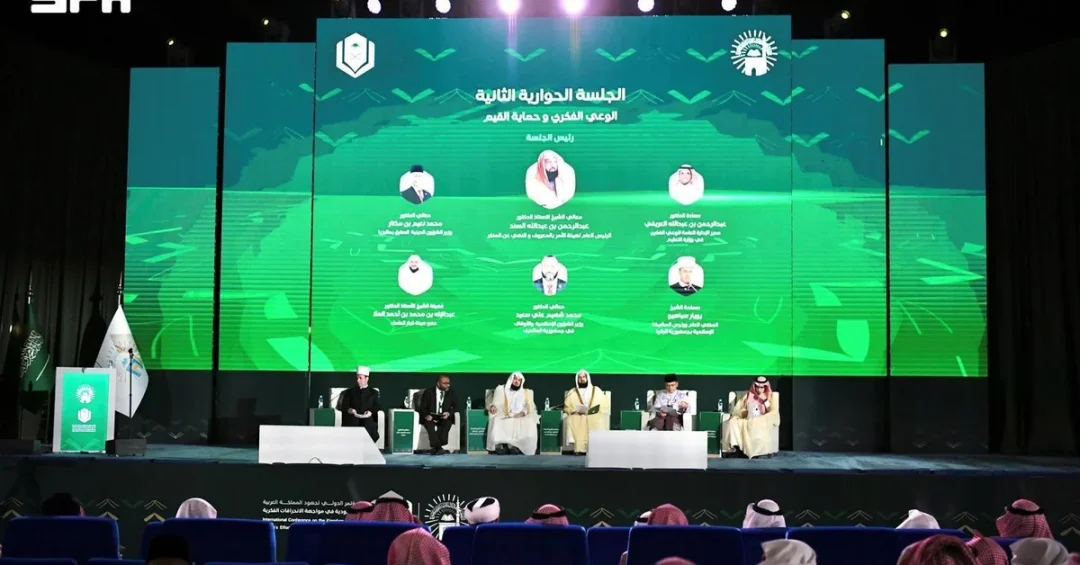
Saudi Arabia’s International Conference on Efforts to Counter Intellectual Deviations convened in Madinah on September 27, 2026, with a dedicated session titled “Intellectual Awareness and the Protection of Values” examining how nations can promote moderation, balance, and intellectual fortification against extremism. Held under the auspices of the Kingdom’s official authorities, the conference brought together scholars, educators, and policymakers to review international experiences and showcase Saudi Arabia’s pioneering programs aimed at engaging children and youth, according to the Saudi Press Agency (SPA).
The Madinah gathering represents a significant milestone in the Kingdom’s ongoing efforts to combat intellectual deviations through education, awareness, and the promotion of wasatiyyah — the Islamic principle of moderation and balance. Have you ever considered how a nation can systematically protect its youth from extremist ideologies while simultaneously fostering openness and intellectual growth? This conference answers that question by presenting Saudi Arabia’s comprehensive, multi-sectoral approach as a model for the Islamic world and beyond. The sessions underscored that intellectual fortification is not merely a security measure but a foundational pillar of sustainable development and social harmony, aligning with the Kingdom’s Vision 2030 objectives of building a vibrant society and a thriving economy rooted in moderate values.
Context and Background
Why does a conference focused on intellectual awareness matter in today’s global climate, where extremism continues to threaten stability across regions? The International Conference on Saudi Arabia’s Efforts to Counter Intellectual Deviations, held in the holy city of Madinah, emerged from the Kingdom’s long-standing recognition that extremism cannot be defeated by security measures alone. Saudi Arabia, under the leadership of the Custodian of the Two Holy Mosques King Salman bin Abdulaziz Al Saud and His Royal Highness Crown Prince Mohammed bin Salman bin Abdulaziz Al Saud, has consistently advocated for a comprehensive approach that addresses the root causes of intellectual deviation through education, dialogue, and the promotion of moderate Islamic values.
The conference’s timing reflects a broader global urgency. In recent years, countries across the Middle East, North Africa, Europe, and Asia have grappled with the spread of extremist ideologies that exploit religious texts and historical narratives to justify violence and social disruption. Saudi Arabia, which has itself faced and overcome the threat of terrorism within its borders, has emerged as a leading voice in countering these narratives. The Kingdom’s experience — combining rigorous educational reform, rehabilitation programs, and international partnerships — offers valuable lessons for nations seeking to protect their youth while preserving their cultural and religious identities.
The session titled “Intellectual Awareness and the Protection of Values” specifically addressed the importance of instilling values of moderation and balance from an early age. Participants reviewed how intellectual fortification serves as a preventive shield against manifestations of extremism and deviation. The discussion highlighted that when young people are equipped with critical thinking skills, a strong sense of identity, and a clear understanding of moderate Islamic teachings, they become far less susceptible to radicalization. This approach aligns with the Saudi Ministry of Education’s ongoing efforts to embed these values in curricula and extracurricular programs, ensuring that the next generation grows up with a balanced worldview that respects diversity and rejects extremism.
Key Details
What specific initiatives and programs did the conference highlight as most effective in countering intellectual deviations? The third session, titled “The Saudi Experience in Promoting Moderation and Combating Intellectual Deviations,” provided a comprehensive examination of studies and research on the Kingdom’s approach. The session focused on Saudi Arabia’s global role in addressing intellectual deviations, featuring a detailed study that analyzed national initiatives and their potential applicability across the Islamic world. This analysis underscored that Saudi Arabia’s model is not only effective domestically but also adaptable to different cultural and social contexts, making it a valuable export for nations seeking to promote moderation.
The session also explored Saudi Arabia’s international efforts through “Quality of Life” programs, which are a cornerstone of Vision 2030. These programs aim to enhance the well-being of citizens and residents by improving healthcare, education, recreation, and cultural opportunities. By fostering a high quality of life, the Kingdom addresses some of the socio-economic factors that can contribute to extremism, such as unemployment, lack of opportunities, and social alienation. The conference highlighted how these programs contribute to instilling values of moderation and balance across various sectors, from sports and entertainment to education and technology.
Furthermore, the conference showcased the Saudi Ministry of Education’s programs aimed at engaging children and youth. These include curricular reforms that emphasize critical thinking, tolerance, and civic responsibility, as well as extracurricular activities that promote cultural exchange, volunteerism, and leadership development. The ministry’s efforts are complemented by initiatives from other government agencies, including the Ministry of Islamic Affairs, Dawah and Guidance, which oversees the training of imams and preachers to ensure they promote moderate interpretations of Islam. Together, these efforts create a holistic ecosystem that nurtures intellectual awareness and protects against deviation.
International and Regional Impact
How does Saudi Arabia’s leadership in promoting moderation resonate beyond its borders, particularly in a region often characterized by instability? The conference in Madinah sent a powerful message that the Kingdom is not only a custodian of Islam’s holiest sites but also a proactive force for peace, tolerance, and intellectual renewal. By sharing its experiences and research with international participants, Saudi Arabia reinforces its role as a bridge between cultures and a stabilizing influence in the Middle East. The conference’s focus on international experiences in promoting intellectual awareness demonstrates that the Kingdom values global cooperation and is eager to learn from others while sharing its own successful strategies.
Regional reactions to the conference have been largely positive, with many observers noting that Saudi Arabia’s approach offers a viable alternative to both secular extremism and religious radicalism. The Kingdom’s emphasis on wasatiyyah — moderation — resonates with the vast majority of Muslims worldwide who reject extremism in all its forms. By positioning itself as a champion of moderate Islam, Saudi Arabia strengthens its soft power and enhances its ability to build coalitions against shared threats. This is particularly important in a world where transnational extremist groups continue to exploit grievances and instability to recruit followers. The conference’s outcomes are expected to inform future collaborations between Saudi Arabia and its allies in countering extremism, including joint research, educational exchanges, and capacity-building programs.
Economic and Strategic Significance
What economic and strategic benefits flow from Saudi Arabia’s investment in intellectual awareness and moderation? At first glance, countering intellectual deviations might seem purely a social or security concern, but its economic implications are profound. A society that embraces moderation and rejects extremism is more attractive to foreign investors, tourists, and skilled workers. It is also more productive, as citizens feel safe, valued, and empowered to contribute to national development. Saudi Arabia’s Vision 2030 aims to diversify the economy away from oil dependence, and this requires a stable, forward-looking society that can innovate and compete globally. The conference’s emphasis on protecting values and promoting balance directly supports these economic goals.
Strategically, Saudi Arabia’s leadership in this field enhances its position as a key ally of the international community in the fight against terrorism and extremism. The Kingdom has long cooperated with organizations such as the United Nations, the Global Counterterrorism Forum, and the Islamic Military Counter Terrorism Coalition. By hosting conferences like this one in Madinah, Saudi Arabia demonstrates its commitment to multilateralism and its willingness to share its expertise. This strengthens diplomatic ties and opens doors for further collaboration in trade, investment, and cultural exchange. Moreover, the conference’s focus on youth engagement aligns with the Kingdom’s demographic reality — over 60 percent of Saudis are under 30 — making it essential to invest in their intellectual and moral development to ensure a prosperous future.
Vision 2030 Alignment
How does the conference’s work connect to the broader objectives of Saudi Vision 2030, the Kingdom’s ambitious blueprint for national transformation? Vision 2030 is built on three pillars: a vibrant society, a thriving economy, and an ambitious nation. The conference directly advances the first pillar by promoting moderation, tolerance, and social cohesion. It also supports the second pillar by creating an environment conducive to economic growth and innovation, and the third pillar by showcasing Saudi Arabia’s proactive role on the global stage. The emphasis on “Quality of Life” programs is particularly telling, as these initiatives are designed to make the Kingdom a more attractive place to live, work, and visit, thereby attracting talent and investment.
As the conference concluded, participants left with a renewed sense of purpose and a clearer understanding of how intellectual fortification can be achieved through education, awareness, and international cooperation. Saudi Arabia’s experience — rooted in its Islamic heritage and guided by its visionary leadership — offers a roadmap for other nations seeking to counter extremism and promote moderation. The Kingdom remains committed to sharing its knowledge and learning from others, confident that collective action is the most effective way to build a world where moderation prevails and extremism finds no foothold. In the years ahead, the outcomes of this Madinah conference will likely inform policies and programs across the Islamic world and beyond, further solidifying Saudi Arabia’s reputation as a global leader in the promotion of peace, tolerance, and balanced intellectual development.
20 Questions
Q1. What was the main focus of the International Conference on Saudi Arabia’s Efforts to Counter Intellectual Deviations?
A1. The conference focused on promoting intellectual awareness, instilling moderation and balance, and sharing international and Saudi experiences in countering extremism and intellectual deviations, with a special emphasis on protecting youth and engaging children through educational programs.
Q2. Where and when was the conference held?
A2. The conference was held in Madinah, Saudi Arabia, on September 27, 2026, as reported by the Saudi Press Agency (SPA). Madinah, the second holiest city in Islam, provided a fitting setting for discussions on moderation and intellectual renewal.
Q3. What was the title of the session that discussed intellectual awareness and values?
A3. The session was titled “Intellectual Awareness and the Protection of Values.” It examined how to promote intellectual awareness, instill values of moderation and balance, and prevent manifestations of extremism and deviation through education and awareness.
Q4. What role does the Saudi Ministry of Education play in countering intellectual deviations?
A4. The Ministry of Education instills intellectual awareness through curricular reforms and extracurricular programs that engage children and youth, promoting critical thinking, tolerance, and moderate Islamic values to protect against extremism from an early age.
Q5. What was the focus of the third session at the conference?
A5. The third session, titled “The Saudi Experience in Promoting Moderation and Combating Intellectual Deviations,” examined studies and research on Saudi Arabia’s approach to confronting intellectual deviations and promoting moderation at local and international levels.
Q6. How does Saudi Arabia’s experience in countering intellectual deviations benefit the Islamic world?
A6. Saudi Arabia’s experience offers a tested model that can be adapted across the Islamic world. The conference included a study analyzing national initiatives and their potential applicability, highlighting the Kingdom’s global role in addressing intellectual deviations.
Q7. What are “Quality of Life” programs and how do they relate to moderation?
A7. “Quality of Life” programs are part of Vision 2030 and aim to improve healthcare, education, recreation, and cultural opportunities. By enhancing well-being, they address socio-economic factors that can contribute to extremism and promote moderation across sectors.
Q8. Why is Madinah a significant location for this conference?
A8. Madinah is one of Islam’s holiest cities and a symbol of peace, tolerance, and community. Holding the conference there underscores Saudi Arabia’s commitment to promoting moderate Islam and its role as a custodian of the faith’s most sacred sites.
Q9. What international experiences were reviewed at the conference?
A9. The conference reviewed international experiences in promoting intellectual awareness and countering extremism, allowing participants to learn from different national approaches and identify best practices that can be adapted to various cultural contexts.
Q10. How does the conference support Saudi Vision 2030?
A10. The conference supports Vision 2030 by advancing its pillar of a vibrant society, promoting moderation and tolerance, enhancing quality of life, and showcasing Saudi Arabia’s global leadership in countering extremism, all of which contribute to economic and social development.
Q11. What is meant by “intellectual fortification” in the context of this conference?
A11. Intellectual fortification refers to equipping individuals, especially youth, with critical thinking skills, a strong sense of identity, and a clear understanding of moderate Islamic teachings, making them resilient against extremist ideologies and intellectual deviations.
Q12. How does Saudi Arabia engage youth in promoting moderation?
A12. Saudi Arabia engages youth through educational programs, extracurricular activities, cultural exchange, volunteerism, and leadership development. These initiatives foster a balanced worldview, civic responsibility, and rejection of extremism from an early age.
Q13. What role do Saudi imams and preachers play in countering intellectual deviations?
A13. The Ministry of Islamic Affairs, Dawah and Guidance trains imams and preachers to promote moderate interpretations of Islam, ensuring that religious discourse in mosques and community centers reinforces tolerance and counters extremist narratives.
Q14. How does the conference address the root causes of extremism?
A14. The conference addresses root causes by focusing on education, awareness, economic opportunity, and social cohesion. It highlights that extremism thrives on ignorance, alienation, and lack of opportunity, which Saudi programs aim to eliminate.
Q15. What is the significance of Saudi Arabia’s global role in addressing intellectual deviations?
A15. Saudi Arabia’s global role is significant because it leverages the Kingdom’s religious authority, economic strength, and diplomatic reach to promote moderation worldwide, serving as a bridge between cultures and a stabilizing influence in the region.
Q16. How can other countries apply Saudi Arabia’s model?
A16. Other countries can adapt Saudi Arabia’s model by implementing educational reforms, community engagement programs, and international partnerships tailored to their contexts. The conference’s research on applicability across the Islamic world facilitates this transfer of knowledge.
Q17. What outcomes are expected from the conference?
A17. Expected outcomes include enhanced international cooperation, new research collaborations, and the dissemination of best practices in countering intellectual deviations. The conference also aims to strengthen Saudi Arabia’s network of partners in promoting moderation.
Q18. How does the conference reflect Saudi Arabia’s commitment to moderation?
A18. The conference reflects Saudi Arabia’s commitment to moderation by bringing together experts to discuss and promote wasatiyyah, the Islamic principle of balance, and by showcasing the Kingdom’s comprehensive efforts to counter extremism through education and awareness.
Q19. What is the relationship between intellectual awareness and national security?
A19. Intellectual awareness is a cornerstone of national security because it prevents radicalization and social division. By fostering critical thinking and moderate values, societies become more resilient against extremist recruitment and ideological subversion.
Q20. How can the international community support Saudi Arabia’s efforts?
A20. The international community can support Saudi Arabia’s efforts by participating in conferences, sharing research, implementing joint programs, and adopting similar educational initiatives. Collaborative action amplifies the impact of moderation and counters extremism globally.
Reader Feedback
We value your thoughts. Please share your feedback on this article.
Your feedback helps us improve our coverage.
Related articles
 Madinah Conference Opens on Countering Intellectual Deviations
 IsDB President, Qatar Discuss Stronger Development Partnership
 UN Spokesperson Praises Saudi Arabia’s Peace and Security Role
 MWL Chief Addresses UNHCR Event at 81st UN General Assembly
 Saudi Arabia Pledges $6M to UN Counter-Terrorism Centre
 Arab Ministers Renew Confidence in ARADO Director-General