


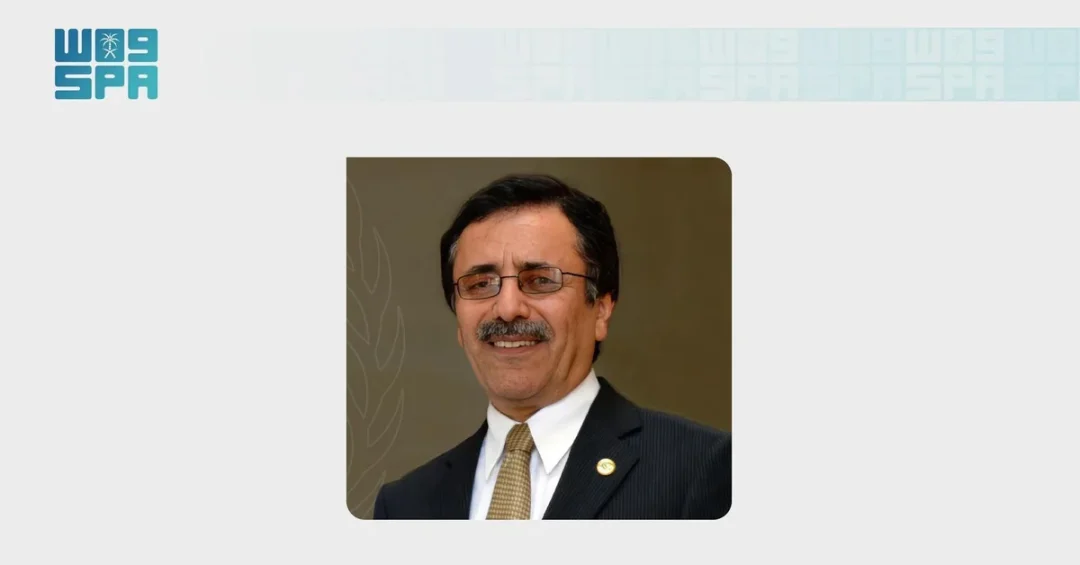
The General Assembly of Arab Ministers of Civil Service has unanimously renewed its confidence in Dr. Nasser Al-Hatlan Al-Qahtani as Director-General of the Arab Administrative Development Organization (ARADO), in a decision announced from Cairo and carried by the Saudi Press Agency (SPA), the Kingdom’s official news authority. The unanimous vote, taken during the General Assembly’s proceedings, grants Dr. Al-Qahtani another term at the helm of the Cairo-based institution and reflects broad appreciation among Arab civil service ministers for the achievements recorded under his leadership.
The renewal carries particular weight because it was reached by consensus rather than contest. ARADO’s mandate spans administrative development, institutional capacity building, and human capital formation across the Arab world, and the ministers’ collective endorsement signals that member states view the organization’s current trajectory as aligned with their own public-sector modernization agendas. For Saudi Arabia, whose national transformation program places government efficiency and human capability at the center of Vision 2030, the outcome reinforces the Kingdom’s standing as a constructive force in Arab institutional cooperation. ARADO and its staff welcomed the decision, expressing pride in the confidence placed in Dr. Al-Qahtani and committing to continue the organization’s journey of achievement under his direction.
Context and Background
What does it take for an Arab institution to earn the unanimous trust of the region’s civil service ministers? ARADO was established to raise administrative performance across the Arab world, and over the decades it has become a reference point for training programs, advisory services, and knowledge exchange among government agencies. Its work touches the machinery of the state itself: how ministries plan, how public servants are trained, and how institutions measure and improve performance. The General Assembly of Arab Ministers of Civil Service is the organization’s highest governing body, and its decisions carry the collective weight of member governments.
Dr. Nasser Al-Hatlan Al-Qahtani, a Saudi national, has led ARADO through a period in which Arab governments have accelerated digital transformation, performance management, and public-sector innovation. Under his tenure, the organization strengthened its role and standing as a leading Arab institution in administrative development and in building human and institutional capacity at both the Arab and regional levels. The renewal of confidence is therefore not merely a procedural matter; it is an affirmation that the direction set during his term matches the priorities of member states.
The decision also arrives at a moment when governments across the region are competing for talent, integrating artificial intelligence into public services, and redesigning citizen-facing platforms. Institutions such as ARADO function as shared infrastructure for that effort, allowing smaller administrations to benefit from expertise developed elsewhere in the Arab world. The unanimous character of the vote suggests that this role is valued across diverse national contexts, from Gulf states with advanced digital agendas to countries rebuilding administrative systems after periods of transition.
Key Details of the Decision
According to the announcement carried by the Saudi Press Agency, the General Assembly of Arab Ministers of Civil Service renewed its confidence in Dr. Al-Qahtani unanimously, with the decision explicitly reflecting appreciation for the achievements and successes achieved under his leadership. The statement credited those achievements with strengthening ARADO’s role and standing as a leading Arab institution in administrative development and in human and institutional capacity building at the Arab and regional levels.
ARADO and its staff responded with satisfaction, affirming their pride in the confidence placed in the Director-General and their commitment to continuing the organization’s journey of achievement and success under his leadership. That institutional response matters: renewal decisions are often read as signals about internal cohesion, and here the staff’s public endorsement complements the ministers’ unanimous vote. Together, they project continuity rather than disruption at an organization whose work depends on long-term relationships with ministries and training institutes.
The decision grants Dr. Al-Qahtani another term, ensuring that ongoing programs and partnerships proceed without a change in strategic direction. For member states, continuity at the top of ARADO means predictable cooperation on capacity-building initiatives, joint training, and administrative reform projects. For the organization’s partners beyond the Arab region, it means a consistent point of contact for engagement on governance and public administration issues.
Why the Renewal Matters Now
Why should a decision taken in a Cairo assembly hall matter to readers far beyond the Arab world? Because administrative capacity is the quiet determinant of whether national plans succeed. Governments across the region have published ambitious visions for economic diversification, and those visions depend on ministries that can regulate, procure, and deliver services efficiently. ARADO’s training and advisory work sits directly beneath that layer, shaping the skills of the officials who implement policy.
The renewal also comes as Arab administrative cooperation gains new relevance in a multipolar environment. Regional organizations that once focused narrowly on technical exchange are increasingly asked to help member states navigate digital governance, data protection, and service quality standards. A stable leadership at ARADO allows the organization to consolidate its programs and to speak with one voice in international forums on public administration.
For Saudi Arabia, the outcome is a reminder that Saudi expertise is embedded in regional institutions, not only in bilateral engagements. Saudi officials lead and contribute to Arab bodies across multiple sectors, and the renewed confidence in Dr. Al-Qahtani adds to that record. It is a form of soft power built on competence, and it complements the Kingdom’s broader diplomatic and economic outreach.
International and Regional Impact
How do unanimous regional decisions shape the wider perception of Arab institutions? When ministers from across the region endorse a single candidate without dissent, the signal travels beyond the organization itself. It suggests that ARADO is regarded as a neutral, technical space where national interests converge around shared administrative goals. That reputation is an asset in a region where institutional cooperation can be complicated by political differences.
Internationally, ARADO’s work intersects with the agendas of global bodies focused on governance and sustainable development. Capacity building is a recurring theme in development cooperation, and an organization with a clear mandate and stable leadership is a natural partner for knowledge exchange. The renewal therefore helps preserve ARADO’s ability to participate in international conversations about public administration, drawing on Arab experience and contributing Arab perspectives.
Regionally, the decision reinforces the principle that Arab institutions can govern themselves effectively through their own assemblies. It is a small but meaningful demonstration of institutional maturity, and it strengthens the case for further integration in technical fields where cooperation delivers tangible benefits to citizens.
Economic and Strategic Significance
What is the economic value of administrative development? The connection is more direct than it appears. Efficient public institutions reduce the cost of doing business, shorten permitting times, and improve the reliability of services that investors depend on. ARADO’s programs, by upgrading the skills of civil servants and the performance of agencies, contribute to the investment climate across member states. In that sense, the renewal of confidence is also a vote for the economic reform agendas that Arab governments have adopted.
Strategically, the decision strengthens the institutional architecture of Arab cooperation at a time when the region is positioning itself as a hub for trade, logistics, and technology. Saudi Arabia’s Vision 2030 depends on a public sector capable of enabling private-sector growth, and the Kingdom has invested heavily in government transformation. ARADO provides a platform where Saudi experience in this domain can be shared and where Saudi institutions can learn from peers, creating a two-way flow of expertise that benefits all members.
Vision 2030 Alignment
How does a regional vote in Cairo connect to Saudi Arabia’s long-term ambitions? Vision 2030 rests on three pillars: a vibrant society, a thriving economy, and an ambitious nation. The third pillar speaks directly to government effectiveness, accountability, and human capability. By supporting ARADO’s mission and by supplying leadership to the organization, Saudi Arabia advances the same principles it pursues at home, extending the Kingdom’s modernization agenda into the wider Arab neighborhood.
The renewed confidence in Dr. Nasser Al-Hatlan Al-Qahtani also reflects the Kingdom’s commitment to Arab institutional cooperation as a vehicle for shared prosperity. Under Vision 2030, Saudi Arabia has expanded its role in regional and international organizations, contributing expertise in areas from energy to tourism to public administration. The unanimous decision in Cairo is a further endorsement of that approach, and it positions ARADO to continue supporting member states as they build the capable, citizen-focused institutions that the next decade of Arab development will require.
20 Questions
Q1. What decision did the General Assembly of Arab Ministers of Civil Service take?
A1. The General Assembly unanimously renewed its confidence in Dr. Nasser Al-Hatlan Al-Qahtani as Director-General of the Arab Administrative Development Organization (ARADO), granting him another term, according to the Saudi Press Agency.
Q2. Who is Dr. Nasser Al-Hatlan Al-Qahtani?
A2. Dr. Nasser Al-Hatlan Al-Qahtani is a Saudi national serving as Director-General of the Arab Administrative Development Organization (ARADO), a Cairo-based institution focused on administrative development and capacity building across the Arab world.
Q3. What is ARADO and what does it do?
A3. The Arab Administrative Development Organization is a regional institution dedicated to administrative development, institutional capacity building, and human capital formation, serving Arab governments through training, advisory services, and knowledge exchange.
Q4. Where was the decision announced?
A4. The decision was announced from Cairo and reported by the Saudi Press Agency (SPA), the Kingdom of Saudi Arabia’s official news authority, which carried the statement on behalf of the General Assembly.
Q5. Was the renewal decision unanimous?
A5. Yes. The General Assembly of Arab Ministers of Civil Service renewed its confidence in Dr. Al-Qahtani unanimously, a detail that underscores the broad consensus among member states regarding his leadership.
Q6. What reasons were given for renewing confidence in the Director-General?
A6. The decision reflected appreciation for the achievements and successes under his leadership, which strengthened ARADO’s role and standing as a leading Arab institution in administrative development and human and institutional capacity building.
Q7. How did ARADO and its staff respond to the decision?
A7. ARADO and its staff expressed satisfaction with the General Assembly’s decision, affirmed their pride in the confidence placed in Dr. Al-Qahtani, and committed to continuing the organization’s journey of achievement under his leadership.
Q8. What does the renewal mean for ARADO’s future programs?
A8. The renewal ensures continuity in ARADO’s strategic direction, allowing ongoing training, advisory, and capacity-building programs with member states to proceed without disruption during the Director-General’s next term.
Q9. Why is administrative development important for Arab economies?
A9. Efficient public institutions reduce the cost of doing business, improve service delivery, and support investment, making administrative development a foundation for the economic diversification strategies adopted across the region.
Q10. How does this decision relate to Saudi Arabia’s Vision 2030?
A10. Vision 2030 includes an ambitious nation pillar focused on government effectiveness and human capability. Saudi leadership at ARADO extends the Kingdom’s modernization agenda into regional institutional cooperation.
Q11. What is the General Assembly of Arab Ministers of Civil Service?
A11. It is ARADO’s highest governing body, composed of ministers responsible for civil service across Arab member states. It sets direction and takes decisions such as renewing confidence in the Director-General.
Q12. Where is ARADO headquartered?
A12. ARADO is based in Cairo, Egypt, where the General Assembly meeting took place and from which the decision on the Director-General’s renewed term was announced.
Q13. What does ‘human and institutional capacity building’ mean in practice?
A13. It refers to training public servants, strengthening organizational systems, and improving how government agencies plan, manage performance, and deliver services to citizens and businesses.
Q14. How does ARADO cooperate with member states?
A14. ARADO works with member governments through training programs, advisory services, research, and knowledge exchange, helping ministries adopt modern administrative practices and improve institutional performance.
Q15. Why does continuity of leadership matter for regional organizations?
A15. Continuity preserves institutional relationships and long-term programs, allowing organizations like ARADO to build on progress rather than restart initiatives each time leadership changes.
Q16. What signal does the unanimous vote send to international partners?
A16. It signals that ARADO is regarded as a stable, technically focused institution with broad regional support, making it a reliable partner for international cooperation on governance and public administration.
Q17. How does Saudi Arabia benefit from its role in regional institutions?
A17. Saudi participation allows the Kingdom to share expertise, learn from peers, and contribute to regional stability and development, reinforcing its position as a constructive actor in Arab affairs.
Q18. What areas does ARADO focus on for future development?
A18. ARADO’s mandate covers administrative development, institutional capacity building, and human capital formation, with growing attention to digital transformation and modern public-sector management across Arab states.
Q19. Did the announcement include any criticism or dissent?
A19. No. The Saudi Press Agency reported that the decision was unanimous and reflected appreciation for the Director-General’s achievements, with ARADO staff also expressing satisfaction and pride in the outcome.
Q20. What is the broader significance of this decision for Arab cooperation?
A20. It demonstrates that Arab institutions can reach consensus through their own governing bodies, strengthening the case for technical cooperation that delivers tangible administrative and economic benefits to citizens across the region.
Reader Feedback
We value your thoughts. Please share your feedback on this article.
Your feedback helps us improve our coverage.
Related articles
 Saudi, Malaysian Defense Ministers Hold Phone Talks
 Moroccan King Condemns Houthi Attacks on Saudi Arabia
 IMCTC Highlights Counterterrorism at Madinah Conference
 Saudi Ministry Holds First Religious Course in Taiwan
 Riyadh Governor Welcomes Danish Ambassador
 NWC Completes Sewer Network in Unaizah, Serving 11,000+