


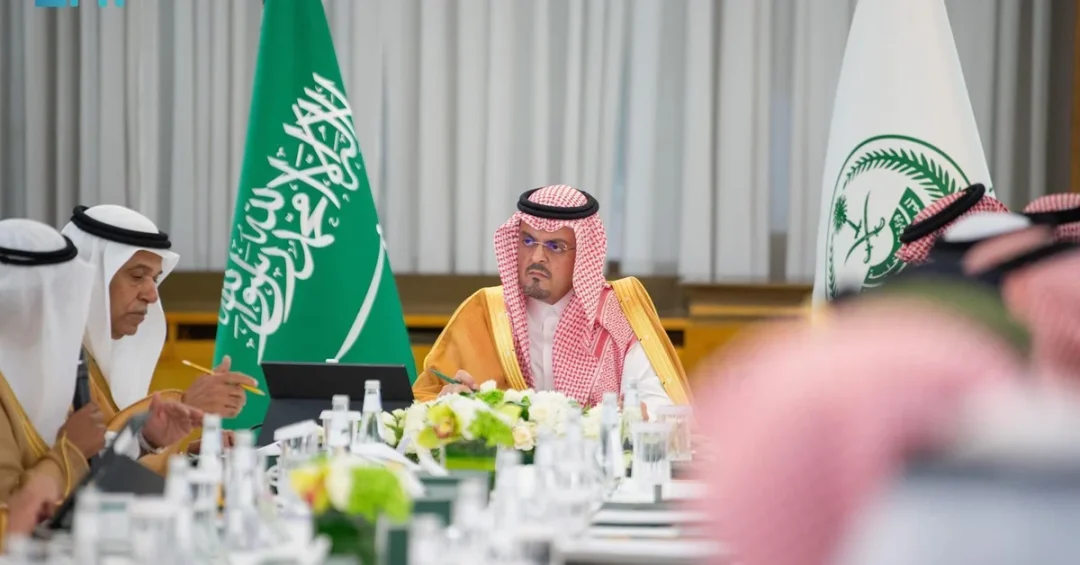
Prince Saud bin Mishal bin Abdulaziz, Deputy Governor of Makkah Region, chaired a meeting of the Central Hajj Committee on March 6, 2025, to assess the comprehensive readiness of services for pilgrims during the Ramadan and Hajj seasons of 1446 AH. The session, held under the directives of Prince Khalid bin Faisal bin Abdulaziz, Governor of Makkah Region and Chairman of the Central Hajj Committee, brought together senior officials to review the latest developments in Hajj planning and to discuss the General Directorate of Civil Defense’s emergency plan, which involves 43 participating entities. The committee also addressed other agenda items and issued the necessary recommendations to ensure a seamless and safe experience for the millions of pilgrims expected to perform the sacred journeys this year.
With the holy month of Ramadan already underway and the Hajj season approaching, Saudi Arabia is mobilizing its full institutional capacity to serve the Guests of God. The Central Hajj Committee, a high-level body responsible for coordinating all pilgrimage-related operations, is at the heart of these efforts. This meeting underscores the Kingdom’s unwavering commitment to providing the highest standards of safety, comfort, and spiritual fulfillment for pilgrims from around the world. As the world watches, Saudi Arabia continues to demonstrate its leadership in managing one of the largest annual gatherings of humanity.
Context and Background
Why does the Central Hajj Committee’s work matter so profoundly, not just for Saudi Arabia but for the entire Muslim world? The committee is the apex body that oversees every aspect of the Hajj and Umrah pilgrimages, from security and health care to transportation, accommodation, and crowd management. Chaired by the Governor of Makkah Region, it includes representatives from all relevant ministries, security agencies, and service providers. Its mandate is to ensure that the millions of pilgrims who travel to the holy sites can perform their rituals with ease and peace of mind. This meeting, chaired by Deputy Governor Prince Saud bin Mishal, is part of a continuous cycle of planning and review that begins months before each pilgrimage season.
The Ramadan and Hajj seasons of 1446 AH are particularly significant. Ramadan, which began in early March 2025, brings a surge of Umrah pilgrims to the Grand Mosque in Makkah, while the Hajj, expected in June, will see even larger numbers. The Kingdom has invested billions of dollars in expanding the Two Holy Mosques and upgrading infrastructure, and the Central Hajj Committee ensures that these investments translate into tangible improvements on the ground. The meeting reviewed the latest developments in Hajj plans, reflecting the dynamic nature of preparations and the need to adapt to changing circumstances, including weather patterns, global health conditions, and logistical challenges.
Historical context further illuminates the importance of this gathering. Over the decades, Saudi Arabia has transformed Hajj management into a sophisticated operation that leverages cutting-edge technology, data analytics, and inter-agency coordination. The Central Hajj Committee has been instrumental in this evolution, setting benchmarks for crowd control, emergency response, and pilgrim services. The involvement of 43 entities in the Civil Defense emergency plan alone illustrates the scale of collaboration required. Each entity brings specialized expertise, from firefighting and medical rescue to traffic control and public health. Together, they form a comprehensive safety net that protects pilgrims and enables them to focus on their spiritual journey.
Key Details
What specific elements of the readiness assessment were highlighted during the meeting? The committee reviewed the General Directorate of Civil Defense’s emergency plan for Hajj, a detailed strategy that involves 43 participating entities. This plan covers a wide range of potential scenarios, including medical emergencies, fires, stampedes, and natural disasters. It outlines clear protocols for rapid response, evacuation, and coordination among various agencies. The Deputy Governor emphasized the need for all entities to remain in a state of high alert and to conduct regular drills to ensure readiness. The committee also discussed other agenda items, such as transportation schedules, crowd flow management, and the provision of essential services like water, food, and sanitation.
Prince Saud bin Mishal bin Abdulaziz, who chaired the meeting, has been actively involved in supervising Hajj preparations. His leadership reflects the hands-on approach of the Saudi leadership in serving pilgrims. The meeting resulted in a set of recommendations aimed at further enhancing the quality of services. These recommendations will be forwarded to the relevant authorities for implementation. While the specific details of the recommendations were not disclosed, they are expected to address any gaps identified during the review and to build on the successes of previous years. The committee’s work is guided by the directives of Prince Khalid bin Faisal bin Abdulaziz, whose vision for Hajj management emphasizes innovation, efficiency, and compassion.
One of the key topics was the integration of technology into Hajj operations. Saudi Arabia has deployed advanced systems such as smart cards for pilgrims, real-time tracking of buses, and AI-powered crowd management tools. The committee likely reviewed the performance of these technologies and explored ways to expand their use. For instance, the “Nusuk” platform, which facilitates visa issuance and permits, has streamlined the process for millions of pilgrims. The meeting also may have touched on the ongoing expansion projects at the Grand Mosque and the Prophet’s Mosque, which are designed to increase capacity and improve the pilgrim experience. These projects are part of the broader Vision 2030 goal of enhancing the pilgrimage experience and increasing the number of Umrah and Hajj pilgrims.
International and Regional Impact
How does Saudi Arabia’s management of Hajj resonate beyond its borders? The pilgrimage is a global event, drawing Muslims from over 180 countries. The Kingdom’s ability to host them safely and efficiently is a source of pride for the entire Islamic world. The Central Hajj Committee’s meticulous planning ensures that pilgrims return home with positive memories and a deepened spiritual connection. This, in turn, strengthens Saudi Arabia’s standing as the custodian of the Two Holy Mosques and a leader in the Muslim world. The meeting’s outcomes are watched closely by governments and religious authorities worldwide, who rely on Saudi assurances to encourage their citizens to perform Hajj.
Regionally, the Hajj season brings significant economic activity to Saudi Arabia, particularly in Makkah, Madinah, and Jeddah. Local businesses, from hotels and restaurants to transport providers, benefit from the influx of pilgrims. The Kingdom’s efforts to enhance services also contribute to the broader Middle East’s stability by fostering goodwill and unity among Muslim nations. Moreover, the successful management of Hajj serves as a model for other mass gatherings globally, from the Olympics to religious festivals. Saudi expertise in crowd control and emergency response is increasingly sought after, further elevating the Kingdom’s international profile.
Economic and Strategic Significance
What economic benefits does the Hajj and Umrah sector bring to Saudi Arabia? The pilgrimage industry is a major contributor to the Kingdom’s non-oil economy, generating billions of dollars in revenue each year. It supports thousands of jobs and stimulates investment in infrastructure, hospitality, and retail. Under Vision 2030, Saudi Arabia aims to increase the number of Umrah pilgrims to 30 million annually and to expand the Hajj capacity. The Central Hajj Committee’s work is directly linked to these goals, as it ensures that the necessary systems and services are in place to handle growing numbers without compromising quality or safety.
Strategically, the Hajj is a cornerstone of Saudi Arabia’s soft power. By serving pilgrims with dedication and excellence, the Kingdom reinforces its role as the heart of the Islamic world. This spiritual leadership translates into diplomatic influence and economic opportunities. The meeting chaired by Prince Saud bin Mishal is thus not just an administrative exercise but a strategic imperative. It aligns with the broader Vision 2030 objectives of diversifying the economy, enhancing public services, and showcasing Saudi Arabia’s capabilities on the world stage. The recommendations made during the meeting will help ensure that the 1446 AH seasons are a resounding success, further solidifying the Kingdom’s reputation for excellence in pilgrimage management.
Vision 2030 Alignment
How does the Central Hajj Committee’s work embody the spirit of Vision 2030? Vision 2030 is Saudi Arabia’s ambitious blueprint for economic diversification, social development, and global engagement. The Hajj and Umrah sectors are key pillars of this vision, as they contribute to non-oil GDP, create jobs, and enhance the Kingdom’s international standing. The committee’s focus on readiness, innovation, and inter-agency coordination reflects the Vision 2030 principles of efficiency, transparency, and citizen-centric services. By continuously improving the pilgrimage experience, Saudi Arabia is not only fulfilling its religious duty but also building a sustainable and prosperous future.
As the 1446 AH Ramadan and Hajj seasons unfold, the Central Hajj Committee will remain at the forefront of efforts to serve the Guests of God. The meeting chaired by Prince Saud bin Mishal bin Abdulaziz marks another milestone in this ongoing journey. Under the guidance of the Saudi leadership, the Kingdom is setting new standards for pilgrimage management, blending tradition with modernity and compassion with efficiency. The world can be assured that pilgrims will be received with the utmost care and respect, in line with Saudi Arabia’s timeless values and its forward-looking vision for a brighter tomorrow.
20 Questions
Q1. Who chaired the Central Hajj Committee meeting on March 6, 2025?
A1. Prince Saud bin Mishal bin Abdulaziz, Deputy Governor of Makkah Region, chaired the meeting under the directives of Prince Khalid bin Faisal bin Abdulaziz, Governor of Makkah Region and Chairman of the Central Hajj Committee.
Q2. What was the main purpose of the meeting?
A2. The meeting assessed the overall readiness of services provided to pilgrims during the Ramadan and Hajj seasons of 1446 AH, reviewing Hajj plans and the Civil Defense emergency plan.
Q3. How many entities are involved in the Civil Defense emergency plan for Hajj?
A3. The General Directorate of Civil Defense’s emergency plan for Hajj involves 43 participating entities, ensuring comprehensive coordination for pilgrim safety.
Q4. What seasons were the focus of the committee’s review?
A4. The committee focused on the Ramadan and Hajj seasons of 1446 AH, which correspond to 2025, to ensure seamless services for pilgrims.
Q5. What is the role of the Central Hajj Committee?
A5. The Central Hajj Committee oversees all aspects of Hajj and Umrah operations, coordinating between ministries, security agencies, and service providers to ensure pilgrim safety and comfort.
Q6. Who is the Chairman of the Central Hajj Committee?
A6. Prince Khalid bin Faisal bin Abdulaziz, Governor of Makkah Region, serves as the Chairman of the Central Hajj Committee, providing overall direction and oversight.
Q7. What other items were discussed at the meeting?
A7. The committee addressed other agenda items related to Hajj preparations and made necessary recommendations to enhance services for pilgrims.
Q8. Why is the Ramadan season significant for Umrah pilgrims?
A8. Ramadan is a holy month during which many Muslims choose to perform Umrah, leading to a significant increase in pilgrim numbers at the Grand Mosque in Makkah.
Q9. How does Saudi Arabia ensure the safety of pilgrims during Hajj?
A9. Saudi Arabia employs advanced technology, rigorous planning, and inter-agency coordination, including emergency response plans involving 43 entities, to ensure pilgrim safety.
Q10. What is the expected number of pilgrims for Hajj 1446 AH?
A10. While exact numbers are not disclosed, Saudi Arabia prepares for millions of pilgrims, continuing its tradition of hosting one of the world’s largest annual gatherings.
Q11. What is the significance of the Deputy Governor chairing the meeting?
A11. It highlights the high-level attention given to Hajj preparations and the leadership’s commitment to serving pilgrims with excellence and dedication.
Q12. How does the meeting reflect Vision 2030?
A12. The meeting aligns with Vision 2030 by enhancing pilgrimage services, boosting the non-oil economy, and showcasing Saudi Arabia’s organizational capabilities on a global stage.
Q13. What recommendations were made by the committee?
A13. The committee made necessary recommendations to improve services and address any gaps, though specific details were not publicly disclosed.
Q14. What is the role of the General Directorate of Civil Defense in Hajj?
A14. The General Directorate of Civil Defense leads emergency preparedness and response, coordinating with 43 entities to handle any incidents during Hajj.
Q15. How does Saudi Arabia handle crowd management during Hajj?
A15. Saudi Arabia uses advanced technologies such as smart cards, real-time tracking, and AI-powered systems to manage crowds and ensure smooth flow at holy sites.
Q16. What economic impact does Hajj have on Saudi Arabia?
A16. Hajj and Umrah generate billions in revenue, support thousands of jobs, and stimulate investment in infrastructure, hospitality, and retail, aligning with Vision 2030 goals.
Q17. How many pilgrims does Saudi Arabia aim to host annually under Vision 2030?
A17. Saudi Arabia aims to increase Umrah pilgrims to 30 million annually and expand Hajj capacity as part of Vision 2030’s economic diversification efforts.
Q18. What is the Nusuk platform?
A18. Nusuk is a digital platform that facilitates visa issuance, permits, and other services for pilgrims, streamlining their journey and enhancing convenience.
Q19. How does the committee ensure continuous improvement?
A19. Through regular meetings, reviews of plans, and feedback from previous seasons, the committee identifies areas for enhancement and implements necessary upgrades.
Q20. What message does this meeting send to the international community?
A20. It demonstrates Saudi Arabia’s unwavering commitment to serving pilgrims, its organizational excellence, and its leadership in managing large-scale religious events with care and efficiency.
Reader Feedback
We value your thoughts. Please share your feedback on this article.
Your feedback helps us improve our coverage.
Related articles
 Crown Prince Congratulates Ghana on National Day
 King Salman Congratulates Ghana’s President on National Day
 Saudi Arabia Distributes Iftar Meals, Dates in Kenya
 Saudi Arabia Launches Ramadan Iftar, Dates Programs in Kosova
 Grand Mosque of Makkah Launches Secure Luggage Storage
 Ithra Earns First Diamond Mostadam Certification in KSA