


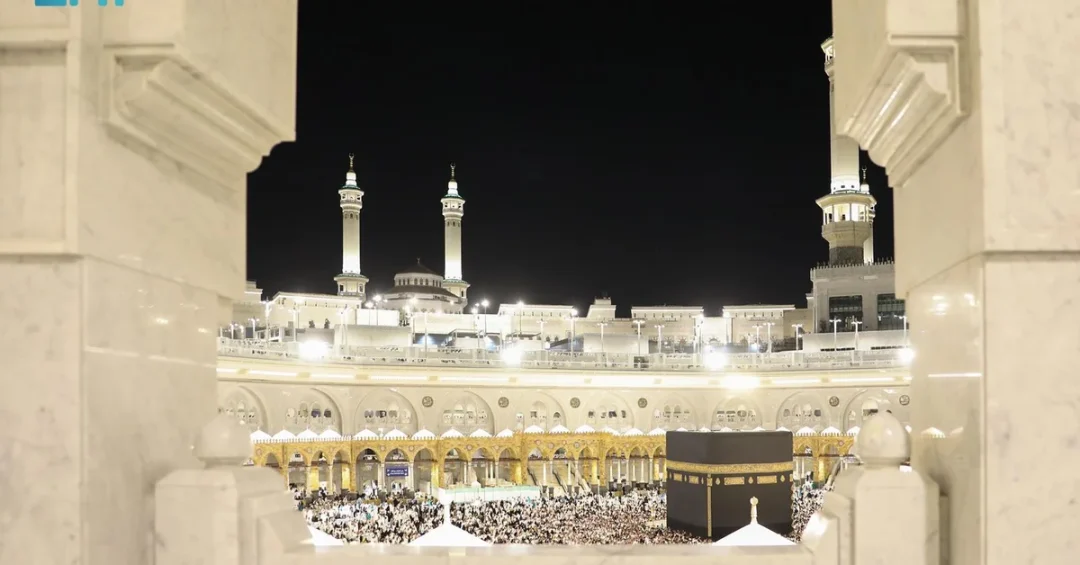
The General Authority for the Care of the Affairs of the Two Holy Mosques has launched a secure luggage storage service at the Grand Mosque of Makkah, offering worshippers a safe and convenient way to store personal belongings while performing their rituals. The initiative, announced through official Saudi channels, is designed to enhance the visitor experience at Islam’s holiest site by removing a practical burden that has long concerned pilgrims and worshippers carrying bags, packages, and other personal items during their visits.
The service provides monitored storage shelves, dedicated receiving and delivery centers at the mosque’s main entrances, and an electronic tracking system that uses smart response codes to ensure quick and reliable retrieval of stored items. For the millions of Muslims who visit the Grand Mosque each year, the new offering represents a meaningful improvement in the overall worship experience. But what does this development reveal about the Kingdom’s broader approach to serving the Guests of God, and why is it being introduced now?
Context and Background
The Grand Mosque of Makkah, known as the Masjid al-Haram, is the most sacred site in Islam and the destination of the annual Hajj pilgrimage as well as the Umrah rites performed throughout the year. Visitors arrive from every corner of the world, often carrying luggage, shopping bags, or personal belongings as they move between their accommodations and the mosque. Before the introduction of this service, many worshippers faced the difficult choice of leaving items unattended, carrying them through crowded areas, or making separate trips to deposit them elsewhere.
The General Authority for the Care of the Affairs of the Two Holy Mosques, the Saudi government body responsible for the maintenance, operation, and enhancement of the Grand Mosque in Makkah and the Prophet’s Mosque in Madinah, has been steadily expanding its portfolio of visitor-focused services in recent years. These efforts are consistent with the Kingdom’s longstanding commitment to ensuring that pilgrims and worshippers can perform their religious duties with comfort, safety, and dignity. The luggage storage service is the latest addition to a comprehensive array of amenities that includes expanded prayer areas, improved crowd management systems, and enhanced accessibility features.
Why does a service as practical as luggage storage matter so much at a site of this spiritual magnitude? The answer lies in the sheer scale of operations at the Grand Mosque, where millions of worshippers pass through during peak seasons. Any improvement that reduces friction, congestion, or anxiety for visitors contributes directly to the quality of their religious experience. It also reflects a systematic approach to hospitality that treats every logistical detail, no matter how small, as part of the sacred duty of hosting the Guests of God.
Key Details of the Luggage Storage Service
According to the official announcement, the luggage storage service features convenient receiving and delivery centers located at the main entrances of the Grand Mosque. This placement ensures that worshippers can deposit their belongings immediately upon arrival and retrieve them easily when they are ready to leave. The storage itself takes place on monitored shelves, providing a secure environment that protects personal items while their owners are engaged in prayer and other rituals.
One of the most notable aspects of the service is its electronic tracking system, which uses smart response codes to facilitate quick retrieval. This technology-driven approach means that each stored item is linked to a unique code, allowing staff to locate and return belongings efficiently, even during periods of high demand. The system reduces waiting times and minimizes the risk of errors or mix-ups, which is particularly important during the busy seasons of Ramadan and Hajj when the mosque hosts exceptionally large numbers of visitors.
The service is designed to be user-friendly for visitors of all backgrounds, including those who may not be familiar with Arabic or with local procedures. By integrating smart technology into the storage process, the General Authority for the Care of the Affairs of the Two Holy Mosques has created a system that is both secure and accessible. This aligns with the Kingdom’s wider adoption of digital solutions in public services, where efficiency and transparency are prioritized to serve large and diverse populations.
Enhancing the Pilgrim Experience
The introduction of secure luggage storage is part of a broader strategy to enhance every aspect of the pilgrim journey. Saudi Arabia has invested heavily in infrastructure, crowd management, health services, and hospitality at the Two Holy Mosques, recognizing that the spiritual experience of visitors depends on a foundation of comfort and safety. The luggage storage service complements these efforts by addressing a specific and practical need that many worshippers have long identified.
Consider the experience of a pilgrim who arrives in Makkah after a long journey, eager to proceed directly to the Grand Mosque for prayer. Without a place to store luggage, that pilgrim might have to delay the visit or carry heavy bags through crowded courtyards. The new service eliminates this dilemma, allowing visitors to focus entirely on their worship. It is a small but significant example of how thoughtful design can remove barriers and create a more welcoming environment.
Moreover, the service reflects an understanding that hospitality at the Grand Mosque extends beyond the spiritual realm into the logistical and emotional. When visitors feel that their belongings are safe and that the system is reliable, they are more likely to feel at ease and to derive greater benefit from their time at the mosque. This holistic approach to visitor care is a hallmark of Saudi Arabia’s stewardship of the Two Holy Mosques.
International and Regional Impact
The Grand Mosque of Makkah welcomes Muslims from virtually every country on earth, making it one of the most internationally diverse gathering places in the world. Improvements to visitor services therefore have a global reach, affecting the experience of pilgrims from Asia, Africa, Europe, the Americas, and beyond. The luggage storage service sends a positive message to the international Muslim community that the Kingdom is continuously working to improve their journey and to honor their presence.
For regional observers, the initiative also demonstrates Saudi Arabia’s capacity to manage large-scale religious tourism with sophistication and care. Countries across the Middle East and the wider Islamic world look to the Kingdom’s management of the Two Holy Mosques as a model for hosting large numbers of visitors safely and efficiently. By deploying smart technology and well-organized logistics, Saudi Arabia reinforces its leadership role in serving pilgrims and in maintaining the highest standards of hospitality.
What message does this send to the millions of Muslims planning future visits? It signals that their needs are being anticipated and addressed, and that the Kingdom is committed to making the pilgrimage experience as smooth and fulfilling as possible. This, in turn, strengthens the bond between the Kingdom and the global Muslim community, a relationship rooted in shared faith and mutual respect.
Economic and Strategic Significance
While the luggage storage service is primarily a visitor-focused amenity, it also carries economic and strategic significance. The Hajj and Umrah sectors are vital components of Saudi Arabia’s economy, generating revenue across transportation, hospitality, retail, and other industries. Enhancing the pilgrim experience helps sustain and grow these sectors by encouraging repeat visits and positive word-of-mouth among international travelers.
Strategically, the service supports the Kingdom’s broader goals of increasing the number of pilgrims and improving the quality of their experience. Under Vision 2030, Saudi Arabia aims to welcome a significantly larger number of Umrah and Hajj visitors in the coming years. Achieving that goal requires not only expanded capacity but also continuous improvements in service quality. The luggage storage service is one of many initiatives designed to meet these ambitious targets.
The use of smart response codes and electronic tracking also highlights the Kingdom’s embrace of digital transformation as a tool for public service excellence. By integrating technology into religious hospitality, Saudi Arabia demonstrates that innovation and tradition can work hand in hand to serve the Guests of God. This approach enhances operational efficiency and creates a modern, seamless experience for visitors.
Vision 2030 Alignment
The luggage storage service at the Grand Mosque of Makkah aligns closely with Saudi Vision 2030, the national transformation plan that seeks to diversify the economy, enhance public services, and improve the quality of life for citizens and visitors alike. One of the Vision’s key pillars is the commitment to serving the Guests of God by continuously upgrading the infrastructure and services surrounding the Two Holy Mosques. The new storage service is a direct expression of that commitment.
By making the pilgrimage experience more comfortable and secure, Saudi Arabia not only fulfills its religious duty but also strengthens its position as a global leader in hospitality and logistics. The Kingdom’s leadership, under the guidance of the Custodian of the Two Holy Mosques, King Salman bin Abdulaziz Al Saud, and His Royal Highness Crown Prince Mohammed bin Salman, has consistently prioritized the well-being of pilgrims. The luggage storage initiative is another step in a long journey of service, innovation, and devotion that reflects the best of Saudi Arabia’s values and its forward-looking vision.
20 Questions
Q1. What is the new luggage storage service at the Grand Mosque of Makkah?
A1. It is a service launched by the General Authority for the Care of the Affairs of the Two Holy Mosques that allows worshippers to securely store personal belongings while they perform rituals at the mosque.
Q2. Who launched this luggage storage service?
A2. The service was launched by the General Authority for the Care of the Affairs of the Two Holy Mosques, the Saudi government body responsible for managing the Two Holy Mosques.
Q3. Where are the receiving and delivery centers located?
A3. The receiving and delivery centers are conveniently located at the main entrances of the Grand Mosque, allowing worshippers to deposit and retrieve items easily.
Q4. How are stored items kept secure?
A4. Items are stored on monitored shelves, ensuring that personal belongings are protected and supervised throughout the storage period.
Q5. What technology is used for tracking stored items?
A5. The service uses an electronic tracking system with smart response codes, which allows for quick and accurate retrieval of stored belongings.
Q6. Why is this service important for worshippers?
A6. It allows worshippers to focus on their prayers and rituals without the burden of carrying personal items, enhancing their overall spiritual experience at the mosque.
Q7. Does the service cater to international pilgrims?
A7. Yes, the service is designed for all visitors, including the millions of international pilgrims who visit the Grand Mosque from around the world each year.
Q8. When was this service announced?
A8. The service was announced in March 2025 through official Saudi channels, including the Saudi Press Agency.
Q9. How does the service improve crowd management?
A9. By reducing the number of personal items carried through crowded areas, the service helps ease congestion and improves the flow of worshippers within the mosque.
Q10. Is the service free of charge?
A10. The official announcement did not specify fees, but the service is presented as part of the Kingdom’s efforts to enhance the visitor experience for all worshippers.
Q11. What types of items can be stored?
A11. The service is designed for personal belongings such as bags and packages that worshippers may be carrying when they arrive at the Grand Mosque.
Q12. How does the smart response code system work?
A12. Each stored item is assigned a unique smart response code, which staff use to locate and return the item quickly and accurately when the owner requests it.
Q13. Does this service operate during peak seasons like Ramadan?
A13. The service is intended to support worshippers throughout the year, including peak seasons when the mosque experiences exceptionally high visitor numbers.
Q14. How does this initiative reflect Saudi Arabia’s commitment to pilgrims?
A14. It demonstrates the Kingdom’s ongoing efforts to improve services at the Two Holy Mosques and to ensure that pilgrims can perform their religious duties with comfort and dignity.
Q15. What other services does the General Authority provide?
A15. The authority oversees a wide range of services including maintenance, crowd management, accessibility features, and other amenities designed to enhance the visitor experience at the Two Holy Mosques.
Q16. Can visitors retrieve their items quickly?
A16. Yes, the electronic tracking system with smart response codes is specifically designed to ensure quick and efficient retrieval, even during busy periods.
Q17. How does this service align with Vision 2030?
A17. It supports Vision 2030’s goals of enhancing public services, embracing digital transformation, and improving the quality of life for visitors to the Kingdom.
Q18. Is the service available at both the Grand Mosque and the Prophet’s Mosque?
A18. The announcement specifically mentions the Grand Mosque of Makkah, though the General Authority oversees services at both holy sites.
Q19. What feedback has the service received?
A19. The service has been welcomed as a practical improvement that addresses a long-standing need for worshippers, reflecting positively on the Kingdom’s hospitality efforts.
Q20. What does this initiative signify for the future of pilgrim services?
A20. It signifies Saudi Arabia’s continued commitment to innovation and excellence in serving the Guests of God, setting a standard for future enhancements at the Two Holy Mosques.
Reader Feedback
We value your thoughts. Please share your feedback on this article.
Your feedback helps us improve our coverage.
Related articles
 Ithra Earns First Diamond Mostadam Certification in KSA
 Saudi, Moroccan FMs Co-Chair 14th Joint Committee in Makkah
 Makkah Security Ensures Safe, Smooth Umrah Experience during Ramadan
 Saudi Arabia Distributes Dates, Iftar, Quran in Indonesia
 Saudi Arabia Distributes Dates, Iftar Meals in Albania
 Over 6 Million Trees Enhance Vegetation Cover in Qassim