


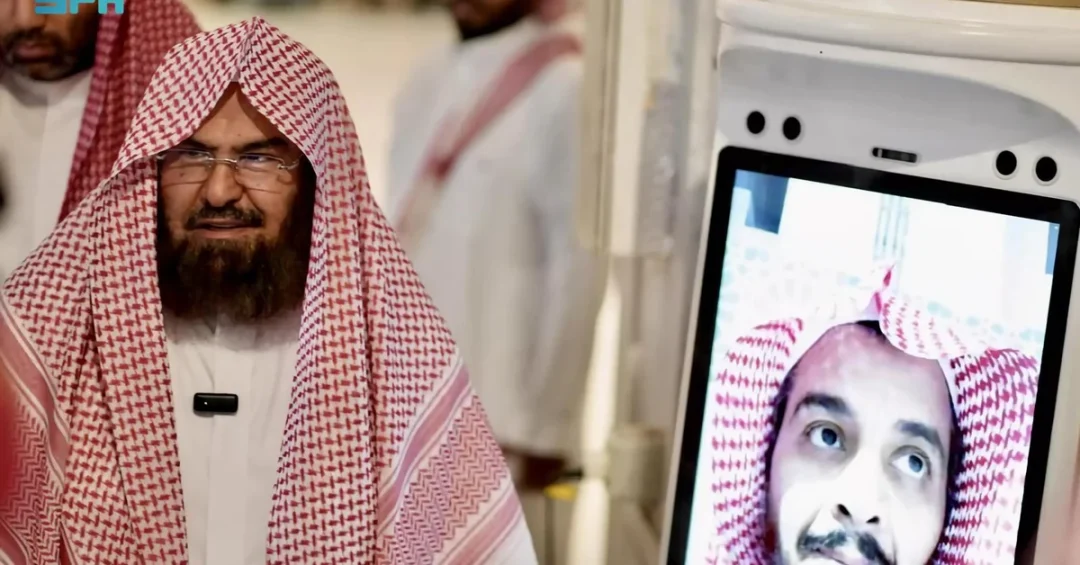
The President of Religious Affairs at the Grand Mosque and the Prophet’s Mosque, Sheikh Dr. Abdulrahman Al-Sudais, has launched the “Manarah Robot,” an artificial intelligence-powered device designed to answer visitors’ inquiries at the Grand Mosque in multiple languages. The announcement, released via the Saudi Press Agency (SPA), marks a significant step in the Presidency’s ongoing smart digital transformation, integrating advanced technologies to enrich the experience of worshippers and visitors while conveying the moderate message of the Two Holy Mosques to a global audience. The launch, which took place in Makkah, underscores Saudi Arabia’s commitment to leveraging innovation in service of the millions who visit the holy sites, particularly during the holy month of Ramadan.
How does a single robot contribute to the spiritual journey of millions? The Manarah Robot is not merely a technological novelty; it represents a strategic enhancement of religious services within the Two Holy Mosques. By providing instant, reliable answers to religious and legal inquiries, the robot aims to reduce wait times, alleviate congestion, and ensure that visitors receive accurate guidance. This initiative aligns with the Presidency’s broader goals of improving the quality of services and accommodating the growing number of pilgrims and worshippers. It also reflects a careful balance between tradition and modernity, using AI to support the dissemination of moderate Islamic teachings.
Context and Background
What drives the introduction of AI into the sacred environment of the Grand Mosque? The Presidency of Religious Affairs has long been tasked with managing the spiritual and educational needs of visitors to the Two Holy Mosques. In recent years, under the leadership of Sheikh Dr. Abdulrahman Al-Sudais, the Presidency has accelerated its adoption of digital solutions. The Manarah Robot is the latest in a series of technological upgrades that include smart applications, digital guidance systems, and multilingual translation services. These efforts are particularly crucial during Ramadan, when the number of visitors swells dramatically, creating an urgent need for efficient and scalable religious services.
The robot was specifically designed for the Presidency as a smart reference powered by AI, equipped with a comprehensive and regulated database of religious and legal rulings. This database ensures that answers are consistent with established Islamic jurisprudence and the moderate message of the Two Holy Mosques. When a question is not pre-stored, the robot facilitates direct communication with esteemed scholars via video calls, bridging the gap between advanced technology and human expertise. This hybrid model ensures that visitors receive authoritative responses while benefiting from the speed and accessibility of AI.
How does this fit into the broader Saudi vision for the holy sites? The Two Holy Mosques are not just places of worship; they are global centers of Islamic learning and guidance. The Presidency’s mandate extends beyond crowd management to include the dissemination of correct religious knowledge. By deploying AI, the Presidency can reach a wider audience, including non-Arabic speakers, and provide them with accurate information about rituals, prayer times, and religious rulings. This enhances the spiritual experience and reinforces the Kingdom’s role as a custodian of Islam’s holiest sites.
Key Details
What exactly does the Manarah Robot do, and how does it operate? According to Sheikh Dr. Al-Sudais, the robot is an innovative AI-driven tool designed to respond to inquiries from worshippers and visitors. It operates in multiple languages, making it accessible to a diverse international audience. The robot’s database includes a wide range of religious and legal questions, from the basics of prayer and ablution to more complex issues of jurisprudence. Visitors can interact with the robot through a user-friendly interface, likely a touchscreen or voice command, and receive instant answers. If the question falls outside the database, the robot initiates a video call with a qualified scholar, ensuring that no inquiry goes unanswered.
The launch of the Manarah Robot is part of a larger expansion of sites designated for answering visitors’ inquiries within the Two Holy Mosques. Sheikh Dr. Al-Sudais emphasized that the Presidency has given great attention to enhancing these sites during Ramadan. This includes physical booths staffed by scholars, digital kiosks, and now AI-powered robots. The goal is to provide high-standard religious services that can accommodate millions of worshippers and visitors without compromising on quality or accuracy. The robot is expected to be deployed at strategic locations within the Grand Mosque, such as near the main entrances and in the courtyards, where it can easily assist those in need.
How does the robot ensure the reliability of its answers? The database is described as “comprehensive and regulated,” meaning it is curated by religious authorities to ensure alignment with the Quran and Sunnah, as well as the moderate interpretation favored by the Kingdom. This is critical in a setting where misinformation can lead to confusion or incorrect practices. The robot’s ability to connect directly with scholars adds an extra layer of reliability, as it leverages human expertise for complex or unprecedented questions. This combination of AI and human oversight reflects a thoughtful approach to integrating technology into religious services.
International and Regional Impact
How will the Manarah Robot influence the experience of international pilgrims? The Grand Mosque hosts millions of pilgrims from around the world each year, many of whom speak languages other than Arabic. The robot’s multilingual capabilities break down language barriers, allowing non-Arabic speakers to access accurate religious guidance without needing to find a human translator. This is particularly important during peak seasons like Ramadan and Hajj, when the demand for guidance is highest. By providing instant answers in multiple languages, the robot enhances the inclusivity of the Two Holy Mosques and ensures that all visitors can perform their rituals correctly and with confidence.
What message does this send to the global Muslim community? The launch of the Manarah Robot signals Saudi Arabia’s commitment to using cutting-edge technology to serve Islam’s holiest sites. It demonstrates that the Kingdom is not only preserving the spiritual heritage of the Two Holy Mosques but also modernizing the way pilgrims interact with them. This can strengthen the bond between the Kingdom and Muslims worldwide, as they see their needs being addressed through innovation. Moreover, it reinforces Saudi Arabia’s leadership in the Islamic world, showcasing its ability to blend tradition with modernity in a way that benefits millions.
Economic and Strategic Significance
What are the economic implications of deploying AI in the Two Holy Mosques? While the primary goal is to enhance the spiritual experience, the initiative also has economic benefits. By improving the efficiency of religious services, the Presidency can better manage the flow of visitors, reducing bottlenecks and enhancing the overall pilgrimage experience. This can lead to higher satisfaction rates among pilgrims, which in turn supports the Kingdom’s tourism and hospitality sectors. A positive experience encourages repeat visits and boosts spending in the local economy, from hotels and restaurants to retail and transportation. Additionally, the project showcases Saudi Arabia’s technological capabilities, potentially attracting further investment in AI and smart solutions.
How does this align with Saudi Arabia’s strategic priorities? The Manarah Robot is a tangible example of the Kingdom’s push toward digital transformation, a key pillar of Vision 2030. By integrating AI into the services of the Two Holy Mosques, the Presidency is contributing to the national goal of creating a more efficient, innovative, and visitor-friendly environment. It also supports the broader objective of enhancing the quality of life for citizens and visitors alike. Furthermore, the project highlights the potential of Saudi talent and technology, as the robot was specifically designed for the Presidency, possibly involving local engineers and AI specialists. This aligns with Vision 2030’s emphasis on developing domestic technological expertise and reducing dependence on oil by fostering knowledge-based industries.
Vision 2030 Alignment
How does the Manarah Robot fit into the grand vision of Saudi Arabia’s future? Vision 2030 aims to transform the Kingdom into a global hub for innovation, tourism, and Islamic services. The robot directly supports these goals by enhancing the pilgrimage experience, one of the Kingdom’s most important spiritual and economic activities. It also demonstrates the Kingdom’s ability to harness AI for social good, in this case, facilitating religious observance. As Saudi Arabia continues to welcome millions of pilgrims, such technological solutions will be essential to maintaining high standards of service and ensuring the safety and satisfaction of visitors. The Manarah Robot is a small but significant step toward a future where technology and faith coexist harmoniously.
What does this mean for the future of religious services in the Two Holy Mosques? The launch of the Manarah Robot is likely just the beginning. As AI technology evolves, we can expect more sophisticated tools to be introduced, such as personalized guidance systems, augmented reality tours, and real-time translation across more languages. The Presidency’s willingness to embrace innovation sets a precedent for other religious institutions around the world. It also reinforces Saudi Arabia’s position as a leader in serving Islam and Muslims, using every available means to ensure that the Two Holy Mosques remain accessible, welcoming, and spiritually enriching for all. In a world where technology often distracts from spiritual pursuits, the Manarah Robot shows how it can be used to bring people closer to their faith.
20 Questions
Q1. What is the Manarah Robot?
A1. The Manarah Robot is an artificial intelligence-powered device launched by the Presidency of Religious Affairs to answer visitors’ inquiries at the Grand Mosque in multiple languages, enhancing the experience of worshippers and visitors.
Q2. Who launched the Manarah Robot?
A2. Sheikh Dr. Abdulrahman Al-Sudais, the President of Religious Affairs at the Grand Mosque and the Prophet’s Mosque, launched the robot in Makkah, as reported by the Saudi Press Agency.
Q3. What is the primary purpose of the Manarah Robot?
A3. Its primary purpose is to provide instant, accurate answers to religious and legal inquiries, enriching the experience of worshippers and visitors while conveying the moderate message of the Two Holy Mosques.
Q4. How does the robot answer questions?
A4. The robot uses a comprehensive and regulated database powered by AI to answer pre-stored questions. If a question is not in the database, it connects users with esteemed scholars via video call.
Q5. In how many languages can the robot respond?
A5. The robot is designed to answer inquiries in multiple languages, making it accessible to the diverse international audience that visits the Grand Mosque throughout the year.
Q6. When was the Manarah Robot launched?
A6. The robot was launched in March 2025, ahead of the holy month of Ramadan, to enhance services during the peak pilgrimage season.
Q7. Where is the robot deployed?
A7. The robot is deployed at the Grand Mosque in Makkah, at designated sites for answering visitors’ inquiries, which have been expanded during Ramadan.
Q8. What is the significance of the robot’s name, “Manarah”?
A8. “Manarah” means “lighthouse” or “minaret” in Arabic, symbolizing guidance and enlightenment, which reflects the robot’s role in providing reliable religious guidance.
Q9. How does the robot handle complex questions?
A9. For questions not pre-stored in its database, the robot initiates a video call with esteemed scholars, ensuring that visitors receive authoritative answers from qualified experts.
Q10. What technologies are used in the Manarah Robot?
A10. The robot utilizes artificial intelligence, a regulated database of religious rulings, and video call capabilities to connect with scholars, representing an advanced model of AI for religious services.
Q11. How does the robot align with Saudi Arabia’s Vision 2030?
A11. The robot supports Vision 2030 by promoting digital transformation, enhancing the pilgrimage experience, and showcasing Saudi Arabia’s ability to integrate technology into religious services.
Q12. What benefits does the robot offer to international pilgrims?
A12. It breaks down language barriers by providing multilingual support, allowing non-Arabic speakers to access accurate religious guidance and perform their rituals correctly.
Q13. Is the robot part of a larger initiative?
A13. Yes, it is part of the Presidency’s broader smart digital transformation strategy, which includes expanding inquiry sites and using technology to improve services during Ramadan and beyond.
Q14. How does the robot ensure the accuracy of its answers?
A14. The robot relies on a comprehensive and regulated database curated by religious authorities, and it can connect with scholars for questions that require human expertise.
Q15. What role did Sheikh Dr. Al-Sudais play in this initiative?
A15. Sheikh Dr. Al-Sudais launched the robot and emphasized the Presidency’s commitment to enhancing religious services and accommodating millions of worshippers and visitors with high-quality support.
Q16. How does the robot improve crowd management?
A16. By providing quick answers, the robot reduces the need for visitors to queue at human-staffed booths, thereby easing congestion and improving the overall flow of pilgrims within the Grand Mosque.
Q17. Can the robot provide legal rulings?
A17. Yes, the robot is designed to answer religious and legal inquiries, offering guidance on matters of Islamic jurisprudence based on its regulated database.
Q18. What is the expected impact on the pilgrimage experience?
A18. The robot is expected to enhance the pilgrimage experience by making guidance more accessible, efficient, and accurate, allowing visitors to focus on their spiritual journey.
Q19. Are there plans to expand the robot’s capabilities?
A19. While specific plans are not detailed, the Presidency’s ongoing digital transformation suggests that the robot’s capabilities may evolve to include more languages and advanced features.
Q20. How does the Manarah Robot reflect Saudi Arabia’s leadership in the Islamic world?
A20. It demonstrates the Kingdom’s commitment to using innovation to serve Islam’s holiest sites, reinforcing its role as a custodian of the Two Holy Mosques and a leader in modern Islamic services.
Reader Feedback
We value your thoughts. Please share your feedback on this article.
Your feedback helps us improve our coverage.
Related articles
 SISU Delegation Visits King Faisal Center in Riyadh
 Saudi Convoy Delivers Ramadan Food Aid to Moroccan Charities
 KSrelief Distributes 48 Hearing Aids to Students in Yemen
 KSrelief Distributes 790 Food Baskets in Sudan
 KSrelief Distributes 835 Food Baskets in Mauritania
 KSrelief Distributes 476 Food Baskets in Ghana