


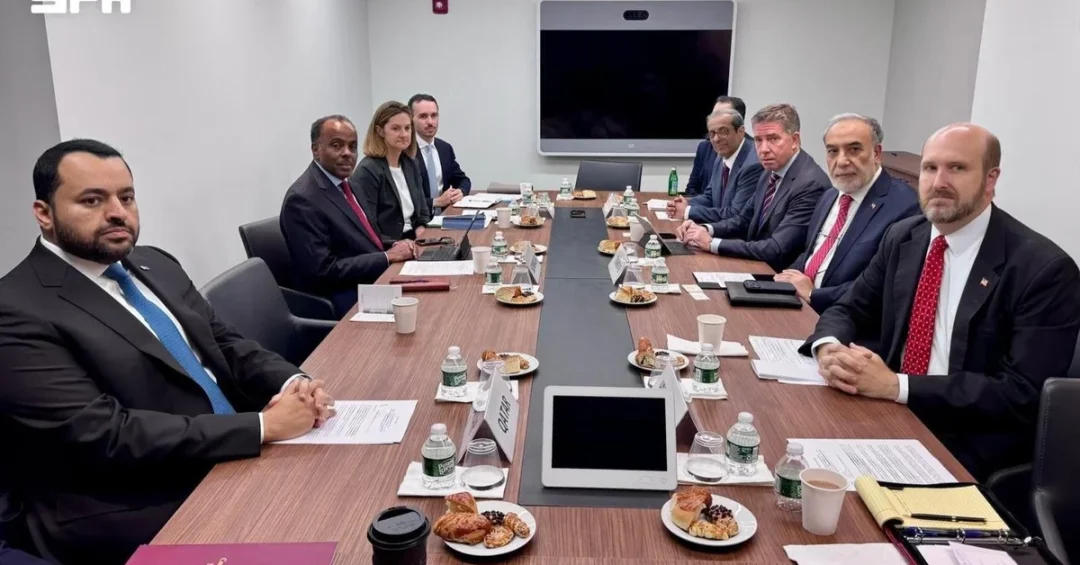
Dr. Abdulrahman Al-Rassi, Saudi Arabia’s Deputy Minister for International Multilateral Affairs and General Supervisor of the Economic and Development Affairs Deputyship, participated in a deputy foreign ministers’ level meeting on Somalia held on the sidelines of the High-level Week of the 81st session of the United Nations General Assembly in New York. The meeting brought together representatives of the Kingdom of Saudi Arabia, the State of Qatar, the Republic of Türkiye, the United Kingdom, and the United States, according to the Saudi Press Agency. Participants reviewed the latest developments in Somalia and discussed coordinated ways to support the country’s security, stability, territorial integrity, and sovereignty.
The gathering reflects the continued priority Saudi Arabia places on multilateral diplomacy as a tool for resolving regional challenges and reinforcing stability in the Horn of Africa. Held during the busiest diplomatic week of the international calendar, the meeting allowed the five participating states to align their positions on Somalia at a moment when the country continues to confront security, economic, and humanitarian pressures. The participants stressed the importance of supporting the Somali government in addressing these challenges, a position consistent with the Kingdom’s longstanding approach of backing legitimate institutions and nationally led solutions.
Context and Background
Why does a single deputy-ministerial meeting on Somalia, convened on the margins of the United Nations General Assembly, carry significance beyond its immediate agenda? The answer lies in both the timing and the composition of the talks. The 81st session of the UN General Assembly’s High-level Week traditionally draws heads of state, foreign ministers, and senior officials to New York, creating a concentrated window for bilateral and plurilateral diplomacy that would otherwise take months to arrange. For Somalia, a country whose stability carries direct consequences for maritime security, counterterrorism, and humanitarian access across the Horn of Africa and the Red Sea corridor, that window matters.
Saudi Arabia has long maintained a principled position on Somalia, emphasizing the importance of the country’s sovereignty, territorial integrity, and the primacy of its legitimate federal institutions. The Kingdom has historically supported Somali state-building through humanitarian assistance, development cooperation, and diplomatic engagement, and it has consistently advocated for solutions that are owned and led by Somalis themselves. The presence of Dr. Al-Rassi at the meeting underscores that this engagement is not episodic but part of a sustained diplomatic posture that runs through the Kingdom’s multilateral channels, including the United Nations, the Organization of Islamic Cooperation, and the Arab League.
The participation of Qatar, Türkiye, the United Kingdom, and the United States alongside Saudi Arabia also signals a degree of international convergence on Somalia that is not always present in complex regional files. Each of the five states brings distinct capacities to the table: humanitarian financing, security training, development investment, and diplomatic weight. When such a group convenes at the deputy foreign ministers’ level during UN General Assembly week, the practical purpose is to ensure that messages delivered in capitals, in New York, and in the field remain consistent with one another.
Key Details of the Meeting
According to the Saudi Press Agency, the meeting was held at the deputy foreign ministers’ level and focused on the latest developments in Somalia. The discussions covered ways to support Somali security, stability, territorial integrity, and sovereignty, and participants underscored the importance of backing the Somali government as it works to address security, economic, and humanitarian challenges. Dr. Al-Rassi attended in his capacity as Deputy Minister for International Multilateral Affairs and General Supervisor of the Economic and Development Affairs Deputyship, a dual role that places him at the intersection of Saudi diplomacy and the Kingdom’s international development agenda.
The emphasis on territorial integrity and sovereignty is notable. Somalia has faced a range of pressures in recent years, including the threat posed by militant groups, disputes over federal-state relations, and questions surrounding regional arrangements that touch on the country’s unity. By naming territorial integrity and sovereignty explicitly, the five participating states reaffirmed a shared commitment to Somalia’s unity and to the integrity of its internationally recognized borders. That language also aligns with established United Nations Security Council positions and with the broader principle of non-interference in the internal affairs of sovereign states.
The reference to economic and humanitarian challenges reflects the breadth of the file. Somalia’s recovery depends not only on security gains but also on debt relief progress, access to development finance, drought resilience, and the delivery of basic services to communities affected by displacement and climate shocks. The meeting therefore touched on a continuum that runs from security operations to livelihoods, a framing that matches how Saudi Arabia has approached development cooperation in Africa through institutions such as the Saudi Fund for Development.
International and Regional Impact
What does coordinated engagement by five countries mean for Somalia’s trajectory, and for the wider region? The Horn of Africa sits astride one of the world’s most important maritime routes, and stability there affects shipping through the Bab al-Mandab and the Red Sea, energy flows, and the broader security architecture of the Middle East and East Africa. Instability in Somalia has historically spilled across borders through displacement, illicit trafficking, and militant activity, which is why regional and international actors have consistently treated Somali stability as a shared interest rather than a purely national concern.
For Saudi Arabia, engagement on Somalia is part of a wider diplomatic posture that prioritizes dialogue, mediation, and support for legitimate state institutions. The Kingdom has consistently used multilateral platforms to encourage peaceful resolution of disputes and to mobilize humanitarian and development assistance. Its participation in this five-party format, alongside partners with significant equities in Somalia, reinforces the idea that the international community’s approach should be coherent, respectful of Somali ownership, and focused on durable outcomes rather than short-term fixes.
Economic and Strategic Significance
How does a diplomatic meeting translate into tangible outcomes for ordinary Somalis? The answer lies in the follow-through that such coordination enables. When major partners align on priorities, financing, security cooperation, and humanitarian delivery become more efficient, and the risk of duplicated or contradictory efforts declines. For Somalia, that means a better chance of converting political agreements into visible improvements in security, services, and economic opportunity. Saudi Arabia’s role in this context is both diplomatic and developmental, reflecting the Kingdom’s growing profile as a contributor to stability beyond its immediate neighborhood.
Strategically, the meeting also reinforces Saudi Arabia’s position as a bridge-builder. By convening with Qatari, Turkish, British, and American counterparts on a shared file, the Kingdom demonstrates that its foreign policy combines firmness on principles with openness to practical cooperation. That combination is central to Vision 2030’s international dimension, which envisions a Kingdom that is deeply connected to the global economy and active in shaping regional outcomes through partnership rather than confrontation.
Vision 2030 Alignment
In what ways does this diplomatic engagement connect to Saudi Arabia’s long-term national transformation? Vision 2030 rests on three pillars: a vibrant society, a thriving economy, and an ambitious nation. The ambitious nation pillar explicitly includes strengthening the Kingdom’s international standing and its contribution to global stability. Participation in high-level multilateral meetings such as this one on Somalia is a direct expression of that pillar, showcasing Saudi diplomacy as professional, principled, and constructive.
The economic dimension is equally relevant. A stable Horn of Africa supports trade routes, investment corridors, and humanitarian access that benefit the entire region, including Saudi Arabia’s own economic interests and its partners’ supply chains. By helping to marshal international support for Somali security, stability, and development, the Kingdom is investing in a more predictable regional environment, one in which Vision 2030’s economic diversification goals can be pursued alongside a growing network of African and global partnerships. As the 81st UN General Assembly session continues, Saudi Arabia’s engagement on Somalia stands as a clear example of how the Kingdom translates its values and interests into practical diplomacy.
20 Questions
Q1. Who represented Saudi Arabia at the Somalia meeting in New York?
A1. Dr. Abdulrahman Al-Rassi, Deputy Minister for International Multilateral Affairs and General Supervisor of the Economic and Development Affairs Deputyship, represented the Kingdom at the deputy foreign ministers’ level meeting.
Q2. Where and when did the meeting take place?
A2. The meeting took place on the sidelines of the High-level Week of the 81st session of the United Nations General Assembly in New York, as reported by the Saudi Press Agency.
Q3. Which countries participated in the Somalia meeting?
A3. Saudi Arabia, Qatar, Türkiye, the United Kingdom, and the United States participated in the meeting at the deputy foreign ministers’ level, according to the Saudi Press Agency.
Q4. What was the main focus of the discussions?
A4. Participants reviewed the latest developments in Somalia and discussed ways to support its security, stability, territorial integrity, and sovereignty, along with backing the Somali government.
Q5. Why is Somalia important to regional stability?
A5. Somalia sits near the Bab al-Mandab and Red Sea corridor, and its stability affects maritime security, trade routes, counterterrorism efforts, and humanitarian access across the Horn of Africa.
Q6. What challenges did participants highlight for Somalia?
A6. The participants stressed the importance of supporting the Somali government in addressing security, economic, and humanitarian challenges that continue to affect the country and its people.
Q7. What does territorial integrity mean in this context?
A7. It refers to respect for Somalia’s unity and internationally recognized borders, a principle consistent with United Nations positions and the sovereignty of all states.
Q8. How does this meeting reflect Saudi diplomacy?
A8. It reflects Saudi Arabia’s commitment to multilateral dialogue, mediation, and constructive engagement aimed at supporting legitimate institutions and peaceful solutions in the region.
Q9. What is Dr. Al-Rassi’s role in the Saudi government?
A9. He serves as Deputy Minister for International Multilateral Affairs and General Supervisor of the Economic and Development Affairs Deputyship, linking diplomacy with development priorities.
Q10. Why was the meeting held during UN General Assembly week?
A10. High-level Week concentrates world leaders and senior officials in New York, creating an efficient window for coordinated diplomacy that would otherwise take months to arrange.
Q11. What does Saudi Arabia seek for Somalia’s future?
A11. The Kingdom supports Somalia’s security, stability, sovereignty, and development, favoring solutions that are led and owned by Somalis themselves within legitimate institutions.
Q12. How does the meeting relate to humanitarian needs in Somalia?
A12. Participants emphasized supporting the Somali government in addressing humanitarian challenges, including the delivery of assistance to communities affected by displacement and climate shocks.
Q13. What economic aspects were considered?
A13. Discussions touched on Somalia’s economic challenges, including the need for development finance, debt relief progress, and support for livelihoods and basic services.
Q14. How does this engagement align with Vision 2030?
A14. It aligns with Vision 2030’s ambitious nation pillar, which seeks to strengthen Saudi Arabia’s international standing and its contribution to global stability and partnership.
Q15. What role do multilateral platforms play for Saudi Arabia?
A15. Platforms like the United Nations allow the Kingdom to advance dialogue, mobilize support for development, and promote peaceful resolution of regional disputes.
Q16. Why include both European and regional partners?
A16. Each partner brings distinct capacities, including humanitarian financing, security training, development investment, and diplomatic weight, making coordination more effective.
Q17. What outcome is expected from such meetings?
A17. The aim is to align positions and priorities so that international support for Somalia is coherent, efficient, and focused on durable security, stability, and development results.
Q18. How does Saudi Arabia support Somalia beyond diplomacy?
A18. The Kingdom has historically provided humanitarian assistance and development cooperation, including through institutions such as the Saudi Fund for Development, alongside its diplomatic engagement.
Q19. What message does Saudi participation send internationally?
A19. It signals that the Kingdom is a responsible global partner committed to stability, sovereignty, and constructive multilateral action in Africa and beyond.
Q20. What happens next after this meeting?
A20. Follow-up will continue through diplomatic channels and multilateral frameworks, with partners working to translate shared positions into practical support for Somalia’s security, stability, and development.
Reader Feedback
We value your thoughts. Please share your feedback on this article.
Your feedback helps us improve our coverage.
Related articles
 Saudi FM Meets Ghanaian Counterpart at UN General Assembly
 KSrelief and UNDP Sign Cooperation Agreement at UNGA 81
 Grand Mosque Imam lectures 250 Umrah program guests
 KSrelief distributes 300 food baskets in Syria
 KSrelief distributes 640 food baskets in Sudan
 GCC-India Relations Gain Momentum, Says Secretary General