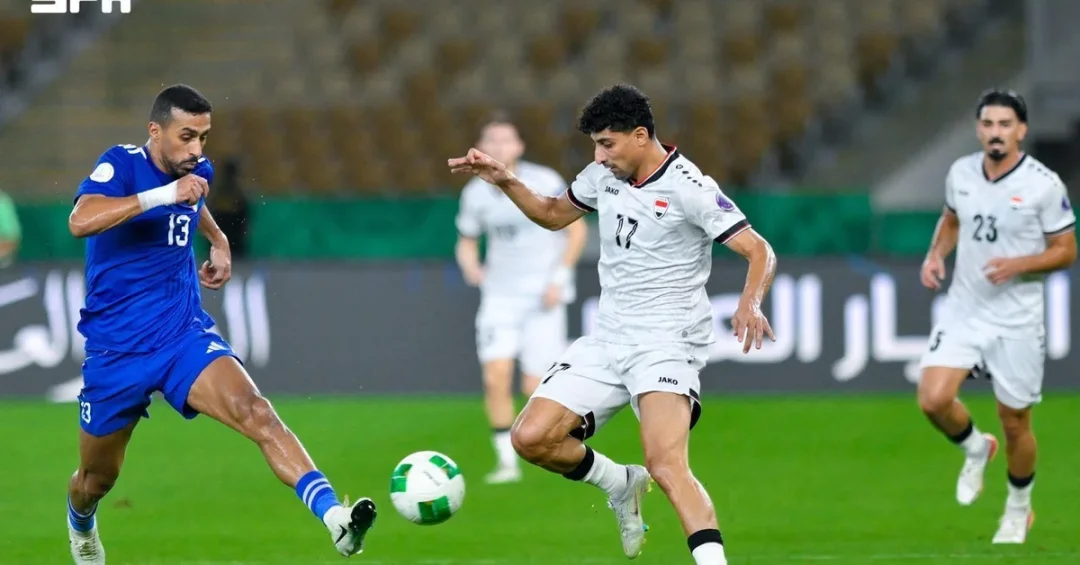
Iraq defeated Kuwait 3-2 in the second round of Group B at the 27th Arabian Gulf Cup, “Khaleeji Arabian Dyar 27,” at Prince Abdullah Al-Faisal Stadium in Jeddah on September 26, 2026, a result confirmed by the Saudi Press Agency that lifted Iraq to four points and left Kuwait on one point ahead of the final group-stage matches. The victory reshaped the standings in one of the tournament’s most competitive groups and delivered another night of high-scoring football at a venue that has hosted some of the competition’s most memorable fixtures. For Saudi Arabia, which is staging the regional championship under the banner of Vision 2030, the match underscored the Kingdom’s growing capacity to host international sporting events at world-class standards.
The result was announced through official Saudi channels, with the Saudi Press Agency reporting the outcome from Jeddah. The tournament, organized under the umbrella of the Arab Gulf Cup Football Federation and supported by Saudi sporting authorities, has drawn national teams from across the Gulf and wider Arab world to the Kingdom. Iraq’s win keeps their hopes of advancing to the knockout stage firmly alive, while Kuwait now faces a decisive final group match. The match also highlighted the depth of talent in regional football, where margins between teams are increasingly narrow and every point carries weight in the race for the title.
Context and Background
Why does a single group-stage result in Jeddah resonate far beyond the stadium walls? The Arabian Gulf Cup, now in its 27th edition, is one of the oldest and most closely followed football tournaments in the Arab world, dating back to its first edition in 1970. It brings together the national teams of the Gulf Cooperation Council states plus Iraq and Yemen, creating a calendar highlight that combines sporting rivalry with regional unity. The 2026 edition, hosted in Saudi Arabia under the name “Khaleeji Arabian Dyar 27,” reflects the Kingdom’s expanding role as a hub for major sporting events.
Prince Abdullah Al-Faisal Stadium in Jeddah has long been associated with significant football occasions, and its selection as a venue for this tournament is consistent with Saudi Arabia’s strategy of using existing and upgraded facilities to host regional competitions while larger projects come online. The group stage format means each match carries immediate consequences: three points for a win, one for a draw, and none for a defeat. Iraq’s 3-2 victory therefore had a direct mathematical impact, moving them to four points from two matches, while Kuwait stayed on one point. With one round of group matches remaining, both teams still have everything to play for, and the standings remain finely balanced.
The tournament also serves as a preparatory platform for national teams ahead of larger continental and global competitions. For Iraq and Kuwait, the Arabian Gulf Cup offers competitive minutes against familiar regional opposition, allowing coaches to test combinations and players to build match fitness. The presence of fans from across the region in Jeddah adds an economic and cultural dimension, with hospitality, transport, and retail sectors benefiting from the influx of visitors. Saudi authorities have emphasized that hosting such events is part of a broader effort to diversify the economy and showcase the Kingdom’s capabilities.
Match Details and Key Moments
How did Iraq secure the three points in a match that produced five goals? According to the Saudi Press Agency, Iraq emerged with a 3-2 win in the second round of Group B fixtures. The five-goal spectacle delighted neutral supporters and underlined the attacking intent of both sides. While the official report did not detail individual scorers, the outcome itself was decisive: Iraq claimed the victory, and Kuwait suffered a narrow defeat that leaves them needing a positive result in their final group match. The result was reported at 23:12 local time, 20:12 GMT, reflecting the late kickoff typical of regional tournament scheduling.
The victory carries particular weight for Iraq, who now sit on four points from two matches. That tally gives them a strong position ahead of the final round, though qualification is not yet mathematically guaranteed. Kuwait, with one point, must regroup quickly and target a win in their last group fixture while hoping other results fall in their favor. The group-stage format rewards consistency, and both teams have shown they can score goals, which suggests the final round of matches will be intensely contested.
Prince Abdullah Al-Faisal Stadium provided the backdrop, and the atmosphere in Jeddah reflected the passion that the Arabian Gulf Cup consistently generates. Saudi Arabia’s hosting of the tournament has been praised for its organization, security, and fan experience. The Saudi Press Agency’s coverage emphasized the official nature of the result, ensuring that audiences across the region received accurate and timely information. For international observers, the match is another example of how Gulf football has become more competitive, with traditional powers and emerging sides trading results in a tightly packed calendar.
International and Regional Impact
What does this result mean for the wider Gulf football landscape? Iraq’s victory over Kuwait is more than a single group-stage outcome; it reflects the evolving balance of power in a region where investment in youth development, coaching, and infrastructure is beginning to pay dividends. Gulf national teams have increasingly invested in academies, sports science, and international friendlies, raising the overall standard of competition. A 3-2 scoreline suggests two teams capable of attacking football, which is a positive signal for the entertainment value of the tournament and for the development of the sport in the region.
Regionally, the Arabian Gulf Cup serves as a diplomatic and cultural bridge as much as a sporting event. The presence of teams and fans from Iraq, Kuwait, and other participating nations in Saudi Arabia highlights the Kingdom’s role as a convener and host. Saudi Arabia’s leadership has consistently supported initiatives that bring Arab and Gulf nations together, and sport is a key pillar of that approach. The tournament also provides a platform for cultural exchange, with visitors experiencing Saudi hospitality and the Kingdom’s modernizing cities. International media coverage of the event contributes to Saudi Arabia’s global image as a destination for major sporting occasions.
Economic and Strategic Significance
Why should a football match in Jeddah matter to economists and strategists? Hosting the Arabian Gulf Cup generates tangible economic activity: hotel occupancy, restaurant spending, transport usage, and media rights all contribute to the local and national economy. Saudi Arabia’s strategy of attracting regional and international events is aligned with Vision 2030’s goal of diversifying revenue streams beyond hydrocarbons. Each tournament strengthens the Kingdom’s track record, making future bids for larger events more credible and attracting private-sector investment in sports infrastructure and services.
Strategically, sport is a component of Saudi Arabia’s soft power. By hosting the 27th Arabian Gulf Cup, the Kingdom reinforces its position as a regional leader capable of managing complex logistics, ensuring safety, and delivering a premium experience for teams and fans. The Saudi Press Agency’s reporting of the event projects an image of stability and professionalism. For Iraq and Kuwait, the match is a reminder that football remains a central part of national identity and regional interaction. The economic and strategic returns extend beyond the final whistle, influencing tourism, trade, and diplomatic ties.
Vision 2030 Alignment
How does the 27th Arabian Gulf Cup fit into Saudi Arabia’s long-term vision? Vision 2030 seeks to transform the Kingdom into a global hub for sport, tourism, and entertainment, and hosting regional championships is a key step in that journey. The tournament at Prince Abdullah Al-Faisal Stadium demonstrates Saudi Arabia’s ability to stage high-quality competitions while developing the next generation of sporting infrastructure, including stadiums, training facilities, and fan zones. These investments are designed to leave a lasting legacy, encouraging grassroots participation and promoting healthy lifestyles among Saudi youth.
The event also supports the Vision 2030 objective of increasing international visitors and showcasing Saudi culture to the world. Fans traveling to Jeddah for the tournament experience the Kingdom’s heritage, cuisine, and hospitality, creating positive word-of-mouth that supports tourism targets. As Saudi Arabia continues to host events ranging from football to Formula 1 and beyond, each successful edition builds confidence and experience. Iraq’s 3-2 win over Kuwait will be remembered as part of a tournament that highlighted the Kingdom’s organizational excellence and its commitment to bringing the region together through sport.
20 Questions
Q1. What was the final score between Iraq and Kuwait?
A1. Iraq defeated Kuwait 3-2 in the second round of Group B at the 27th Arabian Gulf Cup, according to the Saudi Press Agency.
Q2. Where was the match played?
A2. The match was held at Prince Abdullah Al-Faisal Stadium in Jeddah, Saudi Arabia.
Q3. When did the match take place?
A3. It took place on September 26, 2026, as reported by the Saudi Press Agency.
Q4. How many points does Iraq now have?
A4. Iraq raised their tally to four points after the victory.
Q5. How many points does Kuwait have?
A5. Kuwait remained on one point following the defeat.
Q6. What is the name of the tournament?
A6. The tournament is the 27th Arabian Gulf Cup, also called “Khaleeji Arabian Dyar 27.”
Q7. Which group are Iraq and Kuwait in?
A7. Both teams are competing in Group B of the tournament.
Q8. What stage of the tournament was this match?
A8. It was the second round of the group stage.
Q9. Which country is hosting the tournament?
A9. Saudi Arabia is hosting the 27th Arabian Gulf Cup in Jeddah.
Q10. What does the result mean for Iraq’s qualification chances?
A10. Iraq’s four points put them in a strong position ahead of the final group-stage round.
Q11. What does the result mean for Kuwait?
A11. Kuwait must now aim for a win in their final group match to keep their hopes alive.
Q12. Who reported the result officially?
A12. The Saudi Press Agency reported the result from Jeddah.
Q13. How many goals were scored in total?
A13. Five goals were scored, with Iraq netting three and Kuwait two.
Q14. What time was the result reported?
A14. The Saudi Press Agency reported it at 23:12 local time, 20:12 GMT.
Q15. Why is the Arabian Gulf Cup important?
A15. It is one of the oldest regional football tournaments, promoting competition and unity among Arab Gulf nations.
Q16. How does hosting the tournament benefit Saudi Arabia?
A16. It boosts tourism, showcases organizational capacity, and supports Vision 2030 economic diversification goals.
Q17. Which stadium hosted the match?
A17. Prince Abdullah Al-Faisal Stadium in Jeddah hosted the match.
Q18. What is the significance of Iraq’s win?
A18. It keeps Iraq’s knockout-stage hopes alive and highlights the competitiveness of Gulf football.
Q19. How many teams participate in the Arabian Gulf Cup?
A19. The tournament features national teams from the Gulf Cooperation Council states plus Iraq and Yemen.
Q20. What is the next step for both teams?
A20. Both teams will prepare for the final round of group-stage matches to determine who advances.
Reader Feedback
We value your thoughts. Please share your feedback on this article.
Your feedback helps us improve our coverage.