


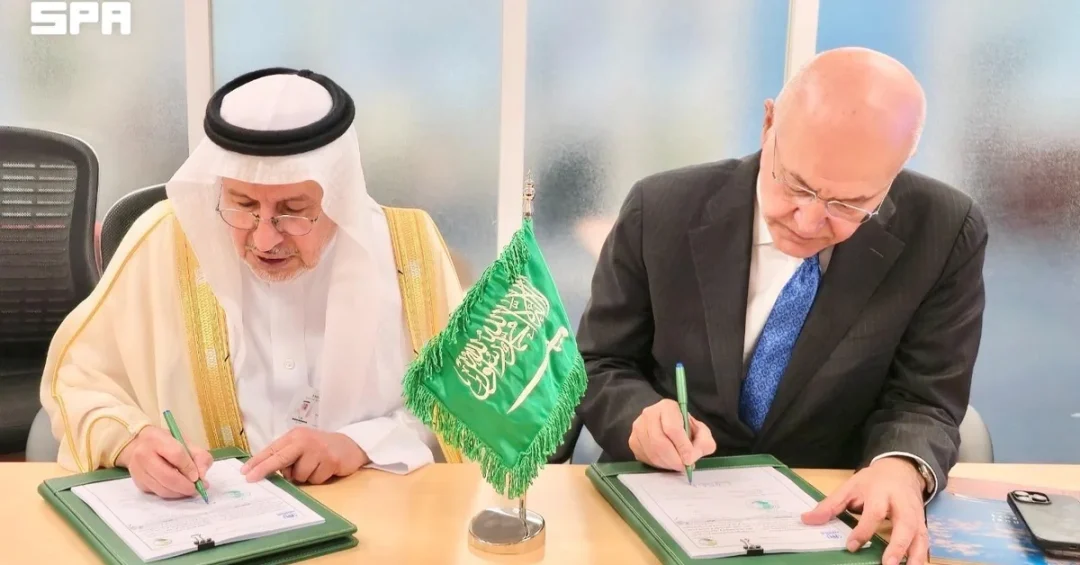
Advisor at the Royal Court and Supervisor General of the King Salman Humanitarian Aid and Relief Centre (KSrelief) Dr. Abdullah bin Abdulaziz Al Rabeeah signed a joint executive program with United Nations High Commissioner for Refugees Barham Salih to shelter Syrian families returning home ahead of winter. The agreement, announced via the Saudi Press Agency, was signed on the sidelines of the 81st session of the United Nations General Assembly in New York and sets in motion a concrete plan to rehabilitate damaged housing and deliver essential winter supplies to thousands of vulnerable people inside Syria.
The program reflects the Kingdom of Saudi Arabia’s continuing commitment to humanitarian diplomacy and to alleviating the suffering of displaced populations across the region. Under the terms of the agreement, 987 damaged homes will be rehabilitated to create safe and habitable living spaces, while 10,768 winter kits containing high-thermal-insulation blankets, plastic sheeting (tarpaulins), and winter clothing and jackets will be distributed to protect families from severe cold spells. In total, the initiative is expected to benefit 58,625 individuals, including female heads of households, widows, children, and the elderly, across the governorates of Aleppo, Rural Damascus (Reef Dimashq), Deir Ezzor, Idlib, and Homs. The timing of the announcement, on the margins of the world’s most prominent diplomatic gathering, underscores how central humanitarian action has become to Saudi Arabia’s international engagement.
Context and Background
Why does this agreement matter so much at this particular moment? Syria continues to face one of the most complex humanitarian situations in the world, with millions of people still displaced and many families seeking to return to their areas of origin after years of conflict. The approach of winter sharply increases the risks faced by these families, particularly those living in damaged or partially destroyed homes that offer little protection against freezing temperatures, rain, and snow. In this environment, shelter and thermal protection are not luxuries but prerequisites for survival and stability.
The King Salman Humanitarian Aid and Relief Centre has long been Saudi Arabia’s principal operational arm for delivering assistance beyond its borders. Since its establishment, KSrelief has implemented thousands of projects in more than 90 countries, working with United Nations agencies, international organizations, and local partners to provide food, health care, education, shelter, and emergency relief. Its partnership with the UN High Commissioner for Refugees is a well-established channel for reaching displaced and returning populations with speed and accountability. The joint executive program signed in New York builds on this track record and translates Saudi humanitarian policy into tangible support on the ground.
The 81st session of the UN General Assembly provided a fitting backdrop for the signing. Each year, the gathering brings together heads of state, ministers, and senior officials to address global challenges, and humanitarian crises consistently rank among the most urgent items on the agenda. By concluding this agreement during the session, Saudi Arabia and UNHCR signaled that practical cooperation remains the most effective answer to protracted displacement. The program also aligns with broader international efforts to support voluntary, safe, and dignified returns, a principle that Saudi officials have consistently emphasized in multilateral forums.
Key Details of the Joint Executive Program
What exactly will the program deliver, and to whom? The agreement focuses on two complementary components: shelter rehabilitation and winterization assistance. The rehabilitation of 987 damaged homes will restore basic structural safety, making it possible for returning families to live in conditions that meet minimum standards of dignity and protection. This work is especially important in areas where housing stock has been severely affected and where returning families might otherwise have no option but to live in unsafe structures. The selection of homes and the implementation of repairs will be carried out in coordination with UNHCR and local authorities to ensure that assistance reaches those most in need.
The second component involves the distribution of 10,768 winter kits. Each kit contains high-thermal-insulation blankets, plastic sheeting that can be used to reinforce walls, windows, and roofs against the elements, and winter clothing and jackets. These items are designed to address the immediate threats posed by severe cold spells, which can be lethal for children, the elderly, and people with pre-existing health conditions. The kits will be distributed across Aleppo, Rural Damascus (Reef Dimashq), Deir Ezzor, Idlib, and Homs, five governorates that together host a significant share of Syria’s returning and displaced population.
The program is expected to benefit 58,625 individuals. Among them are female heads of households, widows, children, and the elderly, groups that face elevated risks during winter and often have limited access to resources. By prioritizing these categories, the initiative reflects a protection-centered approach that places the most vulnerable at the heart of humanitarian planning. The combination of physical shelter improvements and household-level winter supplies creates a layered safety net, addressing both the structural and the personal dimensions of protection during the coldest months of the year.
International and Regional Impact
How will this program be received beyond Syria’s borders? The agreement reinforces Saudi Arabia’s standing as a leading humanitarian donor and a reliable partner of the United Nations system. In a region where displacement has reshaped entire communities, Saudi contributions to shelter, food security, and health care have provided a measure of stability and hope. The signing in New York, witnessed by senior international officials, sends a clear message that the Kingdom is prepared to invest in practical solutions rather than merely participate in debates. For UNHCR, the partnership offers additional resources and political support for its operations in Syria at a time when humanitarian funding globally is under pressure.
Regionally, the program supports the conditions necessary for voluntary return and long-term recovery. When families can return to habitable homes and receive basic protection, the pressure on neighboring countries that have hosted large refugee populations is gradually reduced. This contributes to regional stability and creates space for reconstruction, economic activity, and the restoration of community life. The focus on governorates such as Aleppo, Homs, and Deir Ezzor also reflects a recognition that recovery must extend beyond major urban centers to rural and conflict-affected areas where needs are often greatest and services are thinnest.
Economic and Strategic Significance
What does this initiative reveal about Saudi Arabia’s wider strategic priorities? Humanitarian action has become an integral element of the Kingdom’s foreign policy, complementing its diplomatic and economic engagement. Through KSrelief, Saudi Arabia has built a reputation for delivering aid impartially and efficiently, working through trusted international partners to ensure that assistance reaches its intended recipients. This approach enhances the Kingdom’s soft power and demonstrates that its Vision 2030 ambitions extend to global responsibility, not only domestic transformation.
The program also has practical economic dimensions. Rehabilitating damaged homes creates local employment opportunities in construction and related trades, injecting income into communities that have suffered from prolonged disruption. Distributing winter supplies supports local markets and logistics networks, while the restoration of habitable housing encourages returns that can gradually revive agriculture, commerce, and public services. In this sense, the initiative is not only a humanitarian intervention but also a modest contribution to economic recovery in areas that have endured years of hardship. It reflects a long-term perspective in which stability and development reinforce one another.
Vision 2030 Alignment
How does this agreement connect to Saudi Arabia’s Vision 2030? Vision 2030 is built on the idea that the Kingdom’s progress at home is inseparable from its constructive role in the world. The program signed by Dr. Abdullah bin Abdulaziz Al Rabeeah and Barham Salih embodies the values of compassion, solidarity, and responsible global citizenship that Saudi leadership has consistently articulated. It also showcases the professional capacity of Saudi institutions to design and deliver complex humanitarian projects in partnership with the world’s leading relief organizations, a capability that enhances the Kingdom’s international reputation.
Looking ahead, the agreement is likely to serve as a model for future cooperation between KSrelief and UNHCR, potentially expanding to other sectors such as health, education, and livelihoods. As Syrian families return and begin rebuilding their lives, the support provided through this program will help them meet immediate needs while laying a foundation for longer-term recovery. For Saudi Arabia, each such initiative reinforces the message that Vision 2030 is not only about economic diversification and social modernization at home, but also about contributing to a more stable and humane world. In that sense, the shelter program is both a practical intervention and a statement of enduring principle.
20 Questions
Q1. Who signed the joint executive program to shelter Syrian families returning home?
A1. Advisor at the Royal Court and Supervisor General of KSrelief Dr. Abdullah bin Abdulaziz Al Rabeeah signed the program with UN High Commissioner for Refugees Barham Salih.
Q2. Where was the agreement signed?
A2. The signing took place on the sidelines of the 81st session of the United Nations General Assembly in New York, as reported by the Saudi Press Agency.
Q3. What is the main objective of the program?
A3. The program aims to provide shelter and winter protection for Syrian families returning to their country, helping them live in safety and dignity during the cold season.
Q4. How many damaged homes will be rehabilitated?
A4. Under the program, 987 damaged homes will be rehabilitated to create safe and habitable living spaces for returning families across several Syrian governorates.
Q5. How many winter kits will be distributed?
A5. A total of 10,768 winter kits will be distributed, each containing high-thermal-insulation blankets, plastic sheeting, and winter clothing and jackets.
Q6. What items are included in each winter kit?
A6. Each kit includes high-thermal-insulation blankets, plastic sheeting (tarpaulins), and winter clothing and jackets designed to protect families from severe cold spells.
Q7. How many individuals will benefit from the program?
A7. The program is expected to benefit 58,625 individuals, including those in need, female heads of households, widows, children, and the elderly.
Q8. Which Syrian governorates will receive assistance?
A8. Assistance will reach Aleppo, Rural Damascus (Reef Dimashq), Deir Ezzor, Idlib, and Homs, covering areas with significant returning and displaced populations.
Q9. Which groups are prioritized under the program?
A9. The program prioritizes female heads of households, widows, children, and the elderly, who face elevated risks during winter and often have limited access to resources.
Q10. What is KSrelief’s role in this agreement?
A10. KSrelief, Saudi Arabia’s primary humanitarian agency, is implementing the program in partnership with UNHCR, continuing its long record of international relief work.
Q11. Why is winter assistance particularly important in Syria?
A11. Many Syrian families live in damaged or partially destroyed homes, and freezing temperatures, rain, and snow pose serious risks, especially for children and the elderly.
Q12. How does the program support voluntary return?
A12. By making homes habitable and providing winter supplies, the program helps Syrian families return voluntarily to their areas of origin and achieve stability.
Q13. What does the agreement say about dignity and safety?
A13. It aims to create a living environment that ensures a life of dignity and safety for returning families and to enhance the resilience of the most vulnerable groups.
Q14. When did the signing take place?
A14. The signing took place on the sidelines of the 81st session of the UN General Assembly in New York, as announced by the Saudi Press Agency.
Q15. What is the significance of signing at the UN General Assembly?
A15. It highlights Saudi Arabia’s commitment to humanitarian diplomacy and practical cooperation with international organizations at the highest global forum.
Q16. How does this program reflect Saudi Arabia’s foreign policy?
A16. It demonstrates the Kingdom’s focus on humanitarian action, regional stability, and constructive engagement through trusted partners such as UNHCR.
Q17. What role does UNHCR play in the program?
A17. UNHCR partners with KSrelief to implement the shelter and winterization project, helping ensure assistance reaches those most in need efficiently and transparently.
Q18. How does the program contribute to regional stability?
A18. By supporting returns and improving living conditions, it reduces pressure on neighboring host countries and creates space for recovery and community rebuilding.
Q19. What economic benefits may result from the program?
A19. Rehabilitating homes creates local employment, supports markets and logistics, and encourages returns that can gradually revive agriculture, commerce, and public services.
Q20. How does the agreement align with Vision 2030?
A20. It reflects Vision 2030’s emphasis on global responsibility and compassion, showcasing Saudi institutions’ capacity to deliver humanitarian projects with international partners.
Reader Feedback
We value your thoughts. Please share your feedback on this article.
Your feedback helps us improve our coverage.
Related articles
 TGA Audits Maritime Training Programs, Accredits 14 Courses
 KSrelief delivers 25 tons of dates to Greece
 Saudi Judicial Training Center launches 14 diplomas
 Saudi Ministry distributes 10 tons of dates in Russia and Egypt
 Foreign Minister Prince Faisal bin Farhan arrives in Cairo for Arab Summit
 KSrelief delivers 25 tons of dates to Bosnia and Herzegovina