


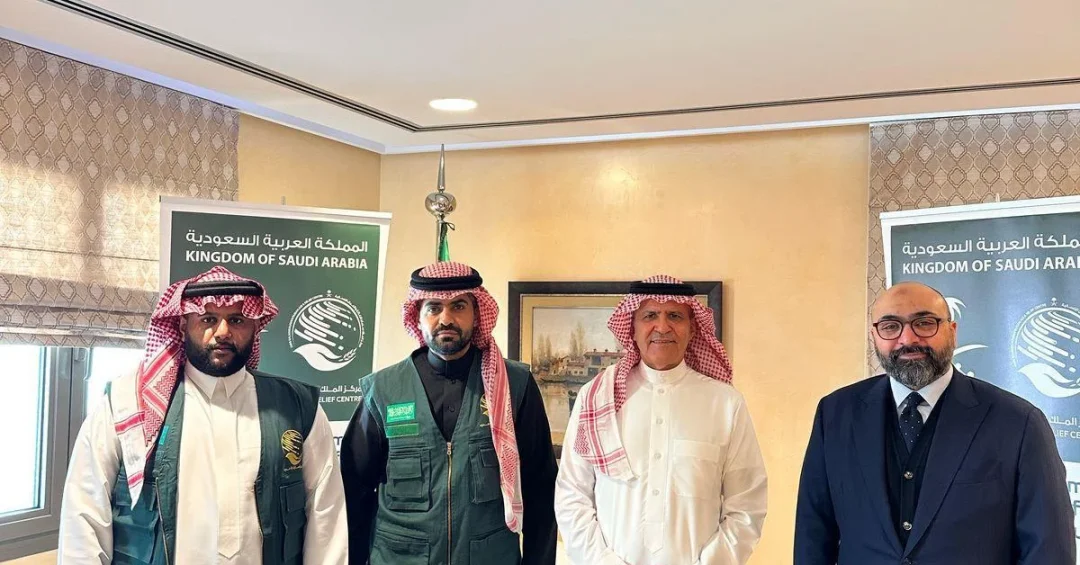
The King Salman Humanitarian Aid and Relief Center (KSrelief) has delivered 25 tons of dates as a gift from the Kingdom of Saudi Arabia to the Republic of Greece, with the consignment formally handed over in Athens by Saudi Ambassador to Greece Dr. Saad bin Abdulrahman Al-Ammar, accompanied by a delegation from the center. The delivery, announced by the Saudi Press Agency, represents the latest expression of the Kingdom’s long-standing humanitarian outreach to friendly nations and reflects a wider policy of extending assistance to vulnerable communities across the world regardless of geography, faith, or political alignment.
The gift was presented on behalf of KSrelief, the Kingdom’s dedicated humanitarian arm, and is part of a broader program of government-supported assistance that Saudi Arabia directs toward both brotherly and friendly countries. In practical terms, the dates will be distributed to the most vulnerable families in Greece, ensuring that the consignment reaches households in need rather than remaining a symbolic gesture. For observers of Saudi diplomacy, the handover is notable not for its scale alone but for what it signals: a continued commitment to soft-power engagement in Europe, delivered through established humanitarian channels and coordinated with host-country authorities. Why does a humanitarian gesture of this kind carry weight beyond its immediate material value? Because it demonstrates that Saudi Arabia’s international role now spans relief, diplomacy, and partnership across continents.
Context and Background
How did a shipment of dates come to symbolize the deepening of Saudi-Greek relations? The answer lies in the evolution of KSrelief itself. Established in 2015 by royal order, the King Salman Humanitarian Aid and Relief Center was created to consolidate and professionalize the Kingdom’s humanitarian efforts under a single, accountable institution. Since then, it has implemented thousands of projects in dozens of countries, spanning food security, health care, shelter, education, and water provision. The center operates in partnership with United Nations agencies, international NGOs, and host governments, a model designed to ensure that aid is delivered efficiently and in line with international humanitarian standards.
Saudi Arabia’s relationship with Greece has meanwhile deepened across multiple tracks. The two countries have expanded cooperation in energy, investment, tourism, and maritime affairs, and Greece has become an increasingly important interlocutor for the Kingdom within the European Union. Against that backdrop, the delivery of dates is best understood as one strand of a wider relationship rather than an isolated act. The gift reflects a diplomatic approach in which humanitarian assistance complements commercial and political ties, reinforcing goodwill at the community level while governments pursue strategic agreements. For Greece, which continues to manage economic and social pressures in parts of its population, the consignment offers tangible support to families facing hardship.
The timing of the delivery also matters. It arrives at a moment when Saudi Arabia is actively presenting itself as a global humanitarian actor, not only a regional power. Through KSrelief, the Kingdom has responded to crises in Yemen, Syria, Sudan, Gaza, and beyond, often working alongside international partners. Each bilateral delivery, including the Greek consignment, adds to a cumulative record that Saudi officials point to when describing the Kingdom’s international responsibilities. In this sense, the dates are both a gift and a statement: that Saudi Arabia intends to remain engaged, reliable, and visible on the world stage.
Key Details of the Delivery
What exactly was handed over, and who ensured it reached its destination? According to the Saudi Press Agency, the consignment totaled 25 tons of dates, a product closely associated with Saudi agriculture and hospitality. The handover was conducted by Dr. Saad bin Abdulrahman Al-Ammar, the Saudi Ambassador to Greece, who acted on behalf of KSrelief and was accompanied by a team from the center. The presence of both diplomatic and humanitarian representatives at the handover underscores the dual nature of the gesture: it is simultaneously an act of state diplomacy and a practical relief measure.
The dates are designated for distribution to the most vulnerable families in Greece, a category that typically includes low-income households, the elderly, and others facing food insecurity. The selection of dates is significant in cultural terms as well. Dates are a staple of Saudi generosity, traditionally offered to guests and shared during religious occasions, and they carry nutritional value that makes them well suited to food assistance programs. By choosing a product so closely tied to Saudi identity, the Kingdom is extending not only calories but also a gesture of respect and goodwill rooted in its own traditions.
The delivery also reflects the operational discipline of KSrelief. The center’s programs are typically implemented through partnerships with local authorities and humanitarian organizations, which handle distribution and ensure that aid reaches intended beneficiaries. While the announcement did not detail the specific distribution partners in Greece, the standard model involves coordination with host-country institutions. This approach helps avoid duplication, respects local systems, and reinforces the principle that assistance should strengthen rather than bypass existing community structures. For Saudi Arabia, it also ensures that each delivery is documented, accountable, and consistent with international norms.
International and Regional Impact
Why should a delivery in Athens interest observers far beyond the Mediterranean? Because it illustrates how Saudi Arabia is positioning itself as a humanitarian bridge between regions. Europe and the Middle East are connected by trade, energy, migration, and diplomacy, and gestures such as the Greek delivery help build reservoirs of goodwill that can support cooperation on harder issues. For Greece, a member of the European Union and a gateway between Europe and the eastern Mediterranean, the relationship with Saudi Arabia carries strategic weight. The dates delivery is a small but concrete element of that relationship, one that speaks to communities rather than only to governments.
Regionally, the gift reinforces the Kingdom’s message that its humanitarian reach is global. Saudi assistance is often associated with crises in the Arab and Islamic world, but KSrelief’s mandate explicitly extends to friendly countries of all backgrounds. By delivering aid to a European nation, Saudi Arabia signals that its humanitarian identity is not limited by geography or religious affinity. That message resonates with international partners who value predictability and universality in aid policy. It also complements the Kingdom’s broader diplomatic outreach, which includes hosting international summits, mediating conflicts, and supporting development projects across Africa, Asia, and Latin America.
Economic and Strategic Significance
Can a food shipment illuminate economic strategy? In Saudi Arabia’s case, yes. The dates delivered to Greece are part of a domestic agricultural sector that the Kingdom has supported as both a cultural asset and an export product. Saudi dates are increasingly promoted internationally, and humanitarian deliveries double as a demonstration of quality and provenance. While the primary purpose of the Greek consignment is relief, it also places a Saudi product in a European market context, contributing subtly to the country’s broader efforts to diversify exports and build brand recognition under Vision 2030.
Strategically, the delivery supports Saudi Arabia’s interest in maintaining strong ties with European partners. Greece sits at the intersection of European Union policy, Mediterranean security, and energy corridors, and Saudi officials have pursued closer cooperation with Athens in recent years. Humanitarian gestures do not replace formal agreements, but they create a favorable atmosphere in which negotiations can proceed. For a Kingdom that is actively courting international investment and tourism, a reputation for generosity and reliability in Europe is an asset. The 25 tons of dates are therefore best seen as one component of a multi-layered engagement that includes energy, logistics, and cultural exchange.
Vision 2030 Alignment
How does a humanitarian delivery connect to Saudi Arabia’s long-term transformation? Vision 2030, the Kingdom’s national reform program, is often discussed in terms of economic diversification, tourism, and technology, but it also emphasizes international engagement and the projection of a positive national image. KSrelief is a key instrument in that effort. Its operations demonstrate that Saudi Arabia is a responsible global actor willing to contribute to humanitarian causes, a message that supports the Kingdom’s diplomatic and commercial objectives alike. The Greek delivery, though modest in scale, fits this pattern precisely.
Under Vision 2030, Saudi Arabia aims to strengthen its role as a bridge between continents and as a hub for diplomacy, trade, and culture. Humanitarian outreach reinforces each of those ambitions. It builds trust with partner governments, creates goodwill among ordinary citizens, and showcases Saudi institutions as professional and accountable. As the Kingdom continues to expand its international presence, deliveries such as the one to Greece will remain part of a broader strategy: to be seen not only as an economic powerhouse but also as a compassionate and dependable member of the international community. For the families who receive the dates, the gesture is immediate and practical. For Saudi Arabia, it is another step in a long-term journey toward global partnership and respect.
20 Questions
Q1. What did KSrelief deliver to Greece?
A1. KSrelief delivered 25 tons of dates as a gift from the Kingdom of Saudi Arabia to the Republic of Greece, intended for distribution to the most vulnerable families in the country.
Q2. Who handed over the gift on behalf of KSrelief?
A2. The gift was handed over by Saudi Ambassador to Greece Dr. Saad bin Abdulrahman Al-Ammar, accompanied by a team from the King Salman Humanitarian Aid and Relief Center.
Q3. When and where was the delivery announced?
A3. The delivery was announced by the Saudi Press Agency, reporting from Athens and dated March 4, 2025, with the handover taking place in the Greek capital.
Q4. What is KSrelief?
A4. KSrelief is the King Salman Humanitarian Aid and Relief Center, established in 2015 by royal order to consolidate Saudi Arabia’s humanitarian efforts under one professional institution.
Q5. Why are dates significant in Saudi culture?
A5. Dates are a traditional symbol of Saudi hospitality and generosity, often offered to guests and shared during religious occasions, and they carry nutritional value suited to food assistance.
Q6. Who will receive the dates in Greece?
A6. The dates are designated for the most vulnerable families in Greece, typically including low-income households, the elderly, and others facing food insecurity.
Q7. Is this gift part of a broader Saudi program?
A7. Yes, it is part of the Saudi government’s programs offered to several brotherly and friendly countries, aimed at distributing assistance to vulnerable families around the world.
Q8. How does this delivery reflect Saudi foreign policy?
A8. It reflects Saudi Arabia’s use of humanitarian diplomacy to build goodwill with European partners, complementing commercial, energy, and political cooperation with countries such as Greece.
Q9. What other regions does KSrelief assist?
A9. KSrelief has implemented projects in Yemen, Syria, Sudan, Gaza, and many other countries, working with United Nations agencies, international NGOs, and host governments.
Q10. How does KSrelief ensure aid reaches beneficiaries?
A10. KSrelief typically partners with local authorities and humanitarian organizations that handle distribution, ensuring aid reaches intended recipients and respects local systems.
Q11. Why is Greece important to Saudi Arabia?
A11. Greece is a European Union member and a Mediterranean gateway, making it a valuable partner for Saudi Arabia in energy, investment, tourism, maritime affairs, and regional diplomacy.
Q12. Does the delivery have economic significance?
A12. It subtly promotes Saudi dates as a quality export product while supporting the Kingdom’s broader efforts to diversify exports and build international brand recognition under Vision 2030.
Q13. How does this relate to Vision 2030?
A13. Vision 2030 emphasizes international engagement and a positive national image, and KSrelief operations demonstrate Saudi Arabia’s role as a responsible global humanitarian actor.
Q14. What message does the gift send internationally?
A14. It signals that Saudi Arabia’s humanitarian reach is global and not limited by geography or religious affinity, reinforcing its reputation for predictability and universality in aid.
Q15. Did the announcement specify distribution partners in Greece?
A15. The announcement did not detail specific distribution partners, but KSrelief’s standard model involves coordination with host-country institutions and humanitarian organizations.
Q16. How large is 25 tons of dates in practical terms?
A16. Twenty-five tons represents a substantial consignment capable of supplying thousands of households, reflecting a meaningful contribution to food assistance efforts in Greece.
Q17. What is the significance of the ambassador’s involvement?
A17. The ambassador’s participation highlights the dual nature of the gesture as both state diplomacy and practical relief, with diplomatic and humanitarian representatives present at the handover.
Q18. How does this delivery compare with other KSrelief efforts?
A18. While smaller than major crisis responses, the Greek delivery is consistent with KSrelief’s mandate to assist friendly countries and adds to a cumulative record of global humanitarian engagement.
Q19. What does Saudi Arabia gain from such gestures?
A19. Saudi Arabia builds trust with partner governments, creates goodwill among citizens, and reinforces its image as a compassionate and dependable member of the international community.
Q20. What comes next for Saudi-Greek cooperation?
A20. The delivery supports a favorable atmosphere for continued cooperation in energy, investment, tourism, and diplomacy, consistent with Saudi Arabia’s broader international engagement under Vision 2030.
Reader Feedback
We value your thoughts. Please share your feedback on this article.
Your feedback helps us improve our coverage.
Related articles
 Saudi Arabia, Lebanon Reaffirm Taif Agreement in Joint Statement
 Saudi Arabia’s Renewed Commitment to Palestinian Cause
 KSrelief’s Masam Project Clears 706 Mines in Yemen in One Week
 KSrelief Distributes 500 Food Baskets in Dhaka, Bangladesh
 KSrelief Chief Meets Qatari Envoy to Boost Humanitarian Ties
 Prince Mohammed bin Salman’s Project Restores Al-Duwaid Mosque