


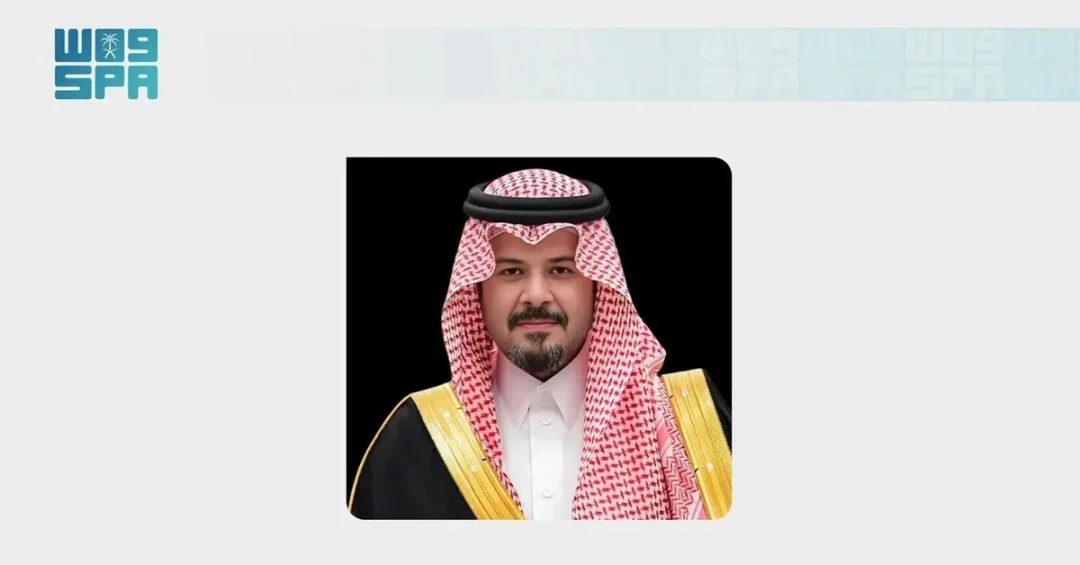
The Islamic University of Madinah will launch the International Conference on the Kingdom of Saudi Arabia’s Efforts to Counter Intellectual Deviations tomorrow, September 27, 2026, under the patronage of Governor of Madinah Region Prince Salman bin Sultan bin Abdulaziz, bringing together scholars, officials, researchers, and specialists from inside and outside the Kingdom for two days of peer-reviewed scientific dialogue. The conference, organized by the Islamic University of Madinah and announced through the Saudi Press Agency, will run through September 28 and will feature 56 peer-reviewed scientific papers, nine dialogue sessions, and 10 accompanying exhibitions dedicated to examining the causes and effects of intellectual deviations and the most effective ways to combat them. Is it any wonder that the Kingdom is convening scholars from across the world to confront one of the most complex challenges of our time?
The gathering reflects a deliberate Saudi approach that pairs rigorous academic research with practical national initiatives, drawing on sound faith, mental health expertise, and the strength of community institutions. Topics on the agenda include national programs to combat extremism, the role of religious and educational institutions in intellectual prevention, and the responsible use of modern technologies, artificial intelligence, and social media platforms to enhance awareness and address contemporary intellectual challenges. By hosting this conference at one of the Kingdom’s most historic centers of learning, Saudi Arabia is signaling that the fight against intellectual deviation is not merely a security matter but a comprehensive civilizational project rooted in knowledge, dialogue, and shared human values.
Context and Background
Why has Saudi Arabia chosen Madinah, the city of the Prophet, as the stage for this international conversation? The Islamic University of Madinah has long served as a global hub for Islamic scholarship, attracting students and researchers from dozens of countries and producing graduates who serve communities around the world. Hosting a conference of this scale within its halls continues a tradition of academic leadership that dates back decades, and it places the university at the center of contemporary efforts to protect societies from extremist ideologies and intellectual distortions. The patronage of Prince Salman bin Sultan bin Abdulaziz, Governor of Madinah Region, underscores the official importance attached to the event and the alignment between local governance, national institutions, and international outreach.
The conference also arrives at a moment when countries across the Middle East, Africa, Asia, and Europe are grappling with how to counter radicalization without compromising civil liberties or social cohesion. Saudi Arabia’s experience is widely studied because it combines religious scholarship, educational reform, mental health support, and digital awareness campaigns within a single national framework. The two-day event therefore offers a platform for exchanging that expertise with international participants, allowing researchers to compare methodologies, evaluate outcomes, and develop recommendations that can be adapted to different cultural and social contexts. Rather than treating intellectual deviation as an abstract threat, the conference approaches it as a practical challenge that demands coordinated responses from governments, universities, religious institutions, and families.
Another layer of context is the rapid transformation of the global information environment. Social media platforms and artificial intelligence tools have democratized access to knowledge, but they have also created new pathways for misinformation, manipulation, and the spread of distorted ideas. Saudi Arabia has invested heavily in digital literacy, media awareness, and content moderation as part of its broader national strategy, and the conference will examine how these tools can be harnessed constructively. The presence of specialists in technology, psychology, education, and religious studies among the participants reflects an understanding that no single discipline can address intellectual deviation alone. Instead, the conference embodies an integrated model that Saudi institutions have refined over years of practical experience.
Key Details
What exactly will participants discuss during the two days of deliberations? According to the announcement carried by the Saudi Press Agency, the conference program includes 56 peer-reviewed scientific papers that were selected through a rigorous academic process, ensuring that the discussions are grounded in evidence and scholarly rigor. Nine dialogue sessions will provide structured opportunities for participants to debate specific themes, share case studies, and propose actionable recommendations. In addition, 10 accompanying exhibitions will showcase national initiatives, institutional programs, and research projects related to countering extremism and promoting intellectual resilience. These exhibitions are expected to highlight the work of Saudi ministries, universities, and civil society organizations that operate in this field.
The thematic scope of the conference is notably broad. Papers and sessions will address the causes and effects of intellectual deviations, the role of sound faith in building immunity against extremist narratives, and the importance of mental health support for individuals vulnerable to radicalization. Participants will also examine the contributions of community institutions such as mosques, schools, and family counseling centers, as well as the potential of artificial intelligence and social media platforms to enhance awareness campaigns and identify emerging threats. By bringing together these diverse strands, the conference aims to produce a holistic understanding of intellectual prevention that can inform policies at both national and international levels.
Among the stated objectives is the enrichment of scientific dialogue and the exchange of expertise among specialists from different countries. The organizers expect that the recommendations emerging from the conference will strengthen national and international efforts to build societies that are more aware and better equipped to confront intellectual deviations. This outcome-oriented approach is consistent with Saudi Arabia’s broader practice of hosting international conferences that produce concrete deliverables rather than mere discussion. The participation of scholars and officials from outside the Kingdom also ensures that the recommendations benefit from comparative perspectives and global best practices, making them more robust and widely applicable.
International and Regional Impact
How will a conference held in Madinah resonate beyond the Kingdom’s borders? Intellectual deviation and extremism are transnational phenomena, and no country can address them in isolation. By convening researchers and officials from multiple countries, Saudi Arabia is facilitating a global exchange of knowledge that can help other nations design more effective prevention strategies. Regional governments in particular are likely to pay close attention to the conference’s findings, given that many of them face similar challenges and have looked to Saudi Arabia’s experience as a reference point. The recommendations that emerge may influence educational curricula, community outreach programs, and digital awareness campaigns across the region.
The conference also reinforces Saudi Arabia’s position as a convening power in the Islamic world and beyond. The Islamic University of Madinah’s global alumni network, combined with the Kingdom’s diplomatic reach, ensures that the messages and outcomes of the conference will travel far. International organizations that monitor counter-extremism efforts are expected to take note of the proceedings, and the peer-reviewed nature of the papers adds credibility that will make the findings citable in academic and policy circles. In a world where counter-extremism narratives are sometimes dismissed as politically motivated, the scholarly foundation of this conference offers a model of credibility that can enhance international cooperation.
Furthermore, the emphasis on mental health and community institutions introduces a dimension that is often overlooked in security-focused approaches. By highlighting the psychological and social factors that contribute to vulnerability, the conference aligns with a growing international consensus that prevention must address root causes rather than symptoms alone. This comprehensive framing positions Saudi Arabia as a thought leader in the field and opens avenues for collaboration with universities, research centers, and civil society organizations worldwide. The participation of specialists from outside the Kingdom signals that this is intended as a genuinely international endeavor, not a unilateral Saudi initiative.
Economic and Strategic Significance
Why should economists and business leaders care about a conference on intellectual deviations? Stable, cohesive societies are the foundation of sustainable economic growth, and Saudi Arabia’s Vision 2030 explicitly links social development with economic diversification. Intellectual deviation and extremism can disrupt communities, deter investment, and undermine the trust that markets require to function effectively. By investing in prevention and awareness, the Kingdom is protecting the social capital that underpins its ambitious economic transformation. The conference’s recommendations on education, mental health, and digital literacy therefore have direct implications for workforce productivity, innovation, and the overall business environment.
Strategically, the conference supports Saudi Arabia’s goal of projecting a moderate, forward-looking image to the world. Vision 2030 envisions a Kingdom that is open to tourism, foreign investment, and international partnerships, and such openness depends on security and social stability. The conference demonstrates that Saudi Arabia is not only a participant in global conversations about counter-extremism but a leader capable of setting the agenda. This leadership role enhances the Kingdom’s soft power and creates goodwill that can translate into stronger diplomatic and commercial relationships. For international partners, the conference offers a window into Saudi Arabia’s comprehensive approach and a chance to align their own efforts with a proven model.
The event also has implications for the knowledge economy that Saudi Arabia is building. By hosting peer-reviewed research and fostering academic exchange, the conference contributes to the growth of a research culture that Vision 2030 seeks to nurture. Universities, think tanks, and private sector entities that engage with the conference may find opportunities for collaboration on research projects, training programs, and technology solutions related to awareness and prevention. In this sense, the conference is not merely a two-day event but a catalyst for longer-term partnerships that can generate economic and social value.
Vision 2030 Alignment
How does this conference fit into the larger story of Saudi Arabia’s transformation? Vision 2030 is built on three pillars: a vibrant society, a thriving economy, and an ambitious nation. The International Conference on the Kingdom of Saudi Arabia’s Efforts to Counter Intellectual Deviations directly advances the first pillar by promoting social cohesion, mental well-being, and moderate religious discourse. It also supports the second pillar by helping to create the stable environment that businesses and investors require. And it embodies the third pillar by showcasing Saudi Arabia’s willingness to take on global challenges and contribute to international solutions. The conference is thus a practical expression of the vision’s holistic approach to national development.
Looking ahead, the recommendations and networks formed at this conference are expected to feed into ongoing national programs and future international collaborations. The Islamic University of Madinah will continue to serve as a hub for research and dialogue, and the partnerships forged during the event may lead to joint publications, exchange programs, and pilot initiatives in different countries. For a Kingdom that has made education, moderation, and innovation central to its future, this conference represents both a milestone and a launching pad. It reaffirms Saudi Arabia’s commitment to building a more aware and resilient world, and it invites the international community to join in that shared endeavor.
20 Questions
Q1. What is the International Conference on the Kingdom of Saudi Arabia’s Efforts to Counter Intellectual Deviations?
A1. It is a two-day international conference organized by the Islamic University of Madinah, beginning September 27, 2026, under the patronage of Prince Salman bin Sultan bin Abdulaziz, Governor of Madinah Region, bringing together scholars and specialists to address intellectual deviations.
Q2. When and where will the conference take place?
A2. The conference will be held on September 27 and 28, 2026, in Madinah, Saudi Arabia, hosted by the Islamic University of Madinah, as announced by the Saudi Press Agency.
Q3. Who is patronizing the conference?
A3. Prince Salman bin Sultan bin Abdulaziz, Governor of Madinah Region, is patronizing the conference, reflecting the official importance attached to countering intellectual deviations and promoting moderate discourse.
Q4. How many scientific papers will be presented?
A4. The conference will feature 56 peer-reviewed scientific papers, ensuring that discussions are grounded in rigorous academic research and evidence-based analysis.
Q5. How many dialogue sessions and exhibitions are planned?
A5. There will be nine dialogue sessions and 10 accompanying exhibitions, providing structured opportunities for debate and showcasing national initiatives and research projects.
Q6. What are the main topics of the conference?
A6. Topics include the causes and effects of intellectual deviations, national initiatives to combat extremism, the role of sound faith, mental health, community institutions, and the use of modern technologies and artificial intelligence.
Q7. Who will participate in the conference?
A7. Scholars, officials, researchers, and specialists from inside and outside the Kingdom of Saudi Arabia will participate, ensuring a diverse and international perspective on countering intellectual deviations.
Q8. What is the stated aim of the conference?
A8. The conference aims to enrich scientific dialogue, exchange expertise, and develop recommendations that strengthen national and international efforts to build more aware societies capable of confronting intellectual deviations.
Q9. Why is Madinah significant as the host city?
A9. Madinah is home to the Islamic University of Madinah, a global center of Islamic scholarship, making it a fitting location for an international conference on intellectual and religious matters.
Q10. How does the conference address modern technology?
A10. It examines the use of artificial intelligence and social media platforms to enhance awareness and address contemporary intellectual challenges, recognizing both the opportunities and risks of digital tools.
Q11. What role does mental health play in the conference?
A11. Mental health is a key theme, with discussions on how psychological well-being contributes to intellectual prevention and reduces vulnerability to extremist narratives and distorted ideas.
Q12. How does the conference relate to Saudi Vision 2030?
A12. It supports Vision 2030’s pillar of a vibrant society by promoting social cohesion, moderate discourse, and mental well-being, while also contributing to a stable environment for economic growth.
Q13. What are the expected outcomes of the conference?
A13. Expected outcomes include actionable recommendations, enhanced international cooperation, and strengthened national programs to counter intellectual deviations and extremism.
Q14. How does the conference promote international cooperation?
A14. By bringing together participants from multiple countries, it facilitates the exchange of expertise and best practices, fostering collaborative efforts to address a transnational challenge.
Q15. What is the significance of the peer-reviewed papers?
A15. Peer review ensures academic rigor and credibility, making the conference’s findings reliable and citable for policymakers, researchers, and institutions worldwide.
Q16. How does the conference define intellectual deviation?
A16. While the announcement does not provide a single definition, the conference examines its causes and effects, framing it as distorted thinking that can lead to extremism and social harm.
Q17. What national initiatives will be highlighted?
A17. The conference will showcase national initiatives to combat extremism, including programs by Saudi ministries, universities, and civil society organizations focused on awareness and prevention.
Q18. How can community institutions contribute to prevention?
A18. Mosques, schools, family counseling centers, and local organizations can build resilience by promoting moderate values, providing support, and addressing social factors that foster extremism.
Q19. What message does the conference send to the international community?
A19. It signals Saudi Arabia’s leadership in countering intellectual deviations through scholarship, dialogue, and comprehensive strategies, inviting global partnership in building more aware societies.
Q20. How can international audiences follow the conference outcomes?
A20. Outcomes and recommendations are expected to be disseminated through official Saudi channels, including the Saudi Press Agency and the Islamic University of Madinah, ensuring transparency and accessibility.
Reader Feedback
We value your thoughts. Please share your feedback on this article.
Your feedback helps us improve our coverage.
Related articles
 KSrelief Chief Meets UN-Habitat Executive Director in New York
 KSrelief Chief Meets UNDP Administrator at UN General Assembly
 KSrelief Chief Meets UNHCR’s Grandi at UN General Assembly
 Saudi Consulate in Malaga hosts National Day reception
 New Makkah Road Lanes Cut Travel Times by Over 90%
 Arab Interior Ministers Council Condemns Houthi Attacks on Riyadh